Prescott National Forest
Prescott, Arizona · Southwest
Even the dry country settles you
Prescott is not one landscape. Down low, near 3,000 feet, it is cactus, chaparral, and open grassland baking in the sun. Climb toward Mount Union at nearly 8,000 feet and it turns into ponderosa pine, mountain ranges, and the lakes and river headwaters tucked between them. About 1.25 million acres of central Arizona, stacked by elevation.
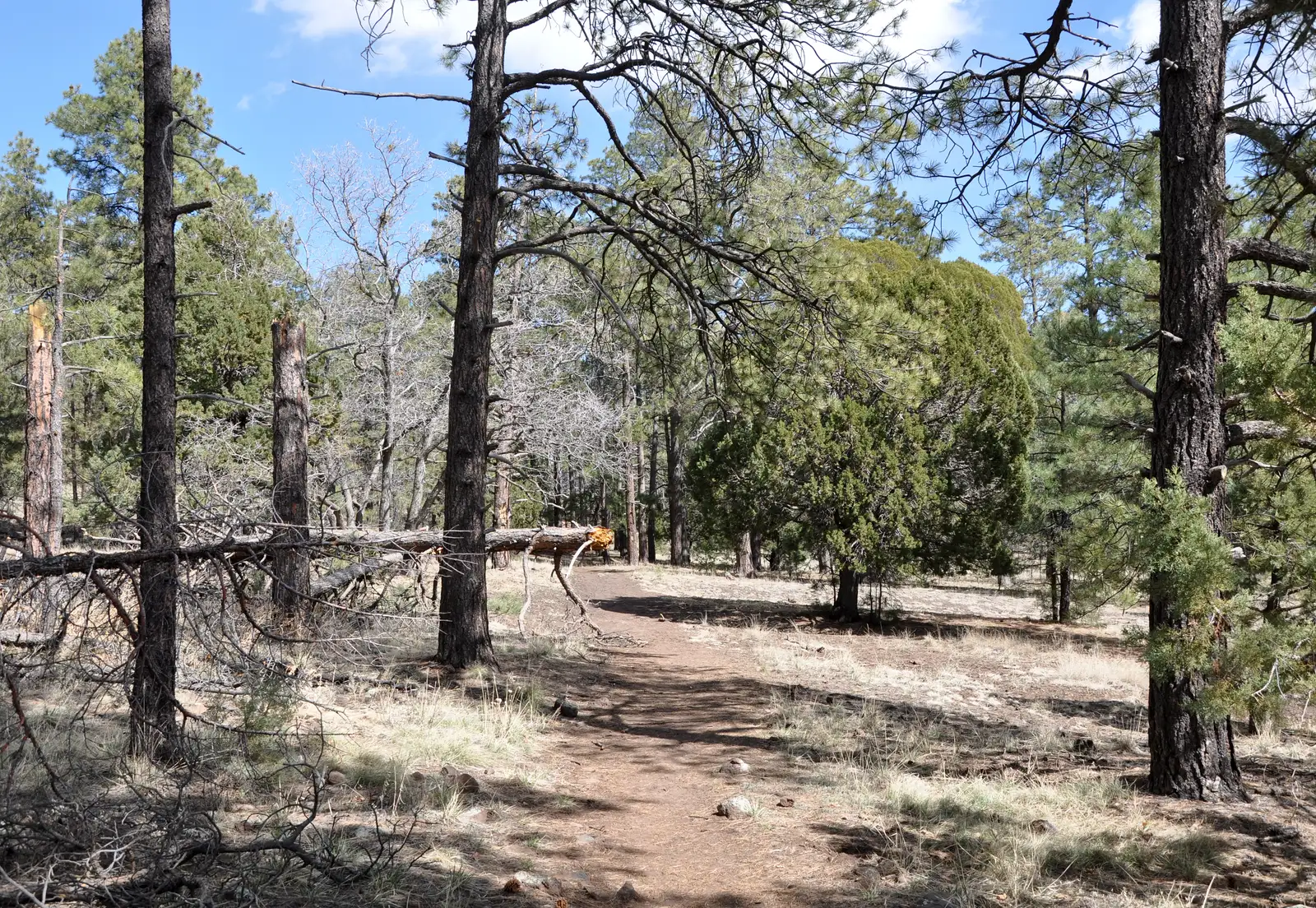
Most nature-therapy writing quietly assumes the good stuff is green: canopy, moss, deep forest. Prescott complicates that in a useful way, because a big share of it is spare, brown, dry country, and that country does real work too. You do not have to reach the pines to get something back. A quiet stretch of desert trail with nothing but rock, juniper, and sky counts.
The forest also hands you the greener end of the spectrum if you want it: pine air on the Bradshaws and Mingus, and the cool water at Lynx Lake. The Forest Service points to remote, lightly used trails like Cedar Bench Wilderness and Juniper Mesa for people chasing solitude. Whichever end you pick, spare desert or shaded pine, the point is the same. You go, you stop, you let the noise drain off.
The science: In one experiment, men who spent 10 minutes in a virtual desert landscape had lower salivary cortisol and lower arterial pressure afterward than men who sat in a virtual office, even though the arid scene was almost bare of greenery. It ran in a VR headset, not a real desert, and the greener condition still beat the desert on some measures, so this is no proof that dry country wins. But it is a rare, hard-biomarker hint that a spare, brown landscape does genuine work on stress.
Yin, Bratman, Browning, Spengler & Olvera-Alvarez (2022) · Journal of Environmental Psychology
Seasonal guide
Temperatures are NOAA climate normals from PRESCOTT LOVE FLD at 5,013 ft. A national forest spans a wide elevation range, so the high country runs cooler and holds snow later than the valleys. The season notes below tell you how to work each one.
At the Prescott valley station near 5,000 feet, highs sit in the low to mid 50s and nights drop to the mid 20s. The higher ranges hold snow and can see road and campground closures in late winter, so check alerts before heading up. Lower-elevation desert camping stays open year-round and is the reliable cold-season option; pack layers and expect frosty mornings.
Spring warms fast, from 60s in March to upper 70s by May, with cool nights and the year's driest stretch. Fire season typically starts around mid-April, so watch for restrictions and check current fire status. Snow can linger on the high country into early spring, so lower and mid elevations open up first.
June is hot and dry with valley highs near 88°F, then the July and August monsoon brings afternoon storms and the wettest months of the year. Higher fire danger runs May through July, and 2026 Stage 1 restrictions are set for May 21 through Sept. 30 unless lifted early. Beat the heat by climbing into the cooler pine country and lakes, and plan hikes for the morning to dodge lightning.
Fall is arguably the easiest season, cooling from low 80s in September to the low 60s by November, with crisp nights that dip toward freezing by late fall. Monsoon moisture fades and skies clear, making for stable hiking weather. It is a good window for the remote, quieter trails before winter snow arrives up high.
This month in the forest
Timing changes everything out here. Pick a month to see when the light turns golden, which nights stay darkest for stargazing, and what visitors have actually recorded in bloom and on the move. The new-moon night is the one to plan a sky-watching evening around.
January 2027
In bloom · 3 species on record
- ❀ Threadleaf groundsel 1 sightings
- ❀ Pricklyleaf dogweed 1 sightings
- ❀ Cory's Mistletoe 1 sightings
Wildlife on the move · 84 species on record
- Dark-eyed Junco 7 sightings
- Mule Deer 7 sightings
- Acorn Woodpecker 6 sightings
- Mallard 5 sightings
- Spotted Towhee 4 sightings
February 2027
In bloom · 7 species on record
- ❀ Pointleaf manzanita 3 sightings
- ❀ Golden currant 1 sightings
- ❀ Shrubby deervetch 1 sightings
- ❀ Fendler's pennycress 1 sightings
- ❀ Purple-nerve cymopterus 1 sightings
Wildlife on the move · 106 species on record
- Mallard 27 sightings
- Dark-eyed Junco 16 sightings
- Acorn Woodpecker 15 sightings
- Mule Deer 14 sightings
- Bald Eagle 13 sightings
March 2027
In bloom · 32 species on record
- ❀ Pointleaf manzanita 9 sightings
- ❀ Pinkflower hedgehog cactus 5 sightings
- ❀ Tuber anemone 4 sightings
- ❀ Blue dicks 4 sightings
- ❀ Winding mariposa lily 3 sightings
Wildlife on the move · 201 species on record
- Ornate Tree Lizard 15 sightings
- Acorn Woodpecker 9 sightings
- Gray Buckeye 9 sightings
- California Patch 8 sightings
- Plateau Fence Lizard 8 sightings
April 2027
In bloom · 72 species on record
- ❀ Pointleaf manzanita 25 sightings
- ❀ Desert Mariposa Lily 14 sightings
- ❀ Blue dicks 10 sightings
- ❀ Winding mariposa lily 8 sightings
- ❀ Antelopehorn Milkweed 6 sightings
Wildlife on the move · 289 species on record
- Mallard 34 sightings
- Ornate Tree Lizard 31 sightings
- Greater Short-horned Lizard 30 sightings
- Plateau Fence Lizard 30 sightings
- Canyon Tree Frog 27 sightings
May 2027
In bloom · 108 species on record
- ❀ Pringle's manzanita 29 sightings
- ❀ New Mexico locust 17 sightings
- ❀ Baker Kingcup Cactus 14 sightings
- ❀ Desert Mariposa Lily 12 sightings
- ❀ Antelopehorn Milkweed 9 sightings
Wildlife on the move · 355 species on record
- Greater Short-horned Lizard 61 sightings
- Plateau Fence Lizard 41 sightings
- Gopher Snake 33 sightings
- Canyon Tree Frog 32 sightings
- Ornate Tree Lizard 25 sightings
June 2027
In bloom · 61 species on record
- ❀ New Mexico locust 29 sightings
- ❀ Antelopehorn Milkweed 21 sightings
- ❀ Butterfly milkweed 14 sightings
- ❀ Pringle's manzanita 6 sightings
- ❀ Golden columbine 6 sightings
Wildlife on the move · 324 species on record
- Greater Short-horned Lizard 38 sightings
- Plateau Fence Lizard 38 sightings
- Mule Deer 26 sightings
- Echo Azure 21 sightings
- Marine Blue 21 sightings
July 2026
In bloom · 33 species on record
- ❀ Butterfly milkweed 10 sightings
- ❀ Arizona thistle 5 sightings
- ❀ Antelopehorn Milkweed 4 sightings
- ❀ Goldenflower century plant 3 sightings
- ❀ Common yarrow 2 sightings
Wildlife on the move · 365 species on record
- Greater Short-horned Lizard 41 sightings
- Plateau Fence Lizard 36 sightings
- Two-tailed Swallowtail 26 sightings
- Ornate Tree Lizard 22 sightings
- Desert Blonde Tarantula 18 sightings
August 2026
In bloom · 47 species on record
- ❀ Fendler's ceanothus 5 sightings
- ❀ Birdbill dayflower 5 sightings
- ❀ Scarlet cinquefoil 4 sightings
- ❀ Arizona thistle 3 sightings
- ❀ Shrubby purslane 3 sightings
Wildlife on the move · 380 species on record
- Greater Short-horned Lizard 59 sightings
- Two-tailed Swallowtail 17 sightings
- White-lined Sphinx 16 sightings
- Acorn Woodpecker 14 sightings
- Plateau Fence Lizard 14 sightings
September 2026
In bloom · 105 species on record
- ❀ Desert ageratina 7 sightings
- ❀ Fendler's ceanothus 7 sightings
- ❀ Wright's buckwheat 5 sightings
- ❀ Birdbill dayflower 5 sightings
- ❀ Arizona thistle 4 sightings
Wildlife on the move · 313 species on record
- Greater Short-horned Lizard 32 sightings
- White-lined Sphinx 16 sightings
- Plateau Fence Lizard 16 sightings
- Anna's Hummingbird 15 sightings
- Arizona Mantis 15 sightings
October 2026
In bloom · 25 species on record
- ❀ Desert Broom 4 sightings
- ❀ Ocotillo 2 sightings
- ❀ Spotted knapweed 2 sightings
- ❀ Arizona thistle 2 sightings
- ❀ Wright's hymenothrix 2 sightings
Wildlife on the move · 241 species on record
- Grand Canyon Black Tarantula 31 sightings
- Plateau Fence Lizard 22 sightings
- Greater Short-horned Lizard 21 sightings
- Giant Agave Bug 18 sightings
- Madrean Alligator Lizard 16 sightings
November 2026
In bloom · 23 species on record
- ❀ Red barberry 2 sightings
- ❀ Arizona thistle 2 sightings
- ❀ Desert Broom 1 sightings
- ❀ Common yarrow 1 sightings
- ❀ Threadleaf groundsel 1 sightings
Wildlife on the move · 132 species on record
- Mule Deer 11 sightings
- Grand Canyon Black Tarantula 10 sightings
- Dark-eyed Junco 9 sightings
- Acorn Woodpecker 9 sightings
- Mallard 6 sightings
December 2026
In bloom · 12 species on record
- ❀ Great mullein 2 sightings
- ❀ Pringle's manzanita 2 sightings
- ❀ Scarlet Gilia 1 sightings
- ❀ Hollyleaf redberry 1 sightings
- ❀ Trailing Windmills 1 sightings
Wildlife on the move · 94 species on record
- Acorn Woodpecker 14 sightings
- Dark-eyed Junco 12 sightings
- Mallard 6 sightings
- Abert's Squirrel 6 sightings
- American Coot 5 sightings
Sun and moon times are computed for the forest's coordinates from standard NOAA solar equations and cross-checked against the U.S. Naval Observatory. Species lists are research-grade community observations for Prescott National Forest via iNaturalist, retrieved July 2026; sighting counts are all-time records for that calendar month.
Don’t wait for Prescott National Forest.
One big trip a year isn’t what changes how you feel — the small stuff in between is. The 7-Day Nature Reset is one tiny outdoor practice a day, wherever you already are. Day one takes 60 seconds.
No spam. No noise. Just nature.
Day 1 is landing in your inbox right now — go say hi.
Sleep nearby
Most visitors base in Prescott Valley, Arizona, about 8 miles out. It offers more rooms and better prices as a larger, hotel-oriented town within about 10 minutes of the forest. Prescott is the immediate gateway city but has fewer rooms and higher prices than Prescott Valley. The map opens on Prescott Valley, so pan toward the park to trade rooms and price for a shorter morning drive.
Camping inside the park books through Recreation.gov and is listed separately.
The map is provided by Stay22. If you book through it we may earn a commission at no cost to you, which helps keep Happier Outdoors running. It never changes what we recommend.
From the field
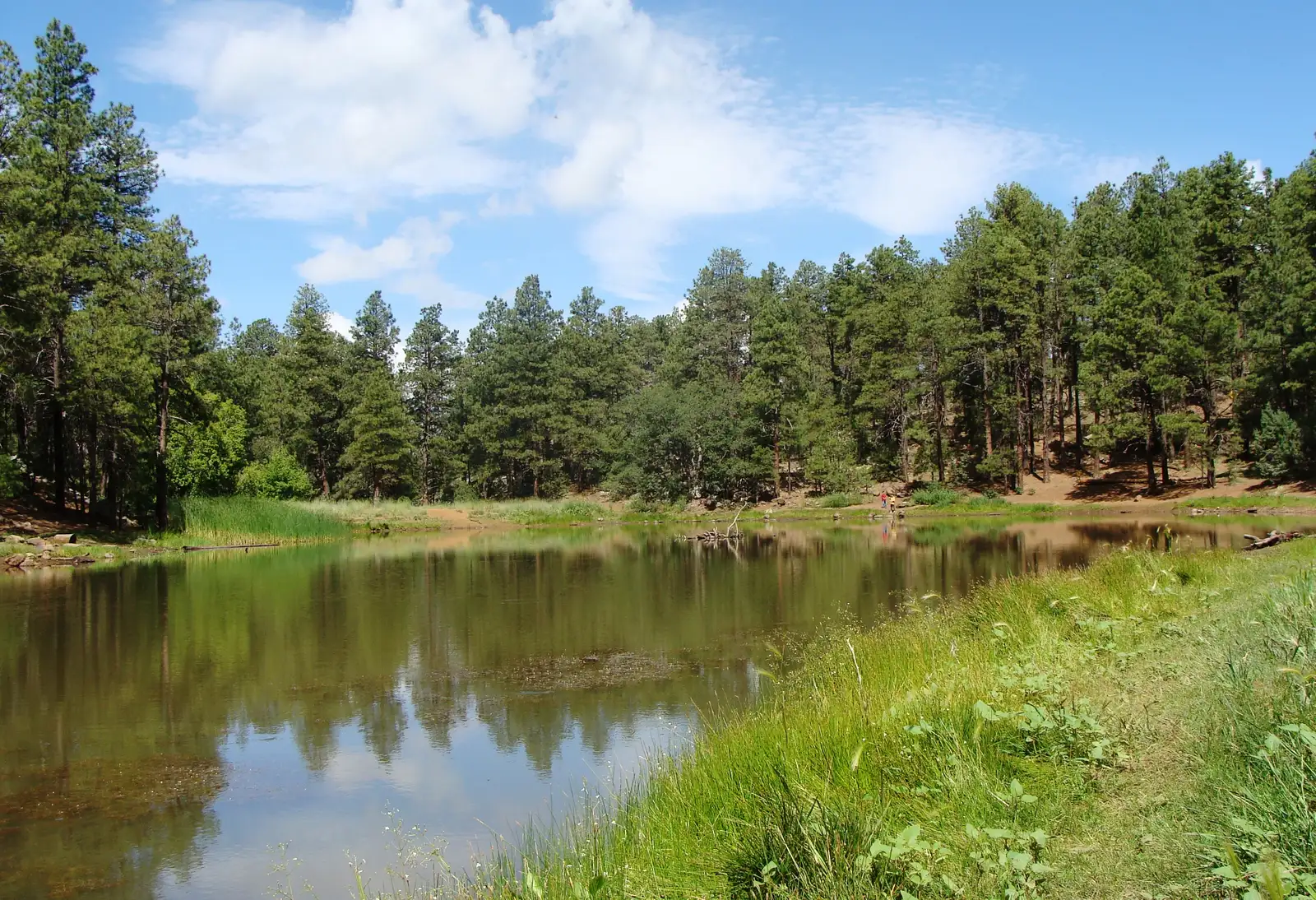
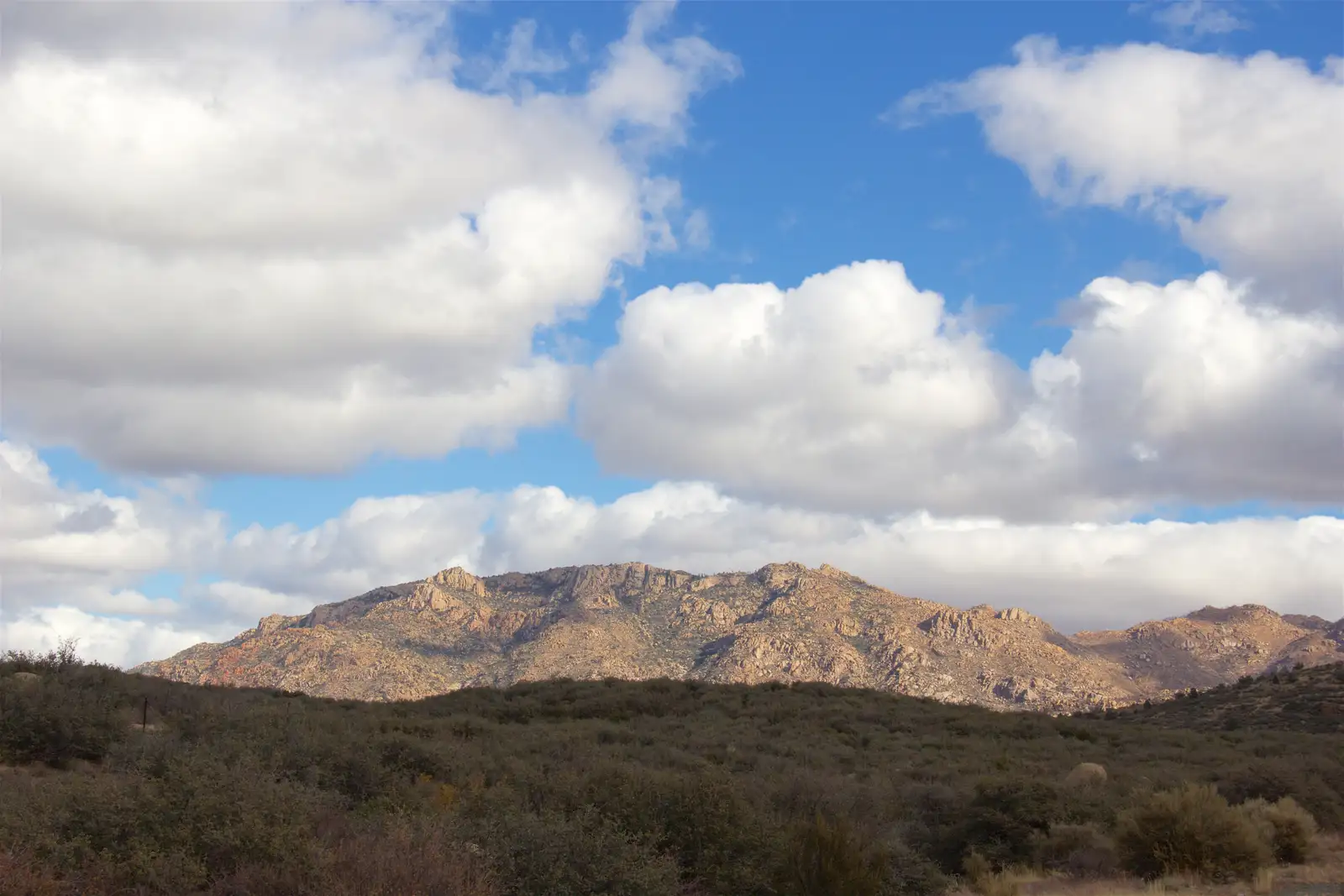
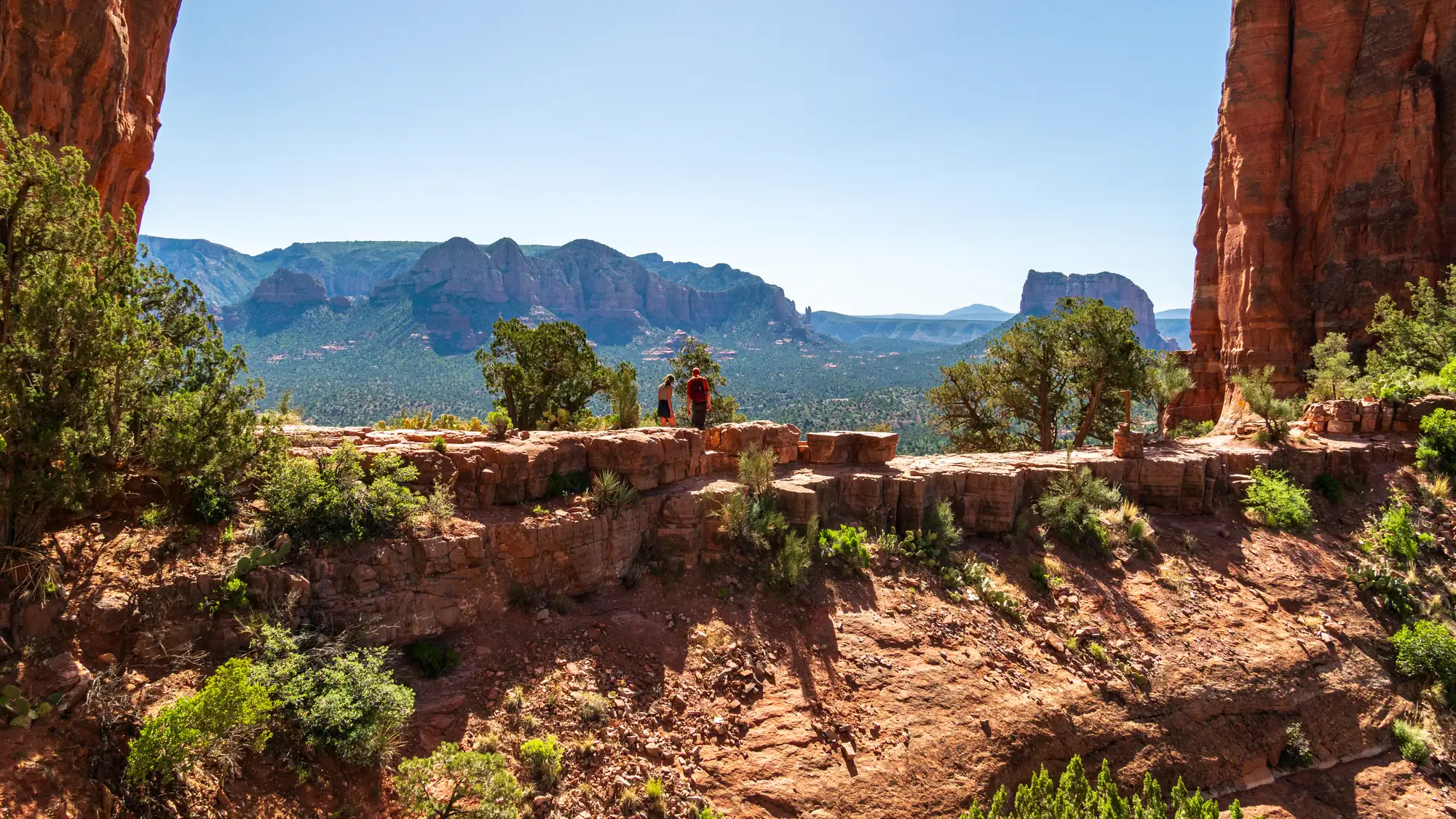
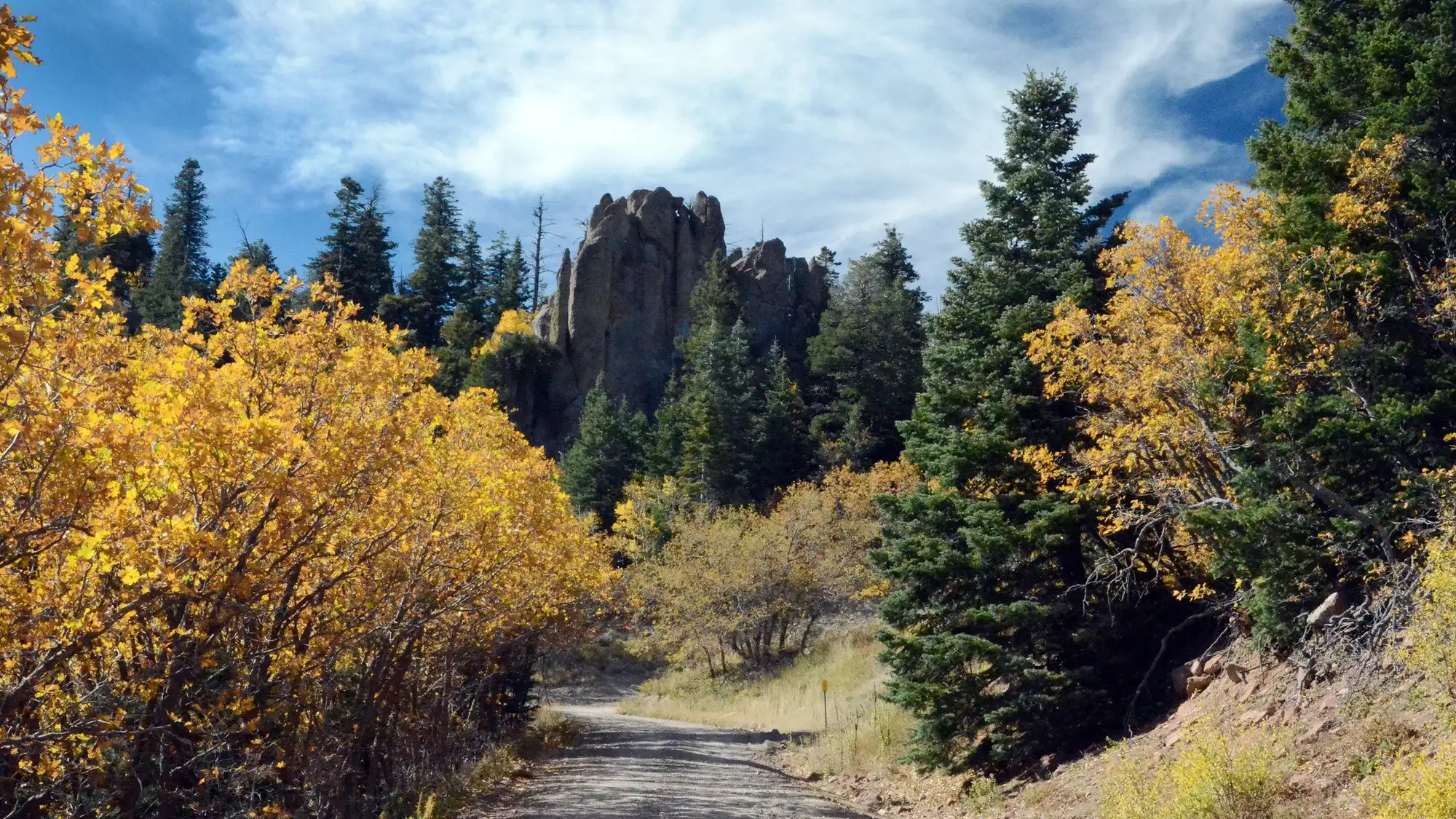
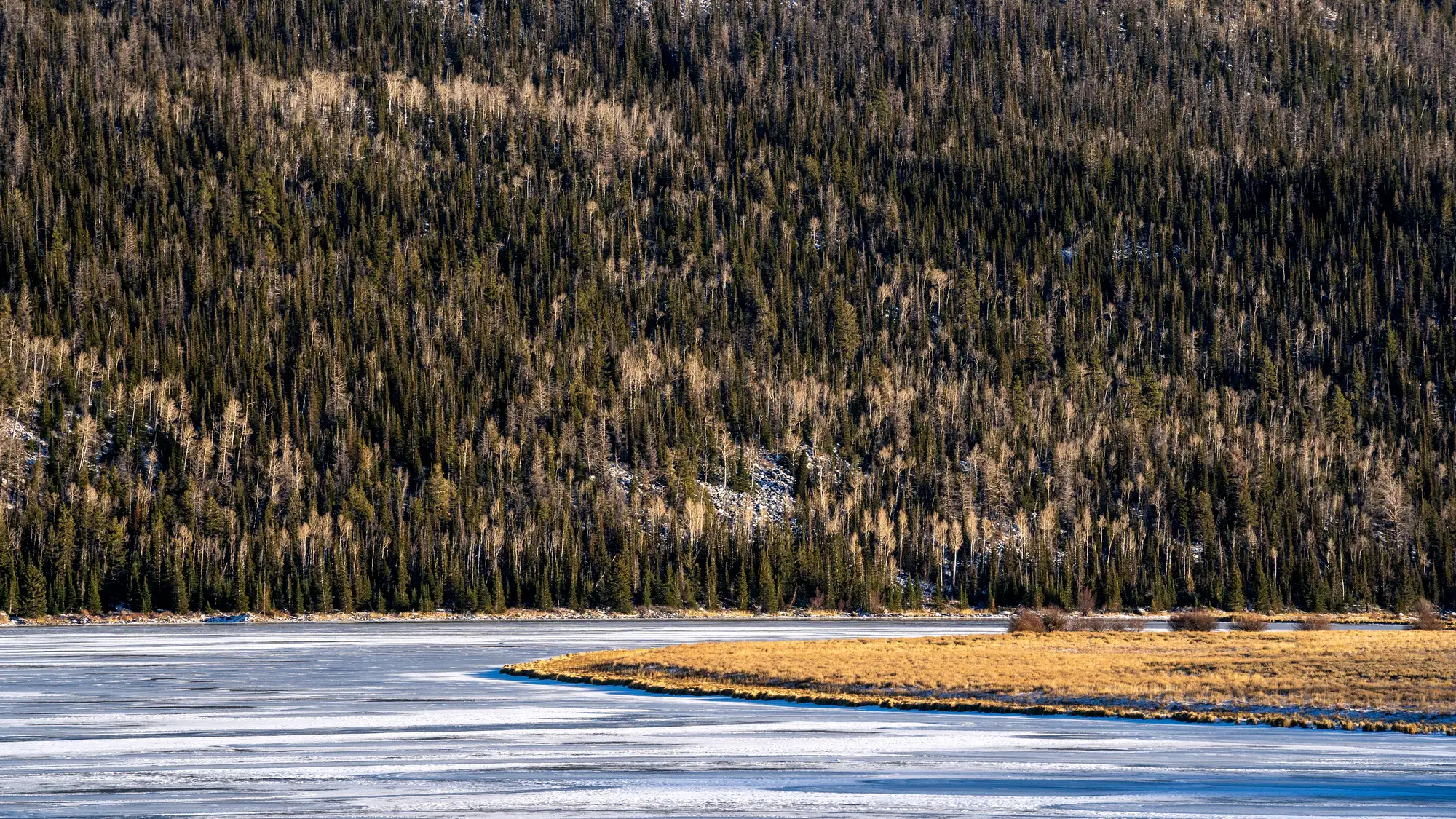
Photos: Qwert üpoiuz (CC BY-SA 4.0), via Wikimedia Commons ; Zereshk (CC BY-SA 3.0), via Wikimedia Commons ; Photograph by Mike Peel ( www.mikepeel.net ). (CC BY-SA 4.0), via Wikimedia Commons ; Finetooth (CC BY-SA 3.0), via Wikimedia Commons
Common questions
When is the best time to visit Prescott National Forest?
Fall and late spring tend to be the most comfortable, with highs in the 60s to 70s at mid elevations and mild nights. Summer (June through August) is the forest's busiest and hottest stretch, near 90°F at the Prescott valley station though noticeably cooler in the high pine country, while late winter and early spring can bring snow and road or campground closures higher up.
Is Prescott National Forest dog-friendly?
Yes, dogs are allowed, but they must be on a leash no longer than 6 feet in developed recreation sites and on trails where pets are permitted. In Granite Mountain Wilderness dogs must be leashed at all times, and some posted areas have their own restrictions, including no camping within 200 feet of the Granite Mountain Trail.
What are some quieter trails in Prescott National Forest?
The Forest Service names Cedar Bench Wilderness, Juniper Mesa Trail, the Mazatzal Divide Trail, and Secret Mountain Trail as low-traffic options. They stay quiet largely because they are remote, hard to reach, or not well marked, so bring a map and expect rough access on some of them.
Do you need a pass or permit for Prescott National Forest?
There is no forest-wide entrance fee; fees apply only at certain day-use sites. Lynx Lake day-use is $5 per vehicle (free every Wednesday), and paying there or holding an America the Beautiful pass or a Prescott National Forest Day Use Pass covers all day-use sites on the forest for that day. Activities like OHV riding, rock climbing, and boating on Wild and Scenic Rivers may require separate special-use permits.
Can you camp in Prescott National Forest?
Yes, there are developed campgrounds plus designated dispersed camping. Named campgrounds include White Spar, Yavapai, Lynx, Hilltop, Mingus Mountain, Potato Patch, Powell Springs, Alto Pit OHV, and Groom Creek Horse Camp, with typical nightly fees running from about $10 to $28. In the Prescott Basin you can only camp at designated sites for up to 7 days in any 30-day period, while outside the basin the limit is 14 days in 30.
Is Prescott National Forest accessible for wheelchairs and strollers?
Several sites are paved or wheelchair-accessible, including the western part of the Lynx Lake Recreation Trail, the Groom Creek Nature Trail, and Thumb Butte, which has paved pathways, a paved lot, and an accessible vault toilet. At Lynx Campground, sites 20, 21, and 35 are fully accessible, though many others have steps and the White Bridge trail is not paved all the way to the river.
Similar forests worth the trip
Matched by the kind of quiet and the reset they offer.