
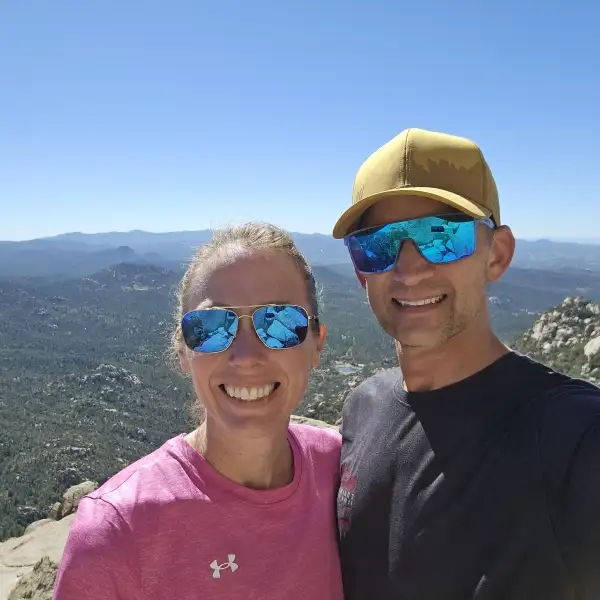
You’ll find over 450 miles of hiking trails waiting for you in Prescott National Forest, ranging from gentle lakeside walks to strenuous mountain ascents that’ll test your endurance. Whether you’re planning a quick afternoon escape or a multi-day wilderness adventure, these Arizona trails deliver stunning granite formations, ponderosa pine forests, and breathtaking high-desert views. But before you lace up your boots, there’s essential information you’ll need to know about permits, seasonal conditions, and choosing the right trail for your abilities.
Granite Mountain Trail: Prescott’s Premier National Recreation Trail
Nestled in the rugged Granite Mountain Wilderness just eight miles northwest of Prescott, the Granite Mountain Trail stands as one of Arizona’s most rewarding mid-elevation hikes. Designated a National Recreation Trail in 1978, this 8-mile round-trip adventure climbs roughly 1,500–1,900 feet from the Metate Trailhead to spectacular ridgetop views.
You’ll start through shaded ponderosa pine forests before tackling steep switchbacks carved into massive granite cliffs—the same iconic boulders visible throughout Prescott. The final push reaches an old lookout site where panoramic vistas reveal Granite Basin Lake, the Granite Dells, and the distant Bradshaw Mountains.
Pack plenty of water, wear sturdy boots, and start early during summer months. The exposed upper sections can be brutally hot, and afternoon monsoon thunderstorms bring dangerous lightning to the ridge. From February through July, keen-eyed hikers may spot peregrine falcons soaring near the summit cliffs, which serve as prime mating grounds for these impressive raptors.
Easy Prescott Hiking Trails for Families and Beginners
Whether you’re introducing young kids to hiking or just prefer a relaxed walk through Arizona’s high country, Prescott National Forest delivers excellent beginner-friendly trails that won’t intimidate newcomers.
Lynx Lake Shoreline offers gentle, partially paved segments perfect for strollers, with 1–2 mile out-and-back options featuring minimal elevation gain. You’ll enjoy lakeside views, waterfowl watching, and convenient picnic areas. The lake also provides fishing opportunities for families looking to extend their outdoor experience.
The Peavine National Recreation Trail follows an old railroad grade with wide, decomposed-granite surfaces ideal for side-by-side walking or family biking. Its gentle slopes showcase stunning Granite Dells rock formations and Watson Lake vistas.
For short loops, explore the Constellation Trails network, where interconnected circuits under 3 miles wind through enthralling granite boulders. Meanwhile, Groom Creek Nature Trail provides ADA-compliant access through shaded pine forests, perfect for wheelchairs and young children.
Moderate Routes: Thumb Butte and Lynx Lake Loop Trails
Stepping up from gentle trails, you’ll find Thumb Butte Trail #33 and Lynx Lake Loop deliver the perfect moderate challenge with rewarding panoramas across Prescott’s high country. These 2-mile circuits each gain 600–700 feet through ponderosa pine forests and rocky overlooks, packing impressive scenery into compact, manageable distances. Both loops start from well-marked trailheads just minutes from downtown, making them ideal midweek adventures when you’re ready for a bit more elevation and effort. At Thumb Butte’s highest point, you’ll encounter a memorial honoring 19 firefighters who lost their lives in the Yarnell Hill Fire.
Trail Length and Elevation
Moderate trails strike the sweet spot between accessibility and adventure, and both Thumb Butte Trail #33 and Lynx Lake Loop deliver exactly that balance in Prescott National Forest.
Trail Stats at a Glance:
- Thumb Butte Loop – You’ll cover 2.0–2.3 miles with 600–900 feet of elevation gain, climbing from roughly 5,795 to 6,380 feet over 1–1.5 hours.
- Lynx Lake Loop – Expect a gentler 2.3–2.5-mile circuit with only 100–200 feet of cumulative gain, finished in 45–75 minutes.
Thumb Butte’s sustained grade earns its moderate rating—especially on the steeper paved section—while Lynx Lake rolls through mild undulations around the water. Both sit between 5,700–6,300 feet, so you’ll feel that higher-elevation air during climbs. The Thumb Butte trailhead is conveniently positioned 3 miles from downtown Prescott , making it an easily accessible option for visitors staying in town.
Scenic Highlights and Features
The views from Thumb Butte Trail reward your effort with a 360-degree sweep of central Arizona’s most dramatic peaks. You’ll spot the Sierra Prieta, Weaver Mountains, and Bradshaw Mountains from the loop, with San Francisco Peaks emerging to the northeast during your descent. Don’t miss Sierra Prieta Overlook at the halfway point—it’s spectacular at sunset.
The trail’s elevation around 6,500 feet delivers sweeping vistas over Prescott below. You’ll hike through tall ponderosa pines in upper sections, shifting to thick juniper forests downhill. Watch for scattered aspen groves and mixed oak canopies creating diverse scenery. Spring through fall offers the best conditions, though the moderately maintained trail stays passable year-round in standard vehicles with decent clearance. The area features abundant camping options alongside trails suitable for mountain biking and horseback riding.
Access and Trailhead Information
Just 2.2 miles west of downtown Prescott, you’ll find the Thumb Butte Trailhead waiting at the day-use picnic area along Thumb Butte Road. Simply follow Gurley Street west from downtown as it changes into County Road 65, and you’ll arrive at the main parking area at Mile 3.4.
Here’s what you’ll discover at the trailhead:
- Parking and Facilities: Spacious parking area with restrooms and picnic tables throughout
- Trail Options: Multiple interconnected trails accessible from the main staging area
- Vehicle Requirements: Standard vehicles handle the access road fine; high-clearance vehicles recommended for Forest Road 373’s extended loop
- Navigation Support: Well-marked pathways guide you through the 2-mile loop with 606 feet of elevation gain
The clearly marked trail suits all skill levels. A $5 fee is required for parking at the Thumb Butte Recreation Area day-use site.
Challenging High-Elevation Hikes in the Bradshaw Mountains
Rising above Prescott’s already-elevated landscape, the Bradshaw Mountains challenge hikers with rugged terrain that rewards effort with breathtaking panoramas and genuine wilderness solitude.
You’ll find Mount Union Summit standing as Prescott National Forest’s highest point at 7,979 feet. This 2-mile round trip deceives with its short distance—slow-going terrain featuring old roads and steep trails earns it a moderate difficulty rating. Plan your ascent between October and May for ideal conditions.
The Bradshaws represent one of Earth’s most mineralized mountain ranges, with mining heritage dating to the mid-1800s. As you climb through diverse flora—ponderosa pines, juniper, and manzanita—watch for mule deer, hawks, and songbirds. On clear days, you’ll spot San Francisco Peaks near Flagstaff stretching across the northern horizon.
Multi-Day Wilderness Backpacking in Eight Designated Areas
You’ll find eight designated wilderness areas across Prescott National Forest, offering over 100,000 acres of pristine backcountry for multi-day adventures. These roadless zones—including remote gems like Juniper Mesa and Apache Creek—follow strict non-motorized rules that keep the trails quiet and the solitude real. Before you shoulder your pack, you’ll need to understand the trail networks in each area and brush up on wilderness regulations that protect these wild spaces.
Wilderness Area Trail Networks
When you’re ready to venture beyond day hikes, Prescott National Forest’s eight designated wilderness areas deliver over 104,000 acres of backcountry terrain perfect for multi-day backpacking adventures. You’ll find interconnected trail networks that let you craft flexible itineraries across diverse ecosystems.
Major Wilderness Trail Systems:
- Granite Mountain Wilderness – 6-mile loop network featuring Trail #261, Tin Trough Springs Trail #308, and Baby Granite Loop
- Apache Creek Wilderness – Loop trail options connecting camping spots and water sources
- Camp Wood Area – Gateway trails linking multiple wilderness zones
- Juniper Mesa Wilderness – Access via 7 Up To Hyde Mountain Trail #5
Check the interactive Forest Visitor Map online or visit Bradshaw Ranger District office at 344 South Cortez Street for current trail conditions and closure updates before heading out.
Backcountry Permits and Regulations
Unlike many Western wilderness destinations, Prescott National Forest’s eight designated wilderness areas don’t require advance backcountry permits for overnight backpacking trips—you’re free to shoulder your pack and head into the backcountry without paperwork or reservation hassles. However, you’ll need to follow the 14-day stay limit within any 30-day period and respect campfire restrictions that vary by season and fire danger level.
Special rules kick in if your route crosses Wild & Scenic River corridors like Fossil Creek or Verde River, where limited-entry permits and seasonal caps apply. Day-use fees may apply at developed trailheads, and dispersed camping near Prescott Basin requires designated sites only. If you’re planning group trips or commercial outfitting, separate special-use permits are mandatory before you hit the trail.
Ponderosa Pines, Granite Cliffs, and Wildlife Along the Trails
As you climb into the mid-elevation zones of Prescott National Forest—roughly between 5,500 and 8,000 feet—the landscape transforms into classic ponderosa pine country. Widely spaced giants tower over grassy understories, creating long sightlines toward distant peaks and massive granite cliffs. The Granite Mountain Trail showcases sheer Precambrian rock faces and weathered domes, while the Dells near Watson and Willow Lakes reveal eroded boulders and hoodoo-like formations.
Wildlife thrives here. Watch for:
- Mule deer and elk foraging in forest meadows
- Raptors soaring above granite thermals
- Woodpeckers and songbirds darting through pines
- Black bears using forested corridors
Vegetation shifts between ponderosa stands, chaparral patches, and riparian bands, offering cooler summer temperatures and diverse scenery that keeps every trail segment visually engaging.
Getting to Trailheads: Road Conditions and Vehicle Needs
The trail itself may offer stunning granite vistas and wildlife encounters, but you’ll first need to get your vehicle safely to the trailhead—and Prescott National Forest access roads span a wide spectrum of driving challenges. Major trailheads near Prescott—Thumb Butte, Goldwater Lake, Granite Basin—sit at the end of paved routes, welcoming standard sedans. Venture deeper, though, and you’ll meet graded gravel roads that turn rough after monsoon storms, with embedded rock and erosion ruts demanding high-clearance SUVs or pickups. Winter snow, spring mud, and summer flash floods add seasonal twists. Before heading out, check the Forest’s Motor Vehicle Use Map and current conditions page for road closures, then match your vehicle’s clearance and drivetrain to your chosen trailhead’s reputation.
Best Seasons for Prescott National Forest Hiking
When should you lace up your boots for Prescott National Forest? You’ll find excellent hiking conditions nearly year-round, but timing matters for safety and enjoyment.
Prime hiking seasons include:
- Spring (April-May) – Comfortable temperatures and wildflower blooms create ideal conditions while other mountain destinations remain snow-covered
- Early Fall (September) – Temperatures drop from summer’s dangerous 85°F-88°F to pleasant mid-60s through high 80s
- Mid-Fall (September-October) – Mild weather, fewer crowds, and vibrant foliage at Granite Basin and Thumb Butte Trail
- Winter (December-February) – Crisp days with gentle snowfall and fewer visitors make economical trips possible
Avoid June through August when extreme heat, lightning storms, and flash floods create serious hazards on exposed granite and canyon bottoms.
Three Ranger Districts That Manage the Trail System
The Prescott National Forest spreads its roughly 450 miles of trails across three distinct ranger districts—Bradshaw, Chino Valley, and Verde—each managing different terrain and access points. You’ll find the Bradshaw District covers the mountainous south including Mount Union at nearly 8,000 feet, while Chino Valley oversees lower-elevation high-desert trails to the north. Understanding which district manages your target trail helps you contact the right office for current conditions, since Bradshaw and Chino Valley share administration at (928) 443-8000, while Verde operates independently.
District Locations and Access
Three distinct ranger districts divide Prescott National Forest into manageable sections, each offering unique landscapes and trail experiences across west-central Arizona. You’ll find headquarters in Prescott coordinating overall management, while individual district offices serve as your primary trip-planning hubs for permits, maps, and current trail conditions.
District locations you can access:
- Chino Valley District – Northern section covering high-desert and pinyon-juniper terrain with wilderness areas like Apache Creek and Juniper Mesa
- Bradshaw District – Southwestern Bradshaw Mountains featuring Mount Union at 8,000 feet and popular Granite Mountain Wilderness near Prescott
- Verde District – Southeastern section around Camp Verde (300 E Highway 260) shifting from desert shrublands to ponderosa zones
- Forest Headquarters – Central administrative office located in Prescott city
Each office provides essential information about seasonal closures and fire restrictions.
Trail Networks by District
Beyond knowing where district offices sit, you’ll want to understand how each ranger district organizes its trails into working networks that shape your hiking options.
Bradshaw District manages the high-use Prescott Basin complex, where Thumb Butte, Granite Mountain Wilderness, and Goldwater Lake clusters interconnect through dense loop systems. You’ll also find major segments of the 56-mile Prescott Circle Trail here, plus the Groom Creek and Wolf Creek networks.
Chino Valley District oversees northern forest trails across rolling pinyon-juniper terrain, with approximately 48 hiking routes that often share tread with mountain bikers and equestrians through stacked loop clusters.
Verde District controls the Mingus Mountain complex above 7,000 feet and riparian Verde River corridor trails, emphasizing wilderness access and backcountry exploration along ridge systems and canyon approaches.
Trail Etiquette: Sharing Routes With Bikers and Riders
When multiple user groups share Prescott National Forest’s scenic trails, understanding proper etiquette transforms potential conflicts into friendly encounters. You’ll navigate these shared spaces smoothly by following established right-of-way practices and communicating effectively with fellow trail enthusiasts.
Essential Trail Sharing Guidelines:
- Know the hierarchy – You should yield to horses, while bikers yield to everyone
- Announce your presence – Call out friendly greetings when approaching from behind to prevent startling others
- Position yourself safely – Step to the downhill side when letting horses pass, avoiding sudden movements
- Reduce speed strategically – Slow down at blind corners and brushy switchbacks where visibility’s limited
On the Prescott Circle Trail specifically, you’ll share the path with mountain bikers and occasional horseback riders, making awareness and courtesy essential for everyone’s enjoyment.
Do You Need a Permit? Fees and Wilderness Regulations
Prescott’s wilderness areas—including stunning Granite Mountain and Sycamore Canyon—enforce stricter rules: no bikes, motorized equipment, or groups exceeding 10–15 people. Dispersed camping is free but limited to 14 days per 30-day period (just 7 days in Prescott Basin). Always check current fire restrictions before striking matches, as seasonal bans frequently protect these beloved landscapes.
Conclusion
You’ll discover incredible adventures across Prescott National Forest’s diverse trail network, whether you’re seeking family-friendly paths or rugged backcountry challenges. Before you head out, check current conditions with the ranger districts and grab any required permits for wilderness areas. Remember to practice proper trail etiquette and respect fellow hikers, bikers, and equestrians. Pack plenty of water, dress in layers, and prepare for Arizona’s changing weather. Now lace up those boots—your Prescott hiking adventure awaits!