
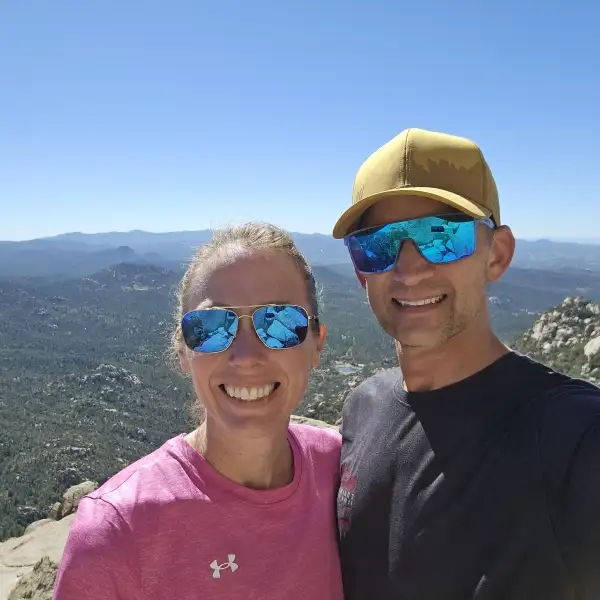
You’ll find something special waiting in Prescott’s high desert terrain that sets it apart from typical mountain biking destinations. With over 455 trails sprawling across elevations that reach nearly 8,000 feet, this Arizona gem offers everything from smooth beginner paths to heart-pounding technical challenges. Whether you’re just starting out or you’ve been shredding trails for years, there’s a specific combination of factors here that’ll transform how you think about desert riding.
What Makes Prescott Different: 455+ Trails and 7,900-Foot Elevations
When you roll into Prescott, you’re already starting at 5,300 feet—higher than most Arizona mountain bikers will climb all day. From there, you’ve got access to 455+ distinct trails that climb toward summits like Mount Union at 7,979 feet and Spruce Mountain at 7,695 feet. That elevation span isn’t just a number—it delivers cooler riding temps, thinner air for training adaptation, and sustained climbs through ponderosa pine instead of cactus.
The trail density is staggering: 160 miles of city open space, roughly 450 miles in Prescott National Forest, and concentrated hubs like Granite Dells and Spence Basin you can ride straight from town. Routes like the Prescott Circle Trail stack 6,000 feet of climbing into a single loop, while quick after-work rides still deliver 500–1,200 feet of vertical. The 57-mile circuit links 13 different trails in a bi-directional route that’s become a benchmark ride for the region.
Prescott’s Trail Network: 292 to 628 Miles of Riding
All that elevation and terrain variety sits on top of a jaw-dropping foundation: somewhere between 292 and 628 miles of trail, depending on whether you’re counting pure singletrack or the full mix of multi-use routes that crisscross the region. MTB Project maps 292 miles of dedicated mountain bike trails, while Trailforks tallies 628 miles when you include motorized and winter routes sharing the network.
At the heart of it all, you’ll find 422 MTB-specific trails delivering 603 miles of rideable distance with nearly 89,000 feet of total descent. The 54-mile Prescott Circle Trail acts as your backbone, connecting everything from Watson Lake to Thumb Butte. Compact zones like Spence Basin pack 41 miles into tight, flowy pods, while the Bean Peaks system adds gravity-fed descents right outside town. Trail popularity shows up in real-time heatmaps based on the last nine months of rider activity, helping you spot the most-ridden lines versus hidden gems that trend green on the map.
Trail Difficulty Guide: Easy, Intermediate, and Advanced
Prescott’s trail network breaks down into three clean difficulty tiers, but here’s what matters: the ratings work differently than resorts with groomed runs. Easy trails like Spence Basin’s 8.7-mile loop feature wide singletrack, grades under 6%, and minimal exposure—perfect for building confidence. Intermediate routes such as Salida Gulch throw in sustained 6–10% climbs, narrower tread, and rock gardens that demand sharper handling. Advanced trails crank grades past 10%, add serious exposure, and stack technical features that’ll test your line choice.
Here’s the catch: length and elevation multiply difficulty fast. The 57-mile Prescott Circle Trail logs 5,000+ feet of climbing, earning its intermediate/difficult tag purely through volume. The forest’s over 450 miles of non-motorized trails and singletrack spread across multiple mountain ranges, giving riders endless route combinations to match their skill level. Check MTB Project or Trailforks before you roll—segments often blend categories mid-ride.
Easy Trails for Beginners: Peavine and Doubletrack Routes
If you’re new to mountain biking, Peavine Trail hands you everything you need: 11–12 miles of smooth, wide doubletrack that follows an old railroad bed between Watson Lake and Iron King. You’ll gain just 500 feet over nearly six miles, with long flat sections that let you focus on handling rather than huffing uphill. The compact dirt and gravel surface rolls predictably under your tires, and the linear route means you won’t get lost at confusing junctions.
What really sells Peavine is the scenery—continuous views of Watson Lake and the Granite Dells’ signature rock formations keep you motivated. Park at the south trailhead off Prescott Lakes Parkway for $2–3, then enjoy wildlife sightings and two-way traffic that’s beginner-friendly and stress-free. If you want to skip the parking fee, head to the free access point at Hwy 89A at Side Road.
Technical Terrain: Rock Gardens, Drops, and Steep Climbs
Beyond the beginner-friendly doubletrack, Prescott’s mountain bike networks throw down some of the Southwest’s finest technical challenges—granite rock gardens that’ll test your line choice, stair-step climbs demanding precise weight shifts, and exposed slab sections where a half-inch mistake sends your front wheel skating sideways. Spence Basin’s 41-mile network packs in continuous rock obstacles on trails like John’s Tree, where you’ll ratchet through pedal-catchers and tight boulder fields. Granite Basin cranks up the difficulty with steep ledge climbs between 5,600–6,800 feet, forcing you to time unweighted front-wheel lifts while maintaining rear traction on off-camber granite. The Bean Peaks Gravity Flow Trails are expanding the system with 6.9 miles of roller-coaster-style terrain designed for all abilities, scheduled to open in phases through Fall 2025. The 57-mile Prescott Circle loop strings together all these zones, mixing long aerobic grinds with sudden rock gardens that demand modulated braking and instant line adjustments through decomposed-granite marbles.
Bean Peaks Gravity Flow: 10 Miles of Berms and Jumps
While technical rock gardens demand inch-perfect wheel placement and constant focus, Bean Peaks flips the script entirely—this network was purpose-built for speed, flow, and catching air. You’ll carve high, supportive berms that let you rail corners without braking, pump through rollers to generate momentum, and session tabletop jumps with predictable landings. The gravity flow design keeps you descending continuously, linking features into one seamless rhythm.
Phase 1 opened with 9.2 miles in spring 2024, and Phase 2 adds another 6.9 miles of bike-optimized singletrack. By spring 2026, the full build-out will deliver over 10 miles of mainly downhill riding—Arizona’s first dedicated gravity flow system. It’s beginner-to-advanced terrain where maintaining speed matters more than grinding climbs. The trails were designed by IMBA’s Trail Solutions Team , who completed the project layout in summer 2020 to ensure features accommodate riders of all abilities.
The Prescott Circle Trail: 57 Miles Around the City
The Prescott Circle Trail wraps an impressive 57 miles around the entire city, connecting 15 different trails into one epic loop that’ll take you through forests, granite formations, and open grasslands. You’ll tackle nearly 6,000 feet of elevation gain as you ride between 5,140 and 6,990 feet, passing landmarks like Thumb Butte, the Granite Dells, and three scenic lakes. Whether you’re planning a single-day challenge or breaking it into segments using the multiple trailheads, this intermediate-rated trail offers enough variety to keep your wheels spinning and your eyes glued to the scenery.
Route Overview and Terrain
Encircling Prescott like a natural crown, the Prescott Circle Trail offers mountain bikers a challenging 54-56 mile loop that showcases Arizona’s high country at its finest. You’ll navigate 15 interconnected trail segments through diverse terrain—from pine forests to chaparral and open grasslands—while climbing and descending between 5,140 and 6,990 feet elevation.
Expect roughly 5,500-6,000 feet of total elevation gain distributed across 25 miles of climbing. The route rewards your effort with spectacular views of Watson Lake, Granite Mountain’s 7,626-foot summit, and the distinctive Granite Dells formation.
You’ll find convenient access through 15 trailheads circling the city, some as close as three miles from downtown. While most sections flow smoothly, some eroded areas require hike-a-bike. Bring your GPS—the trail’s mostly signed but navigation aids help.
Elevation and Technical Segments
Prepare yourself for a workout—this 56-mile loop packs nearly 6,000 feet of climbing across its circuit around Prescott. You’ll encounter constant elevation changes between 5,140 and 6,690 feet, with the highest ridges near Mount Francis topping out around 6,700 feet. The climbing isn’t one long grind—instead, expect frequent punchy ascents that’ll test your anaerobic capacity.
Technical challenges vary dramatically by sector:
- Granite Dells: Navigate tight turns through boulder mazes with rock ledges and narrow bench-cut sections
- Lakeside trails: Handle exposed sidehill terrain and abrupt grade changes near Watson and Willow Lakes
- Forest segments: Tackle embedded rocks, loose chunks, and rooty corners in pine-covered zones
- Southern connections: Master loose-over-hardpack descents with off-camber turns
Surface conditions shift constantly—decomposed granite, sand pockets, and bedrock slabs demand quick adaptation.
Planning Your Loop Ride
Whether you tackle it in one epic push or savor it across multiple days, the Prescott Circle Trail delivers 54–56 miles of varied terrain looping around Arizona’s mile-high city. Strong riders can knock out the full loop in 6–8 hours of saddle time, but you’ll enjoy it more by splitting the route into 2–3 days using the three designated campsites. Fifteen trailheads scattered around the loop let you start anywhere and bail if needed. You’re never far from town—the closest point sits just three miles from downtown services. Bring a GPS; signage exists but isn’t foolproof. With nearly 6,000 feet of climbing and intermediate-to-hard ratings, proper pacing and water planning make all the difference.
Signature Singletrack: Homestead, Ranch Trail, and Goldwater Lakes
Beyond the Prescott Circle Trail’s wraparound tour, you’ll find three signature singletracks that showcase the region’s best riding qualities in concentrated doses. Homestead Trail #305 flows smoothly through thick pines, Ranch Trail #62 challenges you with sustained climbs rewarded by big views, and Goldwater Lakes Trail #396 strings together scenic variety around shimmering lakeshores. Each trail delivers distinct technical features and terrain that’ll test your skills while keeping you grinning through Prescott’s forested backcountry.
Homestead Trail Technical Features
Homestead Trail #305 earns its reputation as a challenging mountain bike route by mixing smooth, fast-rolling tread with intermittent rock gardens, embedded ledges, and technical chutes that’ll test your line choice and bike handling. You’ll navigate finely split vertical slate that forms narrow rock ribbons with sharp edges, requiring precise wheel placement and careful pedal clearance. The lower five miles roll gently upward with manageable features, but the upper two miles steepen considerably.
Key technical challenges include:
- Embedded rocks and roots on climbs that stop momentum and demand strong low-speed balance
- Natural rock roll-downs and step-ups appearing more frequently in steeper sections
- Loose decomposed granite around outcrops that increases braking distance and front-wheel washout risk
- Rocky chutes and tight turns near trail junctions with Ranch and Goldwater routes
Ranch Trail Climbing Challenges
Ranch Trail #62 will test your climbing legs more than any other route in Prescott’s singletrack network. You’ll grind through nearly 1,900 feet of elevation gain over 15 miles, with seven sustained miles of uphill that peak around 6,666 feet. The terrain dishes out punchy ramps hitting 39.7% grade on loose decomposed granite—expect rear-wheel spin on steeper pitches. Manzanita and scrub oak hem you into narrow bench-cuts along exposed sidehills, where off-camber sections demand precise weight shifts and traction management. Starting above 6,000 feet taxes your cardiovascular system, especially during heat-soaked summer efforts. The out-and-back format means you’ll face a mirrored return climb, so budget your energy carefully. This “climber’s delight” rewards endurance and technical pedaling under sustained load.
Goldwater Lakes Scenic Variety
Just south of Prescott, the Goldwater Lakes trail network delivers everything Ranch Trail #62 doesn’t—flowing singletrack through shaded ponderosa corridors, manageable 4% grades, and scenery that shifts from lakeside granite outcrops to forested rollers. You’ll find 13+ miles of stacked loops connecting Upper and Lower Goldwater Lakes at 6,000 feet, where cooler temps and consistent tree cover make summer sessions tolerable.
The terrain’s intermediate-friendly character centers on rhythm over raw technical demand:
- Packed decomposed granite and pine duff replace sustained rock slabs
- Long, steady climbs favor aerobic fitness instead of bike-handling prowess
- Frequent lake views punctuate shaded segments lined with oak and granite boulders
- Homestead connector ties Goldwater trails into broader Acker Park and Thumb Butte networks
Early turnaround points let you customize mileage without sacrificing trail quality.
Prescott’s Riding Season: Year-Round Mountain Biking Conditions
Unlike Arizona’s sweltering low-desert metros, Prescott’s 5,300–5,700-foot elevation delivers a mild four-season climate that keeps trails rideable year-round. Spring, summer, and fall offer superb conditions on marquee routes like the Prescott Circle Trail, with cool mornings and comfortable afternoons perfect for big rides. Winter highs often stay above freezing, opening regular dry-trail windows between storms.
Summer’s heat is manageable if you ride early or target north-facing slopes in the national forest’s cooler microclimates. July and August bring monsoon thunderstorms—plan morning sessions to dodge afternoon lightning. Fall delivers peak conditions: stable weather, autumn colors, and fast granite surfaces. Spring showcases wildflowers while lingering moisture improves traction. With nearly 950 miles across varied elevations, you’ll always find seasonal options.
E-Bikes on Prescott Trails: Where They’re Allowed
Prescott’s trails welcome riders on traditional mountain bikes and e-bikes, but where you can ride electric depends entirely on land ownership. You’ll find Class 1 e-bikes permitted throughout the City of Prescott’s trail system, where they’re classified as bicycles under Arizona law. However, Prescott National Forest prohibits all e-bike classes on nonmotorized trails, treating them as motorized vehicles instead.
Key differences between jurisdictions:
- City trails allow Class 1 e-bikes with pedal-assist up to 20 mph
- National Forest restricts e-bikes to motorized vehicle routes only
- Forest Service rules apply regardless of e-bike class
- Authorized recreational routes exist outside forest boundaries
You’ll find a detailed map of legal e-bike routes at the Forest Service website, helping you plan rides in permitted areas while respecting National Forest regulations.
Trail Etiquette: Riding With Horses and Hikers
You’ll share Prescott’s trails with hikers and equestrians, so knowing how to yield properly keeps everyone safe and happy. The golden rule is simple: bikes yield to hikers, and everyone yields to horses. Clear communication—a friendly “bike back!” or a bell ring—prevents startled encounters and makes passing smooth for all trail users.
Yielding to Other Users
Because Prescott’s trail systems welcome hikers, equestrians, and mountain bikers onto the same singletrack, mastering the yield hierarchy isn’t optional—it’s essential for keeping everyone safe and the trails open.
Always yield bikes to hikers and horses. When you spot other users ahead, slow down early and find a stable pull-off. For horses, stop on the uphill side with your front wheel pointed away—never below them where you’ll look like a predator. Give hikers plenty of room, especially on climbs where restarting is tough.
Key yielding principles:
- Match speed to sightlines—blind corners demand caution
- Avoid skids and sudden movements near horses
- Pull completely off the trail when terrain allows
- Pass in small groups, not one long train
You’re responsible for yielding even when others wave you through.
Communication on Shared Trails
When trail traffic picks up and sightlines shrink, your voice becomes your most valuable safety tool. Call out “rider up” or “on your left” several seconds before passing—giving hikers and equestrians time to react calmly. A handlebar bell works wonders at blind corners and busy trailheads, especially when paired with a friendly greeting.
Around horses, slow to nearly a stop and ask the rider where they’d like you to pass. Position yourself on the downhill side and wait for their go-ahead. Avoid sudden movements or loud braking.
Reduce speed when sightlines narrow, leave plenty of lateral space, and anticipate choke points like switchbacks. Stopping fully when needed shows respect and prevents misunderstandings. Keep your tone calm—it makes every encounter safer.
Best Trail Apps and Maps for Prescott
For offline adventures, these platforms shine:
- Avenza Maps hosts the official Prescott Mountain Bike Trails PDF with full GPS positioning
- City of Prescott provides Circle Trail maps with parking and access points
- Both apps offer downloadable content for signal-dead zones
- Track recording and waypoint marking work seamlessly on saved maps
You’ll navigate confidently whether tackling quick loops or multi-day epics.
Conclusion
You’ve got everything you need to tackle Prescott’s incredible trail system! With hundreds of miles to explore, terrain for every skill level, and year-round riding conditions, there’s no better time to grab your bike and hit the dirt. Download those trail apps, brush up on your etiquette, and get ready for some unforgettable rides. Whether you’re cruising easy doubletrack or conquering technical rock gardens, Prescott’s waiting for you. Let’s ride!