Fishlake National Forest
Richfield, Utah · Southwest
Why a mountain lake steadies you
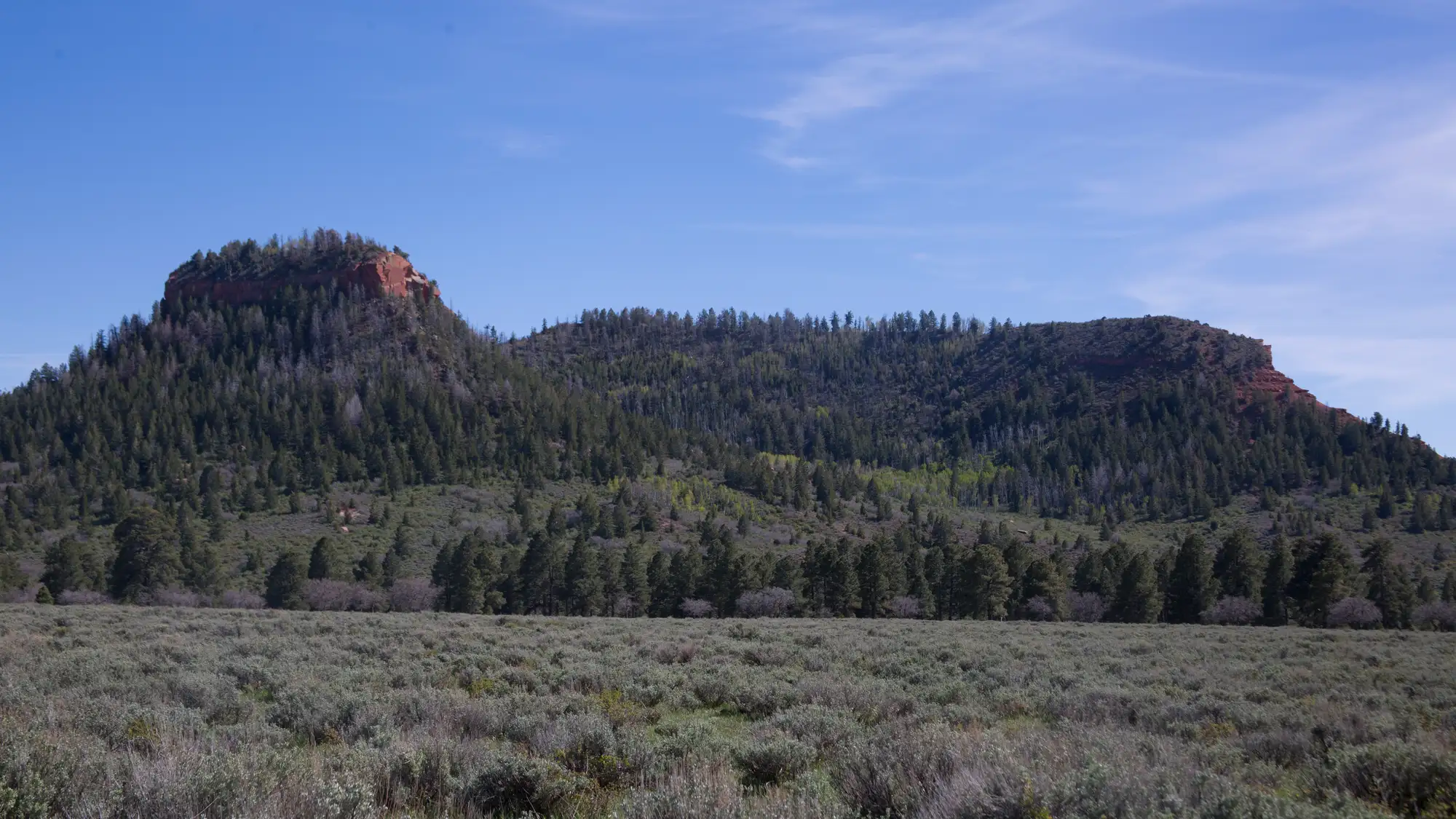
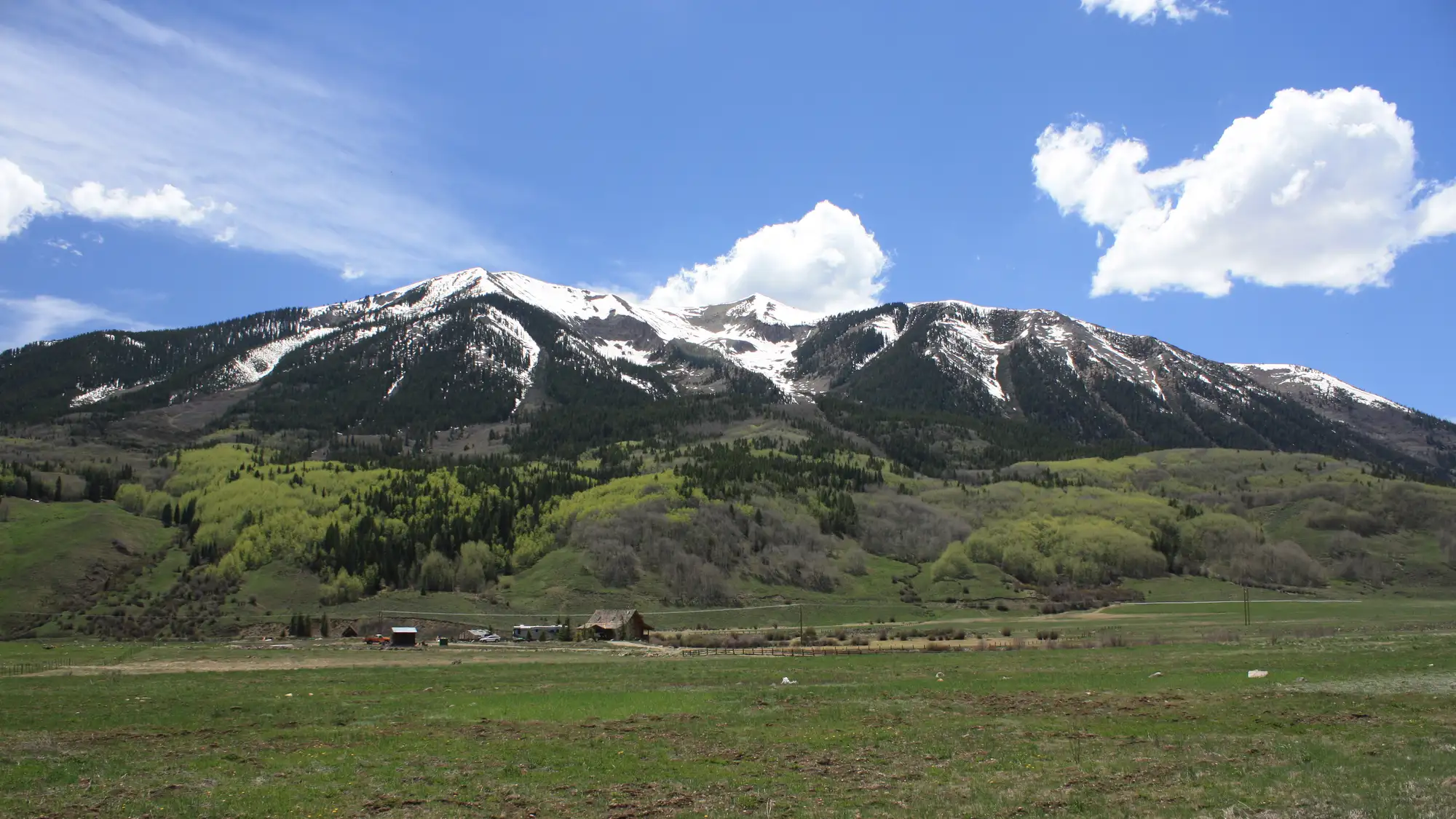
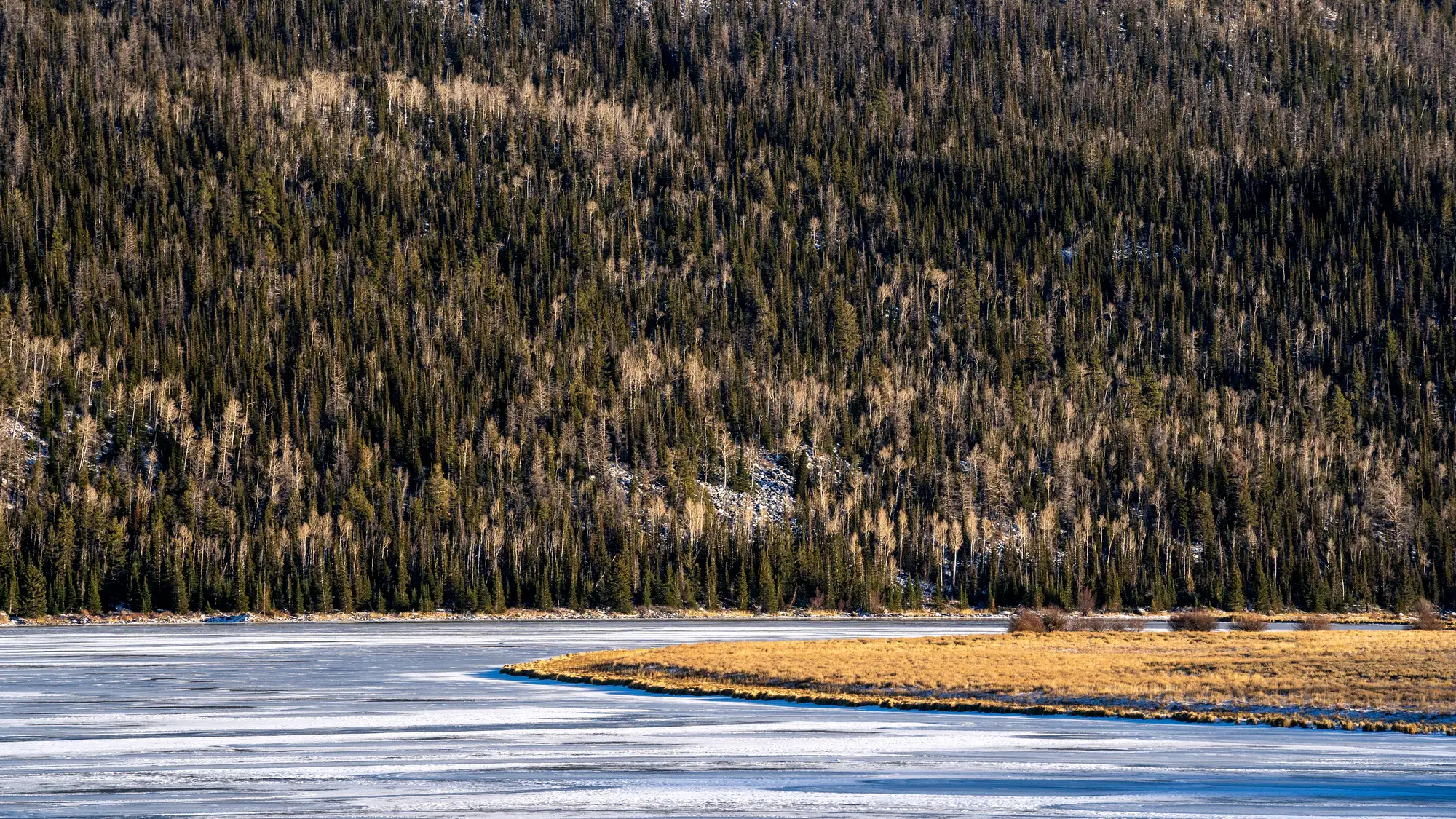
Fishlake covers about 1.8 million acres of central Utah, and it climbs a long way, from roughly 6,380 feet up to 12,174 at Delano Peak in the Tushar Mountains. The signature is aspen: whole hillsides of pale trunks and shimmering leaves, broken by open meadows and forested slopes. At the center sits Fish Lake, Utah's largest natural mountain lake.
A big alpine lake does something specific to a tired mind. Water gives your attention an easy place to rest, and the shoreline here comes without the crush you would meet at a marquee national park. You can sit at the edge of Fish Lake, fish it, or paddle it, and let the day drop off.
The forest rewards going small, too. The Forest Service points to quieter side trails away from the headline spots, and the high country holds meadows and aspen stands where you may not pass another person for hours. That kind of quiet is the point.
The science: White and colleagues, in a 2021 review of population-level research, found that contact with and living near 'blue space,' including rivers and lakes and not only the coast, is linked to better mental health and wellbeing. Fishlake is built around exactly that kind of water: Fish Lake is the largest natural mountain lake in Utah, and the forest is dotted with reservoirs and creeks. You do not have to earn a summit to get near it.
White, Elliott, Gascon, Roberts & Fleming (2021) · Environmental Research
Seasonal guide
Temperatures are NOAA climate normals from KOOSHAREM at 6,930 ft. A national forest spans a wide elevation range, so the high country runs cooler and holds snow later than the valleys. The season notes below tell you how to work each one.
Winter is cold and snowy, with the Koosharem station near 6,930 feet averaging highs in the upper 30s to low 40s Fahrenheit and lows near 10. Several higher roads and some campgrounds close for the season, and the high country runs far colder and stays buried in snow. Make it work by treating it as a snowmobile season, which the forest supports from December to March, and by planning around the closures.
Spring warms slowly, with valley highs climbing from the low 50s in March to the upper 60s by May and nights still near or below freezing. Several roads stay closed until May 15, and Kents Lake Road until July 15, so access is limited and snowmelt can make routes muddy. Aim for lower elevations early and expect the high country to open only late in the window.
Summer is the prime season, with valley highs in the low 80s and cool nights in the 40s, and even milder air up in the Tushars and around Fish Lake. Fire restrictions commonly begin in late June, and a monsoon flash-flood window runs July 1 to September 30, so check alerts and avoid drainages during storms. This is when campgrounds and the lake are fully open, so reserve ahead.
Fall brings crisp air and the aspen color the forest is known for, with September highs in the 70s dropping to the low 50s by November and cold nights. Many campgrounds close by mid-September or October, and early snow can arrive up high. Go for the color early in the window and carry layers, since the high meadows chill fast.
This month in the forest
Timing changes everything out here. Pick a month to see when the light turns golden, which nights stay darkest for stargazing, and what visitors have actually recorded in bloom and on the move. The new-moon night is the one to plan a sky-watching evening around.
January 2027
Wildlife on the move · 5 species on record
- Ferruginous Hawk 4 sightings
- Northern Flicker 2 sightings
- American Dipper 1 sightings
- Common Raven 1 sightings
- Wapiti 1 sightings
February 2027
Wildlife on the move · 26 species on record
- American Goldfinch 5 sightings
- Western Meadowlark 4 sightings
- House Finch 4 sightings
- Red-winged Blackbird 3 sightings
- European Starling 3 sightings
March 2027
In bloom · 5 species on record
- ❀ Wax currant 2 sightings
- ❀ Rubber Rabbitbrush 1 sightings
- ❀ Gray's lomatium 1 sightings
- ❀ Mountain Ball Cactus 1 sightings
- ❀ Woolly Locoweed 1 sightings
Wildlife on the move · 34 species on record
- American Goldfinch 5 sightings
- Turkey Vulture 4 sightings
- Bald Eagle 3 sightings
- Pinyon Jay 3 sightings
- House Finch 3 sightings
April 2027
In bloom · 23 species on record
- ❀ Roundleaf buffaloberry 3 sightings
- ❀ Creeping mahonia 3 sightings
- ❀ Redstem Stork's-bill 2 sightings
- ❀ Glacier Lily 2 sightings
- ❀ Utah Serviceberry 2 sightings
Wildlife on the move · 78 species on record
- Turkey Vulture 10 sightings
- Common Sagebrush Lizard 6 sightings
- House Finch 6 sightings
- Mountain Bluebird 5 sightings
- Lesser Goldfinch 5 sightings
May 2027
In bloom · 30 species on record
- ❀ Mountain Ball Cactus 4 sightings
- ❀ Greenleaf manzanita 3 sightings
- ❀ Scarlet Gilia 2 sightings
- ❀ Early Cinquefoil 2 sightings
- ❀ Hound's-tongue 1 sightings
Wildlife on the move · 195 species on record
- Common Sagebrush Lizard 55 sightings
- Western Rattlesnake 32 sightings
- Plateau Fence Lizard 22 sightings
- Arizona Mountain Kingsnake 19 sightings
- North American Racer 16 sightings
June 2027
In bloom · 45 species on record
- ❀ Sego Lily 7 sightings
- ❀ Scarlet Gilia 4 sightings
- ❀ Humboldt Mountains milkweed 3 sightings
- ❀ Heartleaf bittercress 3 sightings
- ❀ Blue columbine 3 sightings
Wildlife on the move · 252 species on record
- Common Sagebrush Lizard 99 sightings
- Plateau Fence Lizard 45 sightings
- Western Rattlesnake 30 sightings
- Western Terrestrial Garter Snake 17 sightings
- Western Tiger Swallowtail 16 sightings
July 2026
In bloom · 50 species on record
- ❀ Sego Lily 8 sightings
- ❀ Blue columbine 8 sightings
- ❀ Common yarrow 5 sightings
- ❀ American bistort 5 sightings
- ❀ Roundleaf Snowberry 5 sightings
Wildlife on the move · 218 species on record
- Rocky Mountain Cutthroat Trout 76 sightings
- Common Sagebrush Lizard 68 sightings
- Plateau Fence Lizard 30 sightings
- Western Rattlesnake 24 sightings
- Mule Deer 12 sightings
August 2026
In bloom · 14 species on record
- ❀ Common yarrow 2 sightings
- ❀ Silvery lupine 2 sightings
- ❀ Showy goldeneye 2 sightings
- ❀ Spineless Horsebrush 2 sightings
- ❀ Rocky Mountain Beeplant 2 sightings
Wildlife on the move · 191 species on record
- Mule Deer 13 sightings
- Western Terrestrial Garter Snake 12 sightings
- European Mantis 10 sightings
- Bold Jumping Spider 7 sightings
- Uinta Ground Squirrel 7 sightings
September 2026
In bloom · 27 species on record
- ❀ Scarlet Gilia 4 sightings
- ❀ Silvery lupine 3 sightings
- ❀ Showy goldeneye 3 sightings
- ❀ Rocky Mountain Beeplant 3 sightings
- ❀ Wyoming Paintbrush 2 sightings
Wildlife on the move · 117 species on record
- Common Sagebrush Lizard 29 sightings
- Plateau Fence Lizard 17 sightings
- Western Rattlesnake 10 sightings
- Western Terrestrial Garter Snake 8 sightings
- Bold Jumping Spider 8 sightings
October 2026
In bloom · 4 species on record
- ❀ Common dandelion 1 sightings
- ❀ Rubber Rabbitbrush 1 sightings
- ❀ Cut-Leaved Ragwort 1 sightings
- ❀ Rocky Mountain Beeplant 1 sightings
Wildlife on the move · 58 species on record
- Sockeye Salmon 10 sightings
- Plateau Fence Lizard 9 sightings
- Mule Deer 4 sightings
- Wild Turkey 3 sightings
- Lewis's Woodpecker 3 sightings
November 2026
Wildlife on the move · 27 species on record
- Mule Deer 9 sightings
- Red-tailed Hawk 5 sightings
- Ferruginous Hawk 4 sightings
- Bighorn Sheep 3 sightings
- Sockeye Salmon 3 sightings
December 2026
Wildlife on the move · 22 species on record
- Mule Deer 8 sightings
- Red-tailed Hawk 7 sightings
- Ferruginous Hawk 4 sightings
- Wild Turkey 2 sightings
- Eurasian Collared-Dove 2 sightings
Sun and moon times are computed for the forest's coordinates from standard NOAA solar equations and cross-checked against the U.S. Naval Observatory. Species lists are research-grade community observations for Fishlake National Forest, UT, US via iNaturalist, retrieved July 2026; sighting counts are all-time records for that calendar month.
Don’t wait for Fishlake National Forest.
One big trip a year isn’t what changes how you feel — the small stuff in between is. The 7-Day Nature Reset is one tiny outdoor practice a day, wherever you already are. Day one takes 60 seconds.
No spam. No noise. Just nature.
Day 1 is landing in your inbox right now — go say hi.
Sleep nearby
Places to stay around Richfield, Utah. Pan the map to trade a shorter drive for a quieter night.
Camping inside the park books through Recreation.gov and is listed separately.
The map is provided by Stay22. If you book through it we may earn a commission at no cost to you, which helps keep Happier Outdoors running. It never changes what we recommend.
From the field


Common questions
When is the best time to visit Fishlake National Forest?
The warmest, most accessible stretch runs from about late May through September, once winter road closures lift. The Koosharem station near 6,930 feet averages summer highs in the low 80s Fahrenheit, but the forest climbs past 12,000 feet, so the high country stays cooler and holds snow much later. Note that several roads are closed January 1 to May 15, and Kents Lake Road until July 15.
Is Fishlake National Forest dog-friendly?
Yes, dogs are welcome in Fishlake's campgrounds and day-use areas, but they must be leashed at all times. The recreation pages list no forest-wide pet ban; the site-specific rules mainly concern horses and pack animals, not dogs.
What are the quieter trails in Fishlake National Forest?
For solitude, the Forest Service points to smaller side trails rather than the well-known Bullion Falls, Fish Lake Loop, or Paiute ATV corridors. Middle Ranger Trail near Sunglow Campground is described as very peaceful with few visitors, along with Neal's Flat, Seven Bull, Little Creek, and side trails to Upper Box Creek Reservoir.
Do you need a pass or permit for Fishlake National Forest?
Fishlake has no special regional day-use pass, and it honors America the Beautiful and Interagency passes for standard amenity fees. Fees are site-specific and posted at each kiosk or on Recreation.gov, and some campgrounds do not accept those passes and charge posted rates instead. Separate permits apply for things like firewood, Christmas trees, group gatherings of 75 or more, and OHV use.
Can you camp in Fishlake National Forest?
Yes. The forest lists 29 developed campgrounds and nine dispersed areas, with 442 reservable sites on Recreation.gov across places like Mackinaw, Paiute, Bowery Creek, and Doctor Creek. Example fees run roughly $12 to $24 a night, and a 16-day stay limit applies before you must move at least 5 road miles to camp again.
Is dispersed camping allowed and is it free?
Yes, dispersed camping is free primitive camping outside developed campgrounds, with no services, and usually no tables or fire pits, though some popular areas have toilets. The same 16-day stay limit applies, after which you must relocate at least 5 road miles away.
Similar forests worth the trip
Matched by the kind of quiet and the reset they offer.