Yosemite National Park
Yosemite National Park, California · West
Where tired attention comes back
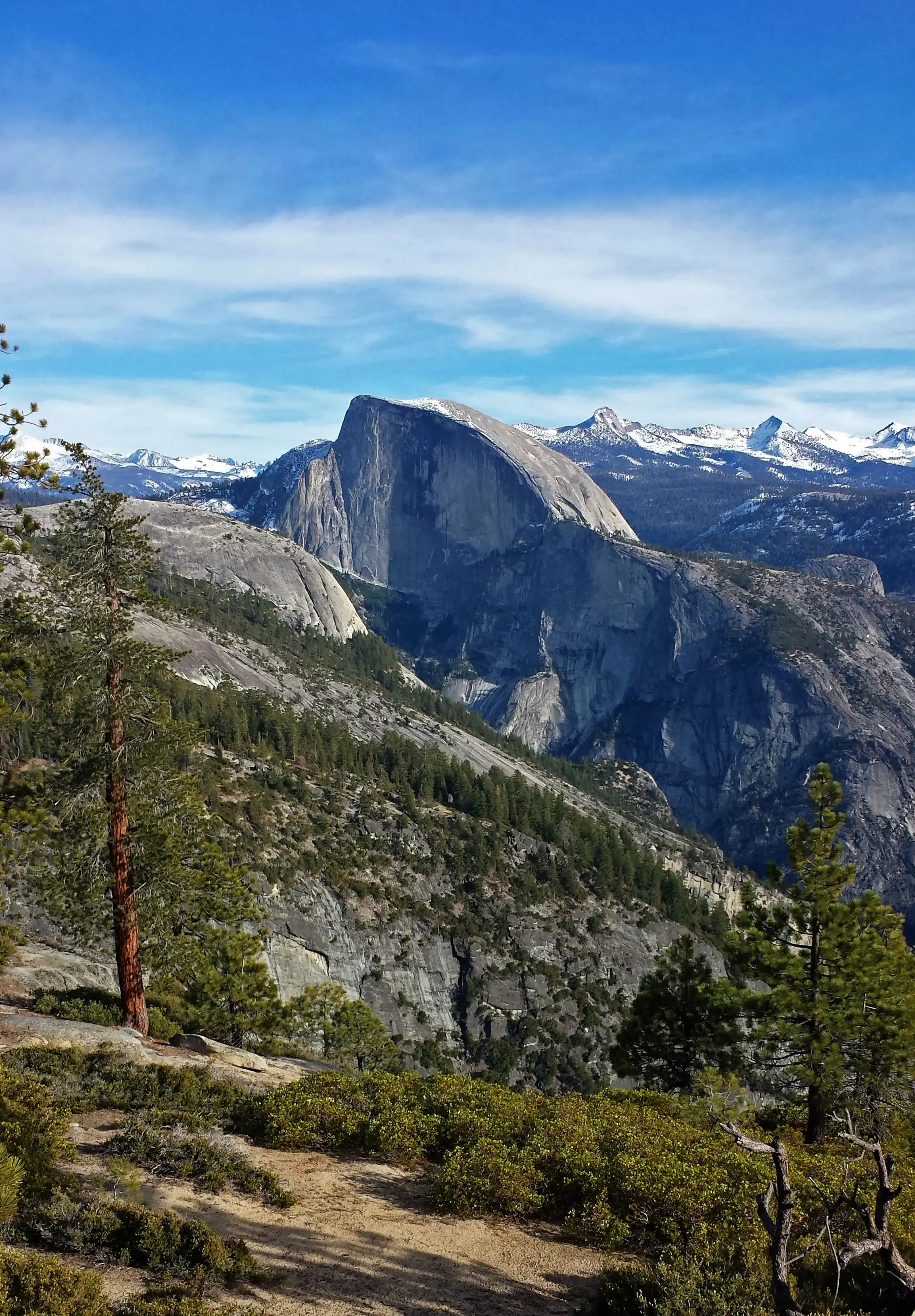
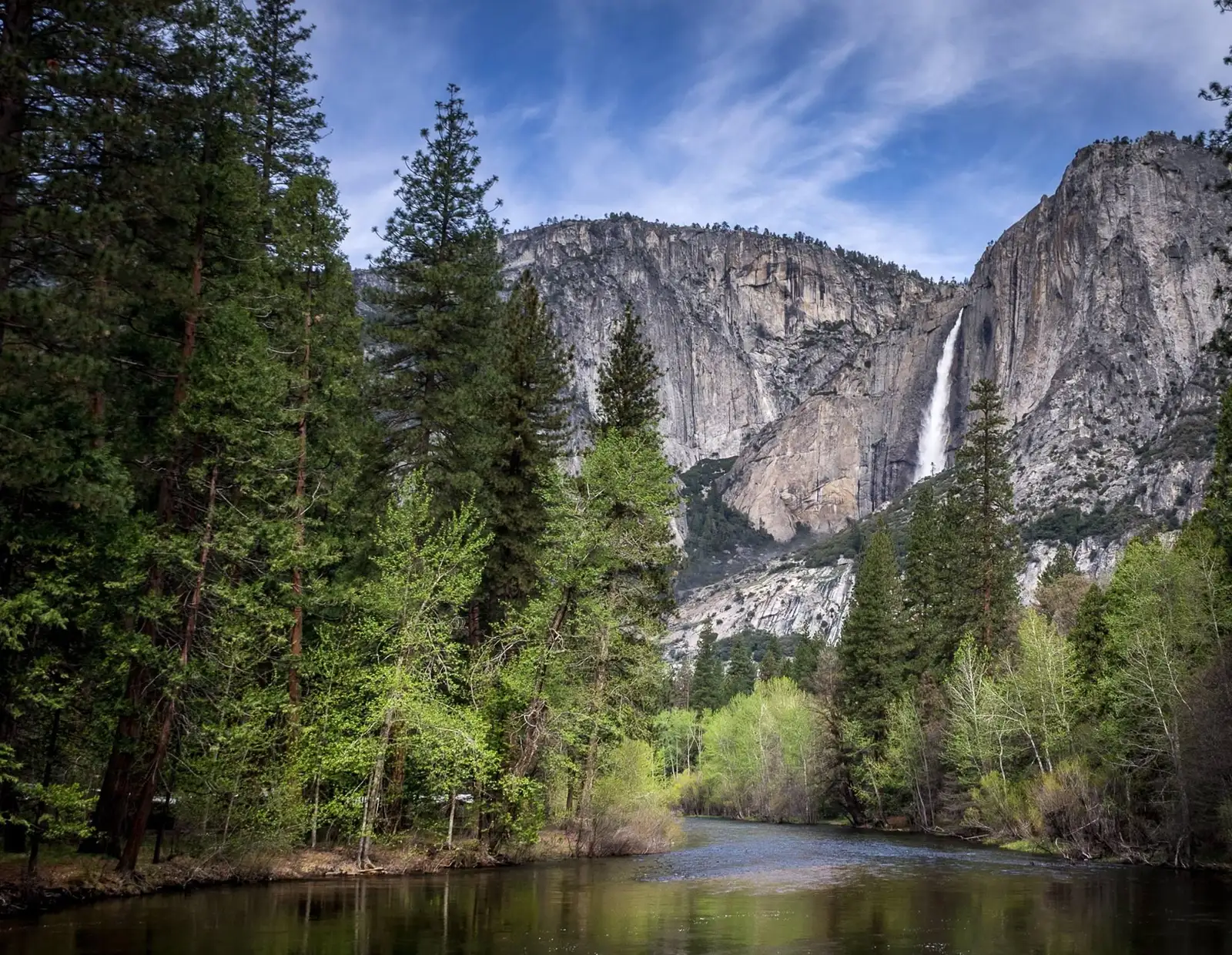
Yosemite gives your eyes somewhere to go without asking anything of them. Waterfalls drop off granite in long white threads, the walls of the valley climb thousands of feet, and meadows open flat and green at their base. You look, and then you keep looking, and none of it takes effort. That easy pull is the whole point.
Focus is a limited resource. A day of screens, decisions, and noise drains the mental muscle you use to concentrate, and it does not refill just because you stopped working. What refills it is a place full of things worth noticing that do not demand a response. Yosemite is dense with exactly that: light moving across El Capitan, the sound of a river, a sequoia that was already old when your grandparents were born.
The park spreads across nearly 1,200 square miles, from the valley floor near 2,000 feet up into the High Sierra above 13,000. That range means the same reset is available whether you have an hour by a paved meadow trail or a week in the backcountry. The scenery does the work; you just have to be in front of it.
The science: The psychologist Stephen Kaplan argued that natural settings restore directed attention, the focused mental resource that daily concentration wears down. His attention restoration theory holds that places full of gentle, effortless interest let that worn resource recover in a way a busy environment cannot.
Kaplan (1995) · Journal of Environmental Psychology
Seasonal guide
Crowd levels use NPS monthly visitation, averaged 2015–2025. Excludes 2020 (COVID anomaly) and 2026 (partial year). Temperatures are NOAA climate normals from a station 7 miles away. Busy does not mean bad. If a peak month is your only window, the season notes below tell you how to work it.
This is the calmest stretch, with January highs near 47F and lows around 28F, and snow covering most of the park from November onward. Tioga Pass is closed and chains may be required, but the valley stays open year-round and the waterfalls run icy and dramatic. Come prepared for cold and snow, check road conditions before you drive, and you get Yosemite at its emptiest.
Spring is prime waterfall season as snowmelt swells the falls, with highs climbing from the upper 50s in March to about 70F by May. March and April stay relatively quiet, though May starts to fill up. High-country roads like Tioga Pass usually remain closed into late spring, so focus on the valley and lower elevations and enjoy the water at full force.
July and August are the busiest months of the year, with valley highs near 89F and parking lots often full by 8 a.m. Waterfalls fed by snowmelt fade as the season dries out, but the high country and Tioga Road open up. Start at dawn, use the free shuttle, and head to Tuolumne Meadows or other areas beyond the valley to trade crowds for space.
Early fall stays busy while temperatures ease from the low 80s in September toward the mid 50s by November, when crowds thin out noticeably. Waterfalls are at their lowest and high-country roads begin closing with the first snows. September and October are a good balance of open access and cooler air, and November rewards those who don't mind early cold with real quiet.
This month in the park
Timing changes everything out here. Pick a month to see when the light turns golden, which nights stay darkest for stargazing, and what visitors have actually recorded in bloom and on the move. The new-moon night is the one to plan a sky-watching evening around.
January 2027
In bloom · 5 species on record
- ❀ California bay 3 sightings
- ❀ Woodland pinedrops 1 sightings
- ❀ Wedgeleaf Goldenbush 1 sightings
- ❀ Tanoak 1 sightings
- ❀ Pacific Dogwood 1 sightings
Wildlife on the move · 75 species on record
- Common Raven 49 sightings
- Coyote 34 sightings
- Western Gray Squirrel 22 sightings
- Steller's Jay 20 sightings
- Mule Deer 17 sightings
February 2027
In bloom · 4 species on record
- ❀ Whiteleaf Manzanita 4 sightings
- ❀ Greenleaf manzanita 4 sightings
- ❀ California bay 1 sightings
- ❀ Sierra Gooseberry 1 sightings
Wildlife on the move · 107 species on record
- Common Raven 77 sightings
- Steller's Jay 35 sightings
- Western Gray Squirrel 26 sightings
- Mule Deer 25 sightings
- Coyote 17 sightings
March 2027
In bloom · 14 species on record
- ❀ Whiteleaf Manzanita 9 sightings
- ❀ Greenleaf manzanita 8 sightings
- ❀ Snowplant 6 sightings
- ❀ Sierra Gooseberry 4 sightings
- ❀ Blue dicks 2 sightings
Wildlife on the move · 158 species on record
- Steller's Jay 115 sightings
- Common Raven 76 sightings
- American Robin 66 sightings
- Mule Deer 51 sightings
- California Ground Squirrel 49 sightings
April 2027
In bloom · 40 species on record
- ❀ Whiteleaf Manzanita 33 sightings
- ❀ Pacific Dogwood 24 sightings
- ❀ Cut-leaved monkeyflower 15 sightings
- ❀ Snowplant 13 sightings
- ❀ Greenleaf manzanita 11 sightings
Wildlife on the move · 231 species on record
- Steller's Jay 270 sightings
- California Ground Squirrel 159 sightings
- Mule Deer 114 sightings
- American Robin 110 sightings
- Common Raven 94 sightings
May 2027
In bloom · 175 species on record
- ❀ Pacific Dogwood 74 sightings
- ❀ Snowplant 52 sightings
- ❀ Leichtlin's Mariposa Lily 33 sightings
- ❀ Prettyface 29 sightings
- ❀ Whiteleaf Manzanita 29 sightings
Wildlife on the move · 421 species on record
- Steller's Jay 333 sightings
- California Ground Squirrel 301 sightings
- Mule Deer 220 sightings
- Western Fence Lizard 194 sightings
- American Robin 125 sightings
June 2027
In bloom · 235 species on record
- ❀ Leichtlin's Mariposa Lily 124 sightings
- ❀ Showy milkweed 74 sightings
- ❀ Prettyface 65 sightings
- ❀ Western columbine 52 sightings
- ❀ Snowplant 43 sightings
Wildlife on the move · 596 species on record
- Mule Deer 379 sightings
- Steller's Jay 377 sightings
- California Ground Squirrel 359 sightings
- Yellow-bellied Marmot 257 sightings
- Western Fence Lizard 211 sightings
July 2026
In bloom · 266 species on record
- ❀ Leichtlin's Mariposa Lily 299 sightings
- ❀ Sierra Tiger Lily 85 sightings
- ❀ Showy milkweed 69 sightings
- ❀ Western columbine 61 sightings
- ❀ Mountain Pride 47 sightings
Wildlife on the move · 632 species on record
- Steller's Jay 393 sightings
- Mule Deer 374 sightings
- California Ground Squirrel 334 sightings
- Yellow-bellied Marmot 307 sightings
- Shasta Blue 178 sightings
August 2026
In bloom · 153 species on record
- ❀ Leichtlin's Mariposa Lily 108 sightings
- ❀ California fuchsia 40 sightings
- ❀ Primrose monkeyflower 29 sightings
- ❀ Marsh grass-of-Parnassus 22 sightings
- ❀ Sierra Tiger Lily 21 sightings
Wildlife on the move · 458 species on record
- California Ground Squirrel 342 sightings
- Mule Deer 265 sightings
- Steller's Jay 256 sightings
- Pacific chorus frog 152 sightings
- Common Golden-mantled Ground Squirrel 131 sightings
September 2026
In bloom · 96 species on record
- ❀ California fuchsia 74 sightings
- ❀ Sierra lessingia 44 sightings
- ❀ Mountain Pride 25 sightings
- ❀ Leichtlin's Mariposa Lily 18 sightings
- ❀ Anderson's thistle 17 sightings
Wildlife on the move · 341 species on record
- California Ground Squirrel 254 sightings
- Mule Deer 230 sightings
- Steller's Jay 180 sightings
- Western Fence Lizard 126 sightings
- Common Golden-mantled Ground Squirrel 116 sightings
October 2026
In bloom · 36 species on record
- ❀ California fuchsia 31 sightings
- ❀ Sierra lessingia 15 sightings
- ❀ Naked Buckwheat 5 sightings
- ❀ Bull Thistle 4 sightings
- ❀ Pearly everlasting 3 sightings
Wildlife on the move · 278 species on record
- California Ground Squirrel 183 sightings
- Mule Deer 166 sightings
- Steller's Jay 131 sightings
- Common Raven 100 sightings
- American Black Bear 81 sightings
November 2026
In bloom · 14 species on record
- ❀ California fuchsia 4 sightings
- ❀ Bull Thistle 2 sightings
- ❀ Sierra lessingia 2 sightings
- ❀ Mountain Misery 1 sightings
- ❀ California Aster 1 sightings
Wildlife on the move · 140 species on record
- Mule Deer 100 sightings
- Common Raven 80 sightings
- California Ground Squirrel 62 sightings
- Steller's Jay 44 sightings
- Western Gray Squirrel 40 sightings
December 2026
Wildlife on the move · 86 species on record
- Common Raven 70 sightings
- Mule Deer 55 sightings
- Coyote 31 sightings
- Steller's Jay 25 sightings
- Western Gray Squirrel 18 sightings
Sun and moon times are computed for the park's coordinates from standard NOAA solar equations and cross-checked against the U.S. Naval Observatory. Species lists are research-grade community observations for Yosemite National Park, US, CA via iNaturalist, retrieved July 2026; sighting counts are all-time records for that calendar month.
Don’t wait for Yosemite.
One big trip a year isn’t what changes how you feel — the small stuff in between is. The 7-Day Nature Reset is one tiny outdoor practice a day, wherever you already are. Day one takes 60 seconds.
No spam. No noise. Just nature.
Day 1 is landing in your inbox right now — go say hi.
Sleep nearby
Most visitors base in Mariposa, California, about 45 miles out. Mariposa has far more hotel rooms, better prices, and a wider selection of dining and amenities. El Portal sits just 3 miles from the Arch Rock Entrance but offers fewer lodging options than Mariposa. The map opens on Mariposa, so pan toward the park to trade rooms and price for a shorter morning drive.
Camping inside the park books through Recreation.gov and is listed separately.
The map is provided by Stay22. If you book through it we may earn a commission at no cost to you, which helps keep Happier Outdoors running. It never changes what we recommend.
Let someone else lead
A guide is worth it when the terrain needs one, or when you would rather look around than navigate. These are the highest-rated trips running around Yosemite, not the cheapest.
 Free cancellation
 Yosemite Valley Private Hiking Tour
- Runs Apr–Nov
- Private tour, up to 10
- Service animals welcome
 Free cancellation
 Yosemite Valley & Glacier Point Adaptive Tour
- Runs Jun–Oct
- Private tour, up to 9
- Wheelchair accessible

5-Day Cathedral Lakes to Clouds Rest & Half Dome
- Runs year-round
- Up to 6 per booking
- Service animals welcome
 Free cancellation
 One Day In Yosemite Private Tour:Yosemite Valley, Glacier Point & Giant Sequoias
- Runs May–Oct
- Private tour, up to 9
- Service animals welcome
Tours are listed by Viator; booking happens there. If you book we may earn a commission at no cost to you, which helps keep Happier Outdoors running. It never changes what we list. Prices checked September 2026 and can change.
Trails & hiking
Over 750 miles of trail. The three below run from a flat valley-floor loop to a classic strenuous climb.
Activities & experiences
Beyond the trails
Yosemite holds more than 400 species of vertebrates: fish, amphibians, reptiles, birds, and mammals. That diversity comes from habitats that stay largely intact, from thick foothill chaparral to conifer forests to open alpine rock. Each animal has a place here.
Every road here has something to look at, but Tioga Road is the famous one. It runs 46 miles (62 km) from Crane Flat to Tioga Pass, typically open from late May or early June through sometime in November.
A bike lets you cover more ground in the same amount of time. Bring your own, rent one, or borrow through the bike share program with its 2-hour limit; hand-crank and tandem bikes are available to rent too. Yosemite Valley has over 12 miles of paved paths at a 15 mph speed limit, and you can ride regular roads if you follow traffic laws.
Kids can earn a Junior Ranger badge by working through a self-guided handbook and completing the activities that fit them best. Pick up the handbook free at any visitor center. When you finish, show it to a ranger during operating hours to get the badge.
Few places rival Yosemite for climbing. The range runs from sustained crack climbs in the Merced River Canyon to crystal pinches on the sun-drenched Tuolumne Meadows domes to multi-day aid climbs on the big walls of the Valley. These walls and crags are also protected as Wilderness, part of a larger ecosystem.
The park film, The Spirit of Yosemite, plays daily on the hour and half hour in the theater behind the Yosemite Exploration Center. First showing is 9:30am, last is 4pm.
Details and current conditions live on nps.gov.
From the field
Common questions
When is the best time to visit Yosemite?
Late spring is the sweet spot if waterfalls are your priority, since snowmelt drives them hardest through May and into June. For fewer people, aim for the quiet months of November through February, when the valley stays open but sees a fraction of summer's crowds. Just know that snow blankets most of the park from about November through May and Tioga Pass is closed then.
Is Yosemite dog-friendly?
Leashed dogs are allowed only in developed areas and on a few paved paths, including the Bridalveil Fall and Lower Yosemite Fall trails and the first paved mile of Mirror Lake. They are not permitted on unpaved trails, in wilderness, in meadows, or on the park shuttle buses. Service dogs are allowed anywhere visitors can go.
What is the quietest trail in Yosemite?
Hikers consistently point to trails outside the congested valley, such as Wapama Falls in Hetch Hetchy, the Pohono Loop connecting Taft Point and Sentinel Dome, and Chilnualna Falls near Wawona. These stay quiet mostly because they require extra driving or are less advertised than headline routes like the Mist Trail. Keep in mind this is visitor consensus, not an official ranking.
How crowded does Yosemite get?
Yosemite is one of the most crowded parks in the country, drawing around 4.3 million visitors a year, with July and August alone accounting for about 30% of that. Nearly all of it funnels into Yosemite Valley, which is only 4% of the park but sees roughly 98% of visitors. Daily congestion peaks between 9 a.m. and 5 p.m., so arriving early or exploring areas beyond the valley makes a real difference.
Is Yosemite accessible for wheelchairs and strollers?
Yes, Yosemite has free wheelchair-accessible shuttles with lifts, several paved accessible trails in the valley, and accessible visitor centers and lodging. The east side of the Lower Yosemite Fall loop and the path to Bridalveil Fall are wheelchair accessible, and three valley campgrounds offer designated accessible sites. Steep routes like Vernal Fall, Upper Yosemite Fall, and Half Dome are not accessible.
Can you camp in Yosemite?
Yes, Yosemite has 13 popular campgrounds plus a few seasonal first-come, first-served options, totaling around 1,500 sites across the park. Reservations are required for essentially all campgrounds from about April through October, and sites can be booked at Recreation.gov. In winter, Camp 4, Wawona, and Hodgdon Meadow typically switch to first-come, first-served.
Where do you park in Yosemite?
Park in one of the three main designated valley areas, Yosemite Village, Curry Village, or near Yosemite Falls, then leave your car and use the free shuttle, walking, or biking to get around. During peak season lots often fill by 8 a.m., so arriving before 6 a.m. or after 2 p.m. helps a lot. Overnight parking is prohibited on Tioga Road and Glacier Point Road starting October 15.
Want it quieter?
When the valley is shoulder-to-shoulder, California's state parks nearby — from the Sierra foothills to the coast — deliver the same big-nature reset without the timed-entry scramble.
Similar parks worth the trip
Matched by wellness profile and the kind of reset they offer.