Joshua Tree National Park
Twentynine Palms, California · West
A landscape that stops the churn
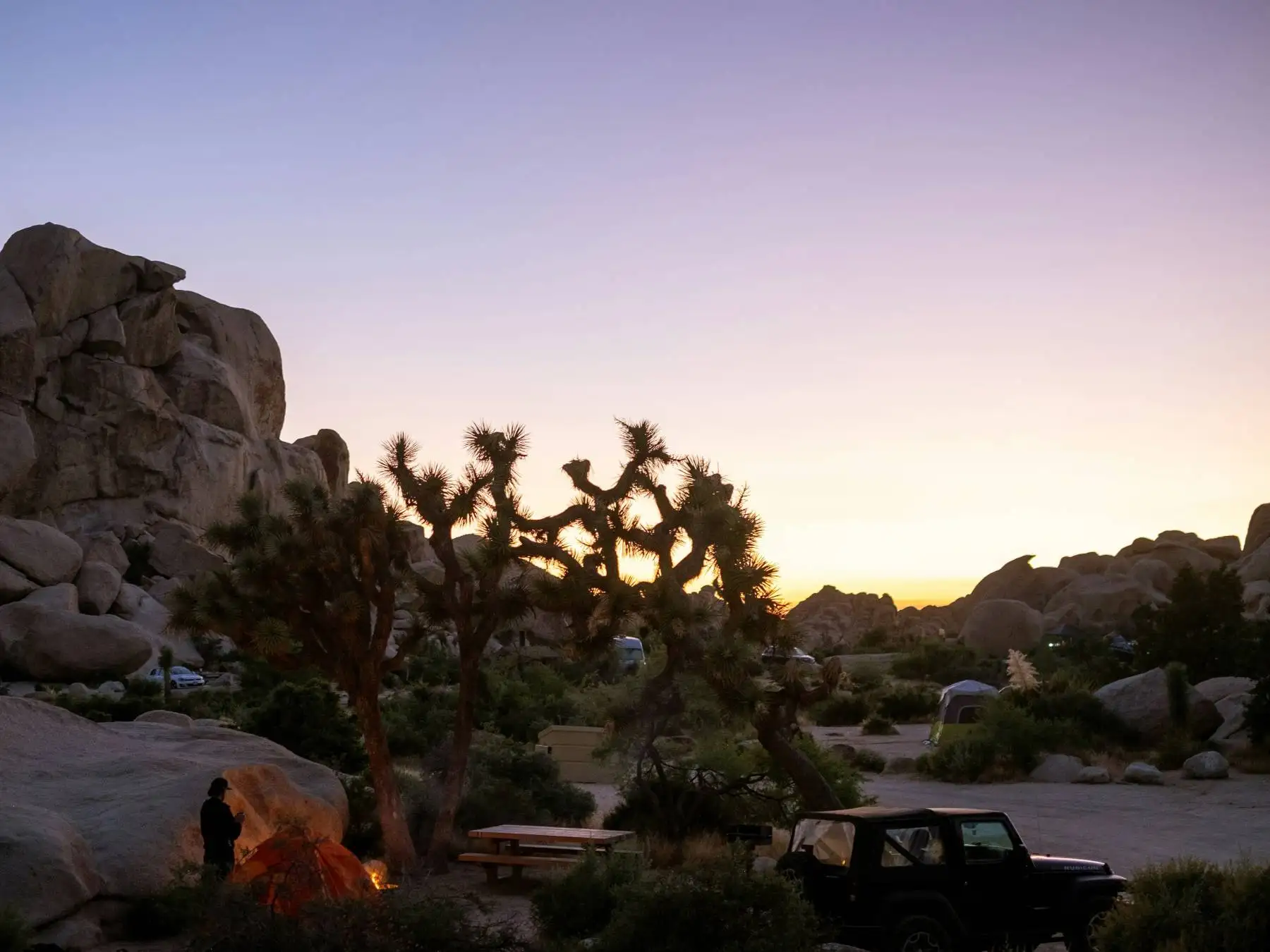
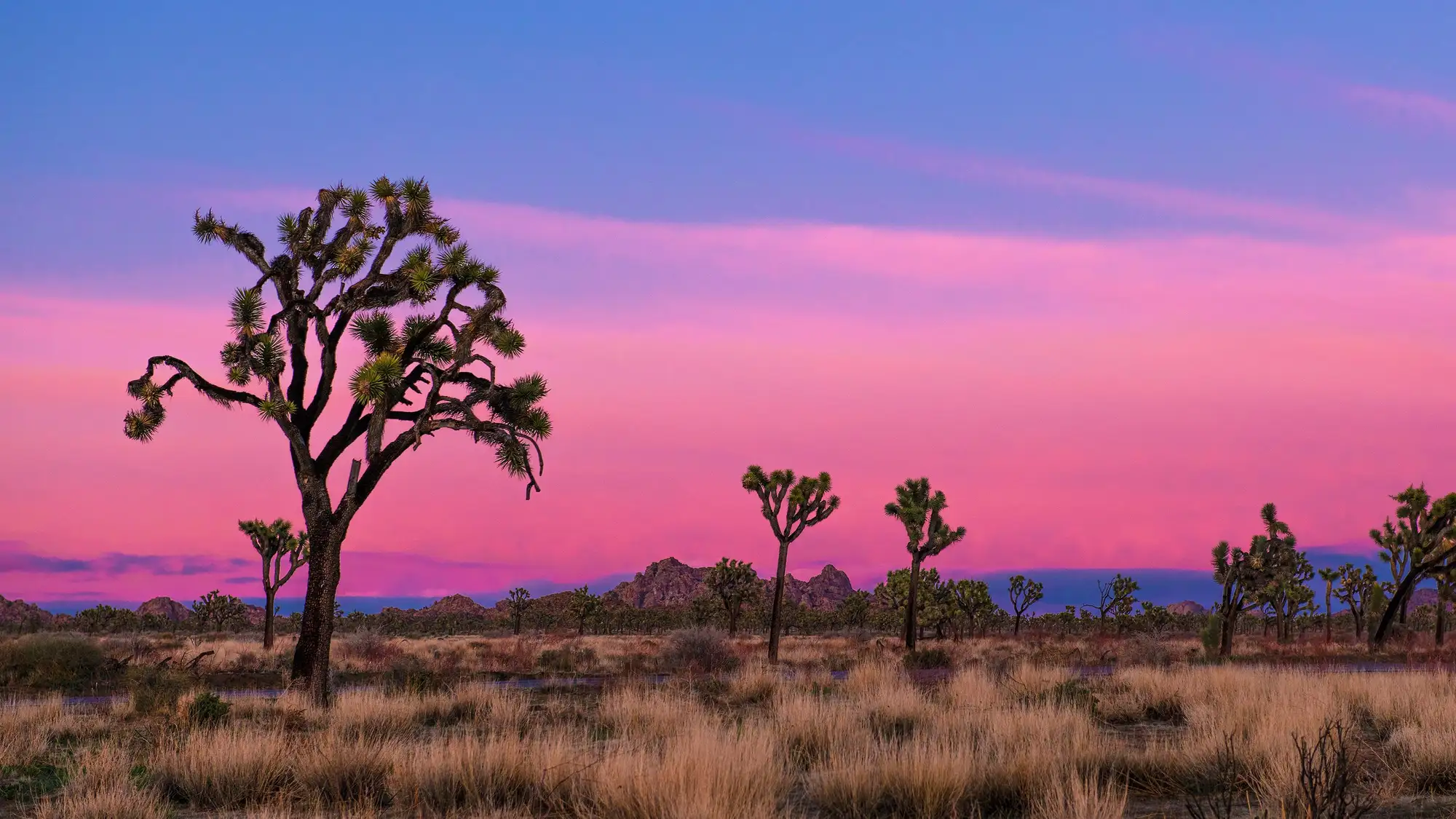
Joshua Tree is where two deserts meet, the Mojave and the Colorado, and the effect is a landscape stripped down to essentials. Boulders piled into strange rounded stacks, twisted Joshua trees, wide gaps of open ground, and at night a sky dark enough to see deep into. There is very little clamoring for your attention, and that emptiness turns out to be the point.
A busy mind runs the same loops on repeat. Worry, replay, plan, repeat. Sparse country like this gives those loops less to feed on. The park service describes it as a vast wilderness sculpted by wind and rare rain, and standing in that kind of quiet, most people notice their internal noise drop a level or two.
You do not have to hike far. A slow walk among the rock formations, or an evening spent watching the sky darken, works on the same mechanism. The desert asks nothing of you, and that is exactly why it helps.
The science: Researchers led by Gregory Bratman found that a 90-minute walk in a natural setting lowered self-reported rumination, the mental habit of chewing on the same worries, compared with an equivalent walk in a city. Brain scans showed less activity in a region tied to that kind of repetitive negative thinking. A landscape as pared-down as Joshua Tree gives the churning mind unusually little to latch onto.
Bratman, Hamilton, Hahn, Daily & Gross (2015) · PNAS
Seasonal guide
Crowd levels use NPS monthly visitation, averaged 2015–2025. Excludes 2020 (COVID anomaly) and 2026 (partial year). Temperatures are NOAA climate normals from a station 18.6 miles away. Busy does not mean bad. If a peak month is your only window, the season notes below tell you how to work it.
Spring is the most comfortable and most crowded season, with highs climbing from the mid-70s in March to around 90F by May and the wildflower peak drawing the year's biggest crowds. March and April are packed, especially on weekends. Arrive before 8 a.m., use the North or South entrance, and you can still find quiet on the remote trails.
Summer is the emptiest time in the park and also the most dangerous, with daytime highs over 100F and nights that barely drop below the mid-70s. This is the season for solitude if you respect the heat: hike only at dawn, carry far more water than feels necessary, and leave pets at home. Midday is best spent resting or scenic driving with the car near shade.
Fall cools steadily from September highs near 96F down to the low 70s by November, and crowds stay light until they build back toward Thanksgiving. September still runs hot, but October and early November offer some of the most pleasant hiking of the year with manageable traffic. It's a strong choice if you want spring-like weather without the spring-break crush.
Winter brings mild days in the low 60s and cold nights that dip below freezing, with occasional snow at higher elevations. Crowds are heavy in December and stay steady through February. Layer up for frigid mornings, bring a warm sleeping bag if you camp, and take advantage of the crisp, clear air that makes the dark night skies especially sharp.
This month in the park
Timing changes everything out here. Pick a month to see when the light turns golden, which nights stay darkest for stargazing, and what visitors have actually recorded in bloom and on the move. The new-moon night is the one to plan a sky-watching evening around.
January 2027
In bloom · 162 species on record
- ❀ Bladderpod 137 sightings
- ❀ Desert bluebells 122 sightings
- ❀ Western Joshua Tree 63 sightings
- ❀ Notch-leaf Scorpionweed 57 sightings
- ❀ Browneyes 53 sightings
Wildlife on the move · 174 species on record
- Phainopepla 111 sightings
- Common Side-blotched Lizard 91 sightings
- Black-throated Sparrow 87 sightings
- California Scrub-Jay 75 sightings
- Cactus Wren 65 sightings
February 2027
In bloom · 205 species on record
- ❀ Desert bluebells 249 sightings
- ❀ Bladderpod 244 sightings
- ❀ Chia 148 sightings
- ❀ Arizona lupine 145 sightings
- ❀ Browneyes 125 sightings
Wildlife on the move · 237 species on record
- Common Side-blotched Lizard 307 sightings
- Phainopepla 135 sightings
- White-tailed Antelope Squirrel 98 sightings
- Black-throated Sparrow 93 sightings
- California Scrub-Jay 87 sightings
March 2027
In bloom · 272 species on record
- ❀ Desert bluebells 723 sightings
- ❀ Chia 477 sightings
- ❀ Western Joshua Tree 371 sightings
- ❀ Sand blazingstar 359 sightings
- ❀ Purple mat 342 sightings
Wildlife on the move · 340 species on record
- Common Side-blotched Lizard 791 sightings
- Common Chuckwalla 401 sightings
- Black-throated Sparrow 208 sightings
- Phainopepla 200 sightings
- Western Fence Lizard 160 sightings
April 2027
In bloom · 305 species on record
- ❀ Kingcup Cactus 383 sightings
- ❀ Desert bluebells 361 sightings
- ❀ Chia 338 sightings
- ❀ Wallace's woollydaisy 293 sightings
- ❀ Beavertail Pricklypear 269 sightings
Wildlife on the move · 484 species on record
- Common Side-blotched Lizard 840 sightings
- Common Chuckwalla 660 sightings
- Western Fence Lizard 341 sightings
- Western Whiptail 290 sightings
- Desert Spiny Lizard 285 sightings
May 2027
In bloom · 268 species on record
- ❀ Desert Mariposa Lily 284 sightings
- ❀ Engelmann's Hedgehog Cactus 208 sightings
- ❀ Paperbag Bush 174 sightings
- ❀ Beavertail Pricklypear 137 sightings
- ❀ Apricot globemallow 136 sightings
Wildlife on the move · 387 species on record
- Common Chuckwalla 627 sightings
- Common Side-blotched Lizard 587 sightings
- Desert Spiny Lizard 414 sightings
- Western Whiptail 324 sightings
- Western Fence Lizard 316 sightings
June 2027
In bloom · 132 species on record
- ❀ Parry's nolina 55 sightings
- ❀ Desert Woollystar 47 sightings
- ❀ California Buckwheat 39 sightings
- ❀ Catclaw Acacia 36 sightings
- ❀ Desert Trumpet 32 sightings
Wildlife on the move · 235 species on record
- Common Side-blotched Lizard 196 sightings
- Desert Spiny Lizard 164 sightings
- Western Whiptail 142 sightings
- Common Chuckwalla 102 sightings
- Western Fence Lizard 97 sightings
July 2026
In bloom · 56 species on record
- ❀ Smoketree 19 sightings
- ❀ Desert Woollystar 11 sightings
- ❀ Desert Trumpet 10 sightings
- ❀ Catclaw Acacia 10 sightings
- ❀ Parry's nolina 9 sightings
Wildlife on the move · 196 species on record
- Common Side-blotched Lizard 68 sightings
- Western Whiptail 54 sightings
- Western Fence Lizard 53 sightings
- Desert Spiny Lizard 48 sightings
- Common Chuckwalla 40 sightings
August 2026
In bloom · 86 species on record
- ❀ Chinchweed 53 sightings
- ❀ Parish's Goldeneye 25 sightings
- ❀ Fringed Amaranth 24 sightings
- ❀ Parry's nolina 22 sightings
- ❀ Apricot globemallow 21 sightings
Wildlife on the move · 226 species on record
- Common Side-blotched Lizard 74 sightings
- Western Whiptail 73 sightings
- Desert Spiny Lizard 69 sightings
- White-tailed Antelope Squirrel 44 sightings
- Common Chuckwalla 43 sightings
September 2026
In bloom · 143 species on record
- ❀ Chinchweed 138 sightings
- ❀ Parish's Goldeneye 82 sightings
- ❀ Fringed Amaranth 81 sightings
- ❀ Paperbag Bush 54 sightings
- ❀ California fuchsia 51 sightings
Wildlife on the move · 334 species on record
- Common Side-blotched Lizard 245 sightings
- White-lined Sphinx 139 sightings
- Desert Spiny Lizard 91 sightings
- Western Fence Lizard 84 sightings
- Western Whiptail 83 sightings
October 2026
In bloom · 154 species on record
- ❀ Chinchweed 190 sightings
- ❀ California fuchsia 119 sightings
- ❀ Fringed Amaranth 103 sightings
- ❀ Wedgeleaf Goldenbush 94 sightings
- ❀ Parish's Goldeneye 49 sightings
Wildlife on the move · 345 species on record
- Common Side-blotched Lizard 426 sightings
- Western Fence Lizard 127 sightings
- California Patch 94 sightings
- White-tailed Antelope Squirrel 93 sightings
- Desert Spiny Lizard 93 sightings
November 2026
In bloom · 145 species on record
- ❀ California fuchsia 115 sightings
- ❀ Chinchweed 106 sightings
- ❀ Wedgeleaf Goldenbush 101 sightings
- ❀ Bladderpod 75 sightings
- ❀ Desert bluebells 57 sightings
Wildlife on the move · 218 species on record
- Common Side-blotched Lizard 180 sightings
- White-tailed Antelope Squirrel 75 sightings
- Phainopepla 71 sightings
- White-crowned Sparrow 60 sightings
- Large Creosote Gall Midge 58 sightings
December 2026
In bloom · 147 species on record
- ❀ Western Joshua Tree 175 sightings
- ❀ Bladderpod 121 sightings
- ❀ Desert bluebells 107 sightings
- ❀ Parish's Goldeneye 72 sightings
- ❀ Thickleaf Groundcherry 69 sightings
Wildlife on the move · 189 species on record
- Gambel's Quail 115 sightings
- Phainopepla 99 sightings
- Black-throated Sparrow 92 sightings
- White-tailed Antelope Squirrel 80 sightings
- White-crowned Sparrow 72 sightings
Sun and moon times are computed for the park's coordinates from standard NOAA solar equations and cross-checked against the U.S. Naval Observatory. Species lists are research-grade community observations for Joshua Tree National Park, US, CA via iNaturalist, retrieved July 2026; sighting counts are all-time records for that calendar month.
Don’t wait for Joshua Tree.
One big trip a year isn’t what changes how you feel — the small stuff in between is. The 7-Day Nature Reset is one tiny outdoor practice a day, wherever you already are. Day one takes 60 seconds.
No spam. No noise. Just nature.
Day 1 is landing in your inbox right now — go say hi.
Sleep nearby
Most visitors base in Palm Springs, California, about 30 miles out. Palm Springs is the major resort community with extensive lodging options and competitive pricing. Staying in Joshua Tree puts you right at the West Entrance but offers limited, often pricier boutique or vintage lodging. The map opens on Palm Springs, so pan toward the park to trade rooms and price for a shorter morning drive.
Camping inside the park books through Recreation.gov and is listed separately.
The map is provided by Stay22. If you book through it we may earn a commission at no cost to you, which helps keep Happier Outdoors running. It never changes what we recommend.
Let someone else lead
A guide is worth it when the terrain needs one, or when you would rather look around than navigate. These are the highest-rated trips running around Joshua Tree, not the cheapest.
 Free cancellation
 Half-Day Guided Hike in Joshua Tree National Park
- Private tour, up to 8
- Moderate fitness needed
 Free cancellation
 Full Day Hike in Joshua Tree National Park
- Private tour, up to 8
- Moderate fitness needed
 Free cancellation
 Professional Stargazing Tour in Joshua Tree
- Runs Jan–Oct
- Up to 18 per booking
- Service animals welcome
 Free cancellation
 Joshua Tree National Park Private Sightseeing Adventure Tour
- Runs year-round
- Private tour, up to 15
- Easy for most fitness levels
Tours are listed by Viator; booking happens there. If you book we may earn a commission at no cost to you, which helps keep Happier Outdoors running. It never changes what we list. Prices checked September 2026 and can change.
Trails & hiking
Over 300 miles of trail and endless off-trail boulder scrambling. Three easy-to-strenuous picks below.
Activities & experiences
Beyond the trails
The night sky here is worth staying up for.
Bring binoculars. A wide range of birds moves through this desert.
Park Boulevard runs a scenic route through the park.
Miles of backcountry dirt roads open up for four-wheel drive vehicles.
Evening ranger programs run after dark. Check the schedule and show up.
A park ranger leads tours of Keys Ranch.
Details and current conditions live on nps.gov.
From the field
Common questions
When is the best time to visit Joshua Tree National Park?
Spring and fall are the most comfortable, with average highs around 85F and cooler nights. Summer days run over 100F and winter nights drop below freezing, so March through May and October through November hit the sweet spot for temperature, though spring is also the most crowded stretch.
Is Joshua Tree National Park dog-friendly?
Leashed dogs are allowed in campgrounds, within 100 feet of roads and parking, and on the paved Oasis of Mara Trail only. They are prohibited on all other trails and in the backcountry, and the park warns against bringing pets during the deadly summer heat. Leashes must be six feet or shorter.
What is the quietest trail in Joshua Tree National Park?
Hikers point to the Stubbe Springs Loop, the Desert Queen Mine Trail's northern loop, and the Boy Scout Trail past its four-mile marker as some of the least-traveled routes in the park. These sit in remote areas far from the main entrances and campgrounds, so they require longer drives and confident navigation. Treat them as reported favorites rather than official recommendations.
How crowded does Joshua Tree National Park get?
Joshua Tree draws roughly 3 million visitors a year and is busiest from October through May, peaking in March and mid-April. Weekends and holidays are the most packed, and lines at the West Entrance are longest between 10 a.m. and 2 p.m. Arriving before 8 a.m. or entering through the North or South entrance helps you skip the worst of it.
Is Joshua Tree National Park accessible for wheelchairs?
The park has two fully paved, wheelchair-accessible trails: the Oasis of Mara Trail near Park Headquarters and the Lower Keys View overlook, which has minimal elevation gain and accessible parking. The Joshua Tree and Cottonwood visitor centers are also accessible with adapted restrooms and van-accessible parking. Note that many other trails have deep sand, and the park does not run a shuttle.
Can you camp at Joshua Tree National Park?
Yes, the park has around 479 sites split between reservation campgrounds like Black Rock, Cottonwood, Indian Cove, Jumbo Rocks, and Ryan, plus first-come, first-served sites at Hidden Valley, Belle, and White Tank. Reservation sites cost $30 to $35 a night and first-come sites run $25. Several campgrounds, including Indian Cove and Jumbo Rocks, have no water, so plan to pack your own.
Where do you park at Joshua Tree National Park?
Park only in designated spots or on graded shoulders, and expect popular lots like Hidden Valley, Barker Dam, Keys View, and Split Rock to close once full during peak season. These lots often fill before 9 or 10 a.m. from September through May. When they're full, park outside the boundary in Twentynine Palms, Joshua Tree, or Yucca Valley and carpool in, since there is no overflow parking inside.
What does it cost to enter Joshua Tree National Park?
Entry is $30 per private vehicle, good for seven days. Motorcycles are $25 and anyone entering on foot or bike pays $15 per person, while a $55 annual pass covers the park for a year.
Want it quieter?
Joshua Tree's marquee spots fill up on cool-season weekends. California's desert state parks nearby — Anza-Borrego and beyond — offer the same big-silence, big-sky reset with more room to roam.
Similar parks worth the trip
Matched by wellness profile and the kind of reset they offer.