Acadia National Park
Bar Harbor, Maine · Northeast
The Atlantic edge steadies you
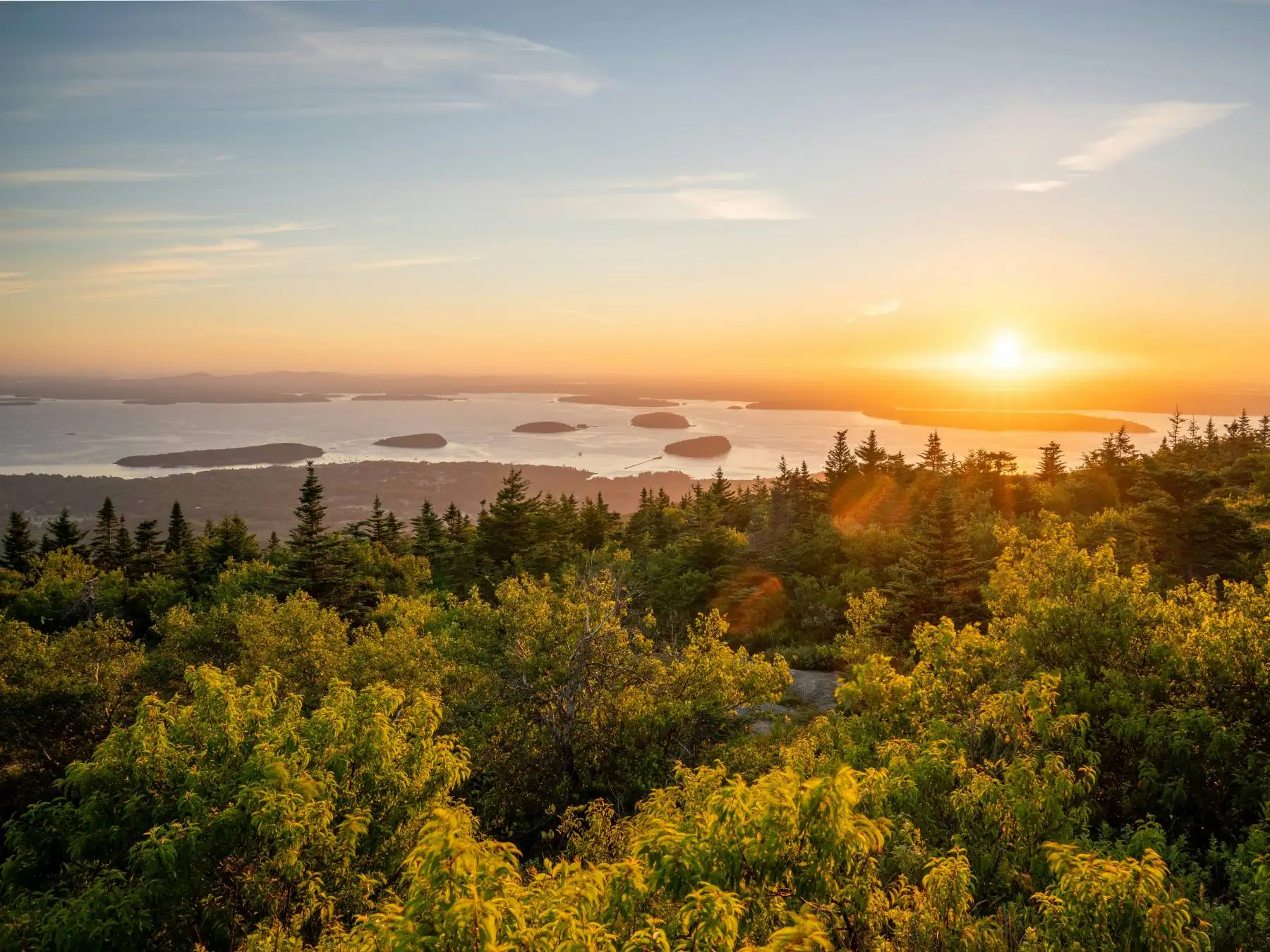
Acadia meets the ocean along the highest rocky headlands on the eastern seaboard, and water is the thread that runs through the whole park. There's the open Atlantic breaking against granite, the freshwater of Jordan Pond and Echo Lake, and 45 miles of carriage road that wander past streams and shorelines. You are rarely far from the sound of water here.
That matters more than it sounds. Standing where surf meets stone gives the mind a simple, repeating thing to rest on, and the horizon does the rest of the work. The Ocean Path traces the coast for miles at an easy grade, so you can be beside the water without any climbing at all.
Acadia is one of the busiest parks in the country, so the calm is not automatic in July. But the shoreline is long, the quiet side west of Somes Sound is real, and an early start puts the ocean in front of you before the crowds arrive.
The science: Population-level research led by Mathew White found that contact with and living near 'blue space,' meaning coasts, rivers, and lakes, is linked to better mental health and wellbeing. Acadia is almost entirely blue space, from the surf line to its freshwater ponds. Being beside it, not just looking at a photo of it, is where the association shows up.
White, Elliott, Gascon, Roberts & Fleming (2021) · Environmental Research
Seasonal guide
Crowd levels use NPS monthly visitation, averaged 2015–2025. Excludes 2020 (COVID anomaly) and 2026 (partial year). Temperatures are NOAA climate normals from a station 2.5 miles away. Busy does not mean bad. If a peak month is your only window, the season notes below tell you how to work it.
Highs sit in the low to mid 30s and lows drop into the teens, with snow common from November into April. Many park roads and facilities close or go unplowed, but the carriage roads open up for cross-country skiing and snowshoeing, and you can have the coast nearly to yourself. Pack real cold-weather layers and check what's open before you drive out.
March stays cold near 41F, but by May highs reach the mid 60s and the crowds start building. Snowmelt keeps trails muddy early and some facilities open on a rolling schedule, so lower-elevation walks and the carriage roads are your best bet. It's a good window to see the park wake up without July's traffic.
This is peak season, with highs in the high 70s and the park at its most crowded. Sand Beach parking fills by 9 a.m. and Cadillac requires a timed-entry reservation, so start at dawn, ride the fare-free Island Explorer shuttle, and head to the quiet side west of Somes Sound when the main loop clogs up. Warm ocean days make it worth the planning.
September still runs peak and October brings foliage crowds, with highs cooling from the low 70s into the 40s by November. October is one of the best times to visit for color, so book lodging and campsites early and go midweek if you can. By November the crowds thin sharply and the park quiets down fast.
This month in the park
Timing changes everything out here. Pick a month to see when the light turns golden, which nights stay darkest for stargazing, and what visitors have actually recorded in bloom and on the move. The new-moon night is the one to plan a sky-watching evening around.
January 2027
Wildlife on the move · 86 species on record
- Common Eider 7 sightings
- Common Periwinkle 6 sightings
- Golden-crowned Kinglet 6 sightings
- Snowy Owl 6 sightings
- Common Loon 5 sightings
February 2027
Wildlife on the move · 75 species on record
- Red Crossbill 10 sightings
- Snowy Owl 7 sightings
- Red-breasted Merganser 5 sightings
- White-tailed Deer 5 sightings
- American Red Squirrel 5 sightings
March 2027
In bloom · 2 species on record
- ❀ Colt's-foot 1 sightings
- ❀ Grey alder 1 sightings
Wildlife on the move · 84 species on record
- Spotted Salamander 57 sightings
- Eastern Red-backed Salamander 17 sightings
- Song Sparrow 10 sightings
- White-tailed Deer 10 sightings
- American Herring Gull 10 sightings
April 2027
In bloom · 18 species on record
- ❀ Trailing arbutus 18 sightings
- ❀ Eastern Dwarf-mistletoe 7 sightings
- ❀ Colt's-foot 6 sightings
- ❀ Black crowberry 4 sightings
- ❀ American fly-honeysuckle 4 sightings
Wildlife on the move · 163 species on record
- Spotted Salamander 115 sightings
- Eastern Red-backed Salamander 39 sightings
- Spring Peeper 28 sightings
- American Red Squirrel 28 sightings
- American Herring Gull 19 sightings
May 2027
In bloom · 83 species on record
- ❀ Rhodora 104 sightings
- ❀ Azure bluet 52 sightings
- ❀ Northern starflower 45 sightings
- ❀ Pink lady's slipper 34 sightings
- ❀ Trailing arbutus 30 sightings
Wildlife on the move · 358 species on record
- Eastern Red-backed Salamander 114 sightings
- American Red Squirrel 75 sightings
- American Herring Gull 63 sightings
- Black-throated Green Warbler 52 sightings
- Spotted Salamander 50 sightings
June 2027
In bloom · 142 species on record
- ❀ Sheep laurel 121 sightings
- ❀ Three-toothed cinquefoil 111 sightings
- ❀ Pink lady's slipper 68 sightings
- ❀ Northern starflower 59 sightings
- ❀ Rhodora 52 sightings
Wildlife on the move · 682 species on record
- American Bullfrog 159 sightings
- American Red Squirrel 126 sightings
- American Herring Gull 105 sightings
- European Green Crab 84 sightings
- White-tailed Deer 81 sightings
July 2026
In bloom · 144 species on record
- ❀ Sheep laurel 119 sightings
- ❀ Three-toothed cinquefoil 66 sightings
- ❀ White meadowsweet 40 sightings
- ❀ Northern bush honeysuckle 30 sightings
- ❀ Fireweed 26 sightings
Wildlife on the move · 925 species on record
- American Bullfrog 276 sightings
- American Herring Gull 175 sightings
- American Red Squirrel 140 sightings
- European Green Crab 112 sightings
- Common Periwinkle 96 sightings
August 2026
In bloom · 136 species on record
- ❀ Flat-top white aster 76 sightings
- ❀ White meadowsweet 34 sightings
- ❀ Northern seaside goldenrod 25 sightings
- ❀ Rugosa rose 24 sightings
- ❀ Bog aster 23 sightings
Wildlife on the move · 667 species on record
- American Bullfrog 298 sightings
- Tricolored Bumble Bee 179 sightings
- American Herring Gull 170 sightings
- American Red Squirrel 117 sightings
- Green Frog 79 sightings
September 2026
In bloom · 66 species on record
- ❀ Flat-top white aster 64 sightings
- ❀ Common toadflax 21 sightings
- ❀ Silverrod 20 sightings
- ❀ Whorled wood aster 16 sightings
- ❀ Northern seaside goldenrod 14 sightings
Wildlife on the move · 458 species on record
- Hickory Tussock Moth 100 sightings
- American Red Squirrel 91 sightings
- American Bullfrog 86 sightings
- Monarch 70 sightings
- American Herring Gull 68 sightings
October 2026
In bloom · 36 species on record
- ❀ Common toadflax 13 sightings
- ❀ American witch-hazel 13 sightings
- ❀ Flat-top white aster 13 sightings
- ❀ Sheep laurel 10 sightings
- ❀ Rugosa rose 10 sightings
Wildlife on the move · 309 species on record
- American Red Squirrel 97 sightings
- American Herring Gull 81 sightings
- Common Periwinkle 55 sightings
- European Green Crab 48 sightings
- North American Porcupine 42 sightings
November 2026
In bloom · 4 species on record
- ❀ American witch-hazel 2 sightings
- ❀ Trailing arbutus 2 sightings
- ❀ Northern seaside goldenrod 1 sightings
- ❀ Purple crownvetch 1 sightings
Wildlife on the move · 110 species on record
- North American Porcupine 17 sightings
- White-tailed Deer 15 sightings
- Common Periwinkle 13 sightings
- American Herring Gull 12 sightings
- American Red Squirrel 8 sightings
December 2026
Wildlife on the move · 61 species on record
- White-tailed Deer 7 sightings
- Common Eider 5 sightings
- Red-breasted Nuthatch 4 sightings
- Golden-crowned Kinglet 4 sightings
- Common Loon 3 sightings
Sun and moon times are computed for the park's coordinates from standard NOAA solar equations and cross-checked against the U.S. Naval Observatory. Species lists are research-grade community observations for Acadia National Park, US, ME via iNaturalist, retrieved July 2026; sighting counts are all-time records for that calendar month.
Don’t wait for Acadia.
One big trip a year isn’t what changes how you feel — the small stuff in between is. The 7-Day Nature Reset is one tiny outdoor practice a day, wherever you already are. Day one takes 60 seconds.
No spam. No noise. Just nature.
Day 1 is landing in your inbox right now — go say hi.
Sleep nearby
Places to stay around Bar Harbor, Maine. Pan the map to trade a shorter drive for a quieter night.
Camping inside the park books through Recreation.gov and is listed separately.
The map is provided by Stay22. If you book through it we may earn a commission at no cost to you, which helps keep Happier Outdoors running. It never changes what we recommend.
Let someone else lead
A guide is worth it when the terrain needs one, or when you would rather look around than navigate. These are the highest-rated trips running around Acadia, not the cheapest.
 Free cancellation
 Acadia Full Day Private Tour & Hike
- Runs May–Oct
- Private tour, up to 10
- Service animals welcome
 Free cancellation
 “Classic Acadia” Private Tour: Cadillac Mountain & Thunder Hole
- Runs Apr–Nov
- Private tour, up to 15
- Stroller accessible
 Free cancellation
 Guided E Bike Tour of Acadia National Park
- Up to 6 per booking
- Easy for most fitness levels
 Free cancellation
 Guided Ebike Tour of Acadia National Park Carriage Roads
- Runs May–Nov
- Up to 8 per booking
- Easy for most fitness levels
Tours are listed by Viator; booking happens there. If you book we may earn a commission at no cost to you, which helps keep Happier Outdoors running. It never changes what we list. Prices checked September 2026 and can change.
Trails & hiking
158 miles of trail plus 45 miles of car-free carriage roads. Three easy-to-strenuous options below.
Activities & experiences
Beyond the trails
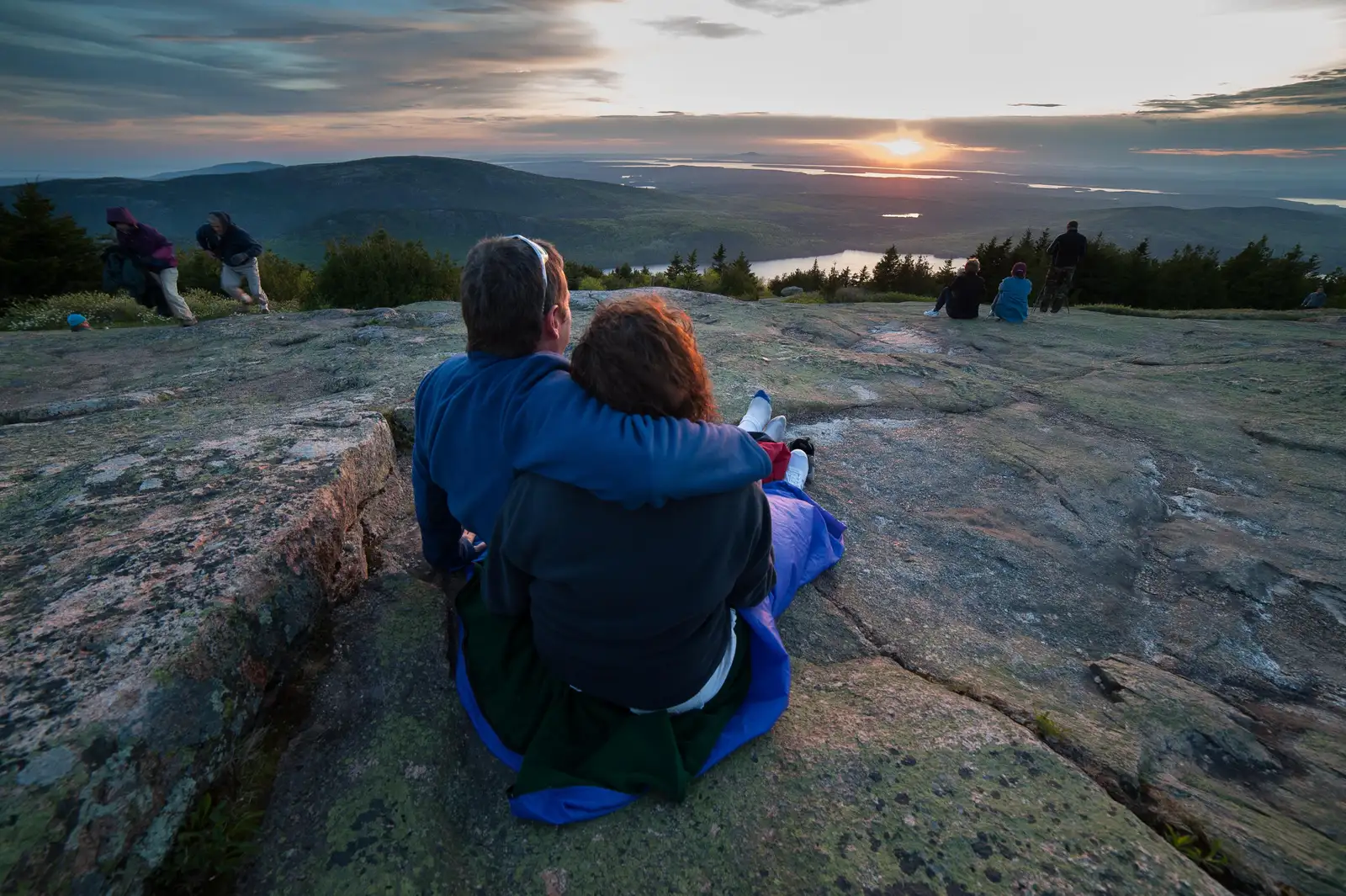
From the park's highest summit, the night sky opens wide. Vehicle access is limited, so plan ahead.
Seawall sits on the west side of Mount Desert Island. Watch the stars while the ocean plays in the background.
The shores around Jordan Pond give you room to stargaze and photograph the night sky.
Ocean Path runs along the coast, with stargazing to be found there.
Sand Beach is the only sandy beach in the park. It makes a good spot for stargazing and night photography.
At the far end of this coastal forest trail on the west side of Mount Desert Island, rocky tidepools wait to be explored.
Details and current conditions live on nps.gov.
From the field
Common questions
When is the best time to visit Acadia National Park?
Late spring and fall offer the best balance of open facilities and thinner crowds, with October drawing color chasers before the November quiet sets in. July through September are the busiest months by far, while May and June are warming up and less packed. Winter is the quietest stretch of all if you can handle cold and snow.
Is Acadia National Park dog-friendly?
Yes, leashed dogs on a six-foot leash are welcome on about 100 miles of trails and all 45 miles of carriage roads. They are not allowed on the six cliff ladder trails, on Sand Beach and Echo Lake Beach during the warm months, or inside public buildings. Blackwoods, Seawall, and Schoodic Woods campgrounds all allow pets.
What is the quietest trail in Acadia National Park?
Visitors consistently point to the 'quiet side' west of Somes Sound, the Schoodic Peninsula, and Isle au Haut for the least crowded hiking, naming trails like Bernard Mountain, Flying Mountain, Hunter's Beach, and Western Head. These areas stay quiet because they are less developed and take extra driving, or in the case of Isle au Haut, a ferry ride. First-time visitors tend to cluster around Jordan Pond, Cadillac Mountain, and The Bubbles instead.
How crowded does Acadia National Park get?
Acadia is extremely crowded, drawing over 4 million visits a year and ranking among the ten most-visited national parks. The heaviest traffic runs July through September, with arrivals peaking between 10 a.m. and noon and a second sunrise surge around 4 to 5 a.m. A timed-entry vehicle reservation is now required in peak season to drive the Cadillac Summit Road.
Is Acadia National Park accessible for wheelchairs?
Yes, though most hiking trails are not accessible due to steep terrain, stone steps, and iron ladder rungs. The paved Ocean Path, the gravel carriage roads, the Cadillac Summit Road, and the visitor centers at Hulls Cove, the Acadia Gateway Center, and Sieur de Monts are accessible, and the fare-free Island Explorer shuttles are equipped with lifts. Note that the 31 steps down to Sand Beach make the water's edge inaccessible.
Can you camp at Acadia National Park?
Yes, the park has four campgrounds: Blackwoods and Seawall on Mount Desert Island, Schoodic Woods on the peninsula, and the primitive Duck Harbor on Isle au Haut. All reservations are made in advance online at Recreation.gov, with no in-person or campground-office bookings allowed. Nightly rates run from $20 at Duck Harbor up to $60 at the larger campgrounds.
Where do you park at Acadia National Park?
Park at designated lots along the Park Loop Road, such as Sand Beach, Jordan Pond, and Echo Lake, but arrive early because Sand Beach routinely fills by 9 a.m. in peak season. Overnight parking is prohibited inside the park. The easiest alternative is the fare-free Island Explorer shuttle, or parking at the Acadia Gateway Center in Trenton and busing onto the island.
Want it quieter?
Acadia is small and popular, and it shows in July. Maine's state parks nearby — from Camden Hills to the Schoodic coast — give you the same salt-air reset with far fewer people.
Similar parks worth the trip
Matched by wellness profile and the kind of reset they offer.