Great Smoky Mountains National Park
Gatlinburg, Tennessee · Southeast
The forest here lowers your baseline
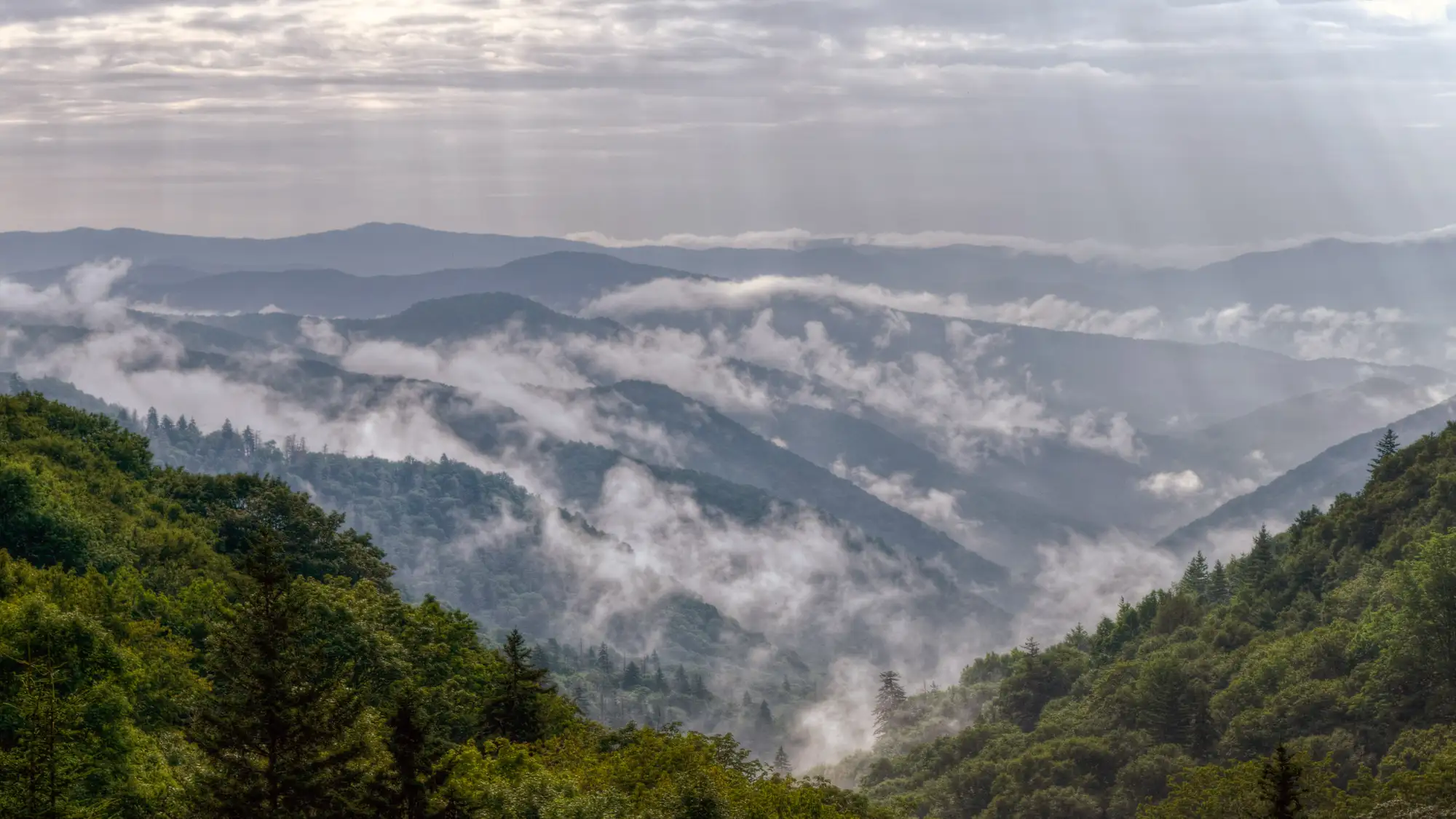
Great Smoky Mountains is, above all, a forest. Ridge after ridge of it climbs from around 875 feet near the valleys to more than 6,600 feet at the crest, and the canopy shifts with every hundred feet you gain. The blue haze the range is named for is the forest itself breathing. That is a lot of living green between you and everything you left in the car.
This is one of the most biologically diverse forests in the temperate world, and standing inside it does something to the body before the mind catches up. Breathing slows. Shoulders drop. The park does not need a famous overlook to work on you; a short walk into the trees on one of the Quiet Walkways is enough to feel the shift.
Because the terrain stacks weather in layers, a warm, clear valley can give way to cool mist a few switchbacks up. That variety keeps a walk interesting without ever demanding much of you, which is part of why the forest settles people so reliably.
The science: In field experiments across 24 Japanese forests, Park and colleagues measured lower cortisol, slower pulse, and lower blood pressure in people who spent time among trees compared with those in urban settings. The effect showed up in the body, not just in how people said they felt. A wooded park like this one gives you the same raw material in abundance.
Park, Tsunetsugu, Kasetani, Kagawa & Miyazaki (2010) · Environmental Health and Preventive Medicine
Seasonal guide
Crowd levels use NPS monthly visitation, averaged 2015–2025. Excludes 2020 (COVID anomaly) and 2026 (partial year). Temperatures are NOAA climate normals from a nearby representative station. Busy does not mean bad. If a peak month is your only window, the season notes below tell you how to work it.
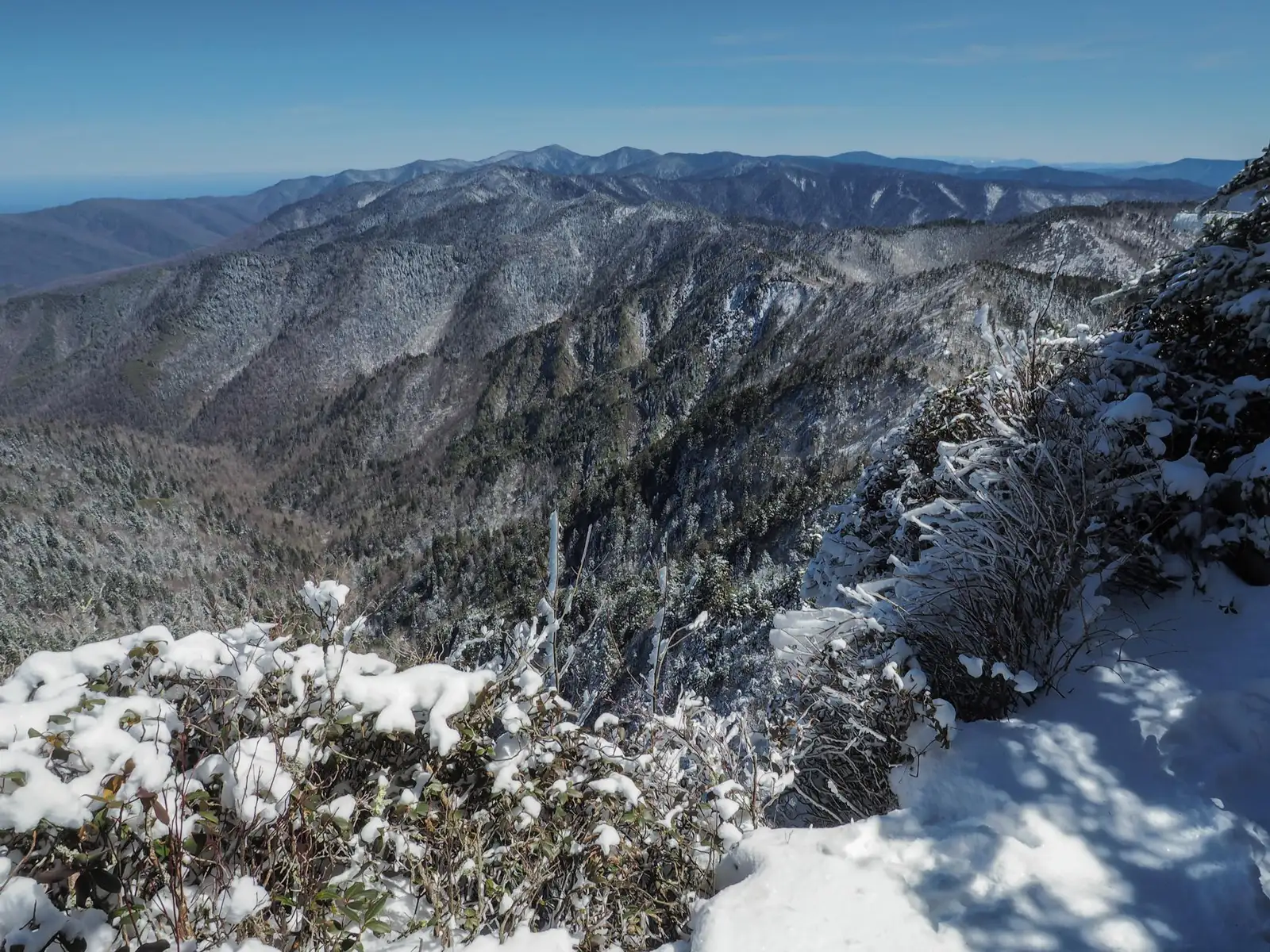
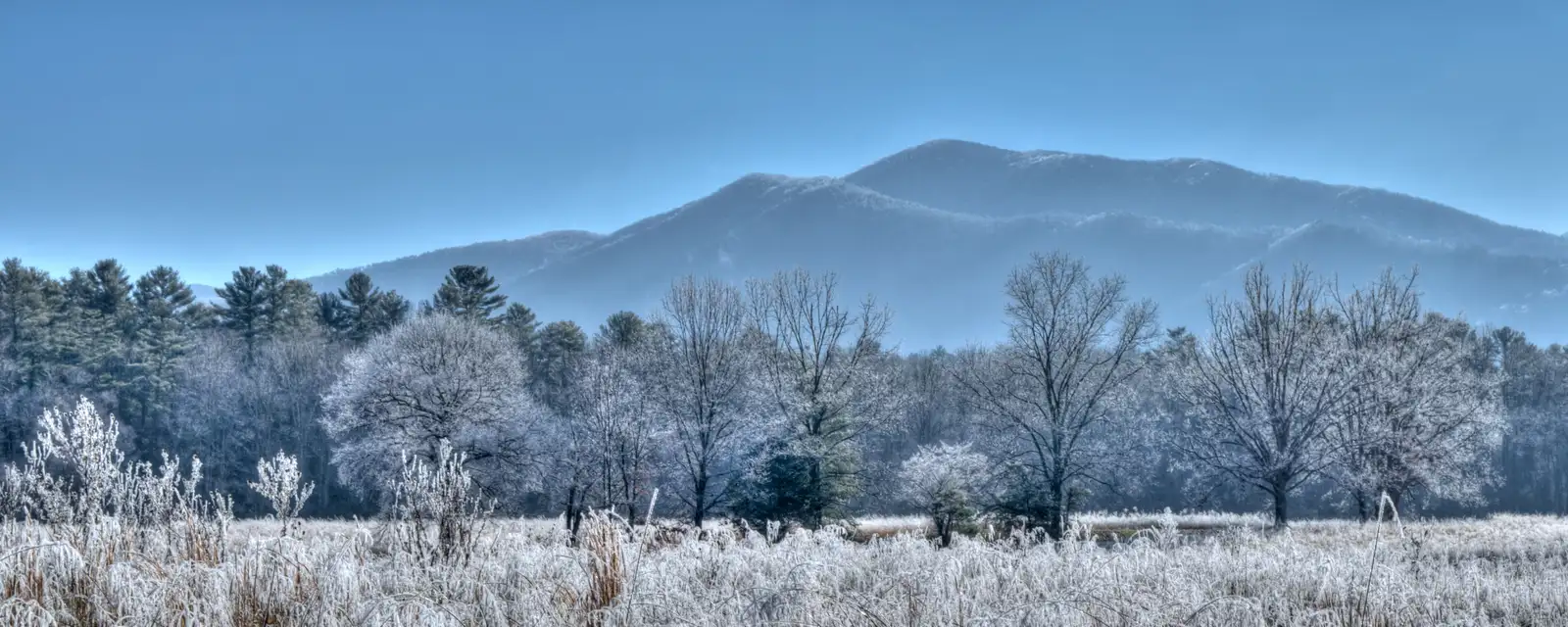
Valley highs run from the mid-40s to low 50s with lows near freezing, and higher elevations are colder still with possible snow and road closures. This is the calmest stretch of the year, with January and February seeing the fewest visitors. Check road status before you go, dress in warm layers, and enjoy having the Quiet Walkways nearly to yourself.
Highs climb from the upper 50s in March to the mid-70s by May, with wildflowers appearing as the season warms. March and April stay relatively quiet before crowds build in May. Rain is frequent, so pack a shell, and remember that clear skies in the valley do not guarantee the same weather higher up.
Valley highs sit in the low 80s with humidity and the year's heaviest rainfall, and afternoon thunderstorms are common. June and July are the busiest months of the year. Start early to claim parking and beat the storms, head to higher, cooler elevations, and cool off along the creek trails.
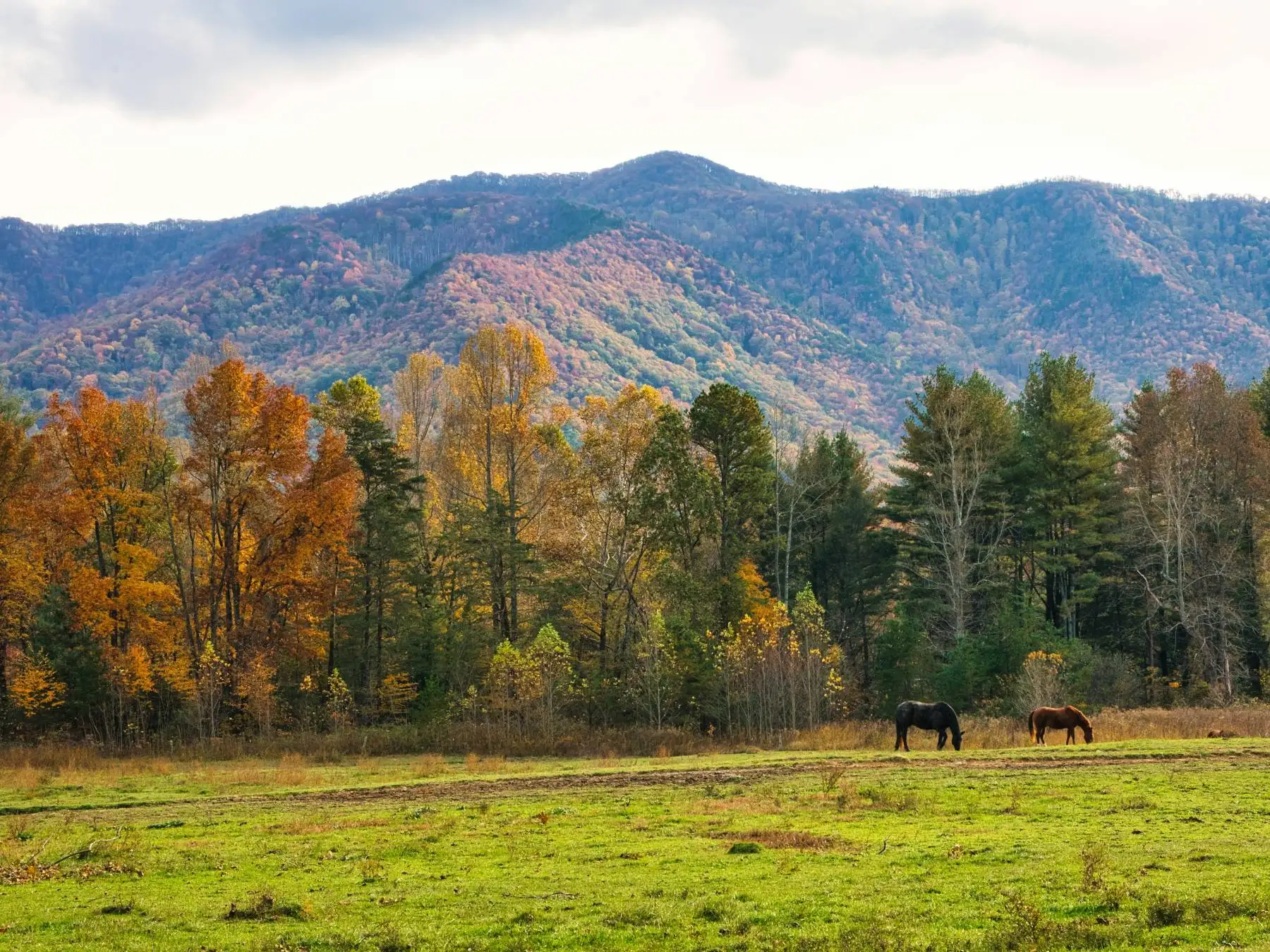
September stays warm in the upper 70s before October cools into the 60s with the park's famous foliage, and November turns crisp with highs in the 50s. October is one of the most crowded months of the year. Come on weekdays, arrive at dawn for parking, and consider late November for color that lingers with far thinner crowds.
This month in the park
Timing changes everything out here. Pick a month to see when the light turns golden, which nights stay darkest for stargazing, and what visitors have actually recorded in bloom and on the move. The new-moon night is the one to plan a sky-watching evening around.
January 2027
Wildlife on the move · 123 species on record
- White-tailed Deer 34 sightings
- Wild Turkey 21 sightings
- Southern Red-backed Salamander 15 sightings
- Eastern Gray Squirrel 13 sightings
- Pileated Woodpecker 9 sightings
February 2027
In bloom · 14 species on record
- ❀ Trailing arbutus 4 sightings
- ❀ Yellow wakerobin 2 sightings
- ❀ Halberd-leaved violet 2 sightings
- ❀ Sharp-lobed hepatica 2 sightings
- ❀ Common snowdrop 1 sightings
Wildlife on the move · 176 species on record
- White-tailed Deer 66 sightings
- Wood Frog 52 sightings
- Southern Red-backed Salamander 41 sightings
- Wild Turkey 36 sightings
- Blue Ridge Two-lined Salamander 31 sightings
March 2027
In bloom · 89 species on record
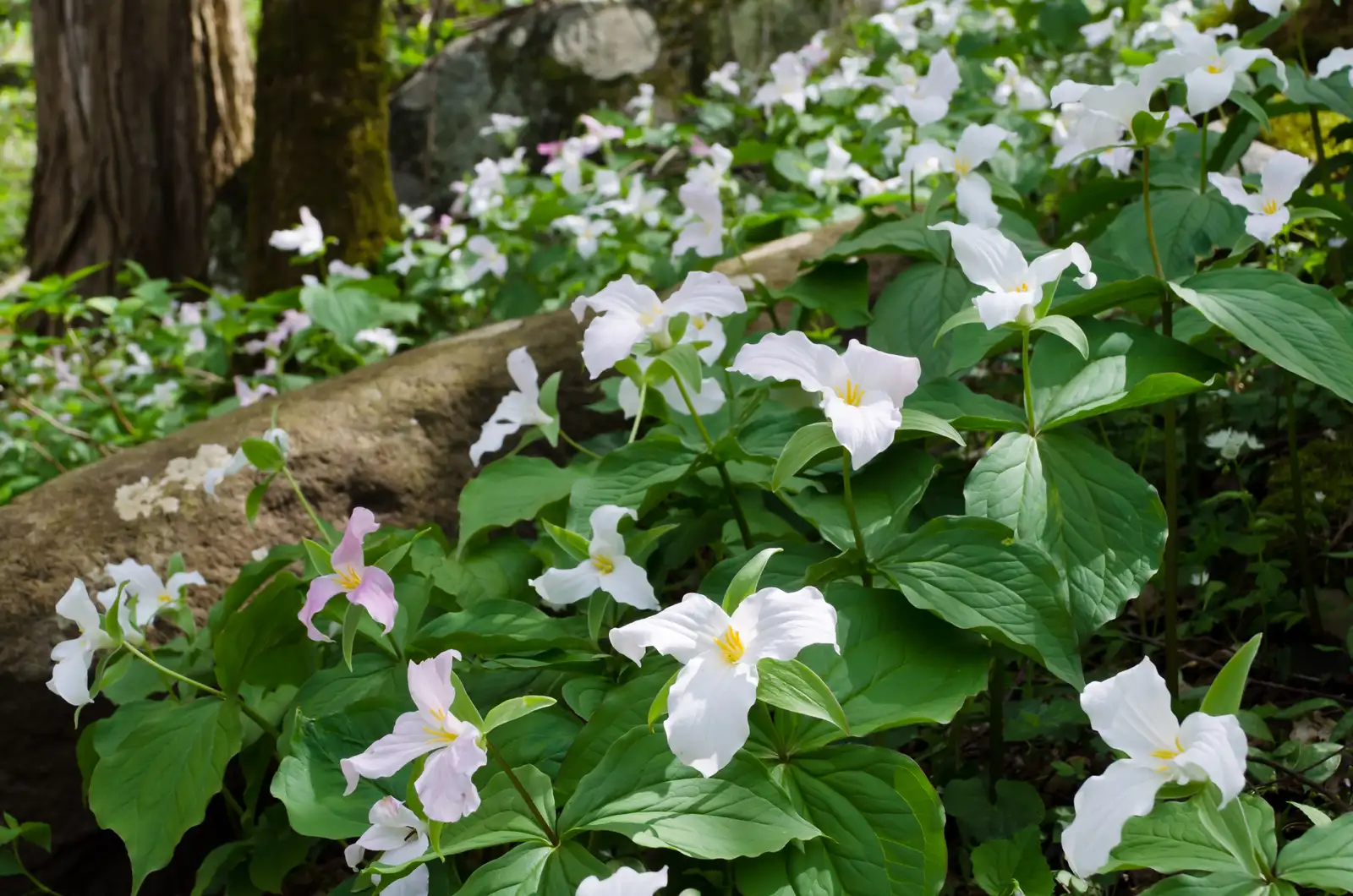
- ❀ Large white trillium 179 sightings
- ❀ Yellow wakerobin 129 sightings
- ❀ Trailing arbutus 108 sightings
- ❀ Halberd-leaved violet 104 sightings
- ❀ Bloodroot 103 sightings
Wildlife on the move · 422 species on record
- West Virginia White 142 sightings
- Southern Red-backed Salamander 135 sightings
- Wild Turkey 129 sightings
- Blue Ridge Two-lined Salamander 128 sightings
- White-tailed Deer 114 sightings
April 2027
In bloom · 241 species on record
- ❀ Dwarf crested iris 942 sightings
- ❀ Showy orchis 870 sightings
- ❀ Large white trillium 766 sightings
- ❀ Yellow wakerobin 695 sightings
- ❀ Red trillium 625 sightings
Wildlife on the move · 887 species on record
- Pipevine Swallowtail 504 sightings
- Wild Turkey 259 sightings
- American Black Bear 220 sightings
- Megalodacne heros 165 sightings
- Eastern Tiger Swallowtail 162 sightings
May 2027
In bloom · 203 species on record
- ❀ Red trillium 237 sightings
- ❀ Vasey's trillium 181 sightings
- ❀ Partridgeberry 180 sightings
- ❀ Painted trillium 176 sightings
- ❀ Yellow wakerobin 126 sightings
Wildlife on the move · 1155 species on record
- Megalodacne heros 337 sightings
- Pipevine Swallowtail 327 sightings
- American Black Bear 241 sightings
- Wild Turkey 213 sightings
- Cherokee Blackbelly Salamander 182 sightings
June 2027
In bloom · 134 species on record
- ❀ Striped wintergreen 111 sightings
- ❀ Partridgeberry 57 sightings
- ❀ Galax 42 sightings
- ❀ Bluebead lily 36 sightings
- ❀ Great rhododendron 33 sightings
Wildlife on the move · 1397 species on record
- American Black Bear 247 sightings
- Pipevine Swallowtail 214 sightings
- Megalodacne heros 208 sightings
- Wild Turkey 198 sightings
- Cherokee Blackbelly Salamander 157 sightings
July 2026
In bloom · 137 species on record
- ❀ Scarlet Beebalm 51 sightings
- ❀ Turk's-cap lily 36 sightings
- ❀ Great rhododendron 30 sightings
- ❀ Purple passionflower 23 sightings
- ❀ Downy rattlesnake plantain 20 sightings
Wildlife on the move · 1419 species on record
- Pipevine Swallowtail 599 sightings
- Cherokee Blackbelly Salamander 241 sightings
- American Black Bear 197 sightings
- Eastern Tiger Swallowtail 145 sightings
- White-tailed Deer 136 sightings
August 2026
In bloom · 103 species on record
- ❀ Cutleaf coneflower 41 sightings
- ❀ Kidney-leaved Grass of Parnassus 39 sightings
- ❀ Cardinal flower 20 sightings
- ❀ Great blue lobelia 20 sightings
- ❀ White snakeroot 18 sightings
Wildlife on the move · 998 species on record
- Pipevine Swallowtail 295 sightings
- Eastern Tiger Swallowtail 237 sightings
- American Black Bear 168 sightings
- Common Eastern Bumble Bee 158 sightings
- Cherokee Blackbelly Salamander 151 sightings
September 2026
In bloom · 114 species on record
- ❀ Great blue lobelia 53 sightings
- ❀ Kidney-leaved Grass of Parnassus 48 sightings
- ❀ White snakeroot 37 sightings
- ❀ Pinesap 19 sightings
- ❀ American hog-peanut 18 sightings
Wildlife on the move · 794 species on record
- Pipevine Swallowtail 189 sightings
- Banded Tussock Moth 142 sightings
- Wild Turkey 120 sightings
- American Black Bear 99 sightings
- Common Eastern Bumble Bee 92 sightings
October 2026
In bloom · 56 species on record
- ❀ Great blue lobelia 25 sightings
- ❀ Common Blue Wood Aster 24 sightings
- ❀ White snakeroot 15 sightings
- ❀ Appalachian Gentian 10 sightings
- ❀ American witch-hazel 9 sightings
Wildlife on the move · 661 species on record
- Wild Turkey 134 sightings
- Blue Ridge Two-lined Salamander 108 sightings
- American Black Bear 106 sightings
- Common Buckeye 87 sightings
- Cherokee Blackbelly Salamander 79 sightings
November 2026
In bloom · 10 species on record
- ❀ American witch-hazel 3 sightings
- ❀ Partridgeberry 2 sightings
- ❀ Thyme-leaved Bluet 2 sightings
- ❀ Shaggy soldier 1 sightings
- ❀ Canada Violet 1 sightings
Wildlife on the move · 390 species on record
- Wild Turkey 86 sightings
- White-tailed Deer 81 sightings
- American Black Bear 70 sightings
- Blue Ridge Two-lined Salamander 62 sightings
- Wapiti 39 sightings
December 2026
Wildlife on the move · 137 species on record
- White-tailed Deer 70 sightings
- Wild Turkey 33 sightings
- American Crow 24 sightings
- Southern Red-backed Salamander 17 sightings
- American Black Bear 14 sightings
Sun and moon times are computed for the park's coordinates from standard NOAA solar equations and cross-checked against the U.S. Naval Observatory. Species lists are research-grade community observations for Great Smoky Mountains National Park, NC, US via iNaturalist, retrieved July 2026; sighting counts are all-time records for that calendar month.
Don’t wait for Great Smoky Mountains.
One big trip a year isn’t what changes how you feel — the small stuff in between is. The 7-Day Nature Reset is one tiny outdoor practice a day, wherever you already are. Day one takes 60 seconds.
No spam. No noise. Just nature.
Day 1 is landing in your inbox right now — go say hi.
Sleep nearby
Places to stay around Gatlinburg, Tennessee. Pan the map to trade a shorter drive for a quieter night.
Camping inside the park books through Recreation.gov and is listed separately.
The map is provided by Stay22. If you book through it we may earn a commission at no cost to you, which helps keep Happier Outdoors running. It never changes what we recommend.
Let someone else lead
A guide is worth it when the terrain needs one, or when you would rather look around than navigate. These are the highest-rated trips running around Great Smoky Mountains, not the cheapest.
 Free cancellation
 River Magic: An Easy Smoky Mountain Guided Walk
- Runs year-round
- Up to 11 per booking
- Easy for most fitness levels
 Free cancellation
 Sharing Nature with Children: Hands-On Smoky Mountain Discovery
- Runs year-round
- Up to 11 per booking
- Easy for most fitness levels

Great Smoky Mountains Rare Synchronous Firefly Waterfalls Walk
- Up to 11 per booking
- Easy for most fitness levels
 Free cancellation
 Best of the Smokies: Full-Day Private Guided Adventure
- Runs year-round
- Private tour, up to 11
- Easy for most fitness levels
Tours are listed by Viator; booking happens there. If you book we may earn a commission at no cost to you, which helps keep Happier Outdoors running. It never changes what we list. Prices checked September 2026 and can change.
Trails & hiking
Over 850 miles of trail, including 70+ miles of the Appalachian Trail. Three easy-to-strenuous picks below.
Activities & experiences
Beyond the trails
This one-way stretch of Foothills Parkway runs 16.6 miles (26.7 km) from Chilhowee to Walland.
From Walland to Wears Valley, the parkway covers 14.75 miles (23.74 km) one-way.
A short 5.6 mile (9.01 km) one-way drive links Cosby to I-40.
Lakeview Drive runs 11.4 miles (18.3 km) roundtrip.
Details and current conditions live on nps.gov.
From the field
Common questions
When is the best time to visit Great Smoky Mountains?
For the quietest visit, come in winter or early spring, when January and February see roughly a third of the crowds of peak summer. June, July, and October are the busiest months, with visitation topping 1.4 million, so if you want fall color without the crush, aim for weekdays and early mornings. Summer highs sit in the low 80s in the valleys and stay cooler up high.
Is Great Smoky Mountains dog-friendly?
Leashed dogs on a six-foot maximum leash are allowed on only two trails: the Gatlinburg Trail and the Oconaluftee River Trail. Pets are also welcome in campgrounds, picnic areas, parking areas, and along roads, but they are not permitted on any other park trails. Service animals are allowed throughout the park.
What is the quietest trail in Great Smoky Mountains?
Visitors consistently point to the park's Quiet Walkways as its least crowded paths, since they are short, about a mile round trip, and marked by small signposts most drivers miss. Hikers also report that remote routes like Hemphill Bald and Noland Creek stay peaceful because they require driving to out-of-the-way entrances far from the main Gatlinburg gate. These are visitor picks rather than official designations, but the pattern is a reliable one.
How crowded does Great Smoky Mountains get?
It is the most visited national park in the country, drawing 11.5 million visitors in 2025, so expect congestion at popular spots. Crowds concentrate at the three main entrances near Gatlinburg, Townsend, and Cherokee, and at hotspots like Cades Cove and the Sugarlands Visitor Center, especially midday from about 9 AM to 2 PM. Arriving early or late and visiting midweek makes a real difference.
Is Great Smoky Mountains accessible for wheelchairs and strollers?
The park has one ADA-accessible trail, the paved half-mile Sugarlands Valley Nature Trail loop near the Sugarlands Visitor Center. Both the Sugarlands and Oconaluftee visitor centers are fully ADA accessible, and visitors with core strength can borrow free GRIT Freedom Chairs at those centers to reach select non-ADA trails. The park does not run its own shuttle service.
Can you camp at Great Smoky Mountains?
Yes, the park has developed frontcountry campgrounds spanning both Tennessee and North Carolina, plus group, horse, and backcountry options. Frontcountry sites at campgrounds like Cades Cove and Smokemont run $30 per night, and both stay open year-round. All reservations are made through recreation.gov or by phone.
Where do you park, and is there a fee?
Parking is first-come, first-served with no reserved spots, and a parking tag is required for any stay over 15 minutes: $5 daily, $15 weekly, or $40 annual. There is no entrance fee to the park itself, but tags are purchased at machines, visitor centers, or recreation.gov. Popular trailhead lots fill fast midday, so arrive early or late.
Want it quieter?
The Smokies are gorgeous and packed. When Cades Cove is bumper-to-bumper, Tennessee and North Carolina state parks nearby offer the same misty-forest reset with room to breathe.
Similar parks worth the trip
Matched by wellness profile and the kind of reset they offer.