Pinnacles National Park
Paicines, California · West
The birds reward a patient ear
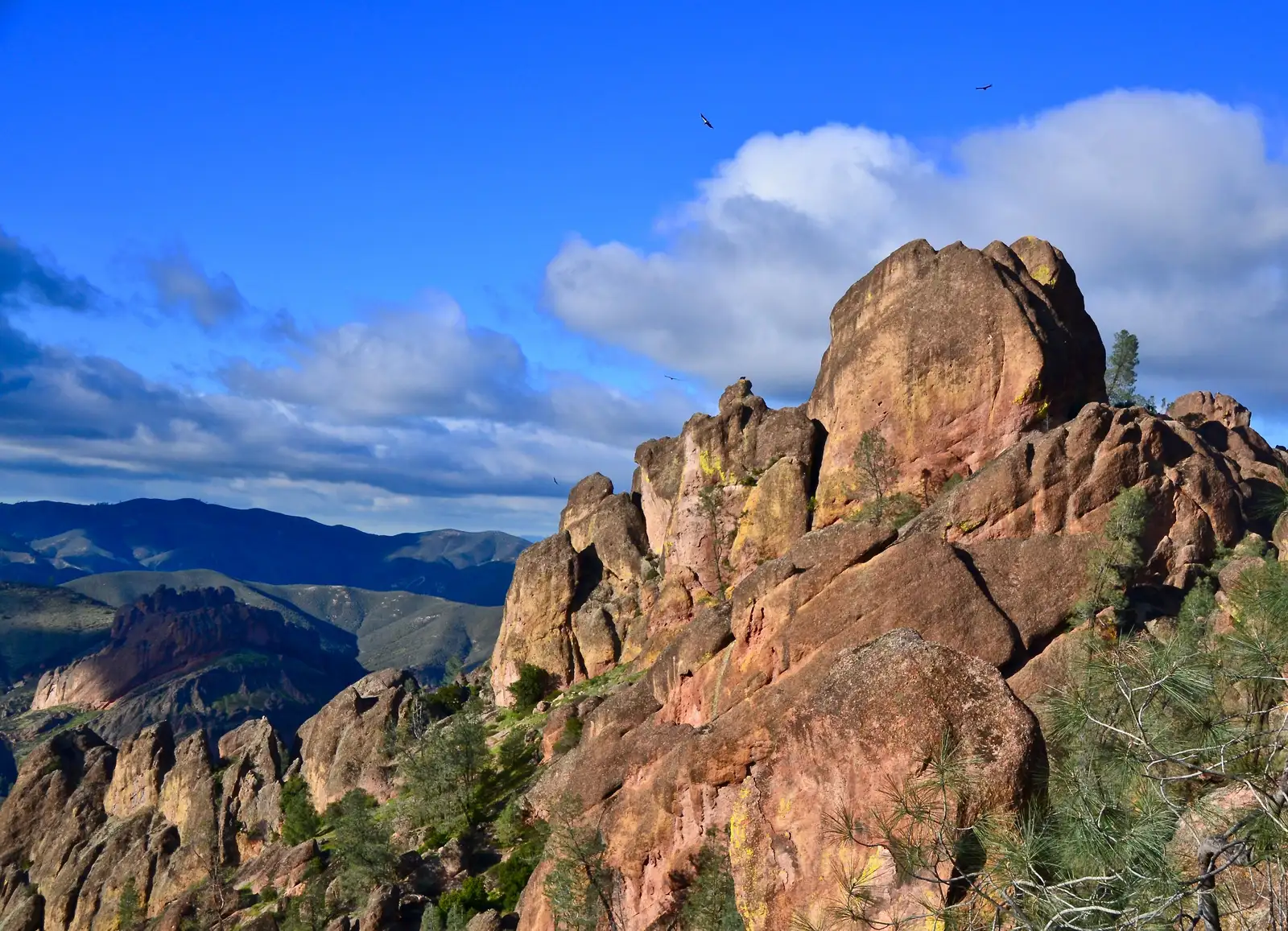
Pinnacles is the leftover of volcanoes that erupted around 23 million years ago, since eroded into a maze of rocky spires and deep, narrow canyons. Between the spires the land shifts from sun-baked chaparral to oak woodland to canyon floors that stay cool and shaded even when the ridges bake. It is a compact park with a lot of texture packed into a short distance.
It is also a birdwatching park, and that changes how you move through it. On the quieter trails the human racket thins out fast, and what fills the gap is birdsong carrying off the rock. Slow down and the canyons turn into a kind of listening room.
The pull here isn't a single overlook. It's the slow, attentive kind of walk, where the payoff grows the more you actually tune in to what is around you.
The science: In one experiment, people on a half-hour guided garden walk who were told to pay attention to the birdsong reported greater wellbeing than people who took the same walk without that instruction, while piping in extra recorded birdsong added nothing. That matters at Pinnacles, a park built for birdwatching, where the quiet chaparral and shaded canyon floors give the calls somewhere to carry. The takeaway is simple: don't just walk through, listen.
Vanhöfen, Stuck, Haag, Härtel & Randler (2025) · Landscape and Urban Planning
Seasonal guide
Crowd levels use NPS monthly visitation, averaged 2015–2025. Excludes 2020 (COVID anomaly) and 2026 (partial year). Temperatures are NOAA climate normals from a station 0.6 miles away. Busy does not mean bad. If a peak month is your only window, the season notes below tell you how to work it.
Spring is the park at its most crowded, with wildflowers, comfortable highs in the upper 60s to low 80s, and parking lots that fill before 8 a.m. It is also the best time for color and cool hiking weather. Come on a weekday, start early, and have a backup trailhead in mind.
Summers are hot and bone-dry, with highs climbing from the high 80s in June to the mid-90s in July and August. Start at dawn, carry plenty of water, and retreat to the cool, shaded canyon floors and talus caves during the afternoon heat. Nights cool off sharply, so early mornings and evenings are the comfortable windows.
Fall is the quietest stretch and one of the easiest times to find solitude. September still runs hot with highs near 90, but October eases into the low 80s and November into the 60s and 70s, with cool nights. Crowds thin out and parking opens up, making it a strong choice for a calm visit.
Winters are mild by day, with highs in the low 60s, but nights drop near freezing and this is the wettest stretch, bringing a few inches of rain a month. Pack layers for the big day-to-night temperature swings and check trail conditions after storms. Crowds stay light until February, when spring visitation begins to ramp up.
This month in the park
Timing changes everything out here. Pick a month to see when the light turns golden, which nights stay darkest for stargazing, and what visitors have actually recorded in bloom and on the move. The new-moon night is the one to plan a sky-watching evening around.
January 2027
In bloom · 17 species on record
- ❀ Big Berry Manzanita 32 sightings
- ❀ Warrior's Plume 17 sightings
- ❀ Milkmaids 12 sightings
- ❀ Bush Poppy 7 sightings
- ❀ Pointleaf manzanita 7 sightings
Wildlife on the move · 194 species on record
- Acorn Woodpecker 59 sightings
- Mule Deer 40 sightings
- California Scrub-Jay 36 sightings
- Turkey Vulture 35 sightings
- Pacific Green Sphinx 34 sightings
February 2027
In bloom · 37 species on record
- ❀ Big Berry Manzanita 46 sightings
- ❀ Warrior's Plume 36 sightings
- ❀ Pointleaf manzanita 25 sightings
- ❀ Milkmaids 21 sightings
- ❀ Hillside gooseberry 17 sightings
Wildlife on the move · 240 species on record
- California Ground Squirrel 61 sightings
- Orange-winged Carpet 51 sightings
- Acorn Woodpecker 46 sightings
- Western Fence Lizard 41 sightings
- Turkey Vulture 37 sightings
March 2027
In bloom · 112 species on record
- ❀ Fiesta Flower 123 sightings
- ❀ Blue dicks 81 sightings
- ❀ Padre's Shooting Star 70 sightings
- ❀ Bluewitch nightshade 60 sightings
- ❀ Warrior's Plume 48 sightings
Wildlife on the move · 324 species on record
- Western Fence Lizard 198 sightings
- California Ground Squirrel 144 sightings
- Acorn Woodpecker 95 sightings
- California Scrub-Jay 84 sightings
- Turkey Vulture 82 sightings
April 2027
In bloom · 194 species on record
- ❀ Coast Range triteleia 99 sightings
- ❀ Blue dicks 87 sightings
- ❀ Butterfly Mariposa Lily 61 sightings
- ❀ Monterey Monkeyflower 56 sightings
- ❀ Shy monkeyflower 56 sightings
Wildlife on the move · 447 species on record
- Western Fence Lizard 317 sightings
- California Ground Squirrel 122 sightings
- Western Whiptail 90 sightings
- Common Side-blotched Lizard 88 sightings
- Acorn Woodpecker 81 sightings
May 2027
In bloom · 225 species on record
- ❀ Butterfly Mariposa Lily 141 sightings
- ❀ Monterey Monkeyflower 91 sightings
- ❀ Woolly bluecurls 87 sightings
- ❀ Goldenstar 71 sightings
- ❀ Coast Range triteleia 60 sightings
Wildlife on the move · 603 species on record
- Western Fence Lizard 320 sightings
- Western Whiptail 236 sightings
- Variable Checkerspot 192 sightings
- California Ground Squirrel 153 sightings
- Turkey Vulture 116 sightings
June 2027
In bloom · 91 species on record
- ❀ Woolly bluecurls 52 sightings
- ❀ Goldenstar 38 sightings
- ❀ Cobwebby Thistle 31 sightings
- ❀ Monterey Monkeyflower 27 sightings
- ❀ California Wild Rose 23 sightings
Wildlife on the move · 408 species on record
- Hedgerow Hairstreak 178 sightings
- Great Copper 146 sightings
- Western Whiptail 135 sightings
- Variable Checkerspot 118 sightings
- Western Fence Lizard 102 sightings
July 2026
In bloom · 35 species on record
- ❀ California fuchsia 14 sightings
- ❀ Cobwebby Thistle 9 sightings
- ❀ Vinegar Weed 9 sightings
- ❀ Indian Valley bushmallow 9 sightings
- ❀ California Wild Rose 6 sightings
Wildlife on the move · 359 species on record
- Acorn Woodpecker 90 sightings
- Western Fence Lizard 79 sightings
- Turkey Vulture 65 sightings
- Mule Deer 64 sightings
- California Ground Squirrel 62 sightings
August 2026
In bloom · 23 species on record
- ❀ California fuchsia 7 sightings
- ❀ Vinegar Weed 7 sightings
- ❀ California Wild Rose 5 sightings
- ❀ Scarlet monkeyflower 4 sightings
- ❀ Whitestem hedgenettle 2 sightings
Wildlife on the move · 272 species on record
- Western Fence Lizard 53 sightings
- Acorn Woodpecker 44 sightings
- California Ground Squirrel 41 sightings
- Mule Deer 35 sightings
- Turkey Vulture 34 sightings
September 2026
In bloom · 25 species on record
- ❀ California fuchsia 13 sightings
- ❀ Vinegar Weed 9 sightings
- ❀ California Wild Rose 4 sightings
- ❀ Three-ray tarweed 3 sightings
- ❀ Narrowleaf milkweed 2 sightings
Wildlife on the move · 256 species on record
- Mormon Metalmark 63 sightings
- Western Fence Lizard 47 sightings
- Mule Deer 39 sightings
- California Ground Squirrel 37 sightings
- Acorn Woodpecker 34 sightings
October 2026
In bloom · 19 species on record
- ❀ California fuchsia 19 sightings
- ❀ Vinegar Weed 6 sightings
- ❀ California Wild Rose 3 sightings
- ❀ Sessileflower false goldenaster 2 sightings
- ❀ Threadleaf groundsel 2 sightings
Wildlife on the move · 257 species on record
- Mule Deer 82 sightings
- Acorn Woodpecker 65 sightings
- Mormon Metalmark 57 sightings
- Desert Tarantula 54 sightings
- Western Fence Lizard 53 sightings
November 2026
In bloom · 14 species on record
- ❀ California fuchsia 23 sightings
- ❀ Big Berry Manzanita 9 sightings
- ❀ California Buckwheat 3 sightings
- ❀ Elegant wild buckwheat 3 sightings
- ❀ Coyote brush 2 sightings
Wildlife on the move · 180 species on record
- Acorn Woodpecker 60 sightings
- California Quail 44 sightings
- Mule Deer 44 sightings
- California Scrub-Jay 38 sightings
- Turkey Vulture 33 sightings
December 2026
In bloom · 11 species on record
- ❀ Big Berry Manzanita 20 sightings
- ❀ Coyote brush 4 sightings
- ❀ Milkmaids 3 sightings
- ❀ Warrior's Plume 2 sightings
- ❀ California fuchsia 2 sightings
Wildlife on the move · 151 species on record
- Acorn Woodpecker 56 sightings
- Oak Titmouse 37 sightings
- California Scrub-Jay 33 sightings
- Mule Deer 32 sightings
- Golden-crowned Sparrow 31 sightings
Sun and moon times are computed for the park's coordinates from standard NOAA solar equations and cross-checked against the U.S. Naval Observatory. Species lists are research-grade community observations for Pinnacles National Park, US, CA via iNaturalist, retrieved July 2026; sighting counts are all-time records for that calendar month.
Don’t wait for Pinnacles.
One big trip a year isn’t what changes how you feel — the small stuff in between is. The 7-Day Nature Reset is one tiny outdoor practice a day, wherever you already are. Day one takes 60 seconds.
No spam. No noise. Just nature.
Day 1 is landing in your inbox right now — go say hi.
Sleep nearby
Most visitors base in Hollister, California, about 30 miles out. Hollister is a larger city with significantly more lodging options, restaurants, and services than the small farm town of Soledad. Soledad sits just 5 miles from the west entrance but is a small farm town with limited rooms. The map opens on Hollister, so pan toward the park to trade rooms and price for a shorter morning drive.
Camping inside the park books through Recreation.gov and is listed separately.
The map is provided by Stay22. If you book through it we may earn a commission at no cost to you, which helps keep Happier Outdoors running. It never changes what we recommend.
From the field
Common questions
When is the best time to visit Pinnacles National Park?
Fall is the sweet spot for quiet, while spring brings wildflowers and the biggest crowds. September and October are the least busy months, though September highs still push into the low 90s, and spring from March through May is peak season with comfortable 70s to low 80s and packed parking lots. Summer is hot and dry, best tackled at dawn.
Is Pinnacles National Park dog-friendly?
Dogs are welcome only in the park's developed areas and must stay on a six-foot leash. That means the campground, picnic areas, parking lots, and paved roads are open to them, but all hiking trails, the caves, and the shuttle buses are off-limits. Service animals are permitted everywhere under the ADA.
What is the quietest trail in Pinnacles National Park?
The North Wilderness and South Wilderness Trails are the least crowded routes in the park. They sit away from the main day-use hubs, are less developed, and lack the cave features that pull crowds toward High Peaks and Balconies. Their trailheads are harder to reach, which is exactly why most visitors skip them.
How crowded does Pinnacles National Park get?
Pinnacles gets busiest on spring weekends and holidays, with the heaviest traffic between 10 a.m. and 3 p.m. Mid-February through early June is peak season, and March through May draw the most people. To beat the lines and full parking lots, arrive before 8 a.m.
Is Pinnacles National Park accessible for wheelchairs and strollers?
Parts of Pinnacles are accessible, but the caves and most trails are not. A section of the Bench Trail between Peaks View and the South Wilderness Trail is partly paved and relatively flat, and both visitor centers have accessible entrances, restrooms, and parking. The talus caves and steeper trails have narrow, uneven terrain that isn't wheelchair-friendly.
Can you camp at Pinnacles National Park?
Yes, Pinnacles Campground on the east side is open year-round and is the park's only campground. It offers tent sites, RV sites with electric hookups, and group sites, plus flush toilets, coin showers, a store, and a seasonal pool. Remember the east and west entrances aren't connected by road, so the campground is reachable only from the east.
Where do you park at Pinnacles National Park?
Pinnacles has two separate entrances, east and west, that don't connect by road, and the lots at both can fill early on busy days. Arrive before 8 a.m. for popular hikes, and know that roadside parking isn't allowed anywhere. If the lots are full, the east side has a large overflow lot behind the campground store.