
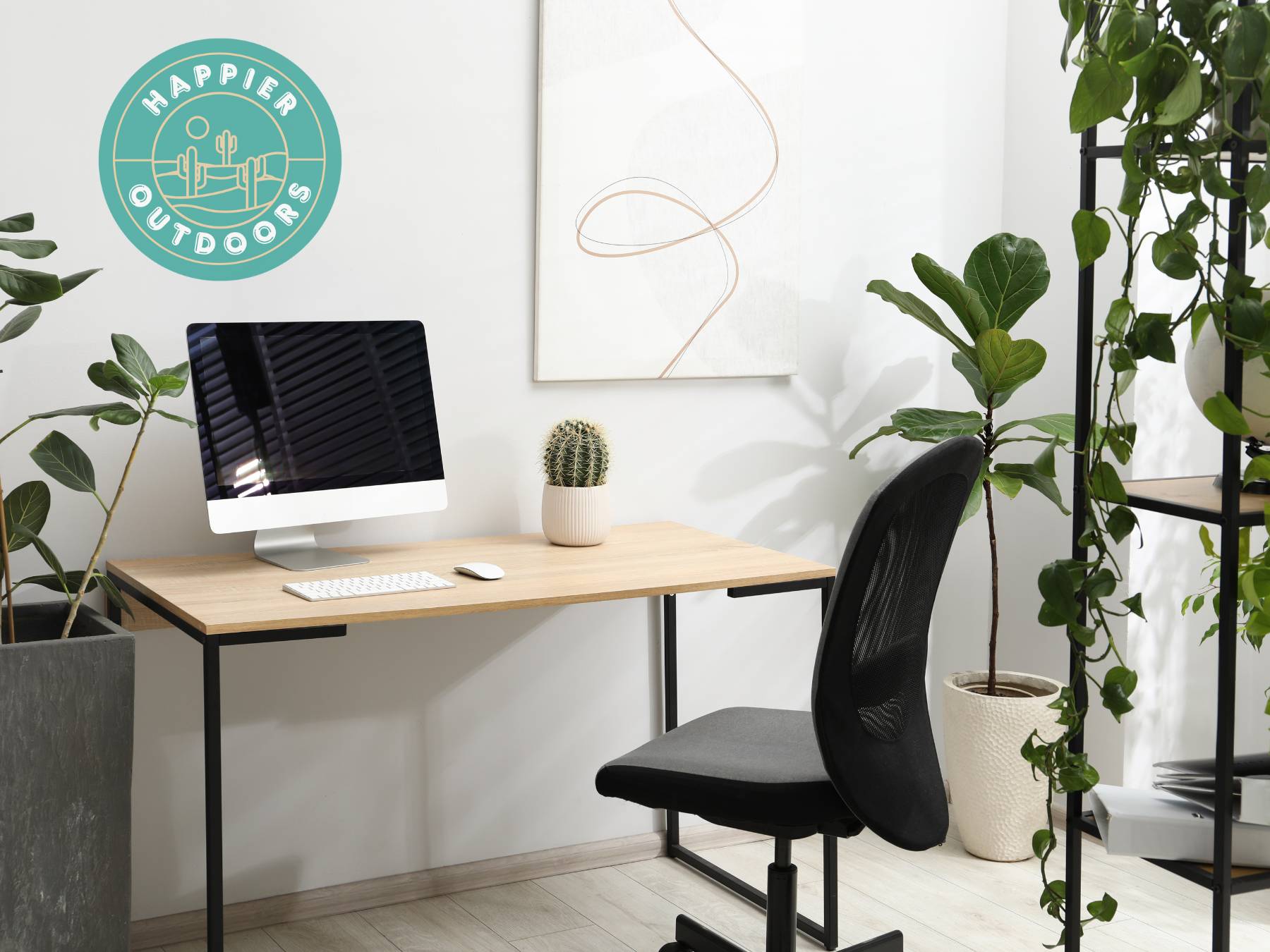
You’ve likely noticed how a walk through a forest or time spent near water leaves you feeling calmer and more focused. That’s not coincidence—it’s biology. Biophilic design taps into this innate human connection to nature, transforming sterile indoor environments into spaces that actually support your wellbeing. But here’s what most people miss: it’s far more than adding a few houseplants. The science behind it reveals something much more compelling.
The Origins and Philosophy Behind Biophilic Design
When you step into a space filled with natural light, living plants, and organic materials, you’re experiencing something deeper than just good aesthetics—you’re tapping into biophilic design.
The concept traces back to 1973 when psychoanalyst Erich Fromm coined “biophilia” to describe humanity’s passionate love for all living things. Biologist Edward O. Wilson expanded this in 1984, proposing that humans possess an innate, genetically-based connection to nature—a bond forged through evolution for survival.
This philosophy forms biophilic design’s foundation: you’re hardwired to thrive around nature. When architects and designers incorporate natural elements into buildings, they’re not just decorating—they’re addressing a fundamental human need. The approach draws from psychology, biology, and ecology to improve your physical, mental, and emotional health by reconnecting you with the natural world. Research demonstrates that even viewing natural images can lower stress levels and enhance overall wellbeing.
Core Principles That Define Biophilic Spaces
Though biophilic design draws from an ancient human-nature bond, it follows specific principles that transform ordinary spaces into environments where you naturally feel at ease.
First, you’ll notice the emphasis on organic shapes. Curves, arches, and spirals replace harsh right angles, mimicking forms found in shells, hives, and vegetation. These shapes trigger your subconscious connection to nature.
Light plays a fundamental role too. Natural light—whether direct, filtered, or reflected—creates depth and warmth while shifting shadows add dimension throughout your day.
Place-based relationships matter equally. Using local materials and native plants roots your space in its geographic and cultural context, avoiding that generic, placeless feeling.
Finally, biophilic spaces balance prospect and refuge. You need open views for awareness alongside sheltered areas for security—satisfying instincts that evolved over millennia. Incorporating water features and living plants brings nature directly into the space, engaging your senses and reinforcing that essential connection to the natural world.
Nature in the Space: Direct Connections to the Natural World
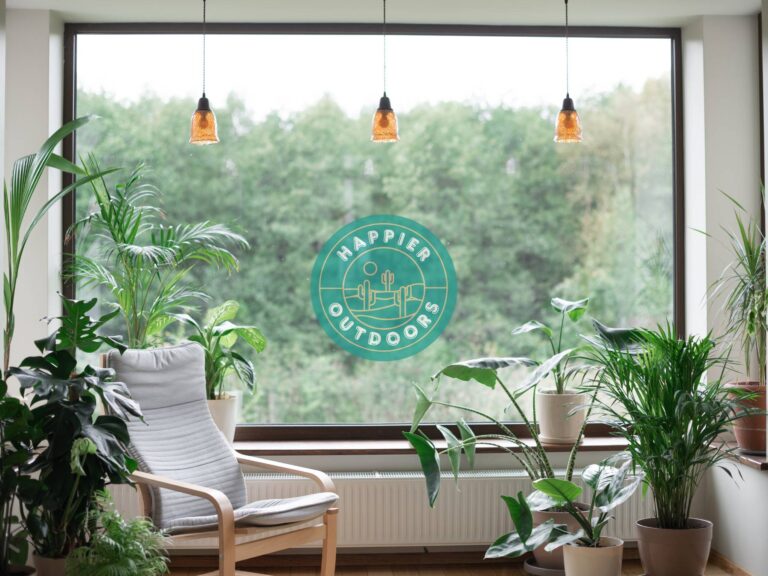
Direct connections to nature form the most intuitive layer of biophilic design—you’re literally bringing the outdoors inside. This means incorporating plants, water features, and natural light into your spaces. Large windows overlooking gardens, living green walls, and indoor fountains all qualify. These elements tap into deep evolutionary preferences—your brain’s wired to feel safe and restored in savanna-like environments. Edward O. Wilson introduced this concept in his 1984 book, explaining that this inherent affinity for nature evolved through natural selection as an adaptive trait for human survival and well-being.
Water features do double duty. They provide calming visual movement while improving humidity and acoustic comfort. Similarly, natural light regulates your circadian rhythm and boosts productivity when you use skylights or light shelves to diffuse sunlight throughout the day.
You can also design spaces that reflect natural systems—operable windows for fresh airflow, seasonal planting changes, or connections to outdoor ecosystems that reinforce your relationship with the living world.
Natural Analogues: Symbolic Representations of Nature
When you can’t bring nature directly indoors, you can still capture its essence through symbolic representations. Natural analogues let you incorporate biomimicry in design, authentic natural materials and textures, and organic patterns and forms that echo the natural world. These elements tap into your innate connection to nature, offering many of the same psychological benefits as direct natural experiences. Furniture and architectural details inspired by leaves or shells create familiar, calming forms that reduce mental strain and enhance comfort.
Biomimicry in Design
Biomimicry takes nature’s 3.8 billion years of research and development and turns it into practical design solutions you can actually use. You’re fundamentally copying nature’s homework—but ethically.
The process works by identifying a design challenge, finding organisms that’ve already solved it, and abstracting those strategies into usable principles. Think of the kingfisher’s beak inspiring quieter bullet trains, or shark skin’s texture creating bacteria-resistant surfaces for hospitals.
You’re not just copying shapes here. You’re translating functions—how polar bear fur traps heat becomes translucent fibers that transmit warmth efficiently. The Eiffel Tower’s structure mirrors human bone’s hierarchical design, maximizing strength while minimizing material. When developing these strategies, designers replace biological terms with discipline-neutral synonyms to facilitate collaboration across different fields.
These aren’t decorative choices. They’re performance-driven solutions that connect your designs to proven natural systems while supporting ecological sustainability.
Natural Materials and Textures
Natural analogues bring nature indoors through materials, textures, and symbolic forms that trigger your brain’s innate connection to the natural world. Think wood grain patterns, stone accents, and curved shapes that mimic shells or leaves. These elements don’t just look good—they create spaces where you feel calmer and more grounded.
Here’s how natural analogues work in your space:
- Materials like hardwood, cork, bamboo, and clay offer authentic textures that engage your senses
- Textures ranging from rough stone to smooth porcelain tiles replicate nature’s tactile variety
- Symbolic forms including biomorphic furniture and fractal patterns subconsciously signal safety
- Color palettes drawn from forests, water, and earth create visual harmony through greens, browns, and soft blues
You’re fundamentally bringing the outdoors in without a single plant. Options like Zest Aloe tiles mimic handcrafted Moroccan tile, adding authentic artisanal character that reinforces this natural connection.
Organic Patterns and Forms
Your brain recognizes nature’s shapes before you’re even aware of it. That’s why organic patterns and forms work so powerfully in interior design. When you incorporate curvilinear shapes inspired by leaves, shells, or water flow, you’re tapping into deep cognitive responses that promote calm and reduce stress.
You don’t need literal nature imagery. Abstract representations—stylized flowers on textiles, spiral motifs on wallpaper, or fractal patterns in architectural details—often create stronger positive effects. These symbolic cues trigger subconscious connections to the natural world while stimulating visual interest. Research shows these visual associations with organic forms also enhance cognitive performance alongside their stress-reducing benefits.
Focus on natural geometries like the Golden Angle (137 degrees) and fractal patterns with mid-range complexity. Balance matters here. Too many intricate biomorphic patterns can overwhelm your senses. The goal is engaging your mind without exhausting it.
Nature of the Space: Prospect, Refuge, and Spatial Design
When you step into a well-designed space, you instinctively scan for open views while also seeking out cozy corners—this dual impulse reflects the biophilic concepts of prospect and refuge. Jay Appleton introduced this theory in 1975, describing the human preference for seeing without being seen. Prospect gives you unobstructed sightlines that reduce stress and boost your sense of control, while refuge offers enclosed, protected areas where you can recharge and focus. Balancing these opposing needs through thoughtful spatial design creates environments where you feel both safe and free.
Prospect and Refuge Explained
Although modern life often feels far removed from our ancestors’ daily struggles for survival, your brain still carries ancient programming that shapes how you experience space. Prospect and refuge theory, formalized by Jay Appleton in 1975, explains why certain environments feel instinctively comfortable.
What your brain is seeking:
- Prospect gives you open sightlines and awareness—you can see what’s coming
- Refuge provides protected enclosure—you’re sheltered but not trapped
- Balance between both creates ideal psychological comfort
- Connection to the wider space prevents isolation while maintaining security
Neuroscience confirms these preferences aren’t just psychological—they’re physiological. Spaces combining prospect and refuge lower your heart rate, reduce blood pressure, and improve concentration. You’ll naturally gravitate toward spots offering a view while keeping your back protected.
Spatial Safety Through Design
Understanding prospect and refuge gives you the foundation, but applying these principles requires specific design strategies that make spaces feel genuinely safe. You’ll want to create alcoves, nooks, and partially enclosed seating areas where people can retreat while maintaining visibility of their surroundings.
Transitional spaces matter too. Think entryways, corridors with natural light, and buffer zones that ease movement between different areas. These gradual shifts prevent the jarring feeling of abrupt spatial changes.
Incorporate natural forms—arches, curves, and organic materials like wood and stone. These elements trigger subconscious feelings of shelter and calm. Fractal patterns and biomorphic shapes add sensory richness without overwhelming the space.
Finally, ascertain your design integrates parts into a coherent whole. Clear boundaries, focal points, and logical spatial sequences create legible environments that reduce stress and support genuine comfort.
Health and Psychological Benefits of Biophilic Environments
Biophilic design does more than make spaces look appealing—it delivers measurable health benefits that affect your body and mind. When you’re surrounded by natural elements, your stress hormones drop, your blood pressure stabilizes, and your mood improves. Research shows patients in biophilic healthcare settings leave hospitals nearly four days sooner and need considerably less pain medication.
Here’s what biophilic environments can do for you:
- Reduce cortisol levels and lower anxiety through natural light and nature views
- Boost cognitive performance by improving memory, focus, and problem-solving abilities
- Accelerate physical healing with shorter recovery times and reduced pain perception
- Prevent burnout by fostering emotional resilience and job satisfaction
These aren’t just aesthetic choices—they’re evidence-based strategies that support your overall wellbeing.
Practical Elements for Implementing Biophilic Design
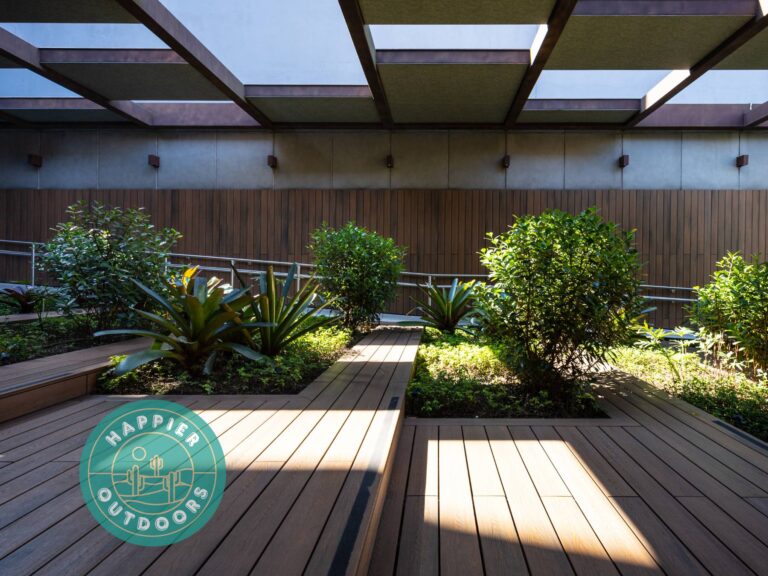
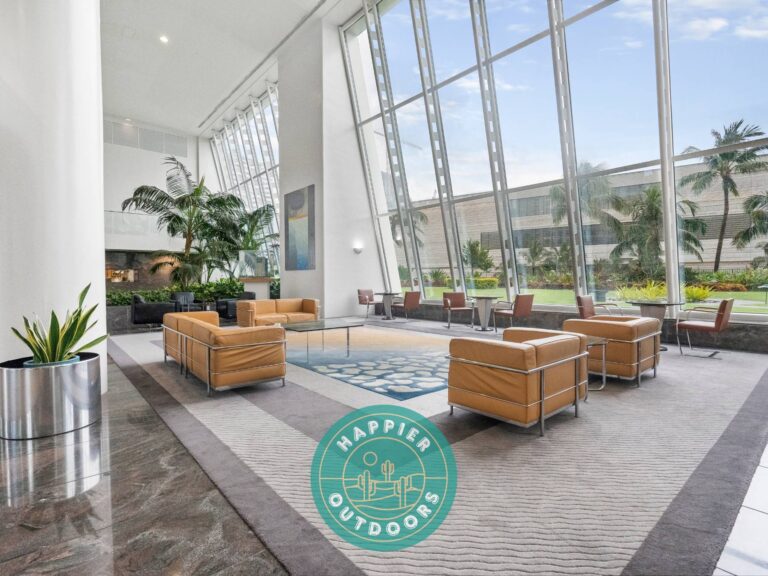
Turning biophilic principles into reality requires thoughtful planning and a toolkit of practical strategies. You’ll want to maximize natural light through expansive windows and skylights while incorporating living elements like green walls and indoor plants.
Consider adding water features such as fountains or reflecting pools to engage multiple senses. Choose natural materials—wood, stone, bamboo—that you can actually touch and feel. These should be sustainable and low-VOC to protect both your health and the environment.
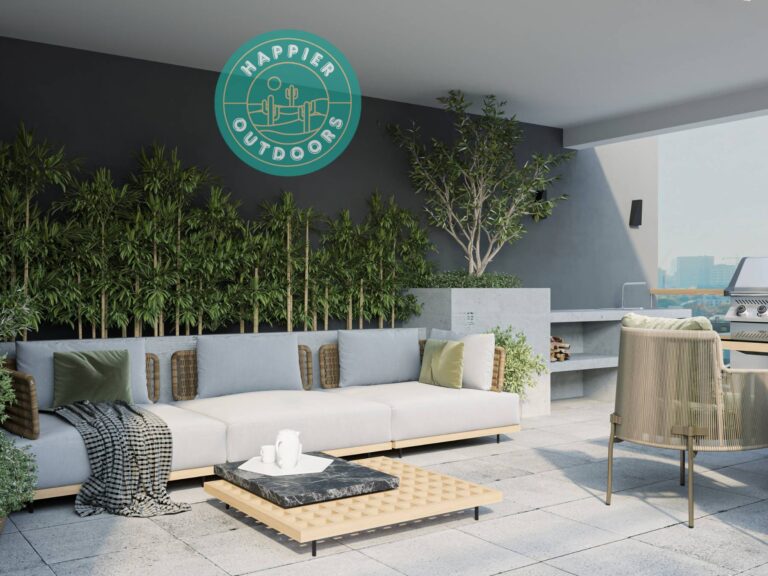
Don’t forget spatial design. Create prospect and refuge areas that offer both open views and cozy retreats. Blend indoor and outdoor spaces through courtyards or terraces. Engage all your senses by introducing natural sounds, varying temperatures, and plant fragrances. These elements work together to create spaces that genuinely connect you with nature.
Creating Place-Based Connections Through Local Materials and Culture
While practical elements form the foundation of biophilic design, the most impactful spaces go deeper—they root themselves in the specific place where they exist. You’re not just adding plants—you’re connecting occupants to their unique environment through materials and cultural touchstones that tell a local story.
When you source indigenous stones, woods, and natural resources from the surrounding landscape, you create authenticity that generic materials can’t match. Local craftsmanship techniques link your space to cultural narratives and community heritage.
Here’s how place-based connections strengthen biophilic design:
- Use materials reflecting local geology and biodiversity to build environmental awareness
- Incorporate traditional motifs and cultural symbols that resonate with community identity
- Design viewsheds connecting interior spaces to prominent natural landmarks
- Respond to local climate patterns through region-specific ventilation and daylighting strategies
Closing Thoughts
You’ve now discovered how biophilic design transforms ordinary rooms into restorative sanctuaries. Whether you’re adding plants, maximizing natural light, or incorporating organic textures, you’re investing in your wellbeing. Don’t wait for a major renovation—start small and let nature guide your choices. Your mind and body will thank you for creating spaces that honor our innate connection to the natural world.