White Sands National Park
Alamogordo, New Mexico · Southwest
A world reduced to white and sky
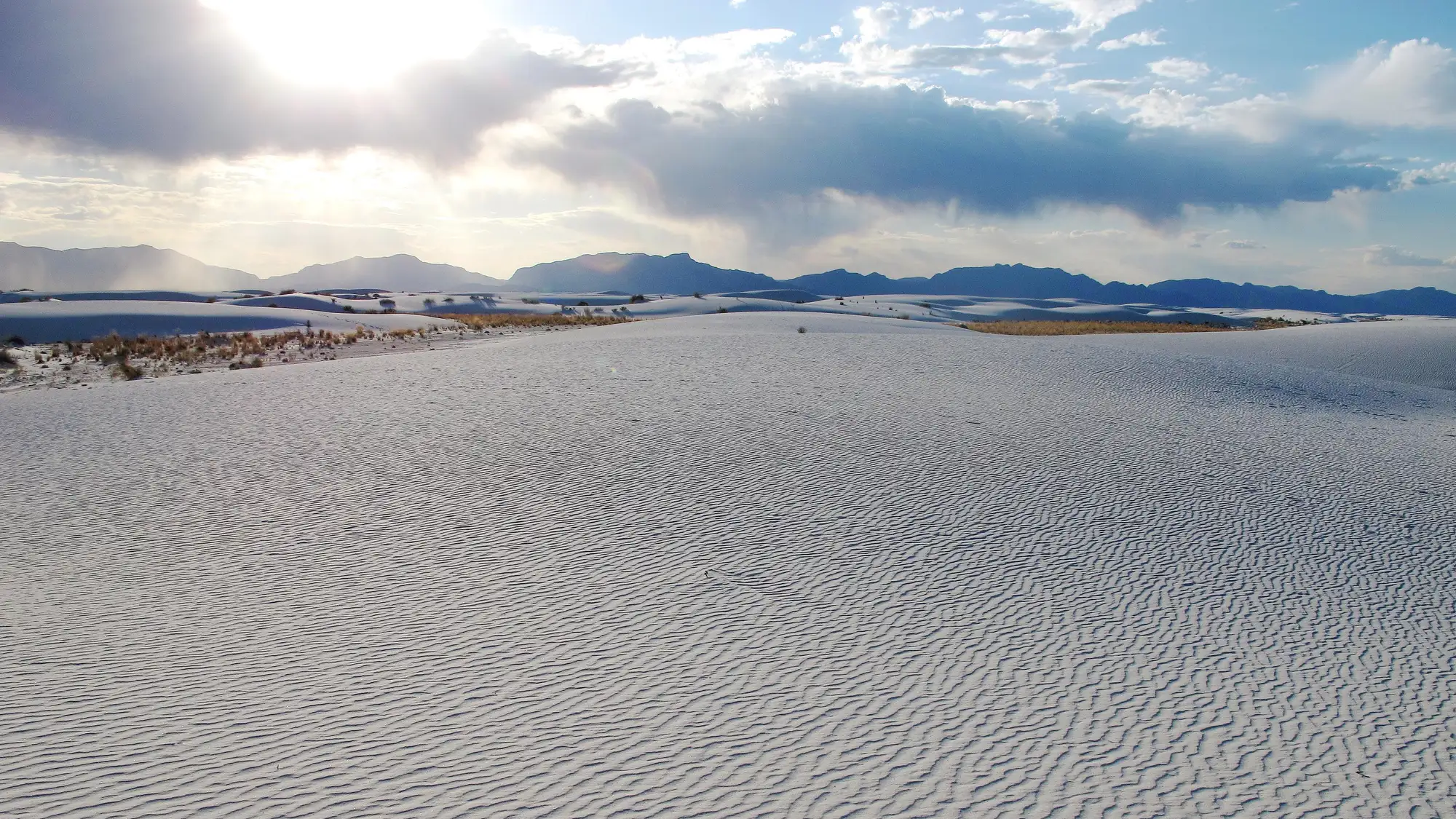
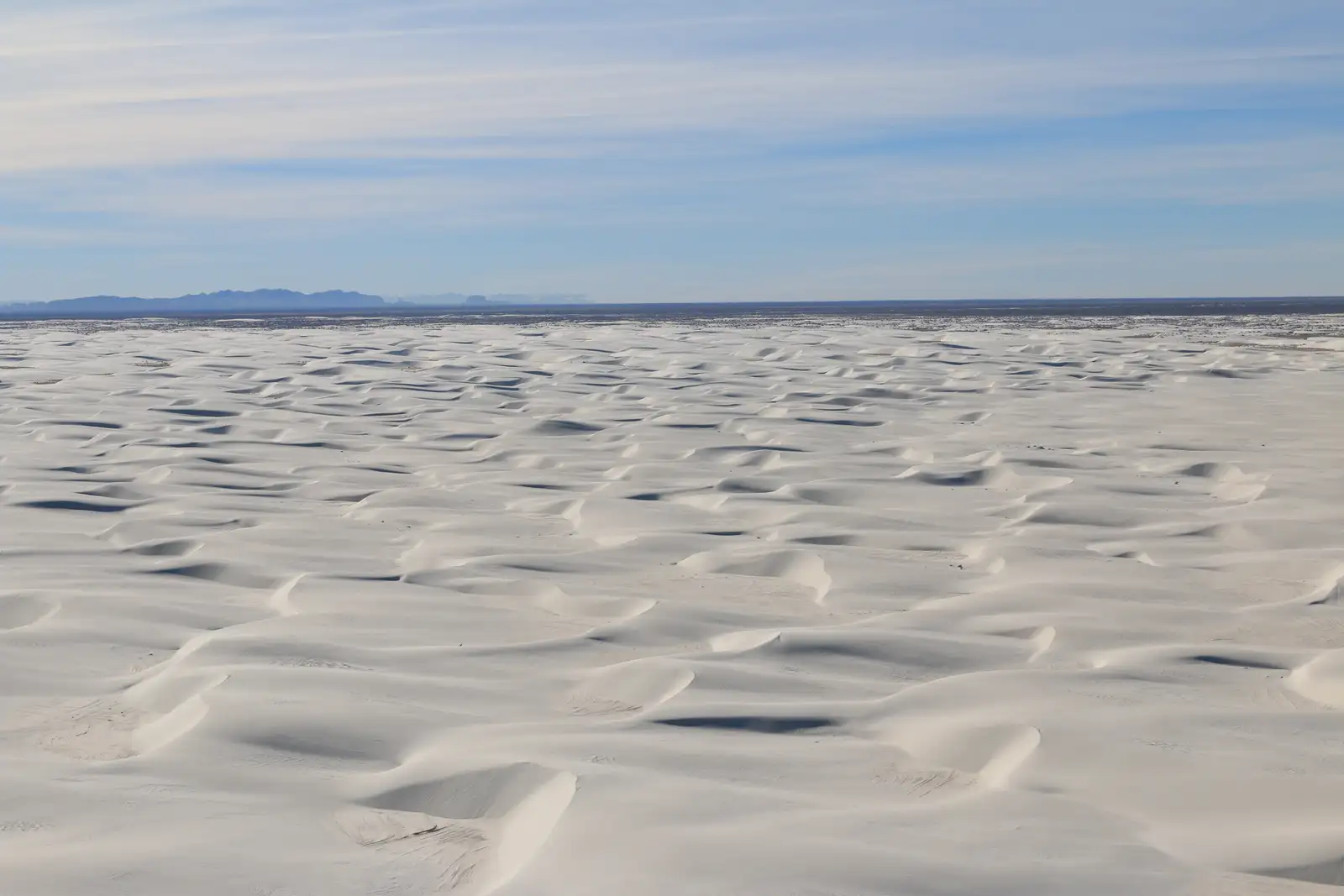
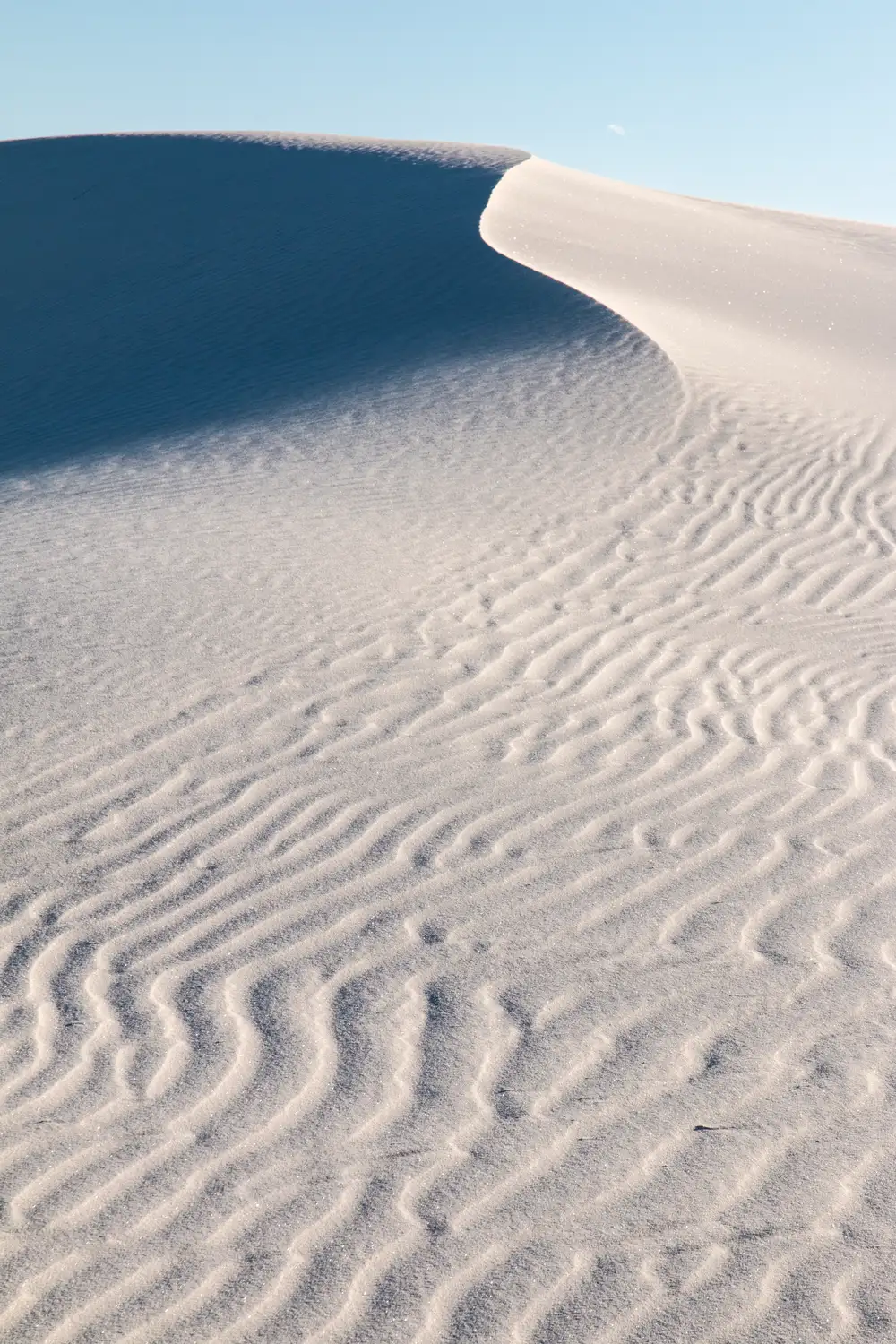
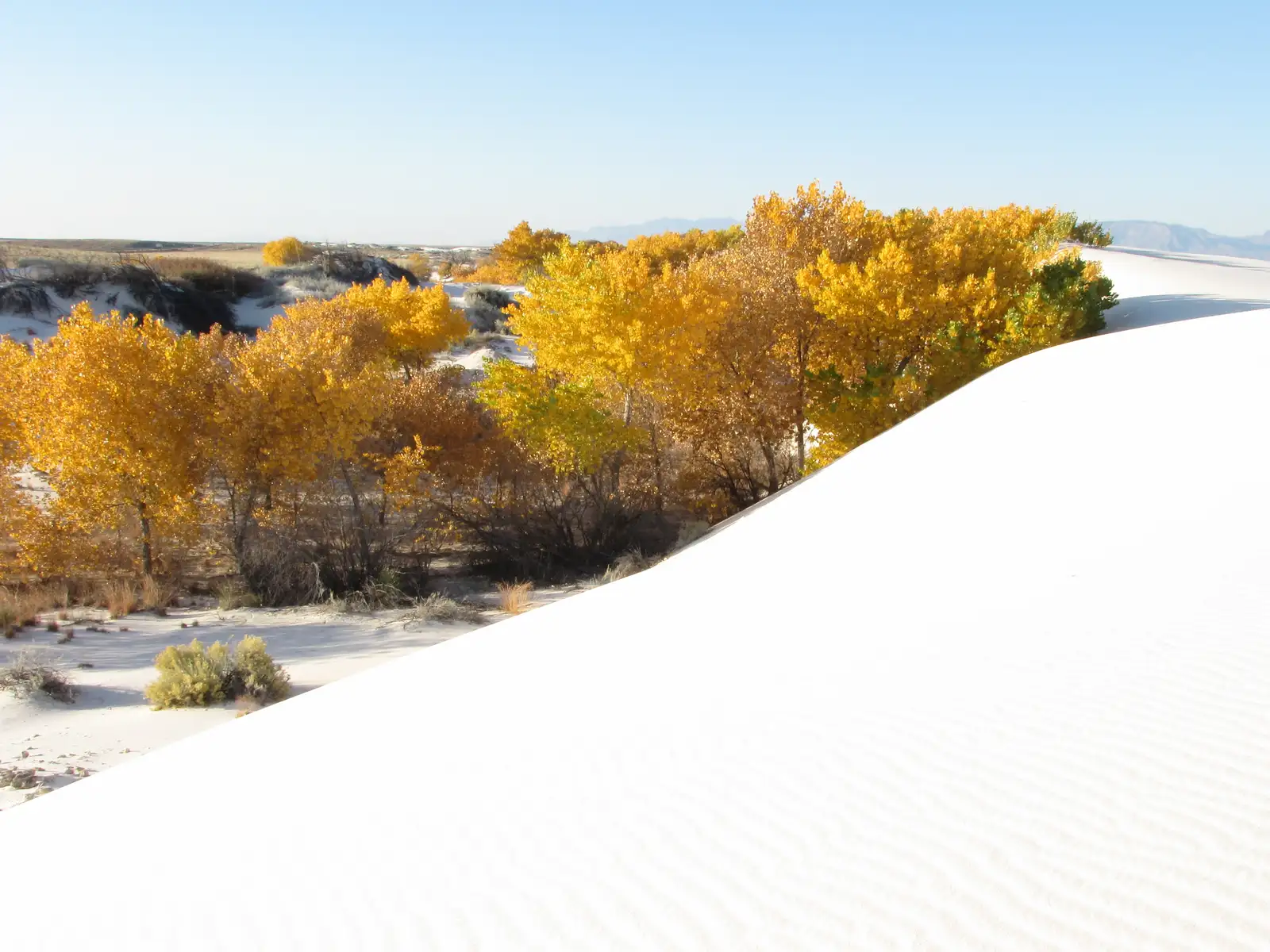
White Sands is a landscape with the volume turned down. Wave after wave of white gypsum rolls across 275 square miles of the Tularosa Basin, the largest dunefield of its kind on Earth. There are few landmarks to fix on, just pale sand meeting hard blue sky, and the gypsum stays cool underfoot even when the air runs hot.
That emptiness is the unusual part, and it does real work. Most places hand the eye a hundred things to track and sort. Here there is almost nothing to name, which leaves a busy mind with very little to snag on. Walking a dune with no particular destination is close to the plain definition of being away from demand.
The park keeps this within easy reach. Dunes Drive runs eight miles into the heart of the dunefield, so you can pull over, climb a ridge, and stand in the open without committing to a long hike. A short stop counts here as much as a full day.
The science: In one experiment, men who spent ten minutes in a virtual desert viewed through a VR headset showed lower salivary cortisol than men who sat in a virtual office, even though the arid scene held almost no plant life. At White Sands the greenery is just as scarce, and that is the point: a body can down-shift in a place with no forest and no water, on white sand under open sky alone.
Yin, Bratman, Browning, Spengler & Olvera-Alvarez (2022) · Journal of Environmental Psychology
Seasonal guide
Crowd levels use NPS monthly visitation, averaged 2015–2025. Excludes 2020 (COVID anomaly) and 2026 (partial year). Temperatures are NOAA climate normals from a station 9.2 miles away. Busy does not mean bad. If a peak month is your only window, the season notes below tell you how to work it.
Spring is the windy season, with highs climbing from the low 70s in March to the upper 80s by May and gypsum lifting off the dunes on gusty afternoons. March is the single busiest month of the year. Start early before both the wind and the crowds build, and bring eye protection for blowing sand.
Summer highs sit near 97F with almost no shade anywhere on the dunes, and July and August bring afternoon monsoon thunderstorms. Begin at gate opening, carry far more water than feels necessary, and watch the sky, since lightning is a real hazard in the open. The cool gypsum underfoot helps, but the air does not.
Fall is the park's most comfortable stretch, with mild daytime highs falling from the upper 80s into the 60s and cool, calm evenings. Crowds thin after the summer peak, and this is the window the park itself recommends. Nights turn cold by November, so pack a warm layer for late walks.
Winter is the quietest season, with mild days in the upper 50s to low 60s and cold nights dropping into the low 20s. This is when the dunefield feels most empty, and low winter light makes the white sand especially bright. Dress in layers and plan to be off the dunes before the temperature falls after sunset.
This month in the park
Timing changes everything out here. Pick a month to see when the light turns golden, which nights stay darkest for stargazing, and what visitors have actually recorded in bloom and on the move. The new-moon night is the one to plan a sky-watching evening around.
January 2027
Wildlife on the move · 23 species on record
- House Sparrow 5 sightings
- Sagebrush Sparrow 5 sightings
- Gemsbok 4 sightings
- Horned Lark 3 sightings
- Northern Harrier 3 sightings
February 2027
Wildlife on the move · 14 species on record
- House Sparrow 3 sightings
- Common Side-blotched Lizard 3 sightings
- Common Raven 2 sightings
- Gemsbok 2 sightings
- House Finch 2 sightings
March 2027
Wildlife on the move · 52 species on record
- Western Earless Lizard 14 sightings
- Rough-lipped Darkling Beetle 14 sightings
- Convergent Lady Beetle 6 sightings
- House Finch 6 sightings
- Common Side-blotched Lizard 4 sightings
April 2027
In bloom · 5 species on record
- ❀ Frosted Mint 2 sightings
- ❀ Purple sand verbena 2 sightings
- ❀ Eastern Cottonwood 1 sightings
- ❀ Kingcup Cactus 1 sightings
- ❀ Scarlet hedgehog cactus 1 sightings
Wildlife on the move · 48 species on record
- Western Earless Lizard 50 sightings
- Rough-lipped Darkling Beetle 24 sightings
- Barn Swallow 8 sightings
- Southwestern Fence Lizard 7 sightings
- House Finch 7 sightings
May 2027
In bloom · 17 species on record
- ❀ Purple sand verbena 13 sightings
- ❀ Soaptree yucca 8 sightings
- ❀ Frosted Mint 6 sightings
- ❀ Kingcup Cactus 4 sightings
- ❀ Rayless Greenthread 2 sightings
Wildlife on the move · 62 species on record
- Western Earless Lizard 64 sightings
- Barn Swallow 22 sightings
- Rough-lipped Darkling Beetle 21 sightings
- Southwestern Fence Lizard 14 sightings
- Nevada Buck Moth 10 sightings
June 2027
In bloom · 17 species on record
- ❀ Purple sand verbena 5 sightings
- ❀ Soaptree yucca 5 sightings
- ❀ Hartweg's Sundrops 2 sightings
- ❀ White Sands fanmustard 2 sightings
- ❀ Hairy Crinklemat 2 sightings
Wildlife on the move · 74 species on record
- Western Earless Lizard 97 sightings
- Barn Swallow 29 sightings
- Southwestern Fence Lizard 21 sightings
- Common Side-blotched Lizard 10 sightings
- Little Striped Whiptail 10 sightings
July 2026
In bloom · 8 species on record
- ❀ Catchfly prairie gentian 5 sightings
- ❀ Hartweg's Sundrops 1 sightings
- ❀ Pale Evening Primrose 1 sightings
- ❀ Purple sand verbena 1 sightings
- ❀ Hairy Crinklemat 1 sightings
Wildlife on the move · 62 species on record
- Western Earless Lizard 81 sightings
- Southwestern Fence Lizard 19 sightings
- Barn Swallow 16 sightings
- Tablelands Flag-Bearer 13 sightings
- Little Striped Whiptail 8 sightings
August 2026
In bloom · 6 species on record
- ❀ Purple sand verbena 2 sightings
- ❀ Gypsum Centaury 2 sightings
- ❀ Field bindweed 1 sightings
- ❀ Alkali Sacaton 1 sightings
- ❀ Hairy Crinklemat 1 sightings
Wildlife on the move · 82 species on record
- Western Earless Lizard 52 sightings
- Southwestern Fence Lizard 24 sightings
- Rough-lipped Darkling Beetle 20 sightings
- Eleodes acuta 10 sightings
- Eleodes caudifera 8 sightings
September 2026
In bloom · 3 species on record
- ❀ Hairy Crinklemat 2 sightings
- ❀ Tree cholla 1 sightings
- ❀ Southwestern Rabbitbrush 1 sightings
Wildlife on the move · 59 species on record
- Western Earless Lizard 23 sightings
- Rough-lipped Darkling Beetle 16 sightings
- Barn Swallow 8 sightings
- Southwestern Fence Lizard 7 sightings
- Convergent Lady Beetle 5 sightings
October 2026
In bloom · 4 species on record
- ❀ Purple sand verbena 2 sightings
- ❀ Redwhisker clammyweed 1 sightings
- ❀ Hartweg's Sundrops 1 sightings
- ❀ Pale Evening Primrose 1 sightings
Wildlife on the move · 69 species on record
- Western Earless Lizard 19 sightings
- Mesquite Girdler 12 sightings
- Southwestern Fence Lizard 9 sightings
- Nevada Buck Moth 9 sightings
- Common Side-blotched Lizard 6 sightings
November 2026
In bloom · 2 species on record
- ❀ Rubber Rabbitbrush 1 sightings
- ❀ Purple sand verbena 1 sightings
Wildlife on the move · 59 species on record
- Convergent Lady Beetle 10 sightings
- Sagebrush Sparrow 8 sightings
- Painted Lady 7 sightings
- Western Pygmy-Blue 5 sightings
- Nevada Buck Moth 5 sightings
December 2026
Wildlife on the move · 31 species on record
- White-crowned Sparrow 5 sightings
- Common Raven 3 sightings
- Greater Roadrunner 2 sightings
- Horned Lark 2 sightings
- Loggerhead Shrike 2 sightings
Sun and moon times are computed for the park's coordinates from standard NOAA solar equations and cross-checked against the U.S. Naval Observatory. Species lists are research-grade community observations for White Sands National Park, US, NM via iNaturalist, retrieved July 2026; sighting counts are all-time records for that calendar month.
Don’t wait for White Sands.
One big trip a year isn’t what changes how you feel — the small stuff in between is. The 7-Day Nature Reset is one tiny outdoor practice a day, wherever you already are. Day one takes 60 seconds.
No spam. No noise. Just nature.
Day 1 is landing in your inbox right now — go say hi.
Sleep nearby
Places to stay around Alamogordo, New Mexico. Pan the map to trade a shorter drive for a quieter night.
Camping inside the park books through Recreation.gov and is listed separately.
The map is provided by Stay22. If you book through it we may earn a commission at no cost to you, which helps keep Happier Outdoors running. It never changes what we recommend.
Activities & experiences
Beyond the trails
Bring a sled and some friends to the Roadrunner Picnic Area. It is a good spot to slide down the dunes together.
For the tallest dunes to sled, head to the parking area at the Alkali Flat trailhead.
Three picnic areas give you shade, a place to rest, and a way into the dunes.
Details and current conditions live on nps.gov.
From the field
Common questions
When is the best time to visit White Sands National Park?
September, October, and early November are the park's recommended window for pleasant weather with smaller crowds. Fall brings mild daytime temperatures and cool nights, while spring stays busy and windy and summer highs climb toward the upper 90s.
Is White Sands National Park dog-friendly?
Yes, but leashed dogs are limited to front-country areas only. Pets on a leash of six feet or less are welcome in parking areas, the Roadrunner Picnic Area, and along Dunes Drive, but they are not allowed on any hiking trail or inside the visitor center. Service animals are permitted throughout unless an area is closed.
How crowded does White Sands National Park get?
It is the most visited National Park Service site in New Mexico, drawing over 700,000 visitors a year, so it gets genuinely crowded in peak months. March is the busiest month, and the park sees more than 60,000 visitors monthly from March through July, with the heaviest traffic on the main dune areas and the Dune Life, Playa, and Interdune Boardwalk trails.
Is White Sands National Park accessible for wheelchairs and strollers?
The visitor center is fully accessible, but trail access is limited. The Interdune Boardwalk is the park's one wheelchair- and stroller-friendly trail, though it is currently closed, so check with rangers for alternatives. All other trails cross soft sand and are not wheelchair accessible, and accessible vault toilets sit at every trailhead and picnic area along Dunes Drive.
Can you camp at White Sands National Park?
All camping is by permit only, and permits are issued at the park entrance booth on the day of camping. There is no advance booking system, and backcountry camping sites are currently closed, so confirm availability before planning an overnight stay.
Where do you park at White Sands National Park?
Parking is available at the front lot near Highway 70 and at trailheads and picnic areas along Dunes Drive. The eight-mile Dunes Drive is paved for the first four miles and compacted sand for the second four, which most vehicles can navigate, and the front lot has two accessible parking areas.
How much does it cost to enter White Sands National Park?
Entry is $25 per private vehicle, valid for seven consecutive days. Motorcycles are $20 and individuals arriving on foot or by bicycle pay $15 per person, while an annual park pass is $45.
What are the park's hours?
The park gates open daily at 7:00 am and close 30 minutes after local sunset. Closing times shift with the season, and local sunset runs about eight minutes earlier than Alamogordo's, so check a sunset time for the day you plan to visit.