
Voyageurs National Park
International Falls, Minnesota
Out on the water, the looping settles
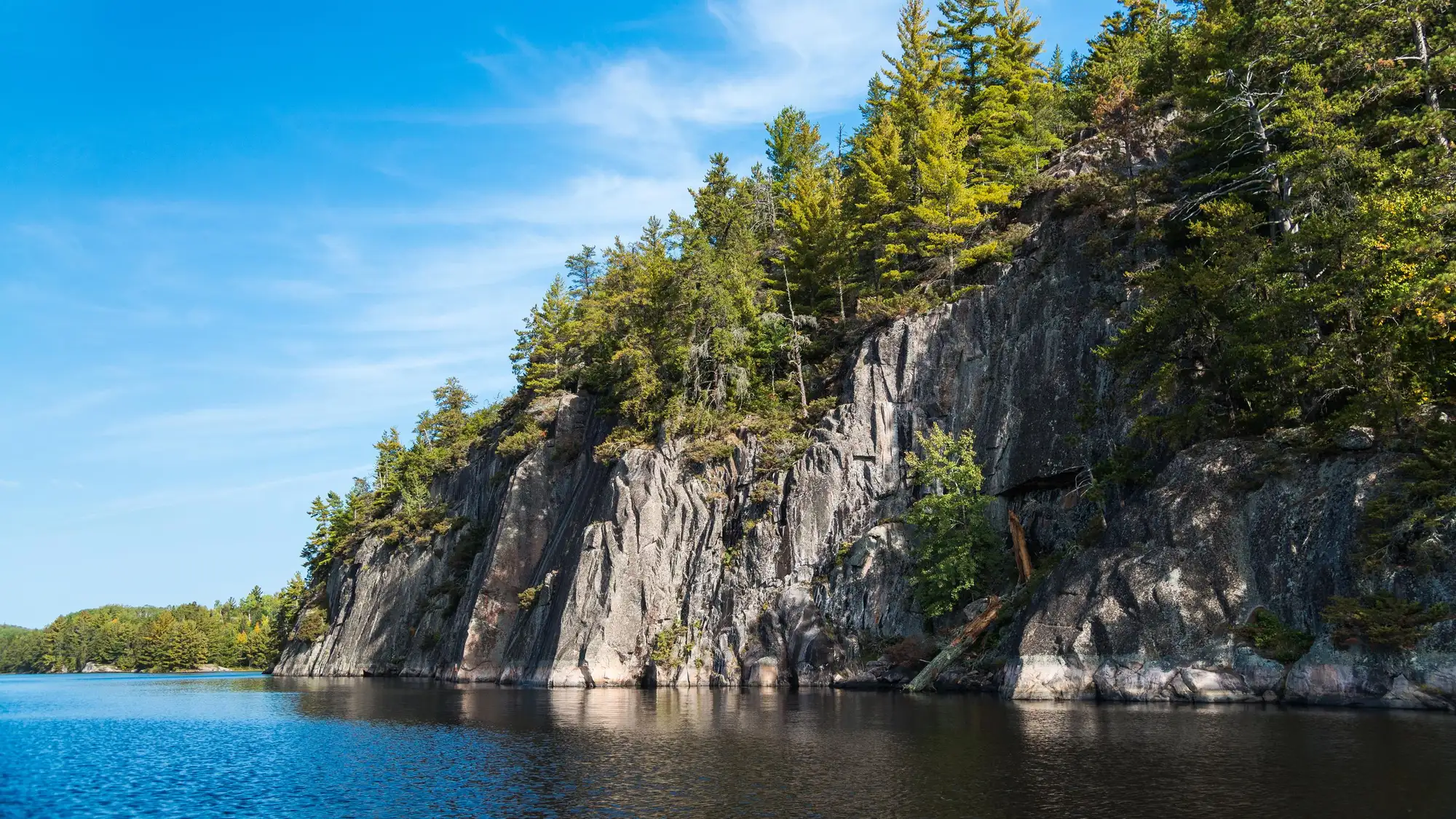
Voyageurs works more like water than land. Its 218,000 acres of lakes, forests, and streams sit along the Canadian border in far northern Minnesota, and the park is named for the French-Canadian voyageurs who once moved through here by canoe. Nearly every campsite is reached by boat, and much of the park has no road to it at all.
That changes the pace of a visit. Instead of ticking off overlooks from a parking lot, you are on the water, watching a shoreline slide past and listening for loons across a bay. Most of the park has no cell signal, and once the motor is off or a paddle finds its rhythm, the day gets very simple.
A mind that spends its days managing inputs rarely lands somewhere like this. When the surroundings ask almost nothing of you, the running commentary in your head has less to feed on.
The science: A 2015 study in PNAS by Bratman and colleagues found that a 90-minute walk in a natural setting quieted rumination, the repetitive brooding a busy mind falls into, in a way an equally long walk through the city did not. Voyageurs delivers that same quieting through slow travel across open water, where a paddle stroke and a far shoreline are about all there is to track. Hours of that, with no signal pulling at you, and the loop tends to run out of fuel.
Bratman, Hamilton, Hahn, Daily & Gross (2015) · PNAS
Seasonal guide
Crowd levels use NPS monthly visitation, averaged 2015–2025. Excludes 2020 (COVID anomaly) and 2026 (partial year). Temperatures are NOAA climate normals from a station 10.9 miles away. Busy does not mean bad. If a peak month is your only window, the season notes below tell you how to work it.
Spring swings hard here: March highs sit near 35F, but by May they reach the low 60s. The big hazard is ice, which usually clears the lakes around May 3, and early-spring lake surfaces can be dangerously thin. Come in mid to late May and you get open water, waking wildlife, and far smaller crowds than summer.
This is the park's peak, with highs in the mid-70s and every lake open for boating, paddling, fishing, and swimming. Weekends, holidays, and Kettle Falls draw the biggest crowds, so book campsites early and launch in the morning. Spread out to the eastern lakes or boat-in trails and you can still find water to yourself.
September still reaches the mid-60s and October cools to around 51F, with fall color on the shorelines and thinning crowds; by November highs drop to the mid-30s and the park empties out. Late fall brings thin, unpredictable ice, so treat the lakes with caution. This is a strong window for cool, quiet paddling and clear, dark nights for aurora and stars.
Winter is cold and quiet, with highs from 15F to 21F and lows well below zero once the lakes freeze solid. Snowmobiling, cross-country skiing, and snowshoeing take over, and the long dark nights are excellent for the northern lights. Dress in serious layers, check ice conditions before heading out, and plan around the short daylight.
This month in the park
Timing changes everything out here. Pick a month to see when the light turns golden, which nights stay darkest for stargazing, and what visitors have actually recorded in bloom and on the move. The new-moon night is the one to plan a sky-watching evening around.
January 2027
Wildlife on the move · 5 species on record
- Ruffed Grouse 1 sightings
- American Red Squirrel 1 sightings
- Sauger 1 sightings
- Yellow Perch 1 sightings
- Cisco 1 sightings
February 2027
Wildlife on the move · 10 species on record
- Black-backed Woodpecker 4 sightings
- Pine Grosbeak 3 sightings
- Ruffed Grouse 1 sightings
- Common Raven 1 sightings
- Common Raccoon 1 sightings
March 2027
Wildlife on the move · 4 species on record
- Eastern Chipmunk 1 sightings
- American Red Squirrel 1 sightings
- Lake Trout 1 sightings
- Virginia Ctenucha Moth 1 sightings
April 2027
Wildlife on the move · 6 species on record
- Ruffed Grouse 1 sightings
- Red-breasted Nuthatch 1 sightings
- North American River Otter 1 sightings
- American Red Squirrel 1 sightings
- Mourning Cloak 1 sightings
May 2027
In bloom · 3 species on record
- ❀ Bearberry 2 sightings
- ❀ Arctic Butterbur 1 sightings
- ❀ Northern starflower 1 sightings
Wildlife on the move · 51 species on record
- Common Garter Snake 5 sightings
- Ruffed Grouse 3 sightings
- Painted Turtle 3 sightings
- Common Loon 2 sightings
- Bald Eagle 2 sightings
June 2027
In bloom · 31 species on record
- ❀ Pink lady's slipper 6 sightings
- ❀ Canadian bunchberry 3 sightings
- ❀ Bluebead lily 3 sightings
- ❀ Northern starflower 3 sightings
- ❀ Red columbine 2 sightings
Wildlife on the move · 233 species on record
- Rosy Maple Moth 39 sightings
- Chalk-fronted Corporal 25 sightings
- Dusky Clubtail 22 sightings
- Pronghorn Clubtail 22 sightings
- Red-spotted Admiral 20 sightings
July 2026
In bloom · 28 species on record
- ❀ Fireweed 4 sightings
- ❀ Spreading dogbane 2 sightings
- ❀ Northern blue flag 2 sightings
- ❀ Red columbine 2 sightings
- ❀ Pearly everlasting 2 sightings
Wildlife on the move · 196 species on record
- Bald Eagle 20 sightings
- American Red Squirrel 18 sightings
- Common Loon 17 sightings
- Rosy Maple Moth 15 sightings
- Green Frog 13 sightings
August 2026
In bloom · 10 species on record
- ❀ American white waterlily 2 sightings
- ❀ Pearly everlasting 2 sightings
- ❀ Indian tobacco 2 sightings
- ❀ Large-leaved aster 2 sightings
- ❀ Tiger lily 1 sightings
Wildlife on the move · 154 species on record
- Red-spotted Admiral 16 sightings
- American Red Squirrel 11 sightings
- Rosy Maple Moth 9 sightings
- Northern Pike 9 sightings
- Bald Eagle 8 sightings
September 2026
In bloom · 12 species on record
- ❀ Large-leaved aster 6 sightings
- ❀ Common boneset 2 sightings
- ❀ Bird's-foot trefoil 1 sightings
- ❀ Smooth sumac 1 sightings
- ❀ Water smartweed 1 sightings
Wildlife on the move · 89 species on record
- Green Frog 9 sightings
- American Red Squirrel 8 sightings
- Ruffed Grouse 6 sightings
- Common Garter Snake 6 sightings
- Bald Eagle 5 sightings
October 2026
Wildlife on the move · 18 species on record
- Ruffed Grouse 4 sightings
- American Red Squirrel 3 sightings
- Common Garter Snake 2 sightings
- American Toad 2 sightings
- Common Loon 1 sightings
November 2026
Wildlife on the move · 5 species on record
- Common Loon 1 sightings
- White-tailed Deer 1 sightings
- American Beaver 1 sightings
- American Red Squirrel 1 sightings
- American Mink 1 sightings
December 2026
Wildlife on the move · 2 species on record
- Gray Wolf 1 sightings
- Stream Cruiser 1 sightings
Sun and moon times are computed for the park's coordinates from standard NOAA solar equations and cross-checked against the U.S. Naval Observatory. Species lists are research-grade community observations for Voyageurs National Park, US, MN via iNaturalist, retrieved July 2026; sighting counts are all-time records for that calendar month.
Don’t wait for Voyageurs.
One big trip a year isn’t what changes how you feel — the small stuff in between is. The 7-Day Nature Reset is one tiny outdoor practice a day, wherever you already are. Day one takes 60 seconds.
No spam. No noise. Just nature.
Day 1 is landing in your inbox right now — go say hi.
Sleep nearby
Most visitors base in International Falls, Minnesota, about 12 miles out. It's the largest nearby city with far more rooms, resorts, and better prices than the smaller gateway towns. Staying in Ranier puts you just 15 minutes from the visitor center but offers far fewer rooms. The map opens on International Falls, so pan toward the park to trade rooms and price for a shorter morning drive.
Camping inside the park books through Recreation.gov and is listed separately.
The map is provided by Stay22. If you book through it we may earn a commission at no cost to you, which helps keep Happier Outdoors running. It never changes what we recommend.
Activities & experiences
Beyond the trails
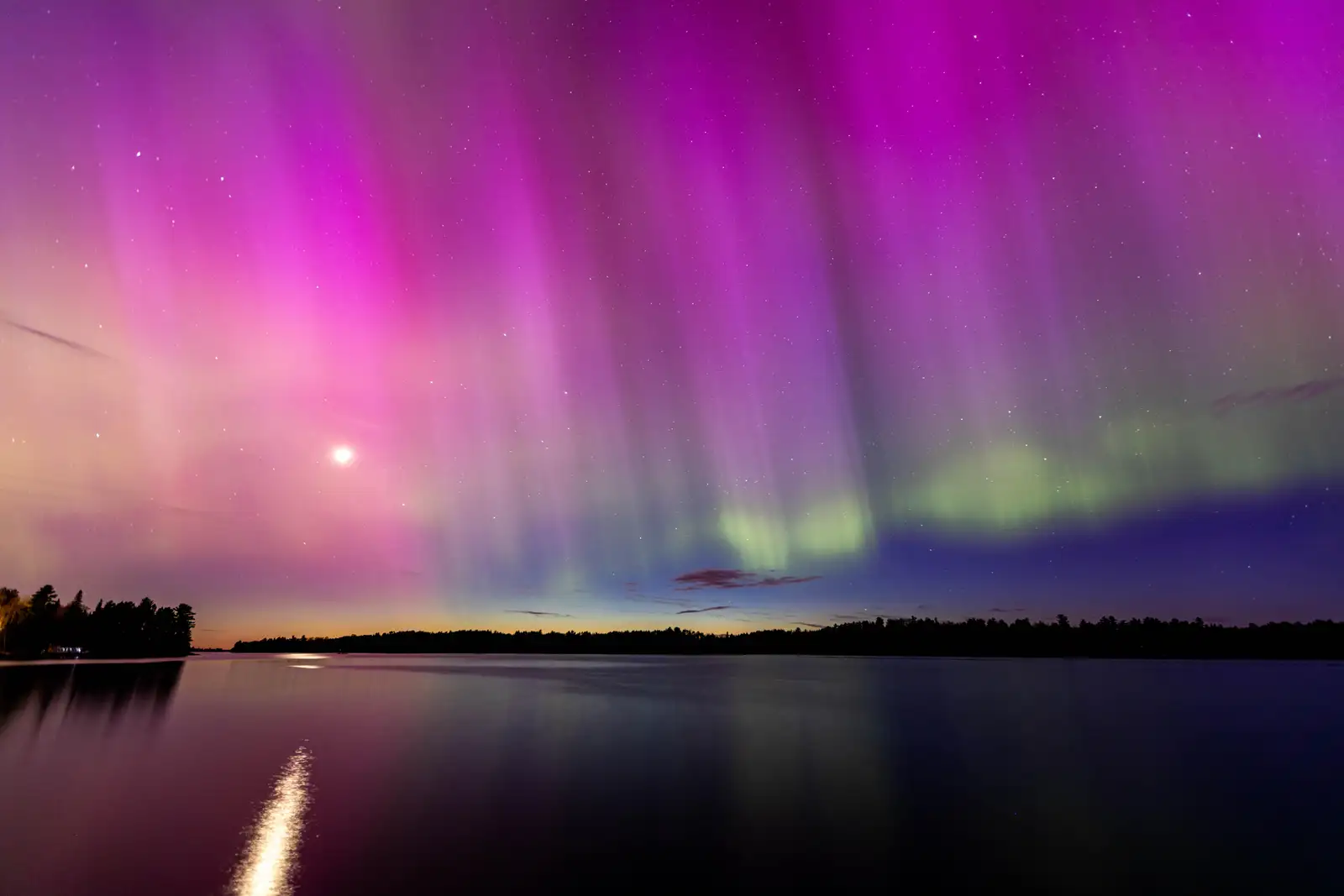
The northern lights, or Aurora Borealis, wash the night sky with color across the northern hemisphere's middle and high latitudes. Voyageurs sits far enough north to catch them.
Recognized as an International Dark Sky Park, Voyageurs protects its night skies from light pollution. The best viewing spots are the Voyageurs Forest Overlook parking area, Kettle Falls Dam, and the Beaver Pond Overlook. Near International Falls, try the areas around the Rainy Lake Visitor Center.
Rocky shoreline, a calm bay, and room to paddle. From the launch, head west one mile between the shore and small islands, then turn south into Blind Ash Bay. The full trip runs about 2.5 miles by canoe or kayak.
No boat of your own? A park ranger can take you out. Guided tours leave from the Rainy Lake and Kabetogama Lake Visitor Centers, mostly June through August, and last anywhere from 90 to 390 minutes. A good way to see the park and some wildlife.
Strap on snowshoes for the Oberholtzer Trail, a 1.7 mile round trip.
Open year-round, the Tilson Connector Trail gets groomed for classic cross country skiing once enough snow falls. It links to the Tilson Bay Trails, managed by the Minnesota Department of Natural Resources.
Details and current conditions live on nps.gov.
From the field
Common questions
When is the best time to visit Voyageurs National Park?
June through August are the warmest, most active months, with highs in the mid-70s Fahrenheit and every lake open for boating and paddling. These are also the busiest months, so for open water with fewer people, September still brings highs in the mid-60s. The lakes usually clear of ice around May 3, so earlier trips can meet thin, unsafe ice.
Is Voyageurs National Park dog-friendly?
Yes, but only in limited areas. Leashed pets, on a 6-foot maximum leash, are allowed on the Rainy Lake Visitor Center Recreation Trail, at frontcountry campsites, day-use sites, boat ramps, and on open or frozen lake surfaces. They are banned from all other trails, the backcountry, and tour boats, where only documented service animals may go.
What is the quietest trail in Voyageurs National Park?
The remote sections of the Kab-Ash Trail, the Cruiser Lake Trail, the Mukooda Trail, and the Anderson Bay Loop are the least-crowded trails. Most stay empty because they cannot be reached by car: the Cruiser Lake and Mukooda trailheads require a boat or kayak, and Anderson Bay sits at the far top of the park, well away from the visitor centers.
How crowded does Voyageurs National Park get?
Voyageurs draws about 199,000 visits a year, which is moderate for a national park, and the crowds concentrate in June, July, and August. Kettle Falls on Rainy Lake is the busiest spot, and weekends and holidays like the Minnesota Fishing Opener and Memorial Day see the heaviest traffic.
Is Voyageurs National Park accessible for wheelchairs and strollers?
Accessibility is limited but real. The crushed-gravel Kabetogama Lake Overlook Trail near the Ash River Visitor Center is wheelchair-accessible, some campsites have accessible facilities and dock chairlifts, and the three visitor centers are designed to be accessible. There are no public shuttles, and most of the park cannot be reached without a boat, so call ahead to arrange specifics.
Can you camp at Voyageurs National Park?
Yes, the park has 143 frontcountry, 14 backcountry, and 2 primitive tent sites, all requiring site-specific reservations on Recreation.gov. Nearly all sites are reached by boat across Rainy, Kabetogama, Namakan, or Sand Point Lakes; only the two primitive sites, Red Pine and Blueberry Ridge, are hike-in along the Kab-Ash Trail.
Is there an entrance fee at Voyageurs National Park?
No, Voyageurs charges no entrance fee. Camping still requires a paid reservation, and a valid Minnesota fishing license is needed to fish.