
Shenandoah National Park
Luray, Virginia · Southeast
The wooded hollows fill with birdsong
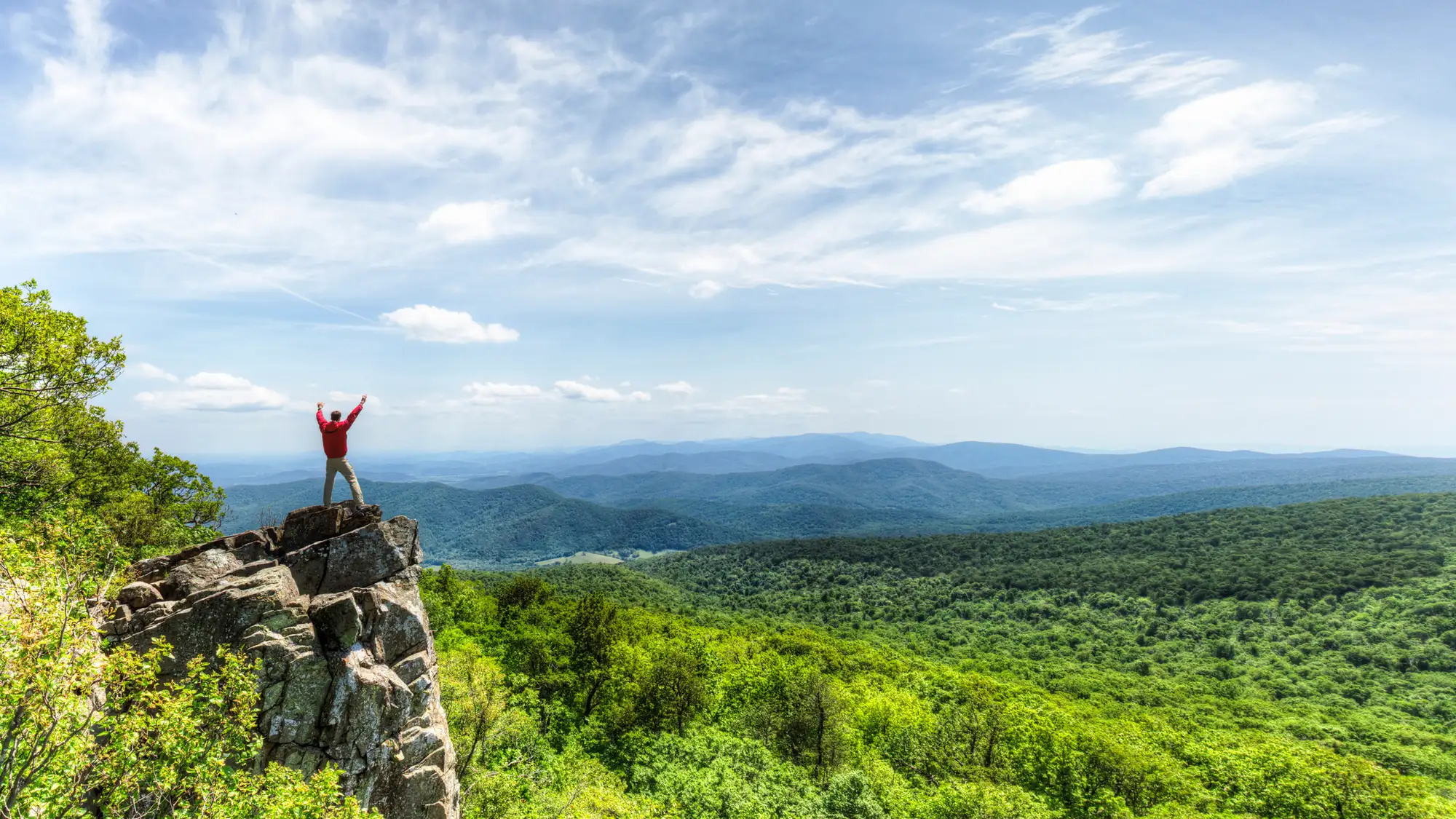
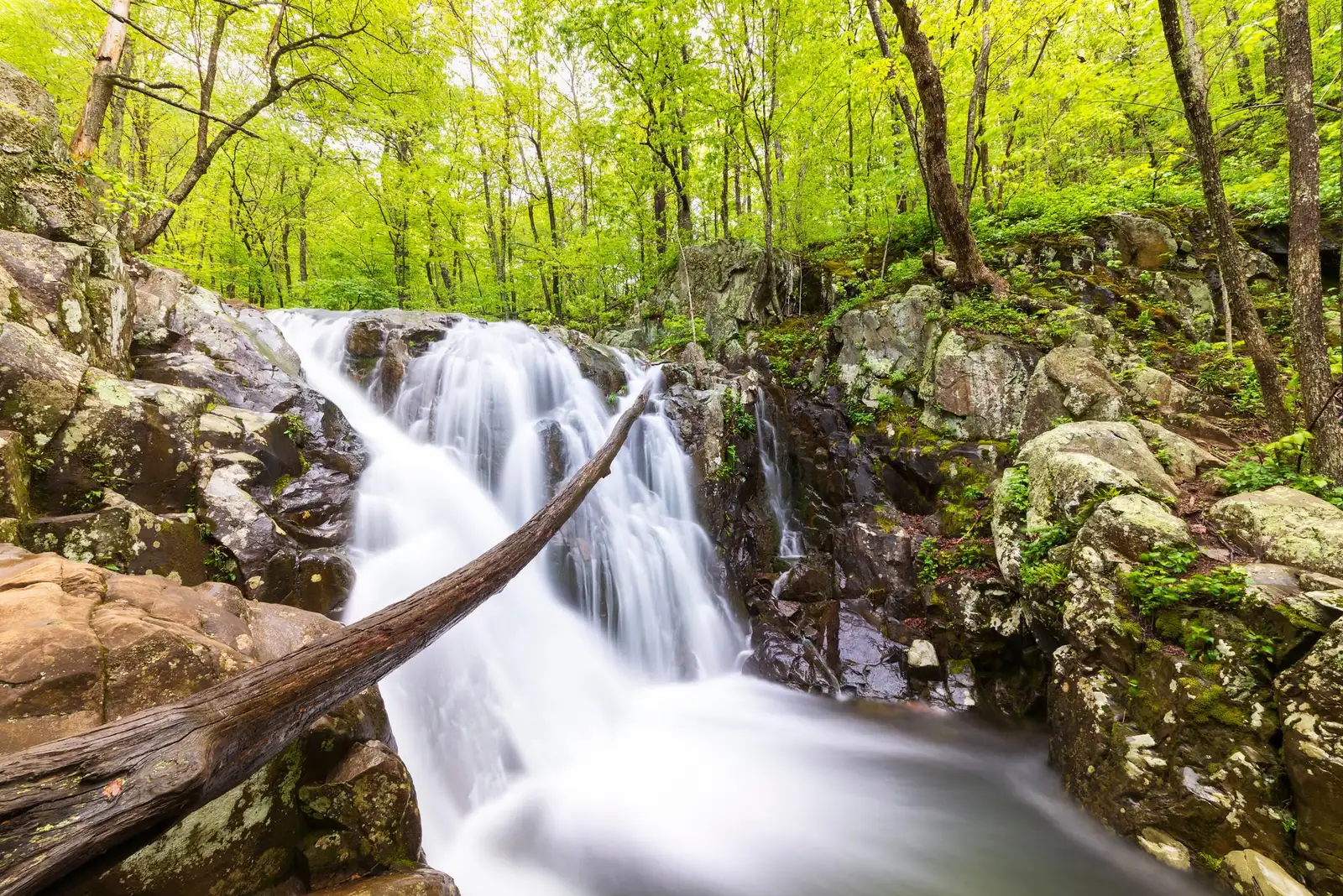
Shenandoah stretches more than 100 miles along the crest of the Blue Ridge, and Skyline Drive runs the whole length of it. Step off the road into one of the park's wooded hollows and the traffic thins fast. Cascading water, deer moving through the understory, and songbirds in the canopy take its place.
The park sits just 75 miles from Washington, D.C., which is part of what it does for people. It hands an overloaded head somewhere to be that asks nothing back. More than 500 miles of trail thread through over 200,000 acres of forest, and the ridgetop runs about 10°F cooler than the valley below.
Away from the busy overlooks, the birds are not background noise. On most of these trails the calls of the songbirds Shenandoah shelters are the loudest thing you hear, and that turns out to matter more than it seems.
The science: On real hiking trails, researchers hid speakers that added a chorus of birdsong to some stretches, and hikers who walked those stretches reported meaningfully higher psychological restoration than hikers on the same trails with the sound off. The hikers were never told about the speakers, so the lift did not depend on noticing the birds at all. In Shenandoah, where songbirds fill the wooded hollows on their own, that restoration is there for anyone walking through, birder or not.
Ferraro, Miller, Ferguson, Taff, Barber, Newman & Francis (2020) · Proceedings of the Royal Society B
Seasonal guide
Crowd levels use NPS monthly visitation, averaged 2015–2025. Excludes 2020 (COVID anomaly) and 2026 (partial year). Temperatures are NOAA climate normals from a nearby representative station. Busy does not mean bad. If a peak month is your only window, the season notes below tell you how to work it.
Highs sit in the mid-40s and lows drop into the low-to-mid 20s, and snow or ice can close parts of Skyline Drive without warning. These are the emptiest months of the year, so check the road status before you go, dress in warm layers, and remember you can still walk in on foot to hike even when the drive is gated.
Mild and wet: highs climb from the mid-50s in March to the mid-70s by May, with rain most weeks and wildflowers following close behind. May starts pulling bigger weekend crowds, so pack rain layers and aim for weekdays, and expect the ridge to run cooler and mistier than the valley.
Peak season, hot and humid, with valley highs reaching the mid-80s in July and frequent afternoon thunderstorms. The ridgetop stays about 10°F cooler, so start early, chase the shaded hollows and waterfall trails through the heat of the day, and save weekends for the quieter southern entrances.
October is by far the busiest month as foliage peaks, with crisp highs in the upper 60s that cool into the 50s by November. Arrive at dawn, use the less-crowded Route 33 and I-64 entrances, and go on weekdays if you can; November quiets down considerably as the color fades.
This month in the park
Timing changes everything out here. Pick a month to see when the light turns golden, which nights stay darkest for stargazing, and what visitors have actually recorded in bloom and on the move. The new-moon night is the one to plan a sky-watching evening around.
January 2027
In bloom · 3 species on record
- ❀ Round-lobed hepatica 6 sightings
- ❀ Dutchman's breeches 1 sightings
- ❀ American witch-hazel 1 sightings
Wildlife on the move · 33 species on record
- White-tailed Deer 12 sightings
- Brook Trout 9 sightings
- Barred Owl 6 sightings
- Ruffed Grouse 3 sightings
- Northern Cardinal 3 sightings
February 2027
In bloom · 2 species on record
- ❀ Round-lobed hepatica 28 sightings
- ❀ Star chickweed 1 sightings
Wildlife on the move · 45 species on record
- White-tailed Deer 20 sightings
- Brook Trout 7 sightings
- Barred Owl 4 sightings
- Mourning Cloak 4 sightings
- Red-shouldered Hawk 3 sightings
March 2027
In bloom · 31 species on record
- ❀ Round-lobed hepatica 130 sightings
- ❀ Bloodroot 57 sightings
- ❀ Trailing arbutus 14 sightings
- ❀ Red maple 11 sightings
- ❀ Dutchman's breeches 11 sightings
Wildlife on the move · 168 species on record
- Eastern Red-backed Salamander 105 sightings
- White-tailed Deer 51 sightings
- Brook Trout 42 sightings
- Eastern Comma 16 sightings
- Grapevine Epimenis Moth 15 sightings
April 2027
In bloom · 117 species on record
- ❀ Wild geranium 163 sightings
- ❀ Large white trillium 105 sightings
- ❀ Canadian lousewort 93 sightings
- ❀ Bloodroot 88 sightings
- ❀ Azure bluet 64 sightings
Wildlife on the move · 382 species on record
- Eastern Red-backed Salamander 109 sightings
- White-tailed Deer 68 sightings
- Eastern Tiger Swallowtail 40 sightings
- Brook Trout 38 sightings
- Eastern Towhee 33 sightings
May 2027
In bloom · 155 species on record
- ❀ Wild geranium 334 sightings
- ❀ Canadian lousewort 248 sightings
- ❀ American cancer-root 198 sightings
- ❀ Large white trillium 167 sightings
- ❀ Mountain laurel 152 sightings
Wildlife on the move · 610 species on record
- Eastern Red-backed Salamander 132 sightings
- White-tailed Deer 130 sightings
- Eastern Newt 107 sightings
- Spongy Moth 74 sightings
- American Redstart 68 sightings
June 2027
In bloom · 182 species on record
- ❀ Red columbine 328 sightings
- ❀ Fly poison 323 sightings
- ❀ Mountain laurel 269 sightings
- ❀ Purple-flowered raspberry 199 sightings
- ❀ Eastern gray beardtongue 133 sightings
Wildlife on the move · 825 species on record
- Spongy Moth 211 sightings
- White-tailed Deer 169 sightings
- Eastern Red-backed Salamander 140 sightings
- Common Watersnake 66 sightings
- Eastern Newt 64 sightings
July 2026
In bloom · 146 species on record
- ❀ Red columbine 248 sightings
- ❀ Black cohosh 245 sightings
- ❀ Common milkweed 221 sightings
- ❀ Ghost Pipe 201 sightings
- ❀ White bergamot 192 sightings
Wildlife on the move · 852 species on record
- White-tailed Deer 198 sightings
- Eastern Tiger Swallowtail 165 sightings
- Silver-spotted Skipper 136 sightings
- Eastern Red-backed Salamander 134 sightings
- Spongy Moth 95 sightings
August 2026
In bloom · 133 species on record
- ❀ White snakeroot 124 sightings
- ❀ Common selfheal 118 sightings
- ❀ Allegheny stonecrop 87 sightings
- ❀ Red columbine 67 sightings
- ❀ Common yarrow 63 sightings
Wildlife on the move · 678 species on record
- Eastern Tiger Swallowtail 308 sightings
- White-tailed Deer 154 sightings
- Monarch 153 sightings
- Common Eastern Bumble Bee 141 sightings
- Spotted Lanternfly 113 sightings
September 2026
In bloom · 96 species on record
- ❀ White snakeroot 159 sightings
- ❀ Common selfheal 51 sightings
- ❀ Allegheny stonecrop 50 sightings
- ❀ Pale jewelweed 35 sightings
- ❀ American witch-hazel 29 sightings
Wildlife on the move · 597 species on record
- Eastern Red-backed Salamander 177 sightings
- White-tailed Deer 115 sightings
- Monarch 108 sightings
- Milkweed Tussock Moth 97 sightings
- Spotted Lanternfly 84 sightings
October 2026
In bloom · 54 species on record
- ❀ American witch-hazel 139 sightings
- ❀ Common selfheal 77 sightings
- ❀ White snakeroot 49 sightings
- ❀ Common yarrow 25 sightings
- ❀ Wild Basil 22 sightings
Wildlife on the move · 428 species on record
- Eastern Red-backed Salamander 263 sightings
- Isabella Tiger Moth 117 sightings
- White-tailed Deer 101 sightings
- Hickory Tussock Moth 94 sightings
- Spotted Lanternfly 63 sightings
November 2026
In bloom · 19 species on record
- ❀ American witch-hazel 39 sightings
- ❀ Common selfheal 7 sightings
- ❀ Common yarrow 4 sightings
- ❀ Wild Basil 4 sightings
- ❀ Round-lobed hepatica 3 sightings
Wildlife on the move · 154 species on record
- White-tailed Deer 60 sightings
- Eastern Red-backed Salamander 30 sightings
- Marbled Orbweaver 25 sightings
- Dark-eyed Junco 20 sightings
- American Black Bear 18 sightings
December 2026
In bloom · 4 species on record
- ❀ Round-lobed hepatica 5 sightings
- ❀ American witch-hazel 2 sightings
- ❀ Wild geranium 1 sightings
- ❀ Mountain Thimbleweed 1 sightings
Wildlife on the move · 46 species on record
- White-tailed Deer 14 sightings
- Eastern Red-backed Salamander 8 sightings
- Brook Trout 5 sightings
- Dark-eyed Junco 4 sightings
- Bald Eagle 3 sightings
Sun and moon times are computed for the park's coordinates from standard NOAA solar equations and cross-checked against the U.S. Naval Observatory. Species lists are research-grade community observations for Shenandoah National Park, US, VA via iNaturalist, retrieved July 2026; sighting counts are all-time records for that calendar month.
Don’t wait for Shenandoah.
One big trip a year isn’t what changes how you feel — the small stuff in between is. The 7-Day Nature Reset is one tiny outdoor practice a day, wherever you already are. Day one takes 60 seconds.
No spam. No noise. Just nature.
Day 1 is landing in your inbox right now — go say hi.
Sleep nearby
Most visitors base in Luray, Virginia, about 9 miles out. Luray sits at the park western foot below Thornton Gap with motels, cabins and the park HQ address. Front Royal is the north entrance where Skyline Drive begins, with a similar range of rooms. The map opens on Luray, so pan toward the park to trade rooms and price for a shorter morning drive.
Camping inside the park books through Recreation.gov and is listed separately.
The map is provided by Stay22. If you book through it we may earn a commission at no cost to you, which helps keep Happier Outdoors running. It never changes what we recommend.
Let someone else lead
A guide is worth it when the terrain needs one, or when you would rather look around than navigate. These are the highest-rated trips running around Shenandoah, not the cheapest.
 Free cancellation
 Luray Caverns and Shenandoah National Park Small Group Day Tour
- Runs Apr–Nov
- Up to 12 per booking
- Stroller accessible
 Free cancellation
 Shenandoah National Park Self-Guided Driving Audio Tour
- Runs year-round
- Easy for most fitness levels
 Free cancellation
 Self-Guided Audio Driving Tour in Shenandoah National Park
- Runs year-round
- Easy for most fitness levels
Tours are listed by Viator; booking happens there. If you book we may earn a commission at no cost to you, which helps keep Happier Outdoors running. It never changes what we list. Prices checked September 2026 and can change.
Activities & experiences
Beyond the trails
Dark skies here are easy to reach, which makes stargazing and astrophotography work for all ages.
Bring binoculars for the whole family. The park's habitat supports a range of species, including colorful neotropical migratory birds.
Details and current conditions live on nps.gov.
From the field
Common questions
When is the best time to visit Shenandoah?
Fall, especially late September through October, is the most popular time, when cooler air and peak foliage draw the biggest crowds. Spring brings wildflowers and mild, rainy weather, while summer is lush but hot and humid; the ridge usually runs about 10°F cooler than the valley.
Is Shenandoah dog-friendly?
Yes, leashed dogs are allowed on most of Shenandoah's trails, using a physical leash no longer than six feet. Pets are prohibited on about 20 miles of specific trails, the Old Rag area, ranger programs, and inside buildings, but they're welcome in campgrounds and pet-friendly lodging.
What is the quietest trail in Shenandoah?
Hikers consistently point to trails like Nicholson Hollow to Corbin Cabin, the Mill Prong and Laurel Prong loop, North Marshall, Graves Mill, Hazel Falls and Cave, and Turk Mountain as the least crowded. Most sit in the park's southern district or require stream crossings and steep grades, which keeps traffic low.
How crowded does Shenandoah get?
Shenandoah draws roughly 1.4 to 1.7 million visitors a year, and October alone accounts for nearly a quarter of them. Crowds pile up at Old Rag, Whiteoak Canyon, Dark Hollow Falls, Stony Man, and Hawksbill, so arriving early or using the quieter Route 33 and I-64 entrances helps.
Is Shenandoah accessible for wheelchairs and strollers?
The Limberlost Trail is the park's one fully accessible hiking trail, a 1.3-mile crushed-greenstone path on a gentle grade. Both the Dickey Ridge and Byrd visitor centers are accessible, and accessible lodging is available at Skyland, Big Meadows, and Lewis Mountain; most other trails are too rugged for wheels.
Can you camp at Shenandoah?
Yes, Shenandoah has four developed campgrounds: Big Meadows, Loft Mountain, Mathews Arm, and Lewis Mountain, with standard sites at $30 a night. Big Meadows is reservation-only, Lewis Mountain is first-come first-served, and Loft Mountain and Mathews Arm mix both.
Where do you park at Shenandoah?
Park only in designated lots at trailheads, overlooks, visitor centers, and picnic areas, since parking elsewhere can get you towed. Popular lots like Whiteoak Canyon fill by mid-morning on weekends, and the Old Rag main lot is closed for construction until November 2026, so start early and have a backup.
Do you need a permit to hike Old Rag?
Yes, hiking Old Rag requires a day-use ticket for every trip between March 1 and November 30. Buy it in advance through Recreation.gov; regular day hiking on other trails does not need a ticket, though overnight backcountry trips require a separate permit.
How much does it cost to enter Shenandoah?
A private vehicle pass is $30 and covers everyone in the car for seven consecutive days. Motorcycles are $25, individuals on foot or bike are $15, and an annual Shenandoah pass is $55.