
Mount Rainier National Park
Ashford, Washington · Pacific Northwest
Green in summer, steadying under snow
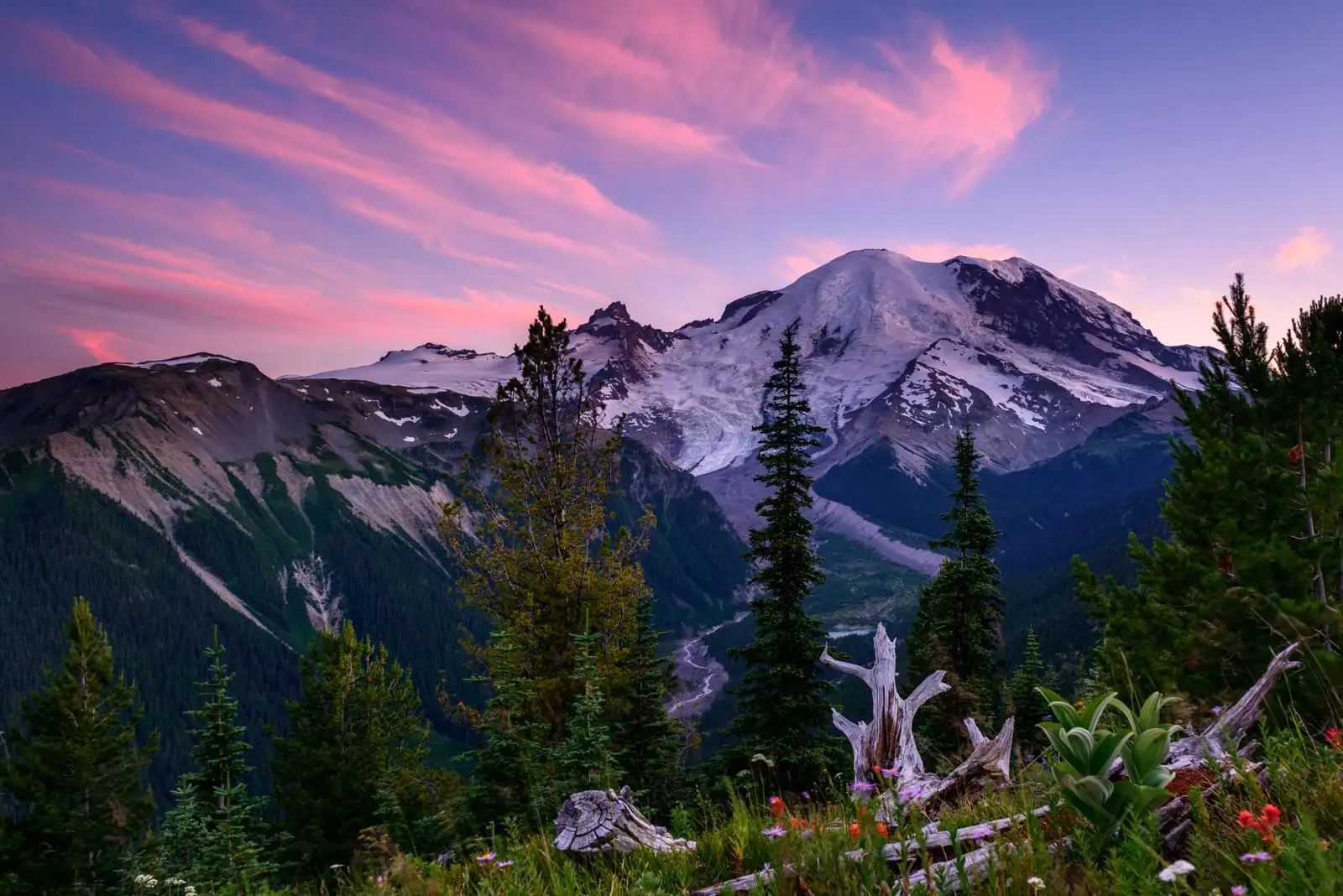
Mount Rainier stacks its calm in layers. Ancient forest cloaks the lower slopes, subalpine wildflower meadows ring the icy volcano, and five major rivers run off the most glaciated peak in the contiguous states. Above it all sits a 14,410-foot mountain that is also an active volcano, dominating the horizon from every direction.
What sets this park apart is how long winter runs. Up high at Paradise, snow can lie on the ground from November into May, and the forest at the base keeps doing its quiet work through all of it. You do not need the wildflowers out to get the benefit of walking here.
That two-season reality is where the science lands.
The science: Researchers had the same volunteers take forest trips in late spring and again on a 4°C January day with snow on the ground, and their systolic blood pressure fell after both trips, even though the immune-cell changes differed sharply by season. That maps neatly onto Rainier, where the forest cloaking the lower slopes is walkable whether you catch it in July meadow-light or on packed snow in March, and the pressure-lowering effect does not wait for summer greenery.
Peterfalvi, Meggyes, Makszin, Farkas, Miko, Miseta & Szereday (2021) · International Journal of Environmental Research and Public Health
Seasonal guide
Crowd levels use NPS monthly visitation, averaged 2015–2025. Excludes 2020 (COVID anomaly) and 2026 (partial year). Temperatures are NOAA climate normals from a station 5.5 miles away. Busy does not mean bad. If a peak month is your only window, the season notes below tell you how to work it.
December through February is the quietest stretch, with highs in the low 30s at Paradise, lows near the low 20s, and many feet of snow on the ground. Winter can last from November to May up high, so roads and facilities close and access depends on conditions. Come for snowshoeing and snow play at Paradise, check road status before you drive, and carry chains.
Snow still blankets Paradise well into spring, with highs climbing from the mid-30s in March to the high 40s by May. March and April stay quiet while May starts to fill up. Lower-elevation forest trails and waterfalls clear first, so aim low while the high country remains buried.
July and August are peak, both for crowds and for the sunniest weather, with highs in the low 60s and the subalpine meadows in full wildflower bloom. Entrance lines can top an hour and the Paradise and Sunrise lots fill by late morning. Arrive before 10 a.m. or visit midweek, and pack a layer because nights stay cool.
September stays busy, October eases off, and November turns quiet as rain and early snow return. Highs slide from the upper 50s in September to the upper 30s by November, and precipitation climbs back over 18 inches. Early fall offers thinner crowds with meadows turning color, but pack for wet weather and shorter days.
This month in the park
Timing changes everything out here. Pick a month to see when the light turns golden, which nights stay darkest for stargazing, and what visitors have actually recorded in bloom and on the move. The new-moon night is the one to plan a sky-watching evening around.
January 2027
Wildlife on the move · 16 species on record
- Canada Jay 24 sightings
- Common Raven 4 sightings
- Cascades Frog 3 sightings
- Mule Deer 3 sightings
- Steller's Jay 2 sightings
February 2027
Wildlife on the move · 6 species on record
- Canada Jay 7 sightings
- Evening Grosbeak 5 sightings
- Common Raven 1 sightings
- Steller's Jay 1 sightings
- Rough-skinned Newt 1 sightings
March 2027
In bloom · 2 species on record
- ❀ Arctic Butterbur 3 sightings
- ❀ Salmonberry 2 sightings
Wildlife on the move · 16 species on record
- Canada Jay 10 sightings
- Steller's Jay 9 sightings
- Douglas's Squirrel 5 sightings
- American Robin 3 sightings
- Varied Thrush 3 sightings
April 2027
In bloom · 19 species on record
- ❀ Western skunk cabbage 12 sightings
- ❀ Arctic Butterbur 12 sightings
- ❀ Pacific trillium 6 sightings
- ❀ Salmonberry 5 sightings
- ❀ Stream violet 5 sightings
Wildlife on the move · 59 species on record
- Canada Jay 27 sightings
- Steller's Jay 20 sightings
- Mule Deer 13 sightings
- Pacific Banana Slug 9 sightings
- Dark-eyed Junco 7 sightings
May 2027
In bloom · 79 species on record
- ❀ Pacific trillium 73 sightings
- ❀ Western skunk cabbage 19 sightings
- ❀ Arctic Butterbur 16 sightings
- ❀ Fairy-slipper 11 sightings
- ❀ Western Bunchberry 9 sightings
Wildlife on the move · 134 species on record
- Canada Jay 71 sightings
- Steller's Jay 63 sightings
- Pacific Banana Slug 39 sightings
- Sooty Grouse 32 sightings
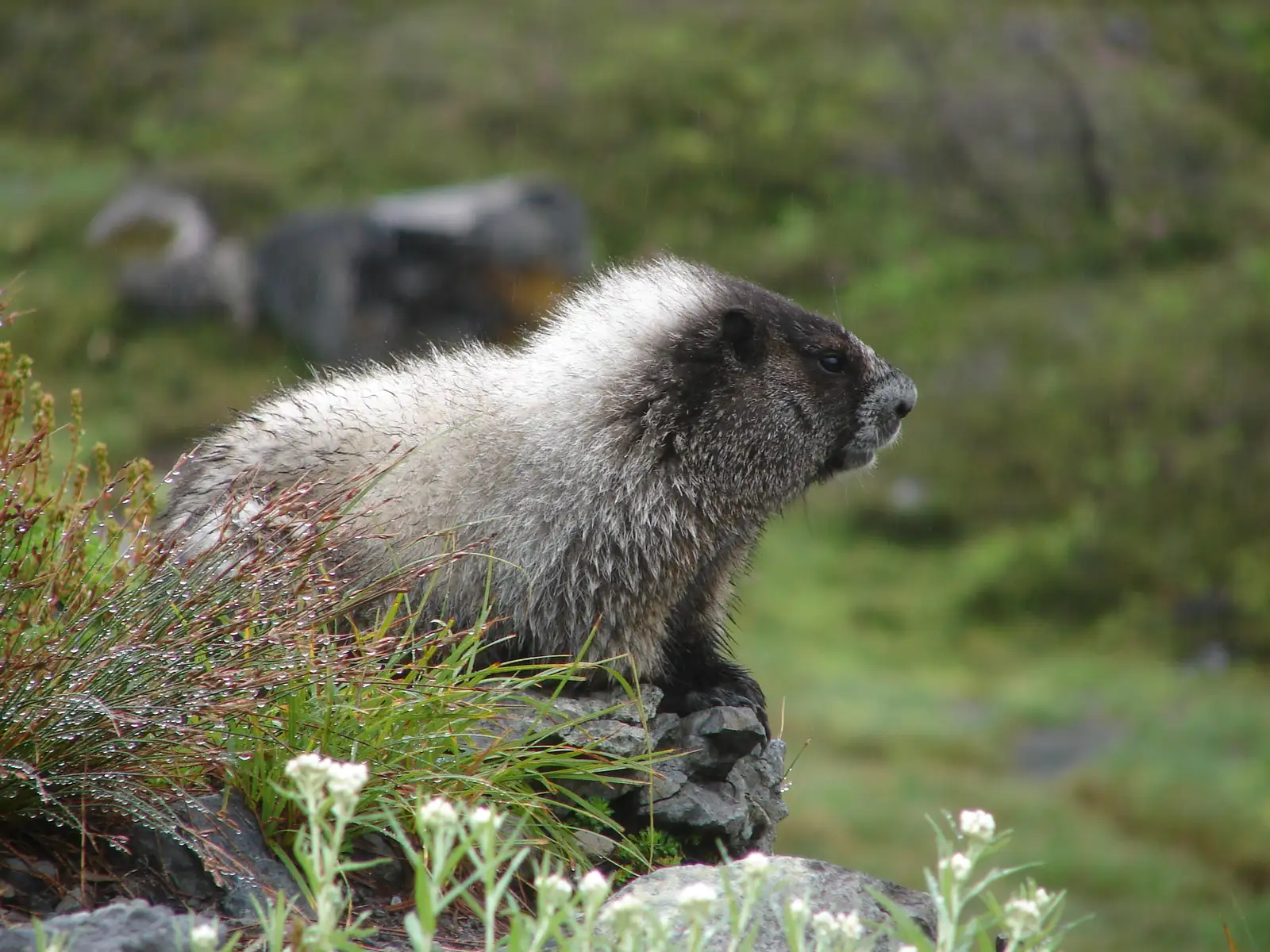
- Hoary Marmot 31 sightings
June 2027
In bloom · 201 species on record
- ❀ Avalanche lily 104 sightings
- ❀ Pacific trillium 78 sightings
- ❀ Glacier Lily 32 sightings
- ❀ Western Bunchberry 32 sightings
- ❀ Threeleaf Foamflower 28 sightings
Wildlife on the move · 215 species on record
- Hoary Marmot 222 sightings
- Canada Jay 122 sightings
- Cascade Golden-mantled Ground Squirrel 118 sightings
- Steller's Jay 94 sightings
- Mule Deer 78 sightings
July 2026
In bloom · 292 species on record
- ❀ Avalanche lily 299 sightings
- ❀ Mountain paintbrush 138 sightings
- ❀ Pink mountainheath 121 sightings
- ❀ Sitka valerian 111 sightings
- ❀ Partridgefoot 103 sightings
Wildlife on the move · 400 species on record
- Hoary Marmot 778 sightings
- Cascade Golden-mantled Ground Squirrel 541 sightings
- Edith's Checkerspot 244 sightings
- Sooty Grouse 196 sightings
- Canada Jay 190 sightings
August 2026
In bloom · 191 species on record
- ❀ Mountain Bog Gentian 180 sightings
- ❀ Lewis' monkeyflower 140 sightings
- ❀ Partridgefoot 75 sightings
- ❀ Mountain paintbrush 72 sightings
- ❀ Pearly everlasting 66 sightings
Wildlife on the move · 369 species on record
- Hoary Marmot 688 sightings
- Cascade Golden-mantled Ground Squirrel 617 sightings
- Anna's Blue 237 sightings
- American Pika 206 sightings
- Sooty Grouse 202 sightings
September 2026
In bloom · 94 species on record
- ❀ Mountain Bog Gentian 63 sightings
- ❀ Pearly everlasting 52 sightings
- ❀ Lewis' monkeyflower 39 sightings
- ❀ Fireweed 28 sightings
- ❀ Mountain paintbrush 16 sightings
Wildlife on the move · 224 species on record
- Hoary Marmot 354 sightings
- Cascade Golden-mantled Ground Squirrel 291 sightings
- Sooty Grouse 157 sightings
- American Pika 139 sightings
- Canada Jay 107 sightings
October 2026
In bloom · 9 species on record
- ❀ Pearly everlasting 9 sightings
- ❀ Fireweed 3 sightings
- ❀ Common yarrow 2 sightings
- ❀ Mountain Bog Gentian 1 sightings
- ❀ Giant red paintbrush 1 sightings
Wildlife on the move · 109 species on record
- American Pika 101 sightings
- Canada Jay 73 sightings
- Cascade Golden-mantled Ground Squirrel 50 sightings
- Sooty Grouse 42 sightings
- Steller's Jay 40 sightings
November 2026
Wildlife on the move · 21 species on record
- Canada Jay 19 sightings
- Ptenothrix maculosa 13 sightings
- American Pika 12 sightings
- Steller's Jay 9 sightings
- Douglas's Squirrel 7 sightings
December 2026
Wildlife on the move · 17 species on record
- Canada Jay 7 sightings
- Common Raven 3 sightings
- Steller's Jay 3 sightings
- Mule Deer 2 sightings
- Douglas's Squirrel 2 sightings
Sun and moon times are computed for the park's coordinates from standard NOAA solar equations and cross-checked against the U.S. Naval Observatory. Species lists are research-grade community observations for Mount Rainier National Park, US, WA via iNaturalist, retrieved July 2026; sighting counts are all-time records for that calendar month.
Don’t wait for Mount Rainier.
One big trip a year isn’t what changes how you feel — the small stuff in between is. The 7-Day Nature Reset is one tiny outdoor practice a day, wherever you already are. Day one takes 60 seconds.
No spam. No noise. Just nature.
Day 1 is landing in your inbox right now — go say hi.
Sleep nearby
Most visitors base in Packwood, Washington, about 17 miles out. Packwood offers the best balance of rooms, price, and centralized access to both Paradise and Sunrise areas. Ashford is closer at just 6 miles from the Nisqually Entrance but has fewer rooms and higher prices. The map opens on Packwood, so pan toward the park to trade rooms and price for a shorter morning drive.
Camping inside the park books through Recreation.gov and is listed separately.
The map is provided by Stay22. If you book through it we may earn a commission at no cost to you, which helps keep Happier Outdoors running. It never changes what we recommend.
Let someone else lead
A guide is worth it when the terrain needs one, or when you would rather look around than navigate. These are the highest-rated trips running around Mount Rainier, not the cheapest.
 Free cancellation
 Mount Rainier Day Hike
- Runs year-round
- Up to 3 per booking
- Service animals welcome
 Free cancellation
 Best of Mount Rainier National Park from Seattle: All-Inclusive Small-Group Tour
- Runs May–Oct
- Up to 10 per booking
- Easy for most fitness levels
 Free cancellation
 Guided hike on Mt. Rainier - old forest, falls and glacier views
- Runs year-round
- Up to 13 per booking
- Moderate fitness needed
 Free cancellation
 Mount Rainier Customized Tour from Seattle
- Runs year-round
- Up to 13 per booking
- Easy for most fitness levels
Tours are listed by Viator; booking happens there. If you book we may earn a commission at no cost to you, which helps keep Happier Outdoors running. It never changes what we list. Prices checked September 2026 and can change.
Activities & experiences
Beyond the trails
Hiking by full moon changes the whole feel of a trail. This covers your options at Longmire, Paradise, and Box Canyon, plus the safety tips worth knowing before you go out in the dark.
Paradise and Stevens Canyon Road open up after dark. Here is how to stargaze safely in both areas.
End a long day of hiking by looking up. The Sunrise area works well for stargazing, whether you stay in the parking lot or take a trail. There is an option for everyone.
A drive can be reward enough here, even if you never leave the car. This route follows the park's historic design from the Nisqually Entrance to Paradise, then connects to the east side and Sunrise.
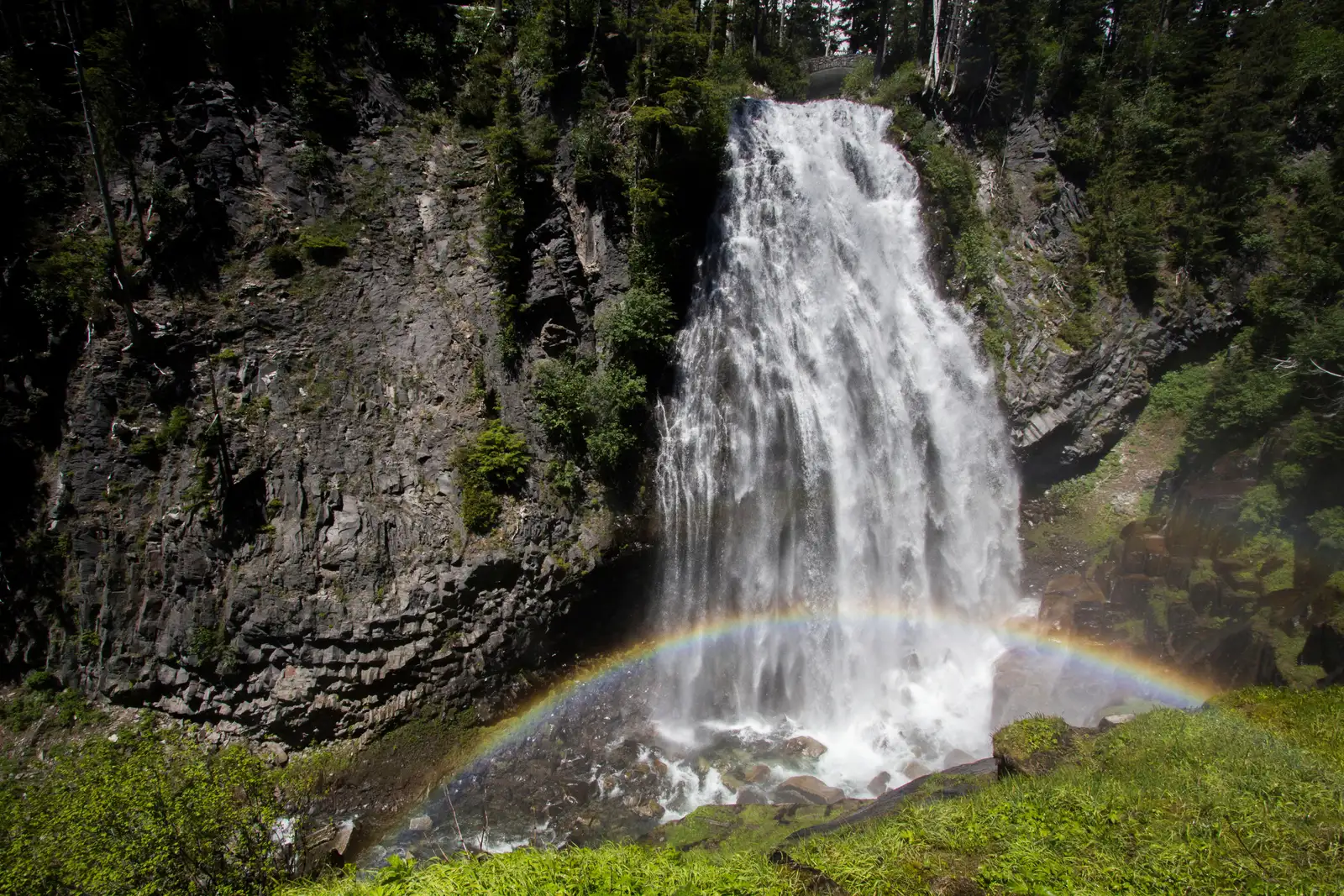
Four of the mountain's waterfalls sit between Longmire and Paradise. You can see all of them without any long or strenuous trails.
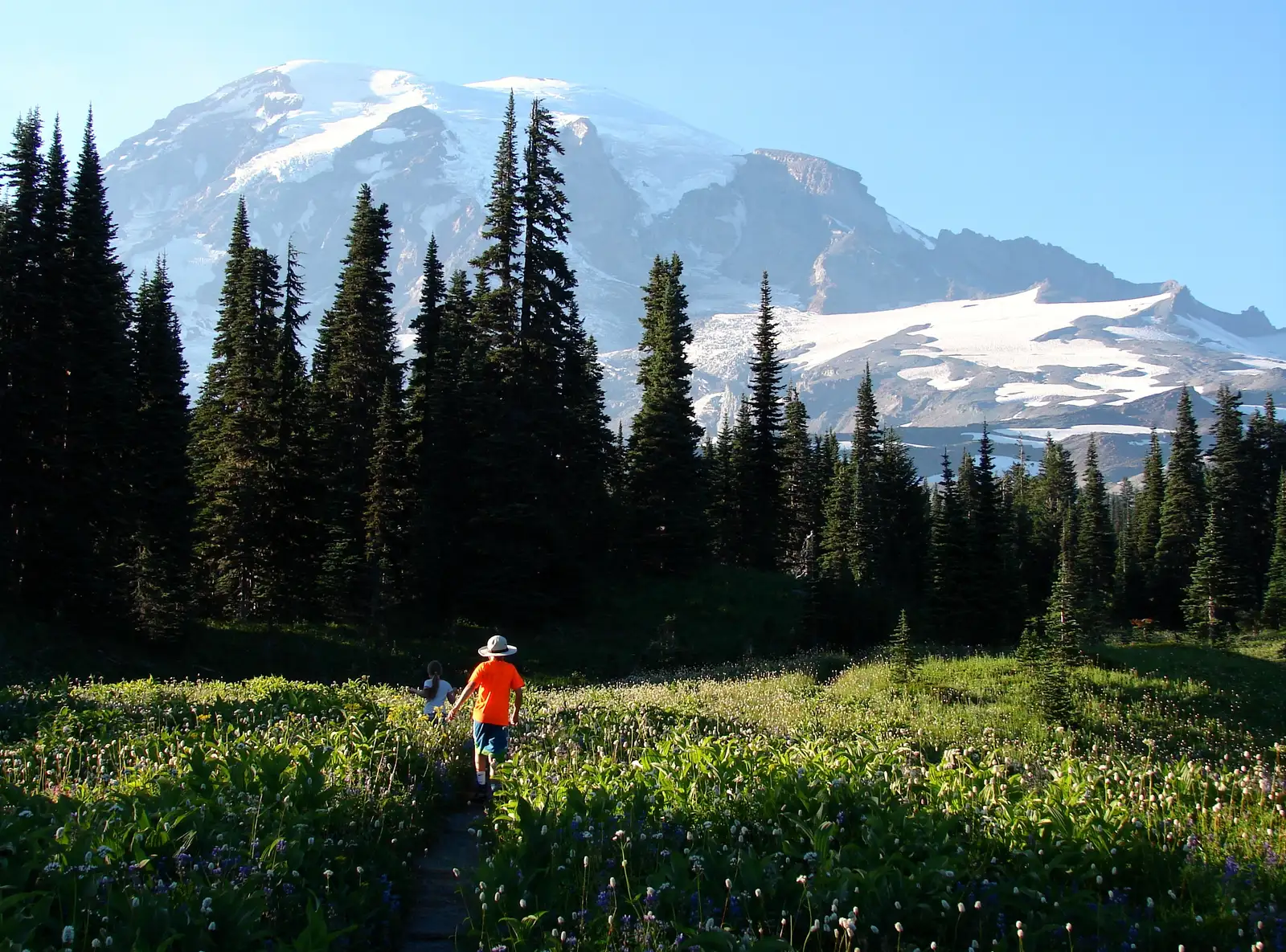
Wildflowers put this mountain on the map. The blooming season is short and shifts with elevation, so timing matters. Find out when to go.
Details and current conditions live on nps.gov.
From the field
Common questions
When is the best time to visit Mount Rainier?
July and August are the sunniest months and the peak of the subalpine wildflower bloom, but they are also the most crowded. Spring and fall bring frequent rain and lingering snow at higher elevations, while winter buries Paradise under many feet of snow from November into May.
Is Mount Rainier dog-friendly?
Dogs are prohibited on nearly all of Mount Rainier's trails, in the backcountry, and on snow, with the only exception being the Pacific Crest Trail along the park's eastern edge. Leashed pets up to six feet are allowed in parking lots, campgrounds, picnic areas, and on paved roads open to vehicles.
What is the quietest trail at Mount Rainier?
Visitors and rangers point to the Mowich Lake area on the remote northwest side as the quietest, largely because a rough 20-mile gravel road keeps traffic down. Near busy Paradise, hikers report that Bench and Snow Lakes stays far calmer than the roadside Reflection Lakes because the extra effort thins the crowd.
How crowded does Mount Rainier get?
Mount Rainier draws about 2.4 million visitors a year, and they concentrate hard into July and August, when entrance waits at Nisqually and White River can top an hour. To beat the crush, arrive before 10 a.m. or visit midweek, when Paradise and Sunrise feel much calmer.
Is Mount Rainier accessible for wheelchairs?
Mount Rainier has no fully accessible trails, but all four visitor centers are wheelchair accessible, with accessible parking and restrooms at the major developed areas. The Kautz Creek Boardwalk and the first 0.3 miles of the Trail of the Shadows are passable with assistance.
Can you camp at Mount Rainier?
Yes, the park has vehicle campgrounds at Cougar Rock, Ohanapecosh, and White River, plus primitive tent pads at Mowich Lake. Cougar Rock and Ohanapecosh take reservations through Recreation.gov, White River is first-come, first-served only, and Mowich Lake requires a wilderness permit.
Where do you park at Mount Rainier?
Most visitors park at the Paradise lots on the west side or the Sunrise lots on the east side, but both fill by late morning on summer weekends. Arrive before 10 a.m. or come on a weekday, and use overflow at the Paradise Picnic Area or along Paradise Valley Road when the main lots close.
How much does it cost to enter Mount Rainier?
Entry costs $30 per private vehicle and is good for seven consecutive days. Individuals on foot or bicycle pay $15, motorcycles pay $25, and an annual park pass runs $55.