Mesa Verde National Park
Mancos, Colorado · Rocky Mountains
The night sky resets your clock
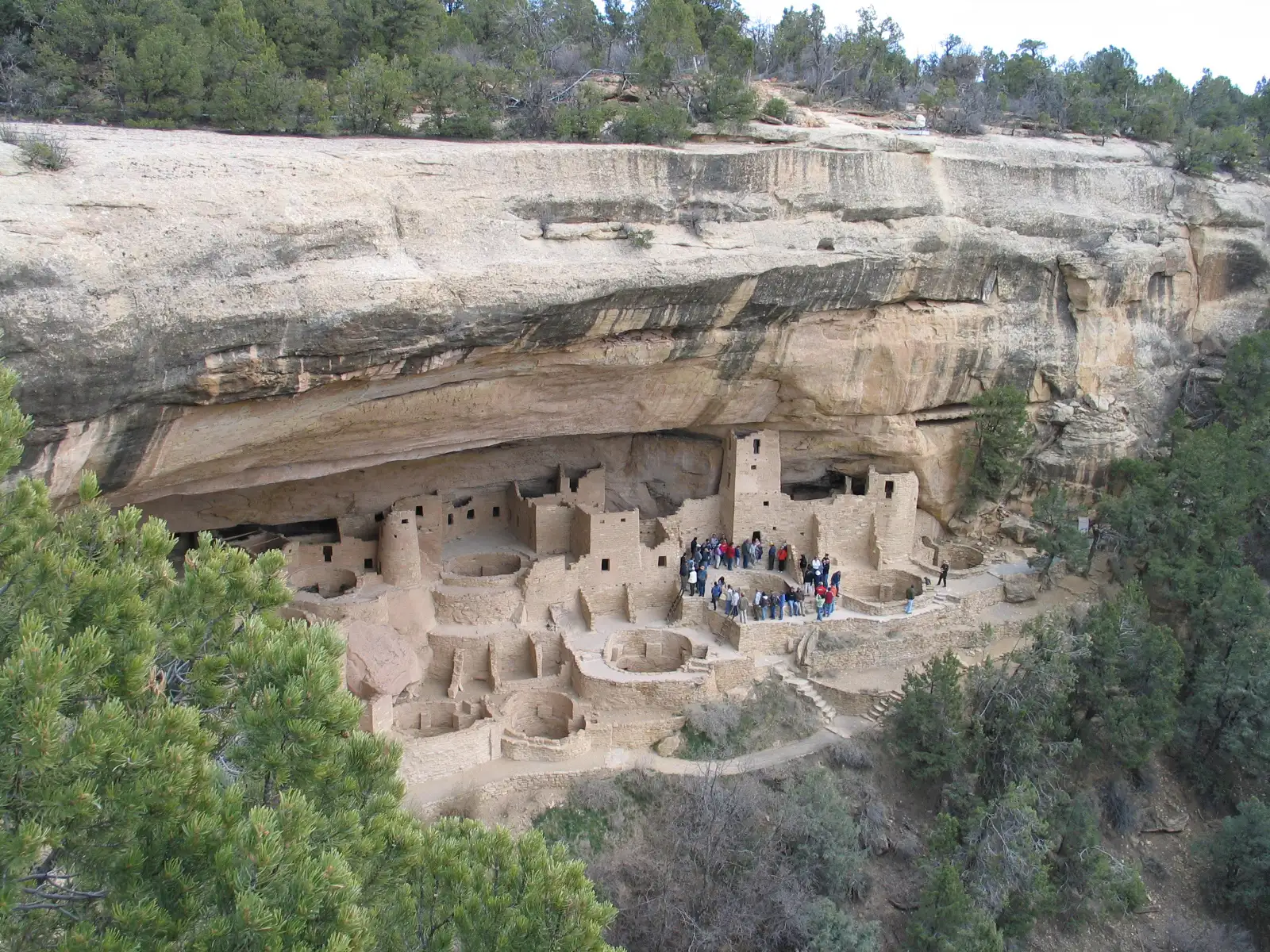
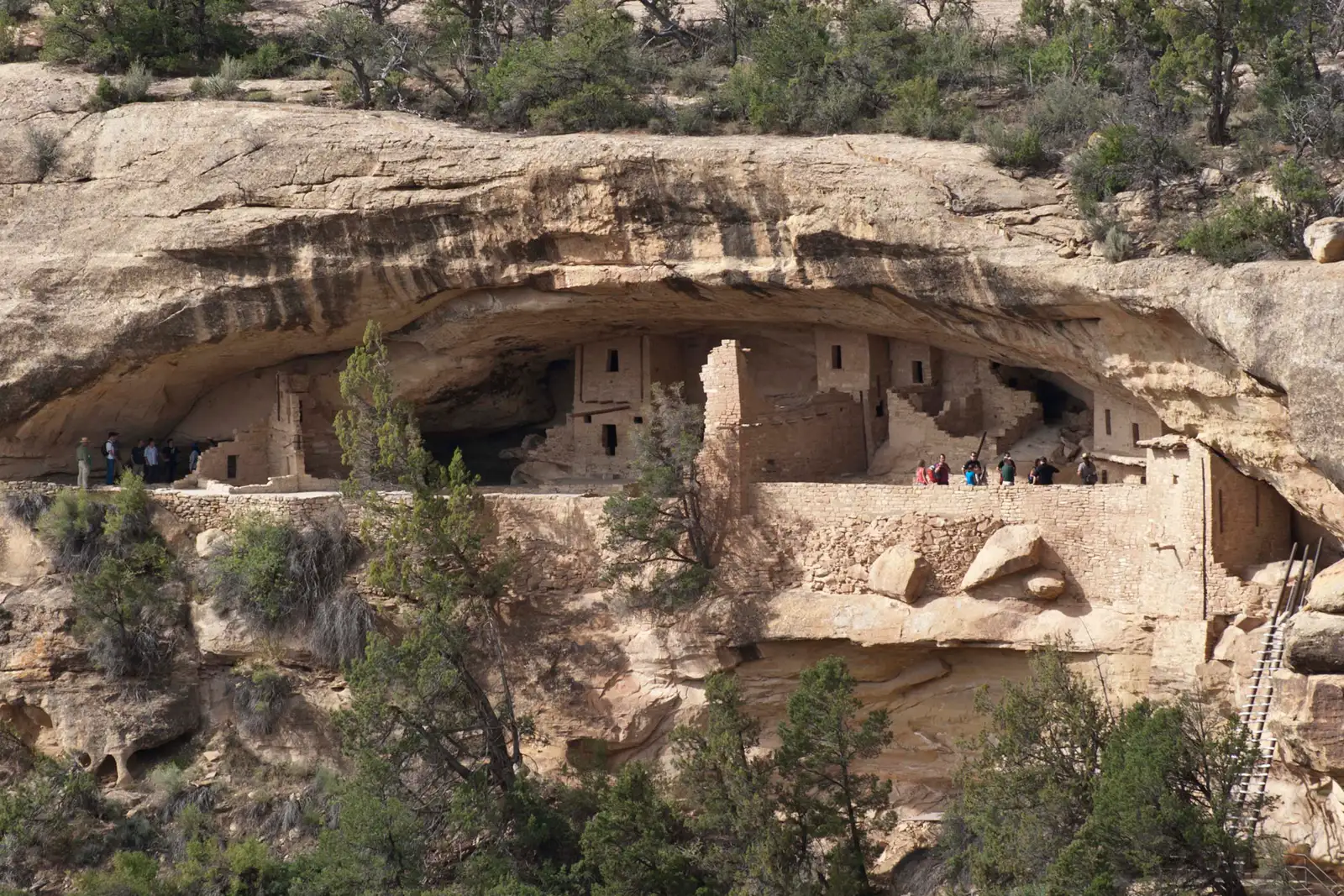
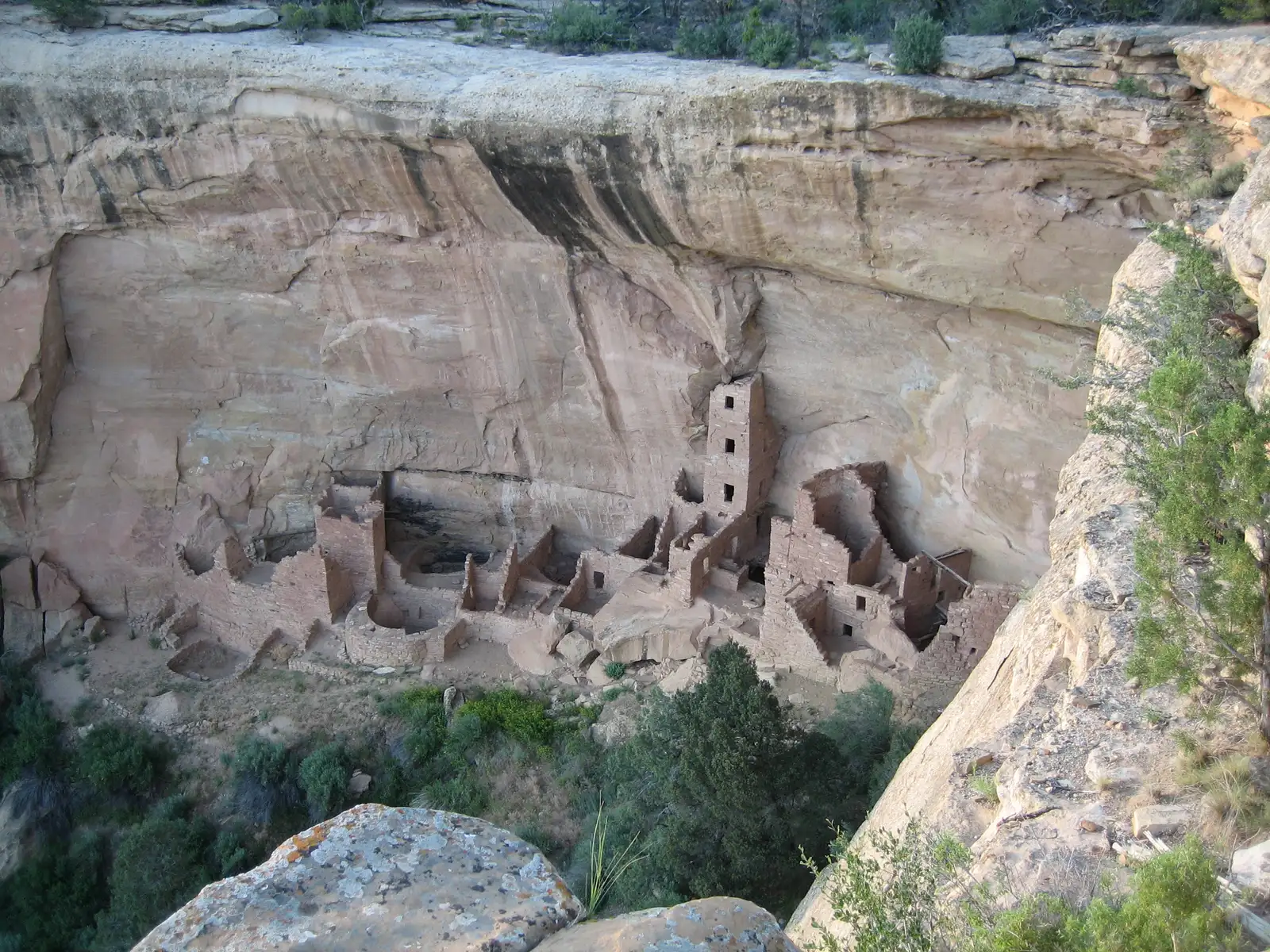
Mesa Verde is best known for what people built into its cliffs. The Ancestral Pueblo lived on these mesas for more than 700 years, and the dwellings tucked under the sandstone overhangs pull nearly everyone who comes. But the park keeps working after the tours end. It is an International Dark Sky Park, and once the last visitors leave the mesa tops go genuinely dark.
That darkness is rarer than it sounds. The park sits high, above 7,000 feet on the mesa, far from the light of any city, and Morefield Campground puts you inside that night rather than driving out of it. A body that spends its evenings under real dark and its days under open sky, instead of under screens and porch lights, gets the plain solar cues it evolved to read.
By day the piñon and juniper woodland gives your eyes something easy to rest on, and the quieter corners of Wetherill Mesa hold the kind of stillness that is hard to find in July. This is a place to slow the pace on purpose, look up at night, and let the ordinary rhythm of light and dark do its work.
The science: When a University of Colorado team had people spend a week camping in the Colorado mountains with only sunlight and campfire, their melatonin onset shifted about two hours earlier, pulling their internal night back in line with sunset and sunrise. It was a small midsummer study and camping changes more than light, but the dark half of that cycle is exactly what Mesa Verde protects. As an International Dark Sky Park with a campground on the mesa, its nights stay dark enough to give a body that same steady cue.
Wright, McHill, Birks, Griffin, Rusterholz & Chinoy (2013) · Current Biology
Seasonal guide
Crowd levels use NPS monthly visitation, averaged 2015–2025. Excludes 2020 (COVID anomaly) and 2026 (partial year). Temperatures are NOAA climate normals from a station 2.5 miles away. Busy does not mean bad. If a peak month is your only window, the season notes below tell you how to work it.
Winter is the emptiest stretch, with some days seeing fewer than 50 visitors. Highs sit in the mid-30s and lows drop into the low 20s, roads ice over, and cliff dwelling tours, Wetherill Mesa, and the campground are closed. Come for the open visitor center, snowshoeing, and near-total quiet, but carry chains or run snow tires and check road conditions before the drive up.
Spring stays quiet through March and April before crowds build in May. Expect a real mix, from clear 40s to 70s along with wind, rain, and snow that can fall into May. It is a good window for lighter trails and open roads; just pack layers and remember that ranger-led cliff dwelling tours do not start until mid-May.
Summer is peak, and the second week of August can bring up to 3,000 people a day. Highs climb into the 80s and can top 90F, with afternoon thunderstorms common in July and August. Reserve cliff dwelling tours 14 days out the moment they release at 8 a.m., start early to beat the heat and crowds, and keep an eye on the sky.
Fall brings mild 50s-to-70s days and thinning crowds, busy in September and October and quiet by November. Snow can arrive as early as October, and tours wind down by late October. Aim for late September or October for warm afternoons and far shorter tour lines.
This month in the park
Timing changes everything out here. Pick a month to see when the light turns golden, which nights stay darkest for stargazing, and what visitors have actually recorded in bloom and on the move. The new-moon night is the one to plan a sky-watching evening around.
January 2027
Wildlife on the move · 8 species on record
- Common Raven 2 sightings
- Cotton-gall Tephritid 2 sightings
- Woodhouse's Scrub-Jay 2 sightings
- Clark's Nutcracker 1 sightings
- Western Bluebird 1 sightings
February 2027
Wildlife on the move · 6 species on record
- Cotton-gall Tephritid 3 sightings
- Woodhouse's Scrub-Jay 2 sightings
- Wild Turkey 1 sightings
- Red-tailed Hawk 1 sightings
- Two-spotted Stink Bug 1 sightings
March 2027
Wildlife on the move · 13 species on record
- Common Raven 5 sightings
- Woodhouse's Scrub-Jay 4 sightings
- Spotted Towhee 3 sightings
- Mountain Bluebird 3 sightings
- Mule Deer 3 sightings
April 2027
In bloom · 8 species on record
- ❀ Oregon Boxwood 4 sightings
- ❀ Dwarf Lousewort 4 sightings
- ❀ Curveseed Butterwort 2 sightings
- ❀ Golden currant 1 sightings
- ❀ Crossflower 1 sightings
Wildlife on the move · 55 species on record
- Common Sagebrush Lizard 10 sightings
- Mule Deer 9 sightings
- Spotted Towhee 8 sightings
- Mountain Bluebird 6 sightings
- Eastern Collared Lizard 5 sightings
May 2027
In bloom · 31 species on record
- ❀ Firecracker penstemon 7 sightings
- ❀ Cliff Fendlerbush 7 sightings
- ❀ Banana Yucca 5 sightings
- ❀ Arrowleaf balsamroot 5 sightings
- ❀ Creeping mahonia 4 sightings
Wildlife on the move · 93 species on record
- Common Sagebrush Lizard 37 sightings
- Eastern Collared Lizard 36 sightings
- Plateau Fence Lizard 22 sightings
- Plateau Striped Whiptail 15 sightings
- Mule Deer 13 sightings
June 2027
In bloom · 40 species on record
- ❀ Gunnison's Mariposa Lily 20 sightings
- ❀ Sego Lily 5 sightings
- ❀ Scarlet Gilia 3 sightings
- ❀ Mancos Beardtongue 3 sightings
- ❀ Field bindweed 2 sightings
Wildlife on the move · 140 species on record
- Common Sagebrush Lizard 59 sightings
- Plateau Striped Whiptail 47 sightings
- Plateau Fence Lizard 41 sightings
- Eastern Collared Lizard 31 sightings
- Mule Deer 31 sightings
July 2026
In bloom · 18 species on record
- ❀ Gunnison's Mariposa Lily 14 sightings
- ❀ Sulfur buckwheat 6 sightings
- ❀ James' Buckwheat 3 sightings
- ❀ Field bindweed 2 sightings
- ❀ Spineless Horsebrush 2 sightings
Wildlife on the move · 125 species on record
- Common Sagebrush Lizard 55 sightings
- Eastern Collared Lizard 30 sightings
- Plateau Fence Lizard 24 sightings
- Plateau Striped Whiptail 19 sightings
- Mule Deer 18 sightings
August 2026
In bloom · 12 species on record
- ❀ Rocky Mountain Beeplant 3 sightings
- ❀ Bridges' penstemon 2 sightings
- ❀ Rubber Rabbitbrush 1 sightings
- ❀ Creeping thistle 1 sightings
- ❀ Rock Soapwort 1 sightings
Wildlife on the move · 94 species on record
- Plateau Fence Lizard 34 sightings
- Common Sagebrush Lizard 28 sightings
- Plateau Striped Whiptail 22 sightings
- Eastern Collared Lizard 19 sightings
- Greater Short-horned Lizard 15 sightings
September 2026
In bloom · 9 species on record
- ❀ Bridges' penstemon 3 sightings
- ❀ Rubber Rabbitbrush 2 sightings
- ❀ Prickly Russian Thistle 1 sightings
- ❀ Common Purslane 1 sightings
- ❀ Spreading fleabane 1 sightings
Wildlife on the move · 111 species on record
- Plateau Fence Lizard 39 sightings
- Woodhouse's Scrub-Jay 28 sightings
- Mule Deer 21 sightings
- Common Sagebrush Lizard 15 sightings
- Spotted Towhee 13 sightings
October 2026
In bloom · 2 species on record
- ❀ Bridges' penstemon 1 sightings
- ❀ Melonleaf Horsenettle 1 sightings
Wildlife on the move · 44 species on record
- Mule Deer 22 sightings
- Grand Canyon Black Tarantula 22 sightings
- Wild Turkey 12 sightings
- Woodhouse's Scrub-Jay 6 sightings
- Plateau Fence Lizard 5 sightings
November 2026
Wildlife on the move · 20 species on record
- Woodhouse's Scrub-Jay 7 sightings
- Mule Deer 6 sightings
- Cotton-gall Tephritid 5 sightings
- Domestic Horse 4 sightings
- Pinyon Spindlegall Midge 4 sightings
December 2026
Wildlife on the move · 10 species on record
- Bobcat 3 sightings
- Black-billed Magpie 2 sightings
- Wild Turkey 1 sightings
- Golden Eagle 1 sightings
- Bald Eagle 1 sightings
Sun and moon times are computed for the park's coordinates from standard NOAA solar equations and cross-checked against the U.S. Naval Observatory. Species lists are research-grade community observations for Mesa Verde National Park, US, CO via iNaturalist, retrieved July 2026; sighting counts are all-time records for that calendar month.
Don’t wait for Mesa Verde.
One big trip a year isn’t what changes how you feel — the small stuff in between is. The 7-Day Nature Reset is one tiny outdoor practice a day, wherever you already are. Day one takes 60 seconds.
No spam. No noise. Just nature.
Day 1 is landing in your inbox right now — go say hi.
Sleep nearby
Most visitors base in Cortez, Colorado, about 11 miles out. Cortez offers far more hotel rooms and better prices than the gateway town. Mancos sits just 6–10 miles from the entrance but has fewer lodging options. The map opens on Cortez, so pan toward the park to trade rooms and price for a shorter morning drive.
Camping inside the park books through Recreation.gov and is listed separately.
The map is provided by Stay22. If you book through it we may earn a commission at no cost to you, which helps keep Happier Outdoors running. It never changes what we recommend.
Let someone else lead
A guide is worth it when the terrain needs one, or when you would rather look around than navigate. These are the highest-rated trips running around Mesa Verde, not the cheapest.
 Free cancellation
 Mesa Verde National Park Full Day Tour
- Runs year-round
- Up to 15 per booking
- Service animals welcome
 Free cancellation
 700 Year Tour - Half Day Mesa Verde Cultural Tour
- Runs May–Oct
- Up to 10 per booking
- Wheelchair accessible
 Free cancellation
 Mesa Verde Immersive Tour
- Runs year-round
- Up to 15 per booking
- Service animals welcome
Free cancellation Mesa Verde National Park Half Day Tour
- Runs year-round
- Up to 12 per booking
- Service animals welcome
Tours are listed by Viator; booking happens there. If you book we may earn a commission at no cost to you, which helps keep Happier Outdoors running. It never changes what we list. Prices checked September 2026 and can change.
Activities & experiences
Beyond the trails
Walk among the earliest buildings in the park, set aside as the Historic Administrative District in 1987. The Pueblo Revival designs draw on indigenous traditions and settle into their surroundings. They hold a distinct place in the story of American architecture.
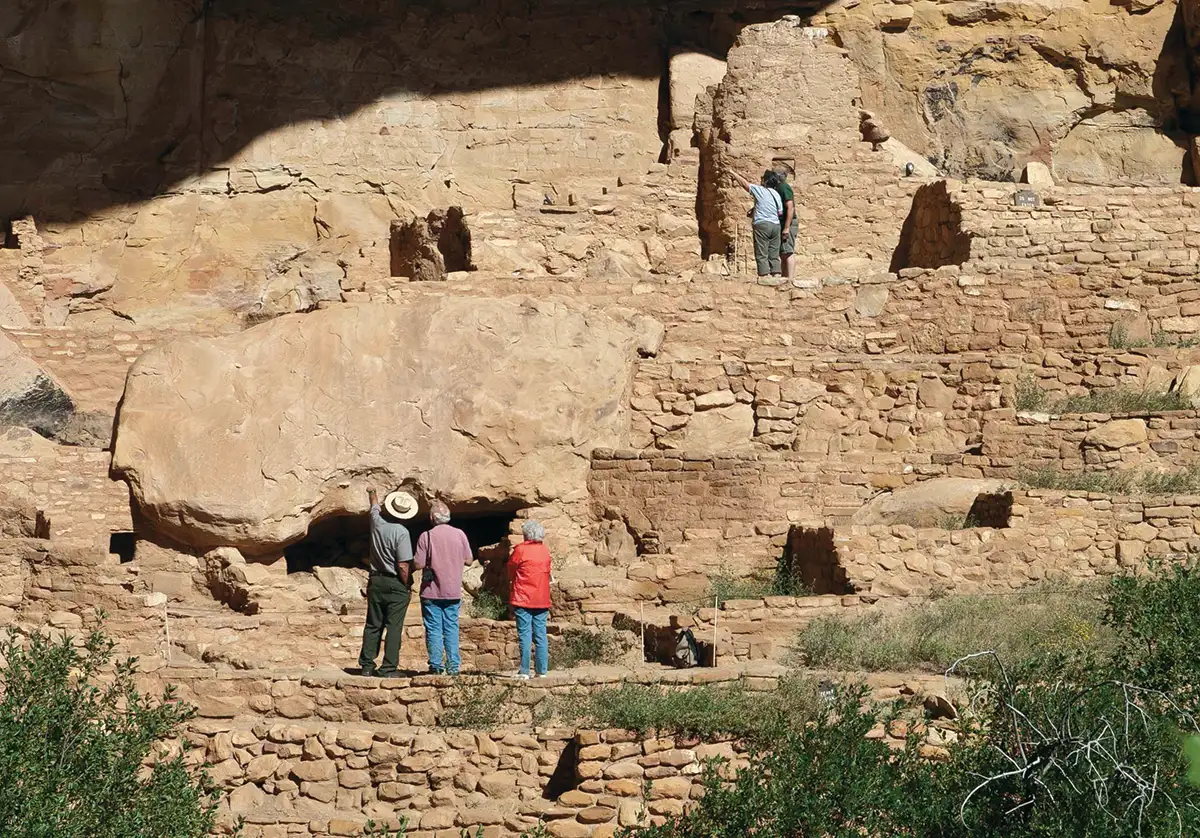
The Mesa Top Loop covers 6 miles (10 km) and about 700 years of Ancestral Pueblo history. Along the way you pass early pithouses, masonry villages, and multi-storied cliff dwellings, tracing how the architecture changed over time. Archeology and Pueblo oral histories fill in what daily life may have looked like for the families who lived here.
Details and current conditions live on nps.gov.
From the field
Common questions
When is the best time to visit Mesa Verde?
The calmest good-weather windows are late April through May and September through October. These shoulder months bring mild days in the 50s to 70s with far smaller crowds than the June-through-August peak, while ranger-led cliff dwelling tours still run from mid-May into late October.
Is Mesa Verde dog-friendly?
Yes, leashed pets are welcome, but only in limited areas. They are allowed on park roads, parking lots, several paved trails, and most Wetherill Mesa trails, but they cannot go on cliff dwelling tours, ancestral sites, tour trails, or inside buildings.
What is the quietest trail at Mesa Verde?
Visitors and park guides consistently point to the Spruce Canyon Trail and the Nordenskiöld Site No. 16 Trail as the least crowded. The Nordenskiöld trail is a short, flat walk to an overlook on the quieter Wetherill Mesa side, while Spruce Canyon gets skipped because it is longer and lacks the famous cliff dwellings.
How crowded does Mesa Verde get?
Mesa Verde is busiest in July and August, when the second week of August can draw up to 3,000 visitors a day. About 60% of the park's roughly 500,000 annual visitors come between June and August, all funneling through one 20-mile entrance road, while winter days can see fewer than 50 people.
Is Mesa Verde accessible for wheelchairs?
Partly. The Visitor and Research Center and the Mesa Verde Museum are fully accessible with paved walkways, ADA restrooms, and wheelchairs to borrow, and overlooks like Sun Temple and Park Point are reachable. Most cliff dwelling tours, however, involve ladders, steep drops, and rough footing and are not wheelchair accessible.
Can you camp at Mesa Verde?
Yes, at Morefield Campground, the park's only campground, which has 267 sites for tents, trailers, and RVs. It is run by a concessionaire and open spring through fall, with reservations made at visitmesaverde.com or by calling 1-800-449-2288.
Do you need a reservation for cliff dwelling tours?
Yes, ranger-led cliff dwelling tours require a timed reservation. Tours run mid-May through late October, and tickets are released on recreation.gov 14 days in advance at 8 a.m. and often sell out.
How much does it cost to enter Mesa Verde?
A private vehicle pass is $30 and covers seven days. Motorcycles are $25 and individuals on foot or bike are $15, and you can also buy a $20 digital vehicle pass on recreation.gov in advance.