
Lassen Volcanic National Park
Mineral, California · West
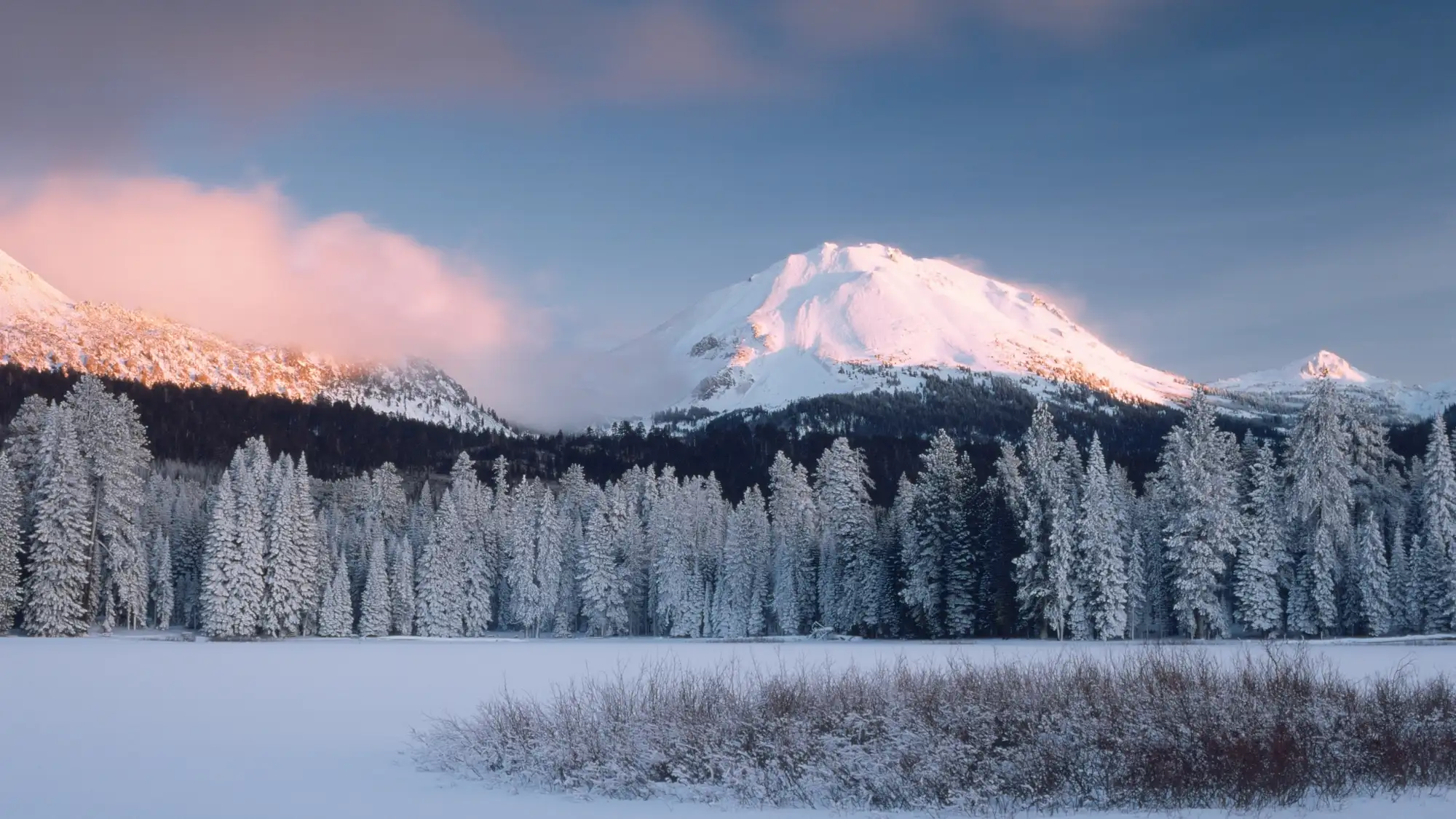
Half the year, under snow
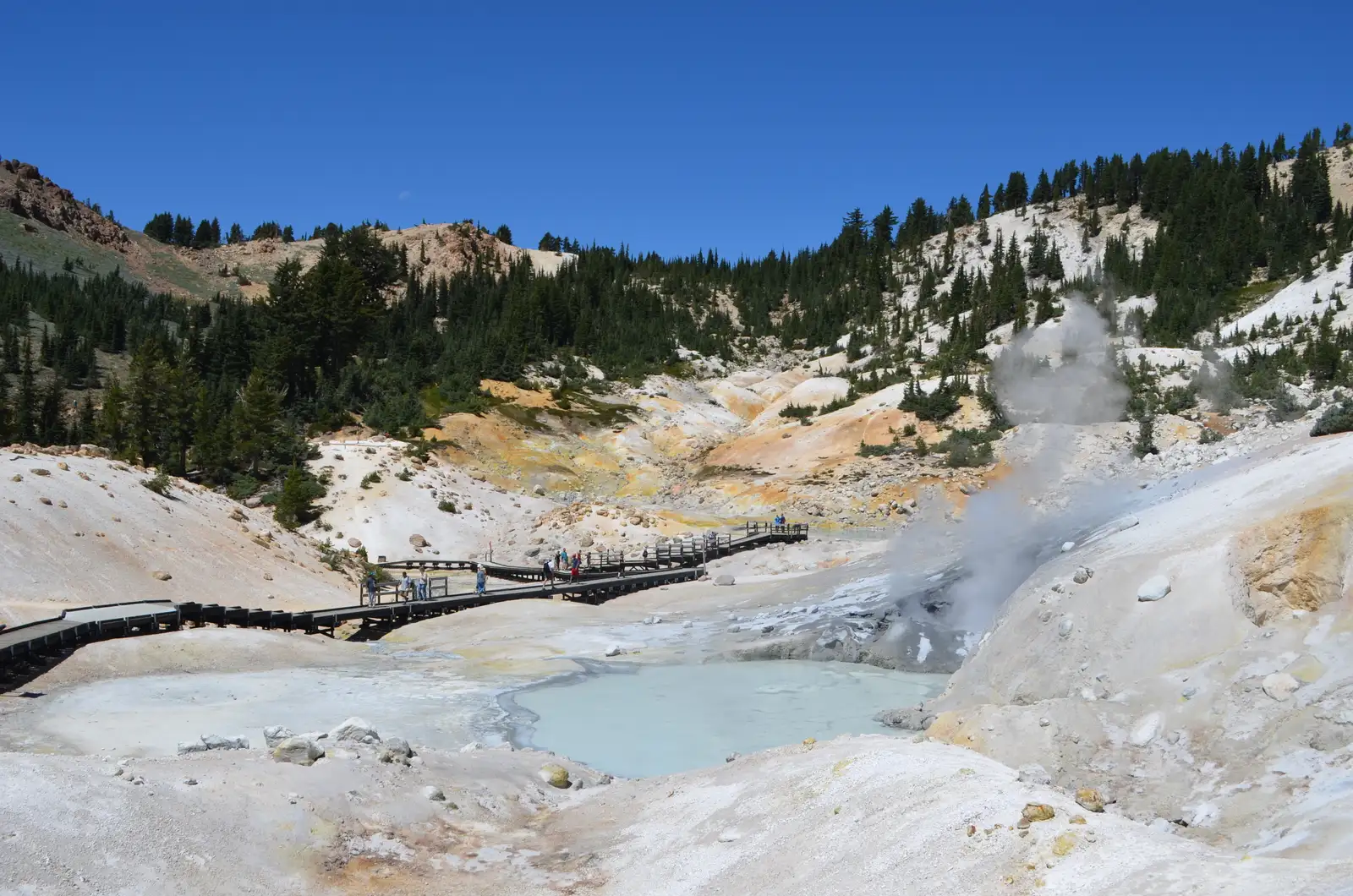
Lassen is a volcano that never fully cooled. Steam still hisses from fumaroles, mud pots plop and churn in Bumpass Hell, and the ground runs hot in places where the last eruptions ended just over a century ago. Jagged peaks and clear lakes fill in the rest, with most of the park sitting high, above 5,700 feet.
What really sets Lassen apart from most parks is snow. The high country holds one of the deepest snowpacks in California, and the road across the park stays closed roughly November through May. For half the year this is a white, near-silent landscape, and the park itself sums up winter here as snow and solitude.
That combination is worth more than a good photo: thin crowds, deep quiet, a landscape stripped down to snow and rock. Strapping on snowshoes for a short loop from the southwest entrance costs little and asks almost nothing of you, which turns out to be the useful part.
The science: A study by Konijnenberg and colleagues found that a 20-minute walk through a snow-covered winter landscape lowered both salivary cortisol and self-reported stress more than the same walk done indoors. Because the indoor version held the exertion steady, the difference points to the wintry landscape itself rather than the movement. At Lassen, where a short winter loop near the Kohm Yah-mah-nee Visitor Center is one of the few ways in during the snow months, that is roughly the dose on offer.
Konijnenberg, Vučić & Johnsen (2023) · Wellbeing, Space and Society
Seasonal guide
Crowd levels use NPS monthly visitation, averaged 2015–2025. Excludes 2020 (COVID anomaly) and 2026 (partial year). Temperatures are NOAA climate normals from a station 9.5 miles away. Busy does not mean bad. If a peak month is your only window, the season notes below tell you how to work it.
Highs sit around 40F and lows near 21F, and the park highway is closed by deep snow. Access is limited to the entrances, but the southwest entrance stays open for snowshoeing and cross-country skiing, and the winter entrance fee drops to $10 per vehicle. Dress for real cold and check road status before you drive up.
Snow lingers well into spring, with highs climbing from the mid-40s in March to about 60F by May, and the main road often stays closed into late spring or early summer. Expect winter conditions early and slushy, thinning snow later. May brings a jump in visitors as lower areas open, so go midweek if you want the quiet.
Highs run from about 69F in June to the high 70s in July and August, with cool nights near 45F. This is when the full 30-mile highway, the lakes, and trails like Bumpass Hell are all open, and it is by far the busiest stretch. Arrive at popular trailheads before 9 a.m. to find parking.
Highs cool from about 72F in September to the upper 40s by November, and the first snows can close the park highway anytime in fall. Early fall keeps summer access with slightly thinner crowds, while November brings snow and solitude. Watch the forecast closely, since road closures can come on fast.
This month in the park
Timing changes everything out here. Pick a month to see when the light turns golden, which nights stay darkest for stargazing, and what visitors have actually recorded in bloom and on the move. The new-moon night is the one to plan a sky-watching evening around.
January 2027
Wildlife on the move · 5 species on record
- Bald Eagle 1 sightings
- American Dipper 1 sightings
- Steller's Jay 1 sightings
- Red-breasted Nuthatch 1 sightings
- White-headed Woodpecker 1 sightings
February 2027
Wildlife on the move · 7 species on record
- Common Raven 2 sightings
- Clark's Nutcracker 2 sightings
- Mallard 1 sightings
- Steller's Jay 1 sightings
- White-breasted Nuthatch 1 sightings
March 2027
Wildlife on the move · 26 species on record
- White-breasted Nuthatch 4 sightings
- Great Blue Heron 3 sightings
- Bufflehead 3 sightings
- Douglas's Squirrel 3 sightings
- White-headed Woodpecker 3 sightings
April 2027
In bloom · 5 species on record
- ❀ Western columbine 1 sightings
- ❀ Snowplant 1 sightings
- ❀ Scarlet Gilia 1 sightings
- ❀ Slender Beardtongue 1 sightings
- ❀ Shasta clover 1 sightings
Wildlife on the move · 21 species on record
- Steller's Jay 4 sightings
- Mallard 2 sightings
- Bufflehead 2 sightings
- Canada Goose 2 sightings
- Red-breasted Nuthatch 2 sightings
May 2027
In bloom · 20 species on record
- ❀ Snowplant 10 sightings
- ❀ Purple Fawn Lily 5 sightings
- ❀ Longhorn steer's-head 4 sightings
- ❀ Pacific Bleeding Heart 3 sightings
- ❀ Greenleaf manzanita 3 sightings
Wildlife on the move · 107 species on record
- Steller's Jay 20 sightings
- American Robin 15 sightings
- Mountain Chickadee 15 sightings
- Mule Deer 14 sightings
- Common Golden-mantled Ground Squirrel 14 sightings
June 2027
In bloom · 95 species on record
- ❀ Snowplant 44 sightings
- ❀ Purple Fawn Lily 41 sightings
- ❀ Shasta clover 18 sightings
- ❀ Mountain Pride 14 sightings
- ❀ Longhorn steer's-head 14 sightings
Wildlife on the move · 292 species on record
- Common Golden-mantled Ground Squirrel 70 sightings
- California Tortoiseshell 66 sightings
- Mule Deer 54 sightings
- Common Sagebrush Lizard 50 sightings
- Steller's Jay 39 sightings
July 2026
In bloom · 181 species on record
- ❀ Leichtlin's Mariposa Lily 83 sightings
- ❀ Shasta clover 46 sightings
- ❀ Western columbine 44 sightings
- ❀ Blushing Monkeyflower 42 sightings
- ❀ Primrose monkeyflower 40 sightings
Wildlife on the move · 418 species on record
- California Tortoiseshell 192 sightings
- Common Golden-mantled Ground Squirrel 157 sightings
- Mule Deer 86 sightings
- Pacific chorus frog 72 sightings
- Clodius Parnassian 67 sightings
August 2026
In bloom · 143 species on record
- ❀ Pearly everlasting 48 sightings
- ❀ Primrose monkeyflower 42 sightings
- ❀ Satin lupine 36 sightings
- ❀ Pyrola-leaf Buckwheat 24 sightings
- ❀ Western columbine 21 sightings
Wildlife on the move · 306 species on record
- Common Golden-mantled Ground Squirrel 174 sightings
- California Tortoiseshell 160 sightings
- Mule Deer 97 sightings
- Yellow-rumped Warbler 73 sightings
- Douglas's Squirrel 65 sightings
September 2026
In bloom · 68 species on record
- ❀ Pearly everlasting 22 sightings
- ❀ Rubber Rabbitbrush 14 sightings
- ❀ Alpine Gentian 9 sightings
- ❀ Marsh grass-of-Parnassus 8 sightings
- ❀ Naked Buckwheat 7 sightings
Wildlife on the move · 216 species on record
- Common Golden-mantled Ground Squirrel 89 sightings
- Pacific chorus frog 54 sightings
- Douglas's Squirrel 42 sightings
- Mule Deer 40 sightings
- Sooty Grouse 30 sightings
October 2026
In bloom · 10 species on record
- ❀ Purple Mountain-heath 3 sightings
- ❀ Pearly everlasting 2 sightings
- ❀ Mountain Jewelflower 1 sightings
- ❀ Anderson's thistle 1 sightings
- ❀ One-seeded Pussypaws 1 sightings
Wildlife on the move · 101 species on record
- Common Golden-mantled Ground Squirrel 39 sightings
- American Dipper 13 sightings
- Clark's Nutcracker 11 sightings
- Douglas's Squirrel 10 sightings
- Steller's Jay 9 sightings
November 2026
Wildlife on the move · 25 species on record
- Douglas's Squirrel 4 sightings
- Clark's Nutcracker 3 sightings
- Mountain Chickadee 3 sightings
- Hairy Woodpecker 3 sightings
- Common Raven 2 sightings
December 2026
Wildlife on the move · 2 species on record
- Steller's Jay 1 sightings
- American Black Bear 1 sightings
Sun and moon times are computed for the park's coordinates from standard NOAA solar equations and cross-checked against the U.S. Naval Observatory. Species lists are research-grade community observations for Lassen Volcanic National Park, US, CA via iNaturalist, retrieved July 2026; sighting counts are all-time records for that calendar month.
Don’t wait for Lassen Volcanic.
One big trip a year isn’t what changes how you feel — the small stuff in between is. The 7-Day Nature Reset is one tiny outdoor practice a day, wherever you already are. Day one takes 60 seconds.
No spam. No noise. Just nature.
Day 1 is landing in your inbox right now — go say hi.
Sleep nearby
Most visitors base in Redding, California, about 47 miles out. Redding is the area's largest town with the most rooms, better prices, dining, and services. Mineral offers immediate access to the Southwest Entrance but has very few rooms. The map opens on Redding, so pan toward the park to trade rooms and price for a shorter morning drive.
Camping inside the park books through Recreation.gov and is listed separately.
The map is provided by Stay22. If you book through it we may earn a commission at no cost to you, which helps keep Happier Outdoors running. It never changes what we recommend.
Activities & experiences
Beyond the trails
This 30-mile highway links the northwest entrance at Manzanita Lake to the southwest entrance. It runs through dense forest, past alpine lakes and meadow, crests at 8,512 feet near the Lassen Peak Trailhead, then drops down steep volcanic slopes. Designated turnouts let you stop for the highlights.
Snowshoes open up the park in winter. Follow the snow-covered highway route on Hwy 89, circle an icy lake, or visit boiling hydrothermal features. Experienced explorers can push for a snowy summit.
A two-mile round-trip over-snow route in the Southwest Area brings you to the sights and sounds of the Sulphur Works hydrothermal area.
Easy to reach and one of the park's most popular fishing spots, Manzanita Lake holds a fair number of rainbow and brown trout. California's Department of Fish and Game rates it a blue-ribbon fly fishery.
Behind the Kohm Yah-mah-nee Visitor Center, steep slopes draw sledders all winter. The deep snowfall leaves plenty of room for snowplay and building a snowman.
Winter here suits skis and boards too. Cross-country ski the park's many winter routes, or, if you have the experience, take a backcountry line down one of Lassen's mountain slopes.
Details and current conditions live on nps.gov.
From the field
Common questions
When is the best time to visit Lassen Volcanic National Park?
Summer, roughly July through September, is when the full 30-mile park highway is open and all trails and lakes are reachable. July is by far the busiest month, so for the scenery with fewer people aim for late September or October, when temperatures cool and crowds thin. Winter and spring bring deep snow and limited road access, but real solitude.
Is Lassen Volcanic National Park dog-friendly?
Dogs are allowed only in developed areas: campgrounds, picnic areas, parking lots, and on paved park roads when they are clear of snow. They are prohibited on all hiking trails, in the backcountry, in hydrothermal areas, and inside visitor centers, and leashes must be under 6 feet. Service animals are permitted throughout.
What is the quietest trail in Lassen Volcanic National Park?
Visitors consistently point to Prospect Peak, Brokeoff Mountain, and Devil's Kitchen as the least-crowded trails. Prospect Peak is described as the least-crowded major trail, Brokeoff Mountain's difficulty keeps numbers low, and Devil's Kitchen sits in a remote section far from the main road. These stay quiet because iconic hikes like Lassen Peak and Bumpass Hell pull most of the traffic.
How crowded does Lassen Volcanic National Park get?
Lassen draws about 450,000 visitors a year, far fewer than many national parks, but they concentrate heavily in summer. From July through October, lots at Loomis Plaza, Bumpass Hell, and Kings Creek Fall fill between 9 a.m. and 3 p.m., while winter and spring stay very quiet with limited road access.
Is Lassen Volcanic National Park accessible for wheelchairs?
Two paved trails are wheelchair accessible: the 1-mile Devastated Area Interpretive Trail and the Sulphur Works hydrothermal path, though Sulphur Works is sloped and needs assisted mobility. The Kohm Yah-mah-nee Visitor Center and the Loomis Museum are accessible, and Manzanita Lake, Summit Lake North, and Butte Lake each offer accessible campsites.
Can you camp at Lassen Volcanic National Park?
Yes, the park has several campgrounds totaling 454 sites, most reservable through Recreation.gov. Manzanita Lake is the largest at about 180 sites, while Juniper Lake, Warner Valley, and Southwest Walk-in are first-come or self-register. The $30 vehicle entrance fee is separate from camping fees.
Where do you park at Lassen Volcanic National Park?
Park at trailhead lots and day-use areas along the 30-mile park highway, but arrive before 9 a.m. or after 3 p.m. in summer, since popular lots fill midday. The small Bumpass Hell lot fills especially fast, and if lots are full, the Manzanita Lake day-use area on the southwest shore is your best bet.