Kobuk Valley National Park
Kotzebue, Alaska · Alaska
Wilderness, not a comfortable getaway
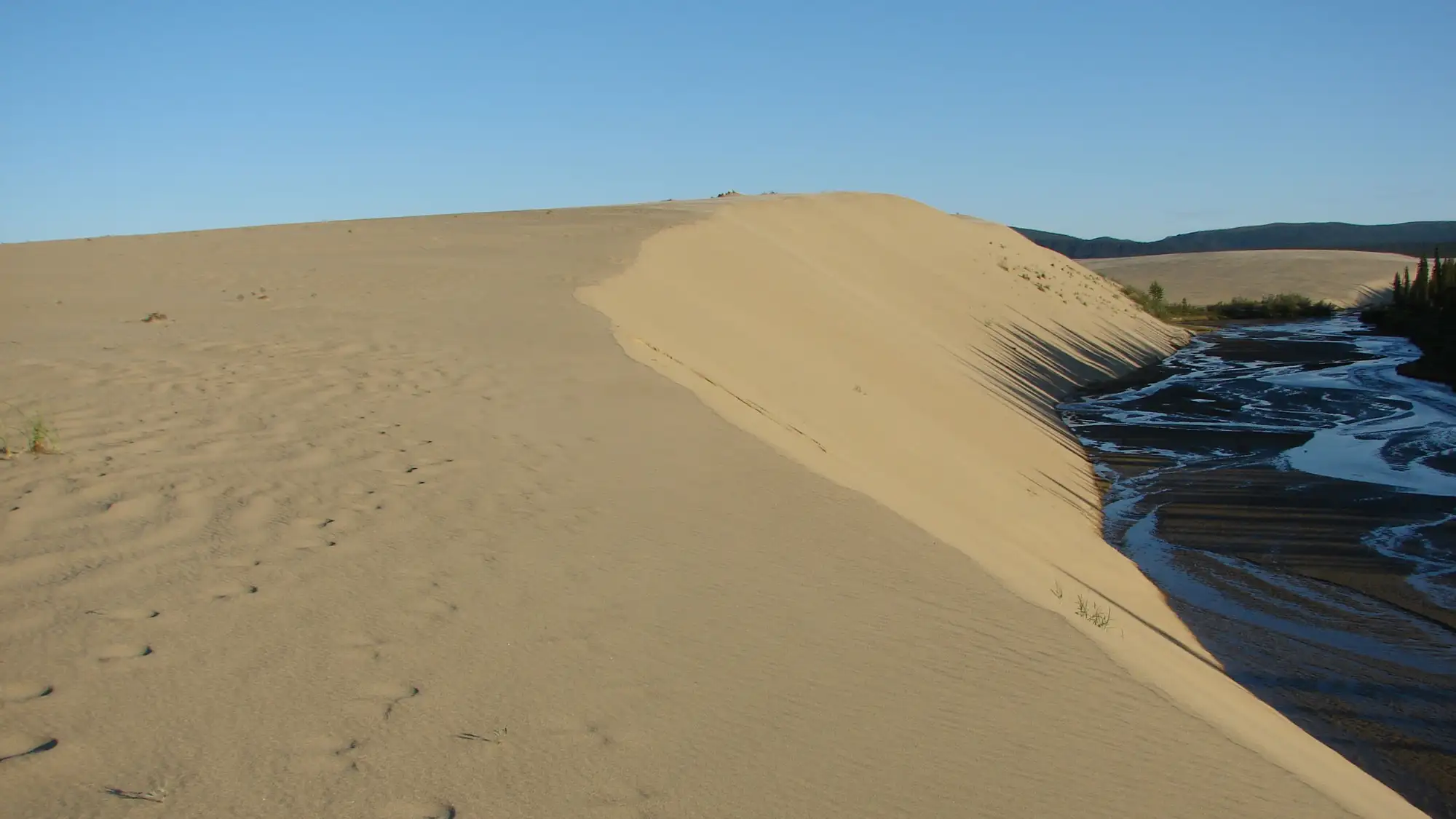
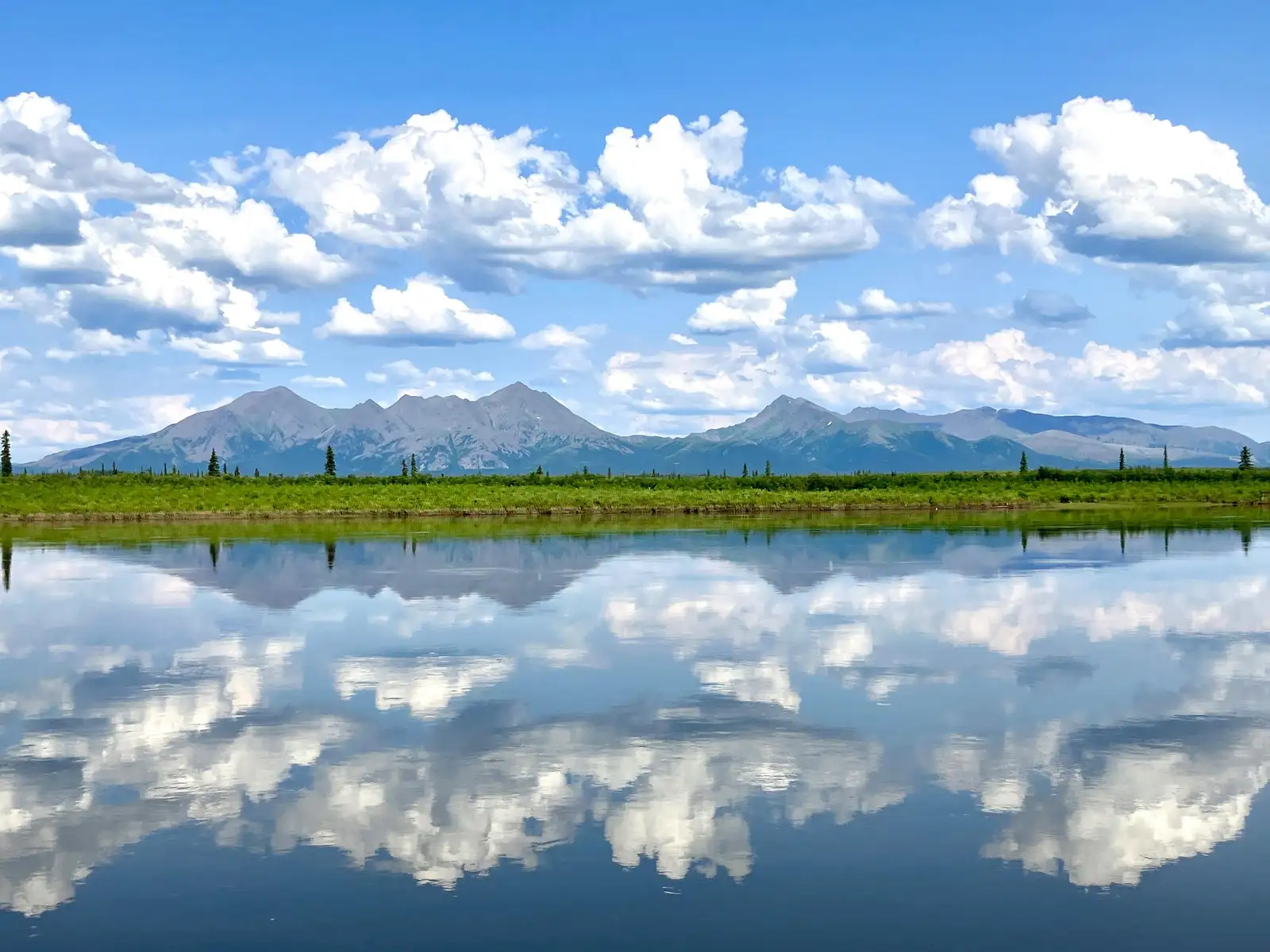
Kobuk Valley keeps a desert above the Arctic Circle. The Great Kobuk Sand Dunes rise straight out of the tundra, and thousands of caribou cross them on migration, leaving tracks that lace the sculpted sand. The Kobuk River threads through the middle of it, the same corridor people have followed for around 9,000 years to meet the herds at Onion Portage.
Nothing here is set up for you. There are no roads, no trails, no campground, and no visitor center inside the park boundaries. You fly in by bush plane from Kotzebue or Bettles, pick a spot, and camp where you land, which means a real visit is measured in days rather than hours.
In a randomized trial, young cancer survivors sent on an eight-day wilderness expedition came back with a stronger sense of connection to nature, while a matched group sent on a comfortable resort holiday did not. That contrast is the useful part here. Kobuk is not the resort version of a break, it is the wilderness version, undeveloped and reachable only by air, and that is exactly the kind of trip where the shift in connection showed up.
The science: In a randomized study, young cancer survivors sent on a real eight-day wilderness expedition showed a significant rise in nature connectedness, while a comparison group on a pleasant resort holiday did not. The honest part of that design is the control: it wasn't wilderness versus staying home, it was wilderness versus a comfortable break. Kobuk Valley is the far end of that spectrum, a trailless park you reach only by plane, and it asks for the kind of immersion the study measured.
Jong, Dahlqvist, Lown, Schats, Beckman & Jong (2023) · BMC Public Health
Seasonal guide
Crowd levels use NPS monthly visitation, averaged 2015–2025. Excludes 2020 (COVID anomaly) and 2026 (partial year). Temperatures are NOAA climate normals from a nearby representative station. Busy does not mean bad. If a peak month is your only window, the season notes below tell you how to work it.
Deep Arctic winter, with highs from about 5F to 9F and lows below zero, plus long darkness. Access is limited to experienced snowmobile travelers, so this is an expedition rather than a casual visit, but the trade-off is aurora and near-total solitude. Travel with expert local support and full cold-weather gear.
The quietest window, with highs climbing from single digits in March to near 39F in May as snow lingers on the ground. Daylight returns fast and the cold eases, but freeze-thaw and river ice make travel unpredictable. Come prepared for winter conditions early in the season and meltwater later.
The main season, when highs reach the mid-50s to about 60F and the Kobuk River is navigable for floating. This is peak visitation in relative terms, though you will likely still have the place to yourself. August is the wettest month at over two inches, and wind with rain can bring hypothermia even when it doesn't feel that cold, so pack quality rain gear, warm layers, and stay dry.
Fall cools quickly, from highs near 47F in September to about 16F by November, with caribou on the move and aurora returning to darkening skies. It is a striking time to be here, but freeze-up and short days shrink your options fast. Build in weather delays for air travel and be ready for genuine cold.
This month in the park
Timing changes everything out here. Pick a month to see when the light turns golden, which nights stay darkest for stargazing, and what visitors have actually recorded in bloom and on the move. The new-moon night is the one to plan a sky-watching evening around.
January 2027
February 2027
March 2027
April 2027
May 2027
June 2027
Wildlife on the move · 20 species on record
- Wood Frog 8 sightings
- American Wigeon 5 sightings
- Glaucous Gull 2 sightings
- Red-throated Loon 2 sightings
- Red-breasted Merganser 2 sightings
July 2026
In bloom · 7 species on record
- ❀ Kobuk Locoweed 3 sightings
- ❀ Dwarf Fireweed 2 sightings
- ❀ Lesser Spearwort 1 sightings
- ❀ Marsh grass-of-Parnassus 1 sightings
- ❀ Little Belt Mountain Thimbleweed 1 sightings
Wildlife on the move · 22 species on record
- American Black Bear 6 sightings
- Moose 6 sightings
- Gray Wolf 5 sightings
- Long-tailed Jaeger 3 sightings
- Semipalmated Plover 3 sightings
August 2026
Wildlife on the move · 2 species on record
- Northern Wheatear 1 sightings
- Caribou 1 sightings
September 2026
Wildlife on the move · 2 species on record
- Graphite Arches 1 sightings
- Spruce Grouse 1 sightings
October 2026
November 2026
December 2026
Sun and moon times are computed for the park's coordinates from standard NOAA solar equations and cross-checked against the U.S. Naval Observatory. Species lists are research-grade community observations for Kobuk Valley National Park, AK, US via iNaturalist, retrieved July 2026; sighting counts are all-time records for that calendar month.
Don’t wait for Kobuk Valley.
One big trip a year isn’t what changes how you feel — the small stuff in between is. The 7-Day Nature Reset is one tiny outdoor practice a day, wherever you already are. Day one takes 60 seconds.
No spam. No noise. Just nature.
Day 1 is landing in your inbox right now — go say hi.
Sleep nearby
Places to stay around Kotzebue, Alaska. Pan the map to trade a shorter drive for a quieter night.
Camping inside the park books through Recreation.gov and is listed separately.
The map is provided by Stay22. If you book through it we may earn a commission at no cost to you, which helps keep Happier Outdoors running. It never changes what we recommend.
Activities & experiences
Beyond the trails
The Great Kobuk Sand Dunes are the northernmost sand dune complex in North America. Arctic wildlife is abundant here.
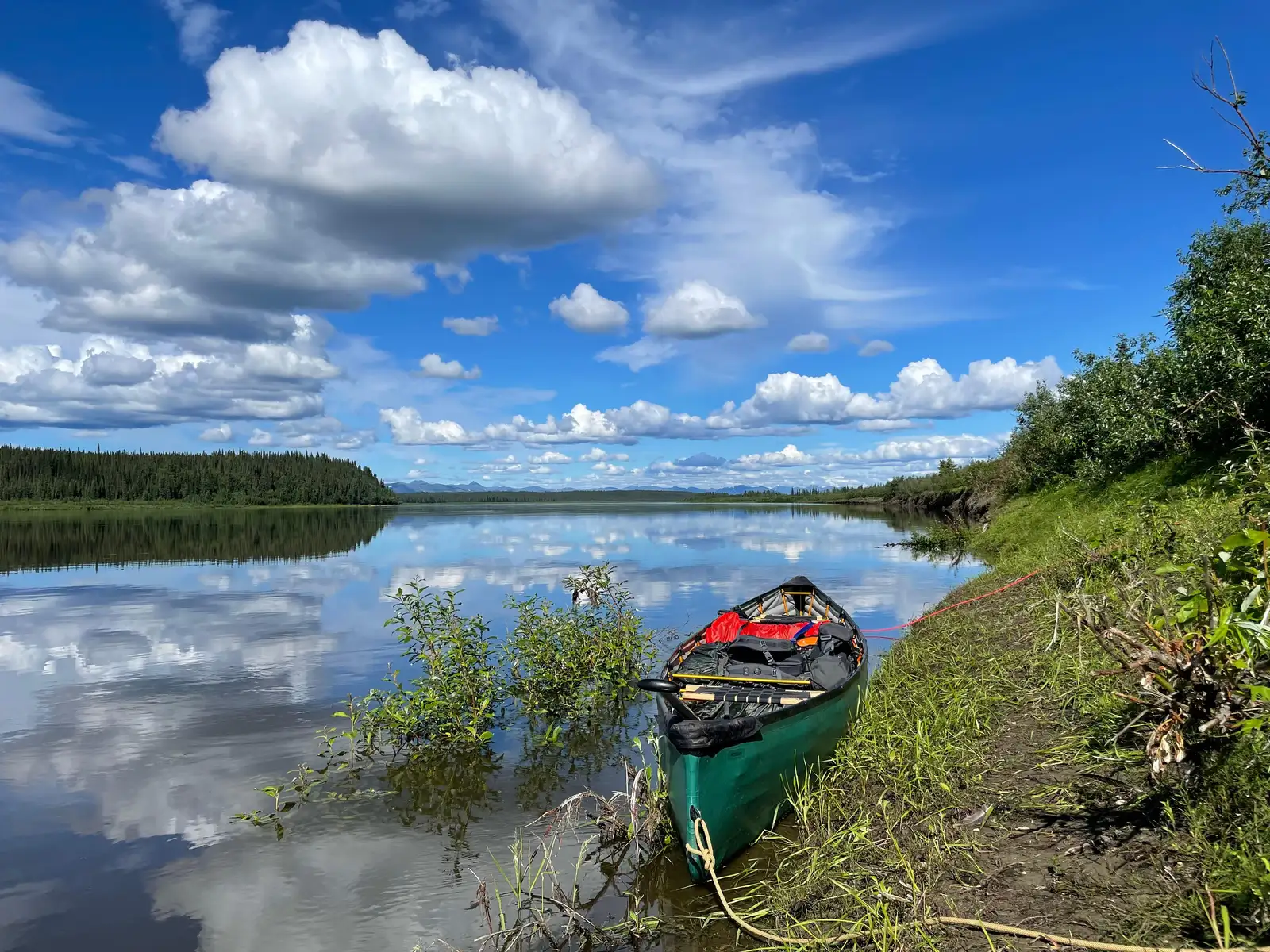
The Kobuk River offers a mild float on a wild river. A quiet way to see this wilderness.
Planning a trip to Northwest Alaska? The Northwest Arctic Heritage Center is where you meet rangers and gather information on Cape Krusenstern National Monument, Kobuk Valley National Park, and Noatak National Preserve.
Details and current conditions live on nps.gov.
From the field
Common questions
When is the best time to visit Kobuk Valley National Park?
Summer, roughly June through August, is the most practical window, when temperatures are warmest and the Kobuk River is navigable for floating. July highs average about 60F. Winter travel is possible but limited to experienced snowmobile users.
How crowded does Kobuk Valley get?
Kobuk Valley is one of the least-crowded national parks in the country, and solitude is the norm rather than the exception. With no roads, trails, or entrance gates to concentrate people, you are unlikely to see other visitors outside of scattered air-taxi landing spots and the river corridor.
Is Kobuk Valley National Park dog-friendly?
Pets are allowed, but the park has no trails, roads, or facilities, so there are no designated areas for them, and you would be managing them in bear country where food must be stored securely. There are no park shuttles either, since access is only by authorized air taxi.
What is the quietest trail in Kobuk Valley?
There are no trails in Kobuk Valley at all; the entire park is unmaintained wilderness. Visitors travel cross-country on foot or float the Kobuk River, so where you find quiet depends entirely on where your air taxi drops you.
Is Kobuk Valley accessible for wheelchairs?
The park itself has no paved trails, accessible routes, shuttles, or facilities, because it is remote wilderness reached only by small plane. The Northwest Arctic Heritage Center in Kotzebue, the gateway, is wheelchair accessible and offers a wheelchair on request, assistive listening devices, and ASL interpreters arranged with 10 days' notice.
Can you camp at Kobuk Valley National Park?
You can camp anywhere in the park's backcountry; there are no campgrounds, designated sites, fees, or reservations. Independent travelers need no permit, though organized groups must obtain one from the Chief Ranger.
Where do you park at Kobuk Valley?
There is no parking at Kobuk Valley because the park has no roads or facilities. Visitors reach it by air from Kotzebue, where the Northwest Arctic Heritage Center helps with transportation and trip planning, and any parking is at town facilities or the Kotzebue airport.
Is there an entrance fee for Kobuk Valley?
There is no entrance fee for Kobuk Valley National Park, and no camping fee either. The real cost of a visit is chartering an air taxi to reach the park.
What are the park hours?
Kobuk Valley National Park is open 24 hours a day, every day of the year. Its visitor center, the Northwest Arctic Heritage Center, is located in Kotzebue because there are no roads into the park.