Katmai National Park & Preserve
King Salmon, Alaska · Alaska
Watching the bears rests your mind
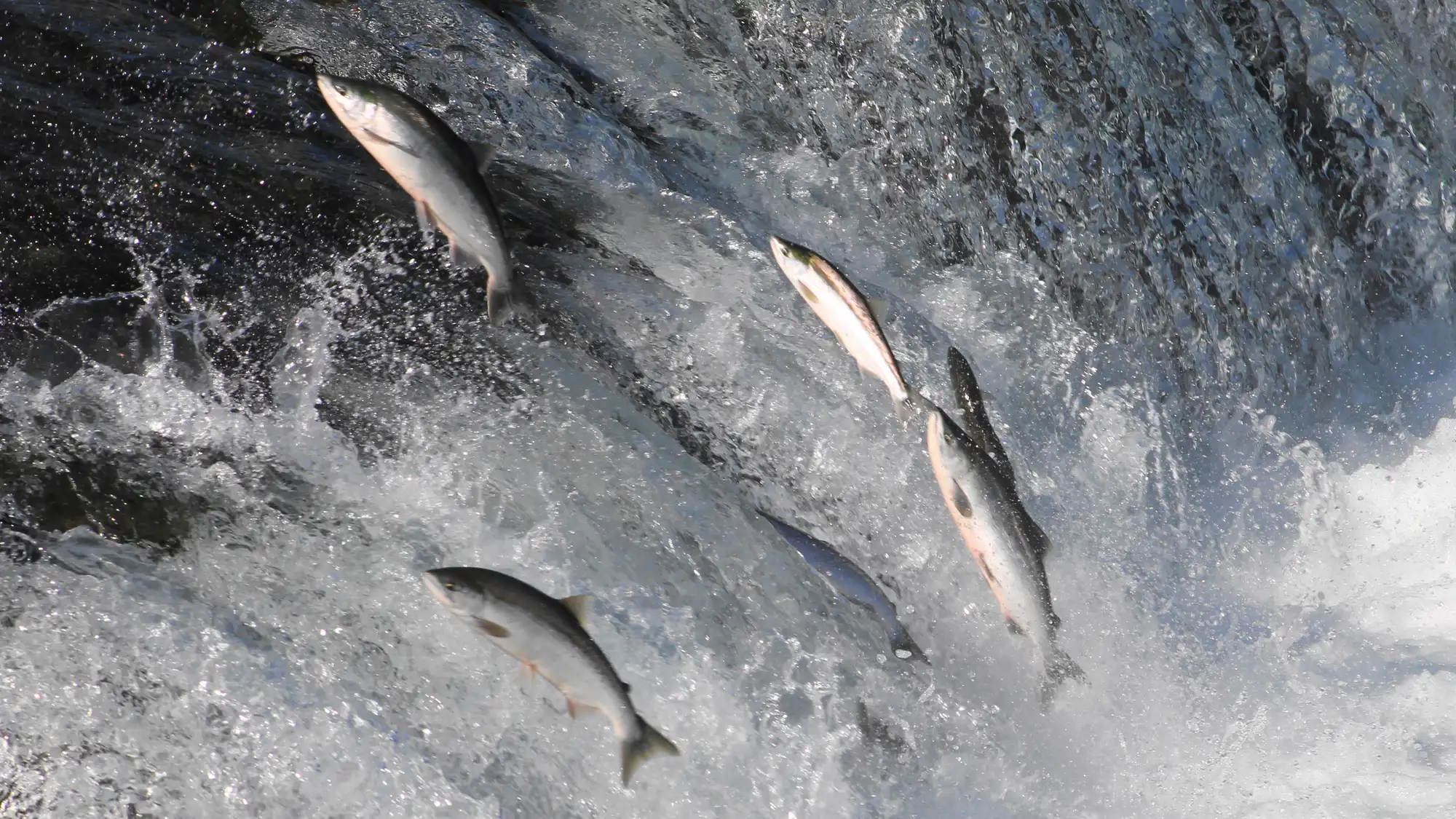
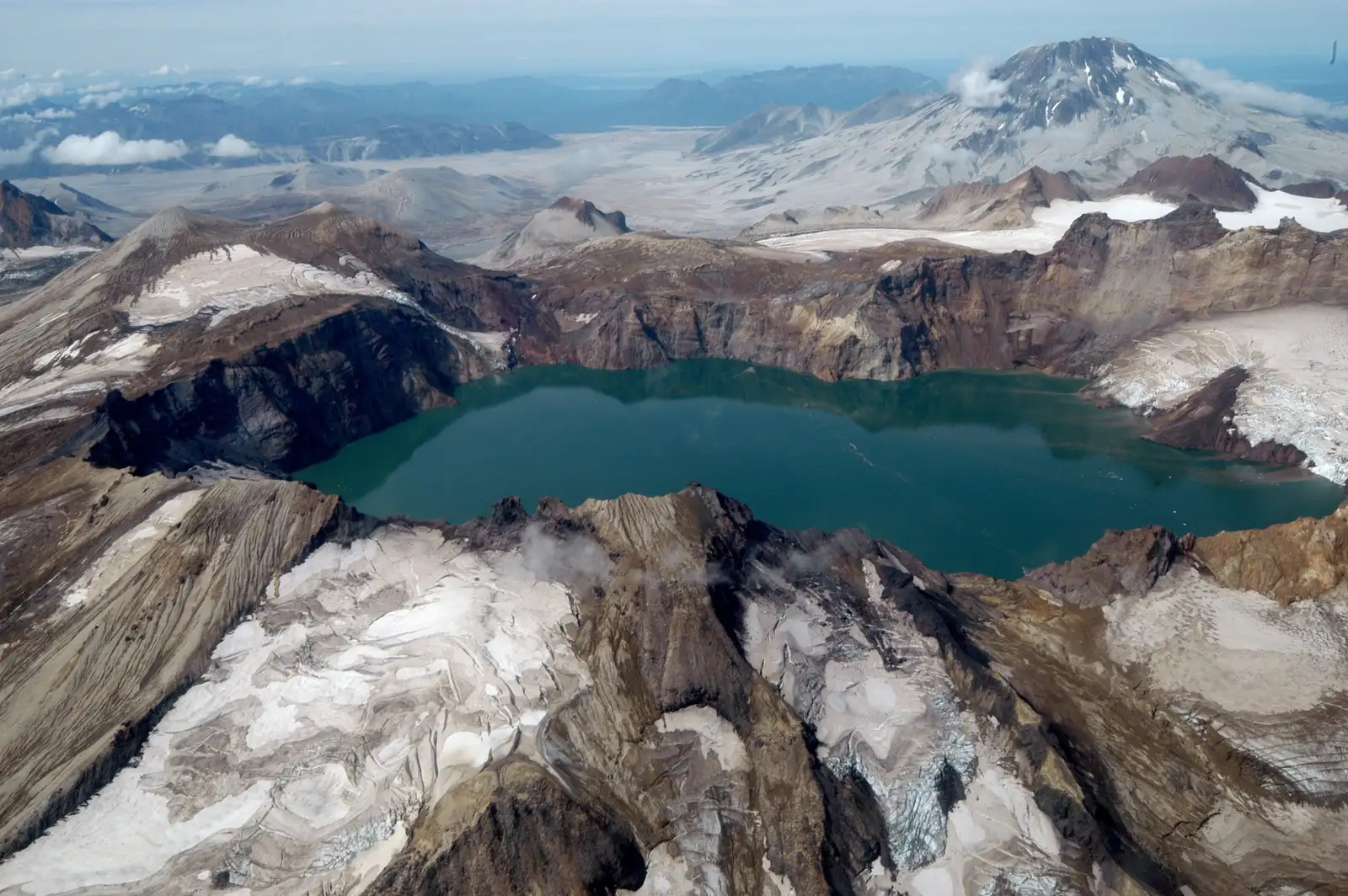
Katmai is one of the hardest national parks in the country to reach. No road touches it, so nearly everyone arrives by floatplane or boat, usually landing at Brooks Camp on Naknek Lake. What waits there is a salmon river and, in the peak weeks, brown bears crowding the falls to fish.
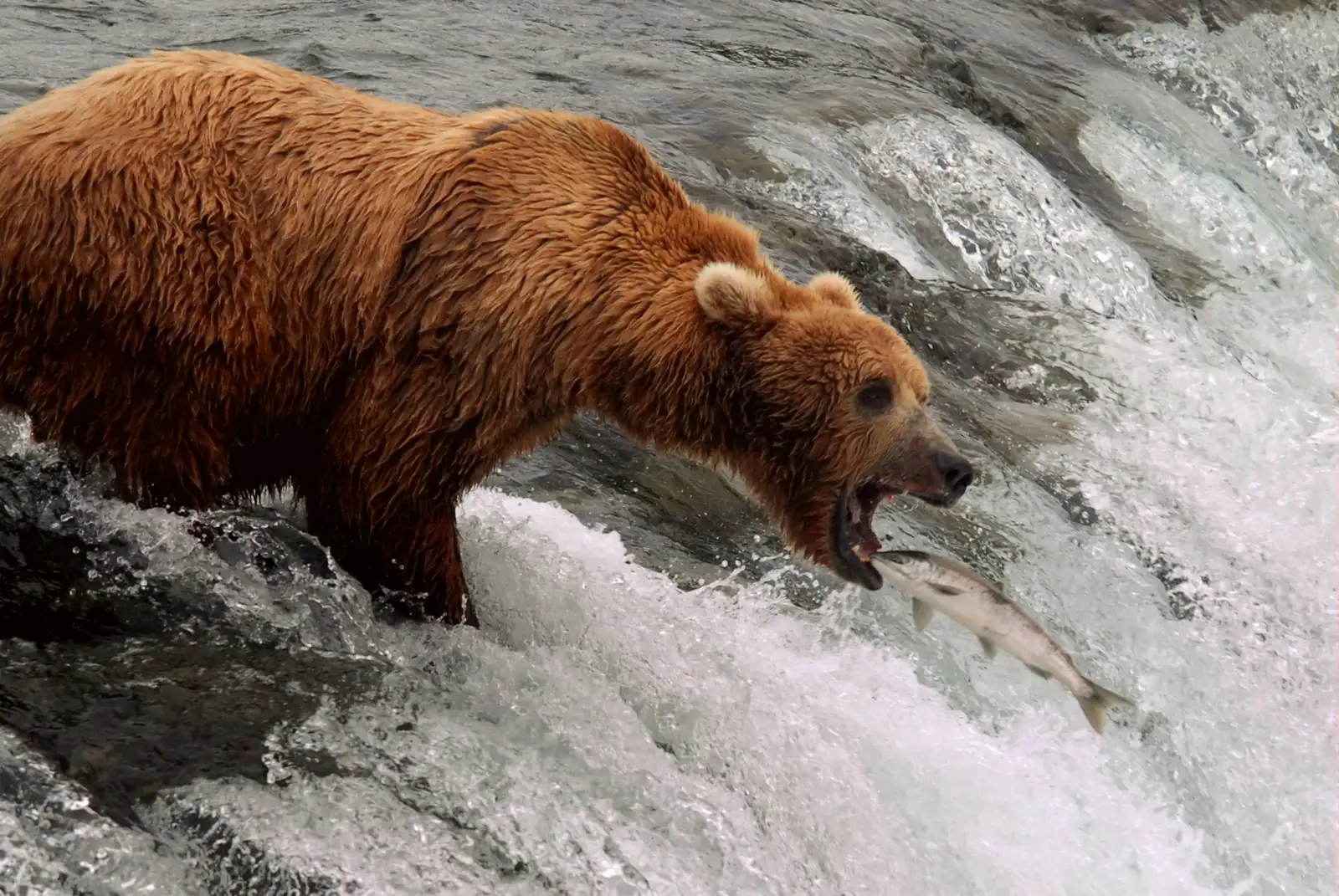
From the elevated viewing platforms the whole scene unfolds without asking anything of you. A bear plants itself at the lip of the falls, a salmon leaps, water roars underneath, and you simply watch. Beyond Brooks Camp the park runs to more than four million acres of trailless wilderness where the loudest thing is moving water.
The science: The psychologist Stephen Kaplan argued that natural scenes hold us through soft fascination, a gentle and effortless kind of attention that lets the worn-out, directed attention we spend all day rebuild. That is close to what standing at the Brooks Falls platform does: your eyes lock onto a bear waiting for a salmon to leap, and the watching costs you nothing while the running water and the wait carry the moment.
Kaplan (1995) · Journal of Environmental Psychology
Seasonal guide
Crowd levels use NPS monthly visitation, averaged 2015–2025. Excludes 2020 (COVID anomaly). Temperatures are NOAA climate normals from a station 43.6 miles away. Busy does not mean bad. If a peak month is your only window, the season notes below tell you how to work it.
Winter is cold and dry, with highs from the mid-20s to low 30s and lows near 10F, and the park sees only a handful of visitors a month. Brooks Camp facilities are closed and access means a chartered plane, so this is a trip for well-equipped, self-reliant travelers chasing deep solitude and a chance at the aurora.
Spring warms slowly, with April highs in the low 40s climbing into the low 50s by May, but bears and services are only starting to appear. May opens the shoulder camping season at Brooks Camp, so come for quiet and lower fees, knowing bear numbers stay light until June.
Summer is why most people come and the busiest stretch by far, with July and August at peak. Highs sit around 59 to 62F with frequent rain, and July brings the famous salmon-and-bear spectacle at Brooks Falls, so book far ahead, arrive early in the day, and plan around the one-hour platform limit.
September stays prime for bear viewing and crowds before visitation drops off sharply through October and November. September is the wettest month at over 5 inches with highs in the mid-50s, cooling into the 30s and 40s by November, so pack serious rain gear and expect Brooks Camp to wind down for the season.
This month in the park
Timing changes everything out here. Pick a month to see when the light turns golden, which nights stay darkest for stargazing, and what visitors have actually recorded in bloom and on the move. The new-moon night is the one to plan a sky-watching evening around.
January 2027
February 2027
March 2027
April 2027
May 2027
Wildlife on the move · 7 species on record
- Brown Bear 3 sightings
- Semipalmated Plover 1 sightings
- Trumpeter Swan 1 sightings
- Rainbow Trout 1 sightings
- Old World Swallowtail 1 sightings
June 2027
In bloom · 7 species on record
- ❀ Chives 1 sightings
- ❀ One-flowered Wintergreen 1 sightings
- ❀ White twisted-stalk 1 sightings
- ❀ Arctic raspberry 1 sightings
- ❀ Northern Groundcone 1 sightings
Wildlife on the move · 11 species on record
- Common Merganser 3 sightings
- Brown Bear 3 sightings
- Rock Ptarmigan 1 sightings
- Least Sandpiper 1 sightings
- Greater Yellowlegs 1 sightings
July 2026
In bloom · 5 species on record
- ❀ Common Butterwort 1 sightings
- ❀ Swedish Cornel 1 sightings
- ❀ Calthaleaf Avens 1 sightings
- ❀ Fireweed 1 sightings
- ❀ Arctic Starflower 1 sightings
Wildlife on the move · 16 species on record
- Brown Bear 32 sightings
- Common Merganser 5 sightings
- Greater Yellowlegs 3 sightings
- Glaucous-winged Gull 3 sightings
- Bald Eagle 3 sightings
August 2026
Wildlife on the move · 11 species on record
- Brown Bear 18 sightings
- Horned Puffin 3 sightings
- Gray Wolf 2 sightings
- Glaucous-winged Gull 1 sightings
- Common Merganser 1 sightings
September 2026
Wildlife on the move · 6 species on record
- Brown Bear 20 sightings
- Glaucous-winged Gull 1 sightings
- Bald Eagle 1 sightings
- Harbor Seal 1 sightings
- Sea Otter 1 sightings
October 2026
November 2026
December 2026
Sun and moon times are computed for the park's coordinates from standard NOAA solar equations and cross-checked against the U.S. Naval Observatory. Species lists are research-grade community observations via iNaturalist, retrieved July 2026; sighting counts are all-time records for that calendar month.
Don’t wait for Katmai.
One big trip a year isn’t what changes how you feel — the small stuff in between is. The 7-Day Nature Reset is one tiny outdoor practice a day, wherever you already are. Day one takes 60 seconds.
No spam. No noise. Just nature.
Day 1 is landing in your inbox right now — go say hi.
Sleep nearby
Most visitors base in Naknek, Alaska, about 5 miles out. Naknek offers more lodging options and often better prices than King Salmon, just 14 miles away. King Salmon has the park headquarters and visitor center and flight/boat access, but fewer and pricier rooms. The map opens on Naknek, so pan toward the park to trade rooms and price for a shorter morning drive.
Camping inside the park books through Recreation.gov and is listed separately.
The map is provided by Stay22. If you book through it we may earn a commission at no cost to you, which helps keep Happier Outdoors running. It never changes what we recommend.
Activities & experiences
Beyond the trails
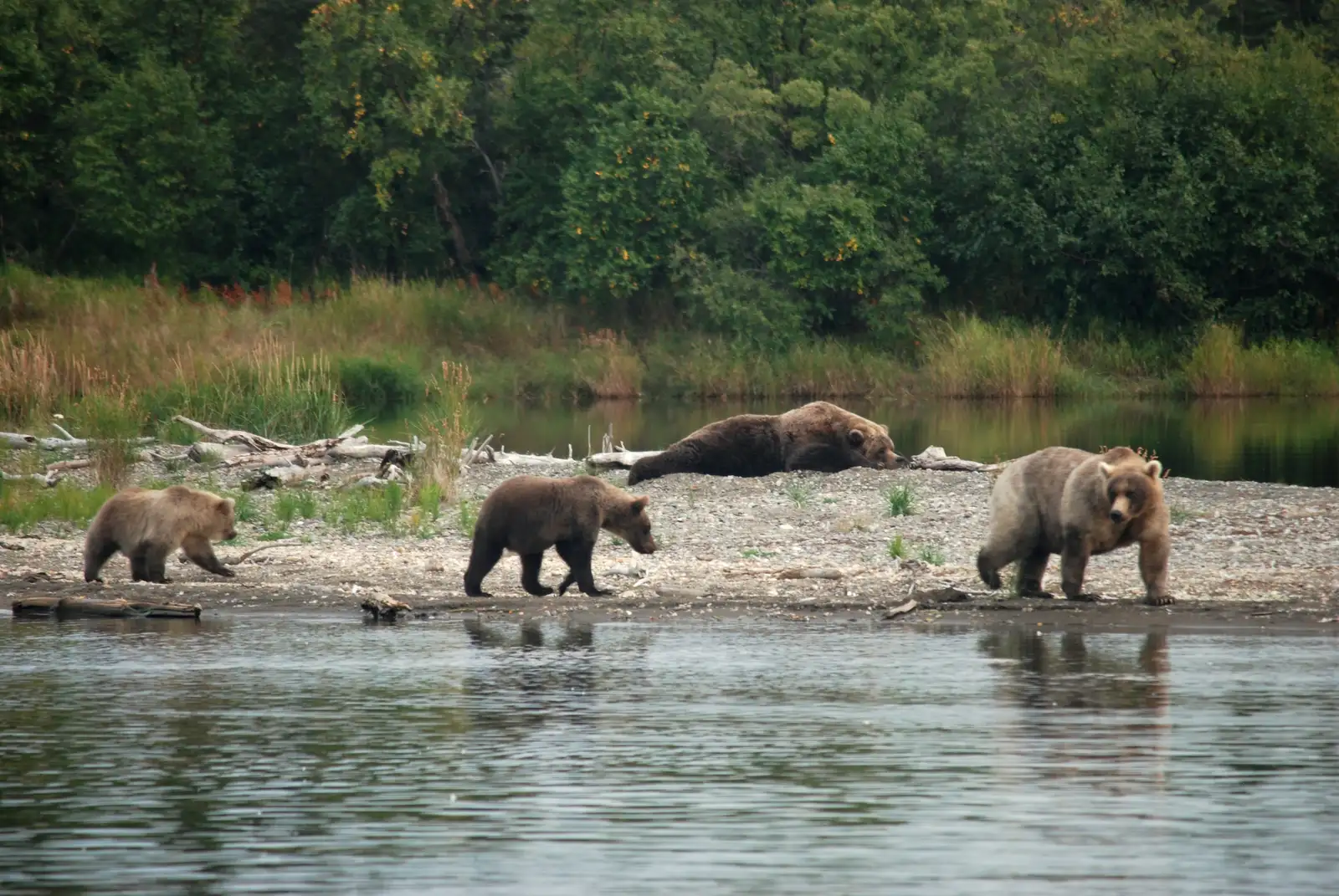
Brooks Camp is one of the best places anywhere to watch brown bears.
Can't make it to Alaska? The live bearcam follows the brown bears of Brooks River from anywhere with an internet connection.
A ranger-guided tour takes you into the Valley of Ten Thousand Smokes, site of the largest volcanic eruption of the 20th century.
Kids can earn a Junior Ranger Badge and take their stewardship a step further.
Adults get their own version. The Not-So-Junior Ranger activity book digs deeper into Katmai's history and resources, made for young adults and up.
The Savonoski Loop is an 80 mile paddle through Katmai's backcountry. You'll need intermediate canoeing or kayaking skills plus experience in wilderness and bear country, and depending on route and weather, plan for 4 to 10 days.
Details and current conditions live on nps.gov.
From the field
Common questions
When is the best time to visit Katmai National Park?
July and August are the peak months, and July is prime for watching bears fish at Brooks Falls. Roughly 70% of the year's visits land in July, August, and September, so expect the Falls Platform to fill, with rangers enforcing a one-hour limit; September also delivers strong bear viewing under cooler, wetter skies.
Is Katmai National Park dog-friendly?
Pets are banned from the Brooks Camp Developed Area, within 1.5 miles of Brooks Falls, from May 1 through October 31. They are allowed in the backcountry if leashed or physically restrained at all times, though some routes such as the hike to Dumpling Overlook do not permit pets.
What is the quietest trail at Katmai?
The Dumpling Mountain Trail is the quietest maintained trail at Brooks Camp, often walked in near-solitude even in busy summer months. It trades easy bear viewing for a strenuous climb, which is why most visitors stick to the crowded Brooks Falls Trail.
How crowded does Katmai get?
Katmai is extremely uncrowded overall, drawing only 25,000 to 37,000 visitor use days a year, but Brooks Camp gets genuinely crowded in summer. The Falls Platform holds just 40 people, so rangers cap visits at one hour and run a waiting list when it is full, while the vast majority of the park stays little visited.
Is Katmai accessible for wheelchairs?
Accessible facilities sit almost entirely at Brooks Camp, with no paved trails or accessible facilities elsewhere in the park. The 1.2-mile Brooks Falls Trail is rated easy and wheelchair accessible, though it is unpaved and often muddy, the viewing platforms have ramps, and a limited number of loaner wheelchairs are available at the Brooks Camp Visitor Center.
Can you camp at Katmai?
Yes, Katmai's only developed campground is Brooks Camp Campground, with 60 sites and advance reservations required through recreation.gov. Fees run $18 per person in peak season and $10 in the shoulder season plus a $6 reservation fee, and backcountry camping is free with no permit outside the restricted Brooks Falls area.
Where do you park at Katmai?
There is no parking at Katmai because you cannot drive into the park. Visitors leave vehicles in King Salmon or at the Lake Camp boat launch on Naknek Lake, then reach the park by floatplane or boat.