Isle Royale National Park
Houghton, Michigan
Where the connection finally drops
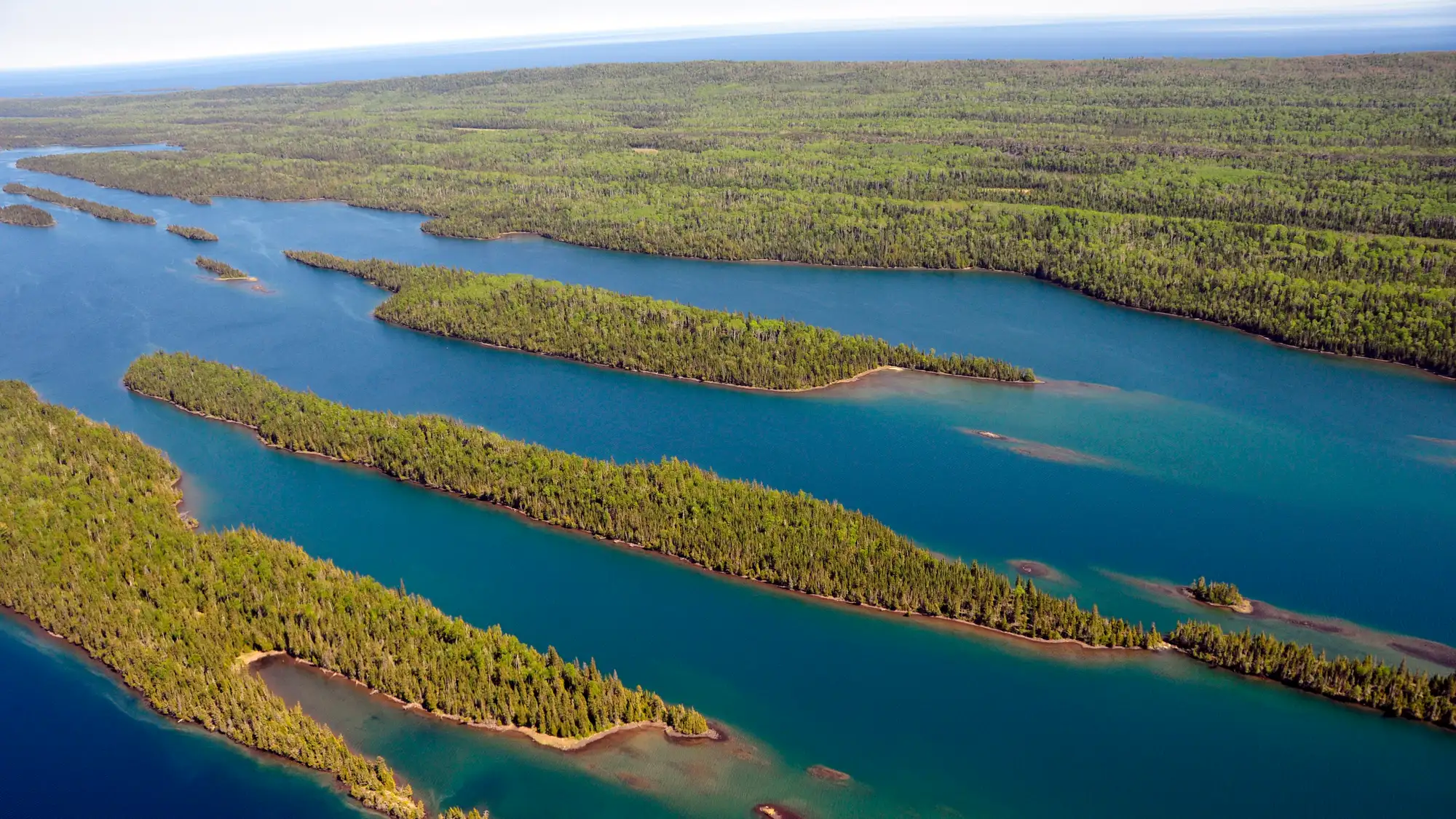
Isle Royale is not a place you drop into for an afternoon. It sits in the middle of Lake Superior, reachable only by ferry or seaplane, with no roads once you land. Getting there takes hours across open water, and the island holds you for days rather than a lunch break. The park's own invitation asks for a commitment: cross the lake and become part of the island.
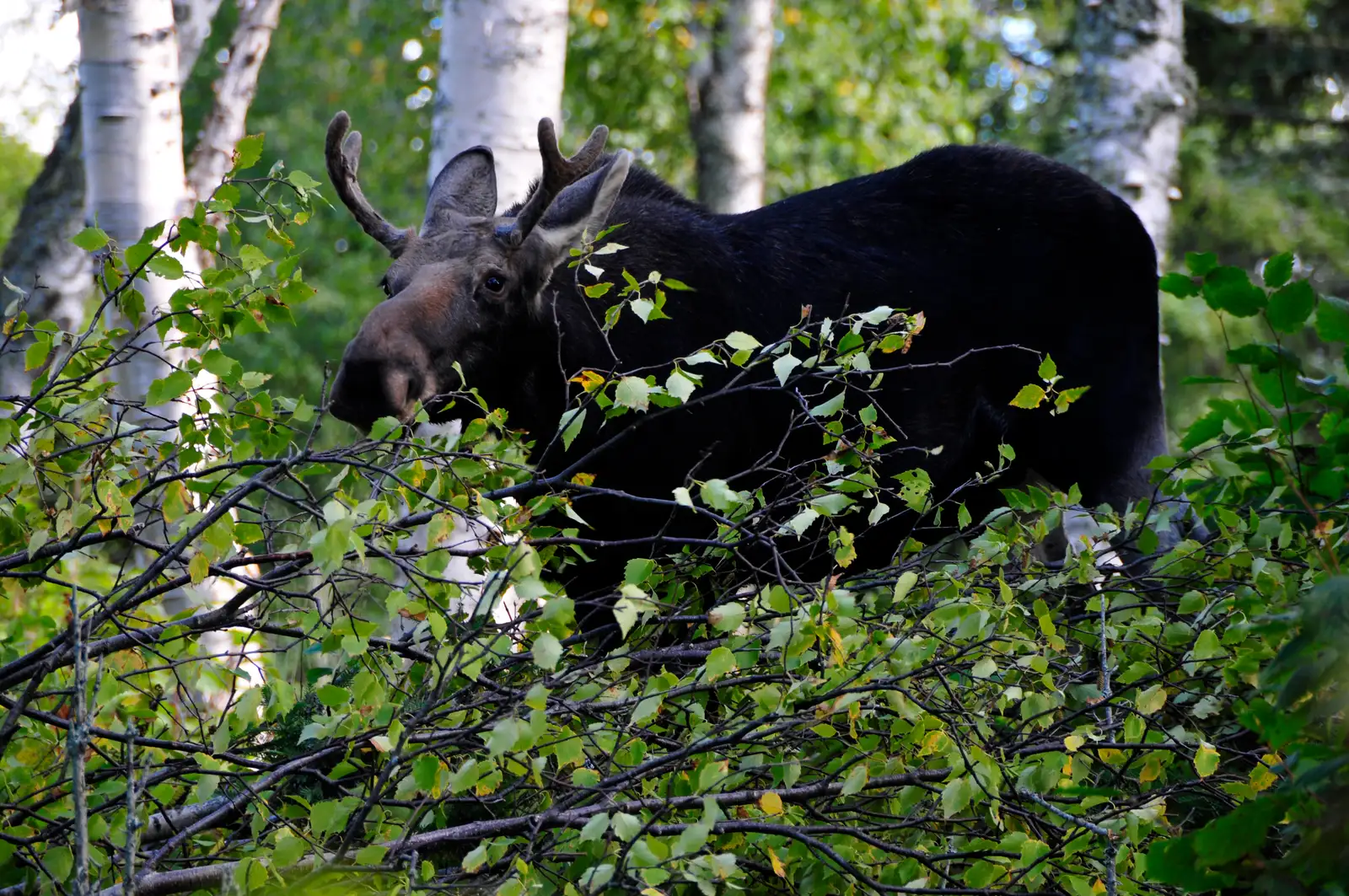
That distance does something a roadside park cannot. Cell coverage thins to nothing across most of the island, and trails run from Rock Harbor and Windigo deep into backcountry where hikers report seeing more moose than people. A visit here is counted in nights, and the phone in your pocket stops being useful almost as soon as the mainland drops behind you.
A study of backpackers by Atchley, Strayer and Atchley found that four to six days of wilderness travel with no phones or screens raised scores on a creative-reasoning test by roughly 50 percent. Isle Royale imposes that exposure almost by force: there is no road to duck back to, no signal to refresh, and a trip here already runs the multi-day length the researchers used. The authors are careful that they cannot separate the wilderness from the technology break or the exercise, but Isle Royale hands you all three at once.
The science: A study of backpackers by Atchley, Strayer and Atchley found that four to six days of wilderness travel with no phones or screens raised creative-reasoning scores by about 50 percent. Isle Royale delivers that full exposure almost by force, with no road to retreat to and coverage that fades once the mainland drops behind you. A trip here already runs the multi-day length the researchers studied.
Atchley, Strayer & Atchley (2012) · PLOS ONE
Seasonal guide
Crowd levels use NPS monthly visitation, averaged 2015–2025. Excludes 2020 (COVID anomaly) and 2026 (partial year). Temperatures are NOAA climate normals from a station 40 miles away. Busy does not mean bad. If a peak month is your only window, the season notes below tell you how to work it.
The island stays closed until April 16, and ferries do not run until May, so a real spring visit means late May. Highs climb from the mid-40s in April to around 58F in May, nights still drop near freezing, and Lake Superior keeps everything cool and damp. Pack for cold water and mud, and book early because the first crossings fill as summer nears.
July and August are the island's peak, with highs near 73F, the warmest water, and the fullest ferry and seaplane schedule. This is also when campgrounds, docks, and transport sell out, so reserve your crossing early and start hikes from Rock Harbor or Windigo before the day's arrivals land. Afternoon showers are common, with each summer month averaging over three inches of rain.
September and October bring cooler air, thinning crowds, and fall color, with September highs around 65F dropping to the low 50s by October. Transport winds down after September and the island closes October 31, so confirm your return crossing before committing to a late trip. Nights turn cold fast, often near freezing in October, so carry real cold-weather gear.
The island is closed to all visitors from November 1 to April 15 because of extreme winter weather, and the closure reaches 4.5 miles out into Lake Superior. Highs sit in the 20s and nights fall near zero. Use these months to plan instead: the mainland headquarters in Houghton stays open, and group reservations for the coming season open the October before.
This month in the park
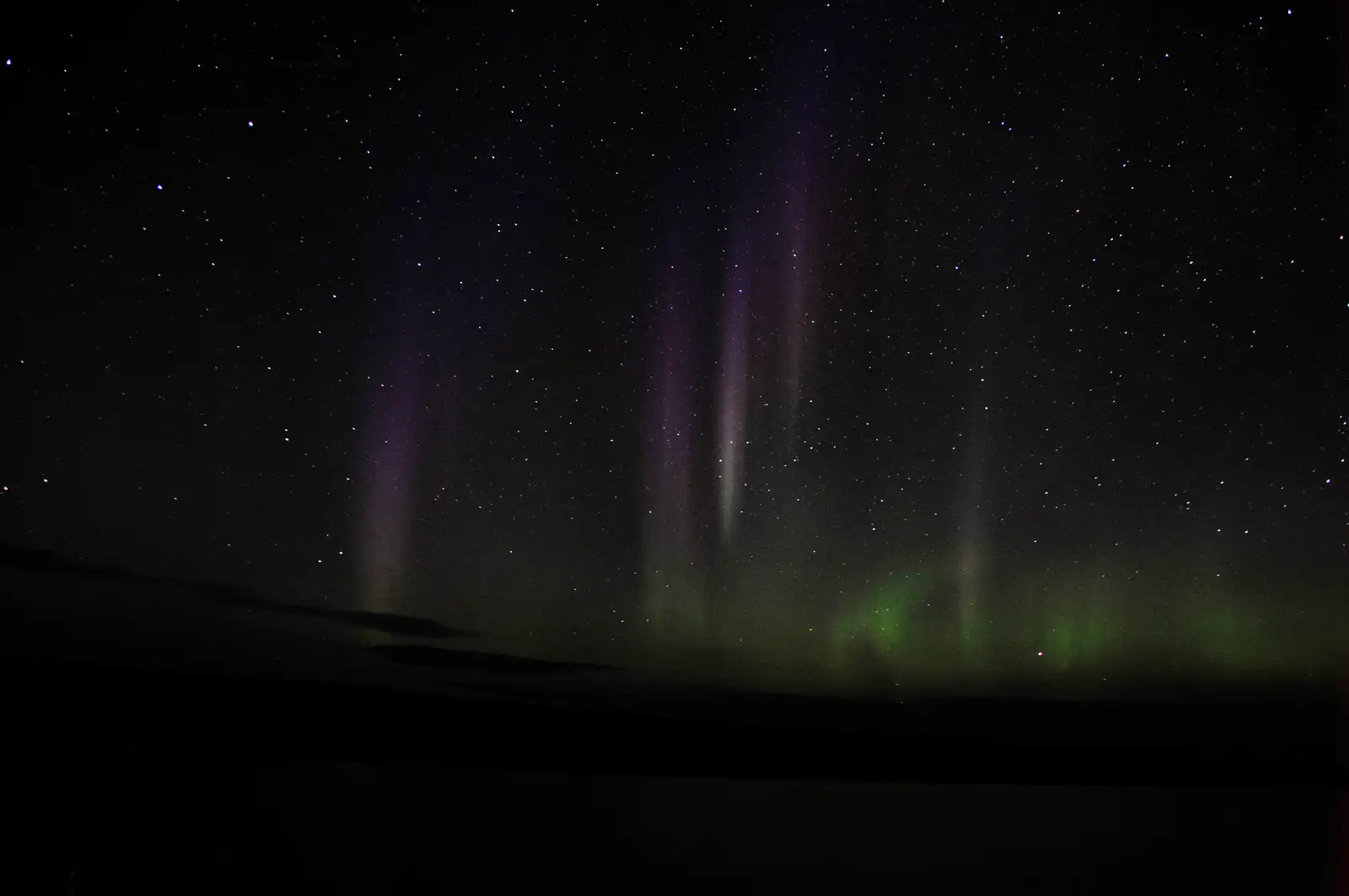
Timing changes everything out here. Pick a month to see when the light turns golden, which nights stay darkest for stargazing, and what visitors have actually recorded in bloom and on the move. The new-moon night is the one to plan a sky-watching evening around.
January 2027
February 2027
Wildlife on the move · 3 species on record
- Gray Wolf 1 sightings
- Red Fox 1 sightings
- Winter tick 1 sightings
March 2027
April 2027
May 2027
In bloom · 27 species on record
- ❀ Small-flowered blue-eyed mary 8 sightings
- ❀ Eastern Skunk Cabbage 7 sightings
- ❀ Prairie Buttercup 6 sightings
- ❀ Fringed polygala 6 sightings
- ❀ Bearberry 5 sightings
Wildlife on the move · 184 species on record
- Yellow-rumped Warbler 232 sightings
- Common Merganser 109 sightings
- Moose 104 sightings
- Common Loon 91 sightings
- Common Goldeneye 80 sightings
June 2027
In bloom · 87 species on record
- ❀ Fringed polygala 23 sightings
- ❀ Marsh marigold 22 sightings
- ❀ Bearberry 20 sightings
- ❀ Pink lady's slipper 19 sightings
- ❀ Yellow lady's slipper 12 sightings
Wildlife on the move · 249 species on record
- Moose 100 sightings
- Common Loon 62 sightings
- Common Merganser 57 sightings
- Red-breasted Merganser 42 sightings
- Canada Goose 37 sightings
July 2026
In bloom · 60 species on record
- ❀ Wood Lily 20 sightings
- ❀ Pink lady's slipper 17 sightings
- ❀ Fringed polygala 10 sightings
- ❀ Northern starflower 7 sightings
- ❀ Pipsissewa 6 sightings
Wildlife on the move · 241 species on record
- Moose 54 sightings
- Red-spotted Admiral 48 sightings
- American Toad 33 sightings
- Common Garter Snake 23 sightings
- Common Loon 22 sightings
August 2026
In bloom · 24 species on record
- ❀ Large-leaved aster 9 sightings
- ❀ Pipsissewa 8 sightings
- ❀ Pearly everlasting 7 sightings
- ❀ Fireweed 7 sightings
- ❀ Spotted Joe-Pye weed 4 sightings
Wildlife on the move · 206 species on record
- Moose 59 sightings
- American Toad 31 sightings
- Common Garter Snake 29 sightings
- American Red Squirrel 27 sightings
- Red Fox 26 sightings
September 2026
In bloom · 16 species on record
- ❀ Large-leaved aster 6 sightings
- ❀ Common jewelweed 2 sightings
- ❀ Pearly everlasting 2 sightings
- ❀ White turtlehead 2 sightings
- ❀ Fireweed 2 sightings
Wildlife on the move · 111 species on record
- Moose 18 sightings
- Narrow-headed Marsh Fly 10 sightings
- Red Fox 9 sightings
- American Toad 9 sightings
- Common Merganser 8 sightings
October 2026
November 2026
December 2026
Sun and moon times are computed for the park's coordinates from standard NOAA solar equations and cross-checked against the U.S. Naval Observatory. Species lists are research-grade community observations for Isle Royale National Park, US, MI via iNaturalist, retrieved July 2026; sighting counts are all-time records for that calendar month.
Don’t wait for Isle Royale.
One big trip a year isn’t what changes how you feel — the small stuff in between is. The 7-Day Nature Reset is one tiny outdoor practice a day, wherever you already are. Day one takes 60 seconds.
No spam. No noise. Just nature.
Day 1 is landing in your inbox right now — go say hi.
Sleep nearby
Most visitors base in Houghton, Michigan, about 50 miles out. Houghton offers significantly more hotel rooms, better prices, and university-town amenities than tiny Copper Harbor. Copper Harbor is right at the ferry dock but is a tiny hamlet with far fewer and pricier rooms. The map opens on Houghton, so pan toward the park to trade rooms and price for a shorter morning drive.
Camping inside the park books through Recreation.gov and is listed separately.
The map is provided by Stay22. If you book through it we may earn a commission at no cost to you, which helps keep Happier Outdoors running. It never changes what we recommend.
Activities & experiences
Beyond the trails
Paddle Washington Creek on the west end of the park. It's a good spot to watch for wildlife.
Tobin Harbor sits on the east end and makes for a calm paddle. Watch for aquatic birds along the way.
The Junior Ranger program covers this isolated island's plants and animals, its cultural history, and Leave No Trace principles.
This quiet stretch of the Greenstone Ridge Trail runs to the northeastern tip of the island. About 5 miles.
Take on the more traveled part of Isle Royale's toughest trail, a primitive route. About 6.7 miles.
Strenuous and primitive, this section offers views of interior lakes, Lake Superior, and Canada. About 6.8 miles.
Details and current conditions live on nps.gov.
From the field
Common questions
When is the best time to visit Isle Royale?
The warmest and most accessible window is July and August, when highs reach the low 70s and ferries and seaplanes run their fullest schedule. For fewer people, aim for late May or September, when transport still operates but crowds thin out. The island is open April 16 to October 31, with transportation offered only from May to September.
Can I bring my dog to Isle Royale?
No, pets are not allowed on Isle Royale, on park boats, or on any trails, and visitors who bring them are required to leave immediately. Leashed pets are permitted only outdoors at the Houghton visitor center and headquarters on the mainland. Service dogs are welcome on the island but need a permit and an approved veterinary certificate arranged before your trip.
What is the quietest trail on Isle Royale?
Hikers consistently point to the Feldtman Ridge and Minong Ridge trails as the island's most remote and least traveled, where you are more likely to see moose than other people. The Huginnin Cove Loop near Windigo and Grace Creek Overlook are also often skipped, because most visitors head for the 40-mile Greenstone Ridge, the park's classic cross-island route. Minong Ridge in particular is less maintained and harder to follow, which keeps casual hikers away.
How crowded does Isle Royale get?
Isle Royale is one of the least visited national parks, drawing only 15,000 to 20,000 people a year, yet it has the highest density of backcountry use in the system. Crowds concentrate in July and August and at the two entry points, Rock Harbor and Windigo, where campgrounds, docks, and transport can sell out. Because there are no roads, there is no daily rush beyond the morning and early-afternoon ferry windows.
Is Isle Royale accessible for wheelchairs and strollers?
Accessibility is limited by the island's rugged, remote terrain, and no trails are paved. Non-motorized wheelchairs are permitted in the developed areas at Windigo and Rock Harbor, and motorized wheelchairs and scooters are allowed in those non-wilderness zones, but bikes, strollers, wagons, and wheeled carts are prohibited on trails. The two seasonal visitor centers are reachable by ferry, boat, or seaplane.
Can you camp at Isle Royale?
Yes, the island has 36 campgrounds, all with tent sites, water sources, and outhouses. Sites cannot be reserved for parties of six or fewer; they run first-come, first-served with no nightly fee, but you must get a free overnight permit on arrival. Groups of seven or more pay a $25 permit fee and must reserve a group site in advance.
Where do you park for Isle Royale?
Park at the Houghton Visitor Center at 800 East Lakeshore Drive, in the upper and lower lots near the Ranger III dock, with two overflow lots uphill if the lower lot fills first. Parking can get tight in summer, so carpool when you can, and note the visitor center gates close at 6:00 pm EDT. If you plan to return by a different ferry or seaplane, park in the upper lot east of the Krist Gas Station, outside the gated area.
How much does it cost to enter Isle Royale?
Entry is $7 per person per day, and children 15 and younger are free. An annual park pass is $60, and visiting the mainland headquarters in Houghton is free.