
Indiana Dunes National Park
Porter, Indiana
The birds here are the point
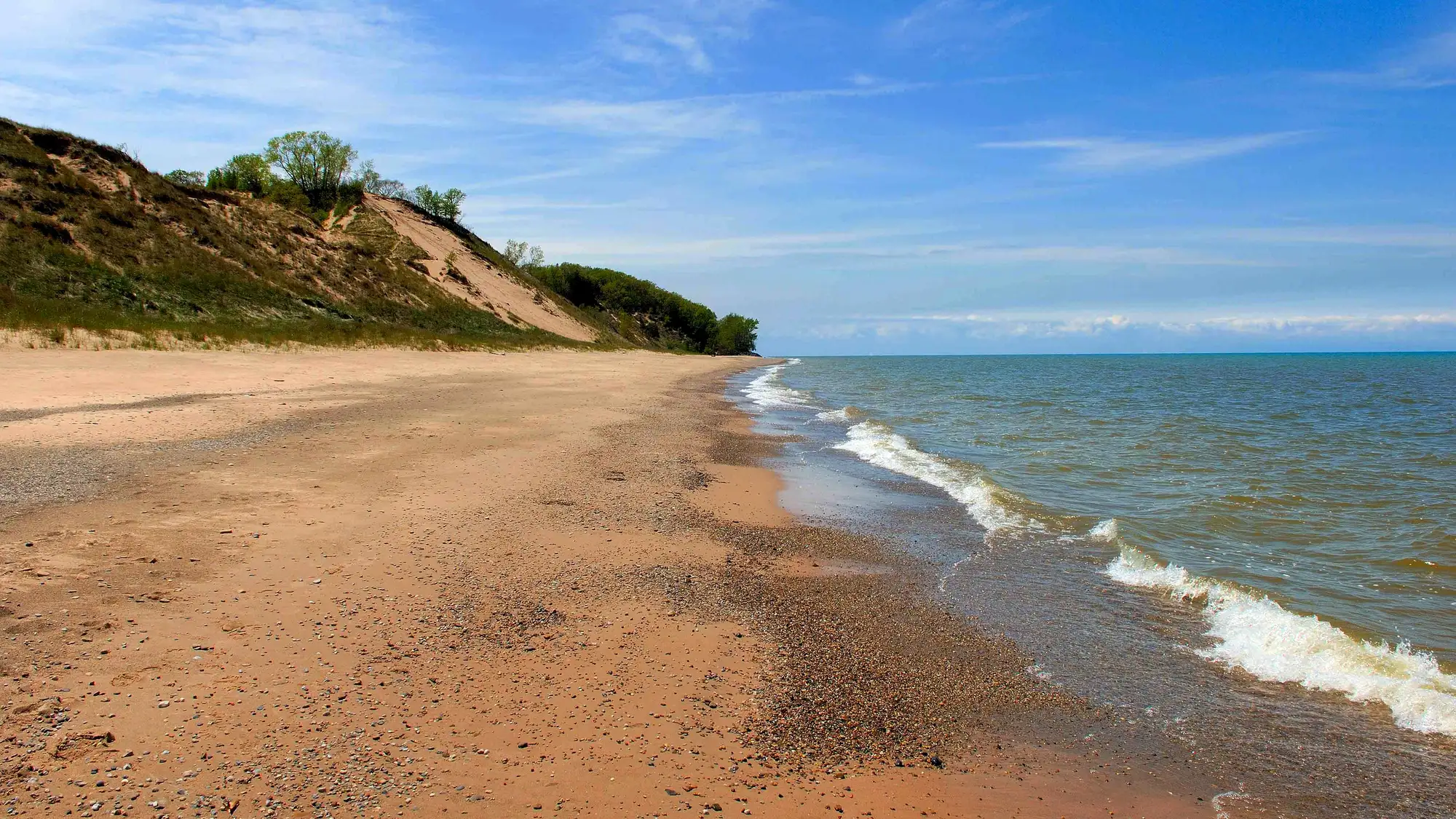
Indiana Dunes packs an unusual amount of variety into a short stretch of Lake Michigan shore. Fifteen miles of coast, shifting dunes, sunny prairie, quiet woodland, and lush wetland all sit inside about 16,000 acres, and that mosaic of habitats is exactly why the bird list runs so long. The park is known for striking plant and bird diversity, and it hosts a birding festival in May for a reason.
Over 50 miles of trails thread through those habitats, so a walk here is less about one big viewpoint and more about noticing what moves through the trees and reeds. On the quieter routes away from the beach parking lots, the loudest thing is often birdsong over standing water. That kind of attention, the effortless looking that a rich landscape invites, is where the reset actually happens.
This is also a park within reach of a major city, roughly 50 miles from Chicago, which makes the contrast sharper. You trade traffic and screens for wind off the lake and the chatter of migrants along the flyway.
The science: In nearly 27,000 real-time smartphone check-ins, people reported higher momentary wellbeing when they could see or hear birds, and that boost held even after researchers accounted for nearby trees, plants, and water, which separates the birds themselves from the greenery around them. Indiana Dunes is known for striking bird diversity, drawn in by the dune, prairie, wetland, and woodland habitats stacked along the Lake Michigan flyway. That is not just scenery; it is close to the exact ingredient the research points to.
Hammoud, Tognin, Burgess, Bergou, Smythe, Gibbons, Davidson, Afifi, Bakolis & Mechelli (2022) · Scientific Reports
Seasonal guide
Crowd levels use NPS monthly visitation, averaged 2015–2025. Excludes 2020 (COVID anomaly) and 2026 (partial year). Temperatures are NOAA climate normals from a station 0.6 miles away. Busy does not mean bad. If a peak month is your only window, the season notes below tell you how to work it.
Winter is the calmest season, with January highs around 32F and lows near 18F, and snow on the trails. This is the window for cross-country skiing, snowshoeing, and quiet walks with almost no one around, so dress in warm layers and check individual area hours before you go.
Spring warms from March highs in the mid 40s to May highs near 68F, and crowds stay light until they build late in May. It is prime birding season, with the birding festival in mid-May, so bring binoculars and expect muddy, wet ground on wetland trails after rain.
Summer is peak, with July highs around 82F and beaches drawing the biggest crowds of the year. Parking lots often fill by mid-morning on weekends and holidays, so arrive before 9 a.m., use the real-time parking website, or aim for the quieter inland trails when the shore is packed.
Early fall stays busy with September highs near 74F and warm lake water, then thins out fast as November highs drop to the upper 40s. September and October offer comfortable hiking and lighter weekday crowds, making them a strong choice if summer heat and lines are not for you.
This month in the park
Timing changes everything out here. Pick a month to see when the light turns golden, which nights stay darkest for stargazing, and what visitors have actually recorded in bloom and on the move. The new-moon night is the one to plan a sky-watching evening around.
January 2027
Wildlife on the move · 142 species on record
- Red-shouldered Hawk 21 sightings
- Northern Cardinal 20 sightings
- Downy Woodpecker 19 sightings
- European Starling 13 sightings
- Blue Jay 12 sightings
February 2027
In bloom · 4 species on record
- ❀ Eastern Skunk Cabbage 3 sightings
- ❀ Winter Aconite 2 sightings
- ❀ Harbinger of spring 2 sightings
- ❀ Sticky False Asphodel 1 sightings
Wildlife on the move · 138 species on record
- Canada Goose 35 sightings
- Eastern Bluebird 34 sightings
- Red-bellied Woodpecker 24 sightings
- American Red Squirrel 23 sightings
- Mallard 22 sightings
March 2027
In bloom · 23 species on record
- ❀ Eastern Skunk Cabbage 49 sightings
- ❀ Harbinger of spring 12 sightings
- ❀ Marsh marigold 11 sightings
- ❀ Purple Cress 6 sightings
- ❀ American hazelnut 5 sightings
Wildlife on the move · 266 species on record
- Sandhill Crane 76 sightings
- Canada Goose 58 sightings
- American Robin 52 sightings
- Eastern Red-backed Salamander 40 sightings
- Red-winged Blackbird 38 sightings
April 2027
In bloom · 116 species on record
- ❀ Dutchman's breeches 56 sightings
- ❀ Large white trillium 41 sightings
- ❀ Bloodroot 38 sightings
- ❀ Prairie trillium 27 sightings
- ❀ Yellow trout lily 23 sightings
Wildlife on the move · 524 species on record
- American Robin 97 sightings
- Canada Goose 83 sightings
- Eastern Red-backed Salamander 76 sightings
- Red-winged Blackbird 69 sightings
- Northern Cardinal 63 sightings
May 2027
In bloom · 207 species on record
- ❀ Red columbine 142 sightings
- ❀ Large white trillium 62 sightings
- ❀ Sundial Lupine 50 sightings
- ❀ Prairie trillium 37 sightings
- ❀ Canadian lousewort 34 sightings
Wildlife on the move · 906 species on record
- Northern Yellow Warbler 141 sightings
- Red-winged Blackbird 121 sightings
- Gray Catbird 121 sightings
- American Robin 114 sightings
- Baltimore Oriole 112 sightings
June 2027
In bloom · 210 species on record
- ❀ Butterfly milkweed 27 sightings
- ❀ Common hoptree 27 sightings
- ❀ Partridgeberry 18 sightings
- ❀ Red columbine 17 sightings
- ❀ American black elderberry 16 sightings
Wildlife on the move · 1198 species on record
- Six-lined Racerunner 127 sightings
- Common Snapping Turtle 76 sightings
- Painted Turtle 68 sightings
- Ebony Jewelwing 62 sightings
- American Robin 61 sightings
July 2026
In bloom · 210 species on record
- ❀ Swamp rose 39 sightings
- ❀ Michigan lily 31 sightings
- ❀ Butterfly milkweed 27 sightings
- ❀ Buttonbush 26 sightings
- ❀ Allegheny monkeyflower 24 sightings
Wildlife on the move · 1369 species on record
- Japanese Beetle 124 sightings
- Six-lined Racerunner 116 sightings
- Monarch 113 sightings
- Ring-billed Gull 70 sightings
- Common Eastern Bumble Bee 69 sightings
August 2026
In bloom · 178 species on record
- ❀ Swamp rose mallow 27 sightings
- ❀ Cardinal flower 22 sightings
- ❀ American hog-peanut 22 sightings
- ❀ Spotted horsemint 20 sightings
- ❀ Allegheny monkeyflower 18 sightings
Wildlife on the move · 1095 species on record
- Monarch 103 sightings
- Common Eastern Bumble Bee 90 sightings
- Milkweed Tussock Moth 87 sightings
- Spicebush Swallowtail 80 sightings
- Eastern Tiger Swallowtail 68 sightings
September 2026
In bloom · 121 species on record
- ❀ Common jewelweed 13 sightings
- ❀ Great blue lobelia 12 sightings
- ❀ Rough blazing star 11 sightings
- ❀ Common boneset 10 sightings
- ❀ Tall coreopsis 10 sightings
Wildlife on the move · 837 species on record
- Monarch 123 sightings
- Common Eastern Bumble Bee 71 sightings
- Banded Tussock Moth 55 sightings
- Large Milkweed Bug 52 sightings
- Ring-billed Gull 44 sightings
October 2026
In bloom · 54 species on record
- ❀ American witch-hazel 14 sightings
- ❀ Fall phlox 4 sightings
- ❀ New England aster 4 sightings
- ❀ White rattlesnake root 4 sightings
- ❀ Pale jewelweed 3 sightings
Wildlife on the move · 514 species on record
- DeKay's Brownsnake 55 sightings
- Ring-billed Gull 39 sightings
- Yellow-rumped Warbler 39 sightings
- Sandhill Crane 35 sightings
- White-crowned Sparrow 33 sightings
November 2026
In bloom · 7 species on record
- ❀ American witch-hazel 7 sightings
- ❀ Dandelions 1 sightings
- ❀ Shaggy soldier 1 sightings
- ❀ Sulphur cinquefoil 1 sightings
- ❀ Fall phlox 1 sightings
Wildlife on the move · 232 species on record
- Dark-eyed Junco 30 sightings
- Sandhill Crane 27 sightings
- Downy Woodpecker 24 sightings
- Red-shouldered Hawk 22 sightings
- Red-bellied Woodpecker 22 sightings
December 2026
Wildlife on the move · 135 species on record
- Red-shouldered Hawk 24 sightings
- Red-bellied Woodpecker 18 sightings
- American Red Squirrel 17 sightings
- Bald Eagle 15 sightings
- Red-breasted Merganser 15 sightings
Sun and moon times are computed for the park's coordinates from standard NOAA solar equations and cross-checked against the U.S. Naval Observatory. Species lists are research-grade community observations via iNaturalist, retrieved July 2026; sighting counts are all-time records for that calendar month.
Don’t wait for Indiana Dunes.
One big trip a year isn’t what changes how you feel — the small stuff in between is. The 7-Day Nature Reset is one tiny outdoor practice a day, wherever you already are. Day one takes 60 seconds.
No spam. No noise. Just nature.
Day 1 is landing in your inbox right now — go say hi.
Sleep nearby
Most visitors base in Michigan City, Indiana, about 12 miles out. Michigan City offers far more rooms and better prices than the smaller gateway towns, plus extensive dining and spa options. Porter sits right at the main Visitor Center entrance but has fewer rooms than Michigan City. The map opens on Michigan City, so pan toward the park to trade rooms and price for a shorter morning drive.
Camping inside the park books through Recreation.gov and is listed separately.
The map is provided by Stay22. If you book through it we may earn a commission at no cost to you, which helps keep Happier Outdoors running. It never changes what we recommend.
Activities & experiences
Beyond the trails
At the southern tip of Lake Michigan, this is an important feeding and resting spot for migrating birds. In fall, southbound birds follow the north-south shoreline and get funneled into the dunes. The open water and miles of shore also draw large numbers of wintering birds.
Kayaking has grown popular here since the Lake Michigan Water Trail opened, along with area waterways like the Little Calumet River and Burns Waterway. For a new challenge, paddle the East Branch of the Little Calumet River Water Trail by kayak or canoe.
Fifteen miles of sandy beach line the southern shore of Lake Michigan, open in every season. Walk it at summer sunset, or come in winter for the arctic look of the lake's shelf ice.
Ride through ancient dune formations on the Glenwood Dunes Trails, the park's only horseback trails. You must bring your own horse. Nearly 15 miles of loops connect at 13 junctions, so bring a map.
There's plenty to explore here, both in the park and online. This page has activities for exploring the park virtually and earning your Junior Ranger badge.
Got an hour to spare? The beaches, dunes, and trails offer relaxation, inspiration, and room for a quick adventure.
Details and current conditions live on nps.gov.
From the field

Common questions
When is the best time to visit Indiana Dunes National Park?
The quietest stretch is winter (December through February), while July and August bring peak crowds along with the warmest weather. For beach warmth with fewer people, late spring or September is a good balance, with highs in the upper 60s to mid 70s.
Is Indiana Dunes National Park dog-friendly?
Yes, leashed dogs on a leash no longer than 6 feet are welcome on most trails and on all beaches year-round. They are not allowed on the Pinhook Bog Trail or the Glenwood Dunes Trail, and they are kept out of the West Beach lifeguarded swim area from Memorial Day through Labor Day. Owners must carry out all pet waste, including off the beach.
What is the quietest trail at Indiana Dunes?
Visitors and park sources consistently point to the Cowles Bog Trail and the Paul H. Douglas Trail in Miller Woods as the least crowded. Cowles Bog is a rugged loop through fen, forest, and steep dunes that ends at a secluded beach, while the Miller Woods trail sits off Lake Street away from the main West Beach lots, so both are often overlooked in favor of West Beach and Mount Baldy.
How crowded does Indiana Dunes get?
It gets very crowded in summer, drawing about 2.7 million visitors a year overall, with July and August the busiest months. Weekends and holidays between Memorial Day and Labor Day see the heaviest crowds at beach access points and the Visitor Center, so arriving before 9 a.m. helps you beat the lines.
Is Indiana Dunes National Park accessible for wheelchairs and strollers?
Yes, the park has paved, wheelchair-accessible trails at Portage Lakefront and Riverwalk and the Dunes Kankakee Trail, plus fully accessible visitor centers. Beach wheelchairs and access mats are available at West Beach and Portage Lakefront, though many dune and woodland trails remain unpaved, steep, or sandy and are not accessible.
Can you camp at Indiana Dunes National Park?
Yes, there are three reservable options: Dunewood Campground (67 sites at $25 a night), the Central Avenue walk-in sites, and the Dunbar Group Site. There are no hookups at Dunewood, and every site must be reserved in advance at recreation.gov since no first-come, first-served camping is available.
Where do you park at Indiana Dunes National Park?
Park at one of the eight designated beach access lots, which hold over 1,139 spaces combined, with West Beach the largest at 642. In summer most lots fill by mid-morning on weekends and holidays, so arrive early, check the real-time parking availability website, or head to trailhead lots like Bailly/Chellberg if you are visiting non-beach areas.