
Hot Springs National Park
Hot Springs, Arkansas
The oldest reset still measures up
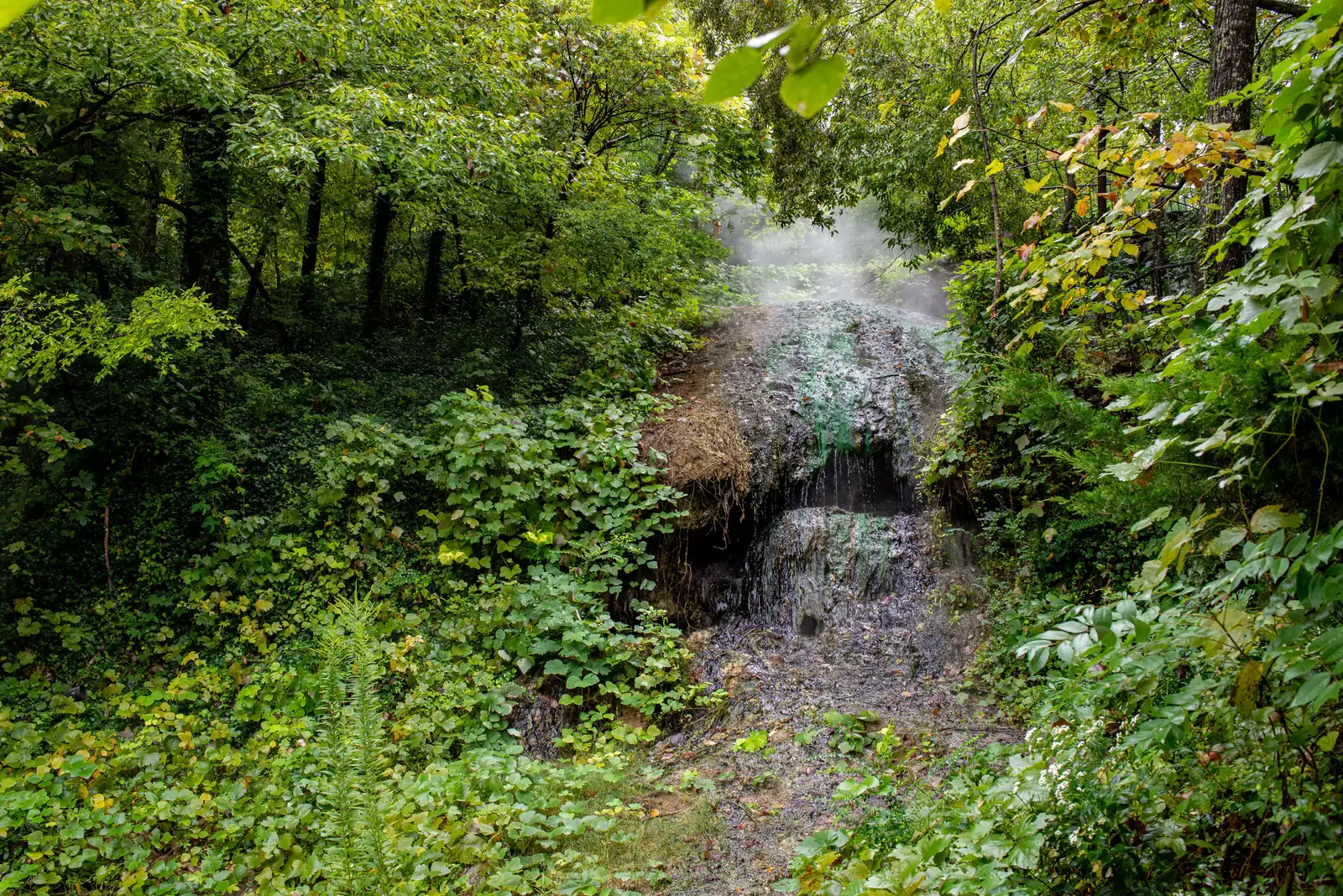
Hot Springs sits in the middle of a working town, and its centerpiece is water you can actually get into. Ancient thermal springs surface along Bathhouse Row, and the park permits soaking inside two of the historic bathhouses, the Buckstaff and the Quapaw. People have bathed here for hundreds of years, well before anyone thought to measure what the warm water was doing.
The park is more than the Row, though. Forested trails climb Hot Springs, North, and West Mountains, creeks run through the grounds, and mountain overlooks reward a short drive or walk uphill. The park service points to the Dead Chief Trail, West Mountain Trail, and the longer Sunset Trail as the least crowded, since most foot traffic stays close to Bathhouse Row.
That combination is the unusual part. You can soak in the morning and walk a quiet forested ridge in the afternoon, both within minutes of downtown, without ever driving out to a remote trailhead.
The science: Lithuanian researchers had stressed but otherwise healthy adults, close to an ordinary park visitor, take 15-minute daily baths in naturally warm, highly mineralized geothermal water at a thermal facility; only that group's blood pressure fell, by about 7/6 mmHg, while a music-therapy group and a no-treatment control did not. Hot Springs channels the same kind of hot, mineral-rich water, and the park allows soaking in two of the historic bathhouses on the Row, the Buckstaff and the Quapaw.
Rapolienė, Razbadauskas, Sąlyga & Martinkėnas (2016) · Evidence-Based Complementary and Alternative Medicine
Seasonal guide
Crowd levels use NPS monthly visitation, averaged 2015–2025. Excludes 2020 (COVID anomaly) and 2026 (partial year). Temperatures are NOAA climate normals from a station 1.1 miles away. Busy does not mean bad. If a peak month is your only window, the season notes below tell you how to work it.
Winter is the quietest stretch, with January the calmest month of all. Highs sit in the low to mid 50s and nights drop near freezing, and wind chill can make it feel as cold as 15F, so bring layers. This is prime time for a warm soak followed by a near-empty forested trail.
Spring brings mild highs climbing from the mid 60s to around 80, but it is also the wettest season, with rainfall peaking in May. Crowds build steadily through these months. Pack rain gear, aim for morning walks between showers, and enjoy the greening forest.
Summer is the busiest season, drawing about 60% of the year's visitors, and it is hot and humid with highs in the low 90s and heat index values that can reach 110F. Start hikes early, carry water, and save the exposed mountain trails for the morning. Bathhouse Row and shaded creekside spots make midday heat easier to manage.
Fall cools off and quiets down, with November among the least crowded months. Highs ease from the mid 80s in September to the low 60s by November, though October can be rainy. It is one of the most comfortable windows for pairing a soak with forested ridge walks.
This month in the park
Timing changes everything out here. Pick a month to see when the light turns golden, which nights stay darkest for stargazing, and what visitors have actually recorded in bloom and on the move. The new-moon night is the one to plan a sky-watching evening around.
January 2027
Wildlife on the move · 25 species on record
- Orangebelly Darter 10 sightings
- Redspotted Stream Crayfish 6 sightings
- White-throated Sparrow 4 sightings
- White-tailed Deer 4 sightings
- House Sparrow 2 sightings
February 2027
In bloom · 6 species on record
- ❀ Greater periwinkle 1 sightings
- ❀ Henbit deadnettle 1 sightings
- ❀ Smooth alder 1 sightings
- ❀ Virginia Springbeauty 1 sightings
- ❀ Winter honeysuckle 1 sightings
Wildlife on the move · 40 species on record
- Prairie Lizard 6 sightings
- American Robin 5 sightings
- Tufted Titmouse 4 sightings
- DeKay's Brownsnake 4 sightings
- Carolina Wren 3 sightings
March 2027
In bloom · 26 species on record
- ❀ Common serviceberry 13 sightings
- ❀ Fire pink 7 sightings
- ❀ Virginia Springbeauty 7 sightings
- ❀ Violet woodsorrel 5 sightings
- ❀ Peach 4 sightings
Wildlife on the move · 72 species on record
- Prairie Lizard 20 sightings
- Carolina Chickadee 7 sightings
- Black-and-white Warbler 5 sightings
- American Robin 5 sightings
- Ring-necked Snake 5 sightings
April 2027
In bloom · 33 species on record
- ❀ Fire pink 9 sightings
- ❀ Violet woodsorrel 8 sightings
- ❀ Lyreleaf sage 6 sightings
- ❀ Coral honeysuckle 4 sightings
- ❀ Flowering dogwood 3 sightings
Wildlife on the move · 120 species on record
- Prairie Lizard 17 sightings
- Eastern Tent Caterpillar Moth 11 sightings
- Western Slimy Salamander 7 sightings
- Orangebelly Darter 6 sightings
- Northern Cardinal 5 sightings
May 2027
In bloom · 30 species on record
- ❀ Ernest's Spiderwort 12 sightings
- ❀ Ouachita blazing star 9 sightings
- ❀ Orchard grass 4 sightings
- ❀ Heart-leaved Skullcap 4 sightings
- ❀ Chinese privet 4 sightings
Wildlife on the move · 149 species on record
- Prairie Lizard 29 sightings
- White-tailed Deer 17 sightings
- Summer Tanager 11 sightings
- Western Slimy Salamander 11 sightings
- Common Watersnake 10 sightings
June 2027
In bloom · 21 species on record
- ❀ Heart-leaved Skullcap 5 sightings
- ❀ Heavenly bamboo 4 sightings
- ❀ Quihoui privet 4 sightings
- ❀ American beautyberry 2 sightings
- ❀ Yellow passionflower 2 sightings
Wildlife on the move · 88 species on record
- Prairie Lizard 9 sightings
- Ouachita Dusky Salamander 5 sightings
- Common Watersnake 4 sightings
- White-tailed Deer 4 sightings
- Eastern Chipmunk 4 sightings
July 2026
In bloom · 10 species on record
- ❀ Buttonbush 1 sightings
- ❀ Asiatic dayflower 1 sightings
- ❀ Whitemouth dayflower 1 sightings
- ❀ Pigeonwings 1 sightings
- ❀ Southern Sneezeweed 1 sightings
Wildlife on the move · 108 species on record
- Prairie Lizard 8 sightings
- American Robin 7 sightings
- Red-spotted Admiral 7 sightings
- Banded Tussock Moth 7 sightings
- Red-bellied Snake 4 sightings
August 2026
In bloom · 9 species on record
- ❀ Hairy gayfeather 4 sightings
- ❀ American pokeweed 2 sightings
- ❀ Flowering spurge 1 sightings
- ❀ Sharpwing monkeyflower 1 sightings
- ❀ Brown-eyed Susan 1 sightings
Wildlife on the move · 97 species on record
- Prairie Lizard 13 sightings
- American Robin 9 sightings
- Red-spotted Admiral 7 sightings
- Eastern Chipmunk 6 sightings
- Red-eyed Vireo 6 sightings
September 2026
In bloom · 12 species on record
- ❀ Bitterweed 3 sightings
- ❀ Common dittany 2 sightings
- ❀ Asiatic dayflower 1 sightings
- ❀ Giant blue sage 1 sightings
- ❀ Pinesap 1 sightings
Wildlife on the move · 74 species on record
- Prairie Lizard 10 sightings
- Red-spotted Admiral 6 sightings
- North American Luna Moth 4 sightings
- Ouachita Studfish 4 sightings
- White-tailed Deer 3 sightings
October 2026
In bloom · 7 species on record
- ❀ Asiatic dayflower 1 sightings
- ❀ Rosepink 1 sightings
- ❀ Brown-eyed Susan 1 sightings
- ❀ Low smartweed 1 sightings
- ❀ Common dittany 1 sightings
Wildlife on the move · 56 species on record
- Prairie Lizard 8 sightings
- Eastern Chipmunk 5 sightings
- Spotted Cucumber Beetle 4 sightings
- White-tailed Deer 3 sightings
- Common Eastern Bumble Bee 3 sightings
November 2026
In bloom · 4 species on record
- ❀ American witch-hazel 2 sightings
- ❀ Tall goldenrod 1 sightings
- ❀ Tall boneset 1 sightings
- ❀ Late purple aster 1 sightings
Wildlife on the move · 46 species on record
- Eastern Chipmunk 3 sightings
- Asian Lady Beetle 3 sightings
- Golden-crowned Kinglet 3 sightings
- Phyllocnistis vitegenella 3 sightings
- Northern Cardinal 2 sightings
December 2026
In bloom · 2 species on record
- ❀ American Mistletoe 1 sightings
- ❀ American witch-hazel 1 sightings
Wildlife on the move · 28 species on record
- Northern Mockingbird 4 sightings
- Asian Lady Beetle 4 sightings
- White-breasted Nuthatch 2 sightings
- White-tailed Deer 2 sightings
- Eastern Gray Squirrel 2 sightings
Sun and moon times are computed for the park's coordinates from standard NOAA solar equations and cross-checked against the U.S. Naval Observatory. Species lists are research-grade community observations for Hot Springs National Park, US, AR via iNaturalist, retrieved July 2026; sighting counts are all-time records for that calendar month.
Don’t wait for Hot Springs.
One big trip a year isn’t what changes how you feel — the small stuff in between is. The 7-Day Nature Reset is one tiny outdoor practice a day, wherever you already are. Day one takes 60 seconds.
No spam. No noise. Just nature.
Day 1 is landing in your inbox right now — go say hi.
Sleep nearby
Most visitors base in Hot Springs, Arkansas, about 1 miles out. Hot Springs offers far more rooms and better prices within the park's urban setting. Malvern lies directly outside the park boundary but has fewer lodging options than Hot Springs. The map opens on Hot Springs, so pan toward the park to trade rooms and price for a shorter morning drive.
Camping inside the park books through Recreation.gov and is listed separately.
The map is provided by Stay22. If you book through it we may earn a commission at no cost to you, which helps keep Happier Outdoors running. It never changes what we recommend.
Let someone else lead
A guide is worth it when the terrain needs one, or when you would rather look around than navigate. These are the highest-rated trips running around Hot Springs, not the cheapest.
 Free cancellation
 Hot Springs NP Self Guided Driving and Walking Audio Tour
- Easy for most fitness levels
 Free cancellation
 Hot Springs Hop Scavenger Hunt
- Runs year-round
- Wheelchair accessible
Tours are listed by Viator; booking happens there. If you book we may earn a commission at no cost to you, which helps keep Happier Outdoors running. It never changes what we list. Prices checked September 2026 and can change.
Activities & experiences
Beyond the trails
Birds fill the park. They soar overhead, flit through branches, walk the ground, and swim in the water. From the tiny calliope hummingbird to the giant California condor, the parks host a wide range of species, with even more passing through on migration. Casual watchers and serious birders both find something here.
Any paved road in the park is open to cyclists. The roads up to North Mountain and West Mountain climb at a steady incline with moderate traffic, so use caution and plan for it. Bikes are not allowed on the Grand Promenade or the sidewalk in front of Bathhouse Row.
Kids can earn a Junior Ranger badge by completing a set of activities as they explore the park. Pick up the booklet at the Fordyce Bathhouse Visitor Center.
Every site at Gulpha Gorge Campground runs $34 per night with full hookups: 30 and 50 amp electric, water, and sewer. Sites are not pull-through. Each one has a picnic table, pedestal grill, and water.
Photography helped build the national parks. Early photographers showed people why these places needed protection, letting them see the beauty even if they could not visit. Today professionals and amateurs travel from around the world to capture the scenic and historic views.
The America's National Parks Store carries a curated selection of educational products and books to extend your visit. Shop in person on Bathhouse Row or through the online store. Purchases support the park's educational programs.
Details and current conditions live on nps.gov.
From the field


Common questions
When is the best time to visit Hot Springs National Park?
Fall and winter are the calmest times to visit, with the smallest crowds and the mildest weather for soaking and walking. January is the quietest month, while June through August is both the busiest and the hottest, with summer highs in the low 90s and heat index values that can reach 110F. Spring and fall bring the most rainfall, so pack for showers if you come then.
How crowded does Hot Springs National Park get?
Hot Springs draws roughly 1.5 million visits a year, and the summer months of June through August account for about 60% of them. The single most crowded spot is Bathhouse Row, a quarter-mile stretch of eight historic bathhouses along Central Avenue.
What is the quietest trail in Hot Springs National Park?
The Dead Chief Trail (formerly the Oertel Trail) and the West Mountain Trail are the least crowded, and the longer Sunset Trail offers the most solitude. Most visitors stick to the easily reached Hot Springs Mountain Trail near Bathhouse Row and the Mountain Tower, so heading farther out thins the crowd quickly.
Can you camp at Hot Springs National Park?
Yes, camping is available at Gulpha Gorge Campground, the park's only campground, with 40 reservable sites for both tents and RVs. Sites cost $34 a night, or $17 with a Senior or Access pass, and every site must be reserved in advance through Recreation.gov.
Where do you park at Hot Springs National Park?
Free lots sit on top of Hot Springs, North, and West Mountains for the in-park trails and overlooks, while Bathhouse Row relies on city metered street parking and garages such as the Exchange Street Garage. Lots have limited capacity, so the park recommends arriving early during peak times, and vehicles longer than 30 feet are not permitted on park roads.
Is there an entrance fee or reservation required?
No, there is no entrance fee and no reservation is needed to enter Hot Springs National Park. Camping at Gulpha Gorge does require a reservation, and soaking is only available inside the Buckstaff and Quapaw bathhouses.
What are the park's hours?
The grounds, Bathhouse Row sidewalks, Grand Promenade, and Arlington Lawn are open daily from 5:00am to 10:00pm. The roads up Hot Springs, North, and West Mountains are open to vehicle traffic from 8:00am to 10:00pm.
Are there accessible campsites at Gulpha Gorge?
Yes, Gulpha Gorge has accessible sites, and they can be booked one week earlier than standard sites by calling the Fordyce Visitor Center at (501) 620-6715. All other sites are reserved through Recreation.gov up to six months in advance.