
Hawaiʻi Volcanoes National Park
Hawaii National Park, Hawaii · Hawaii
Where life keeps rebuilding after fire
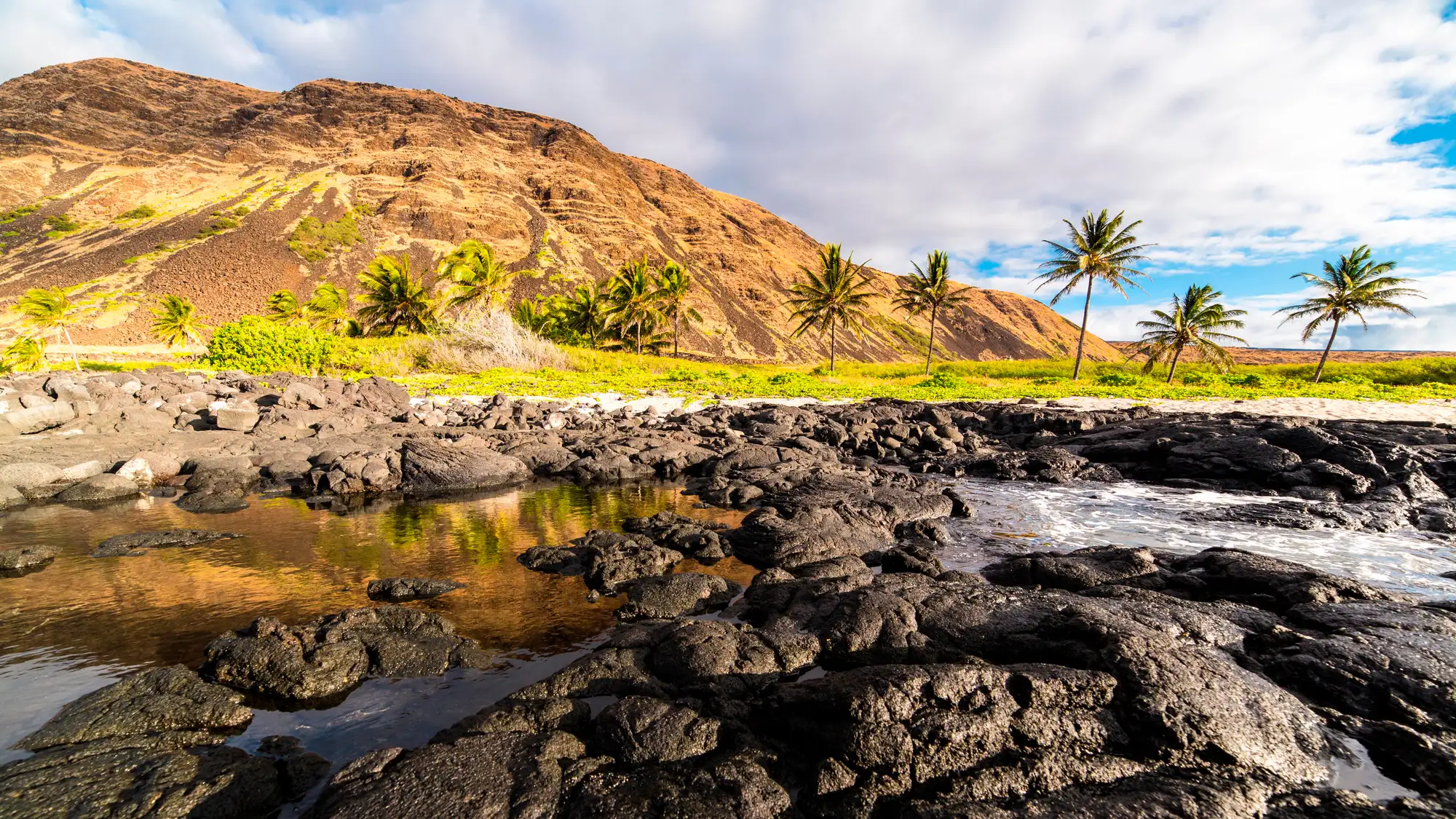
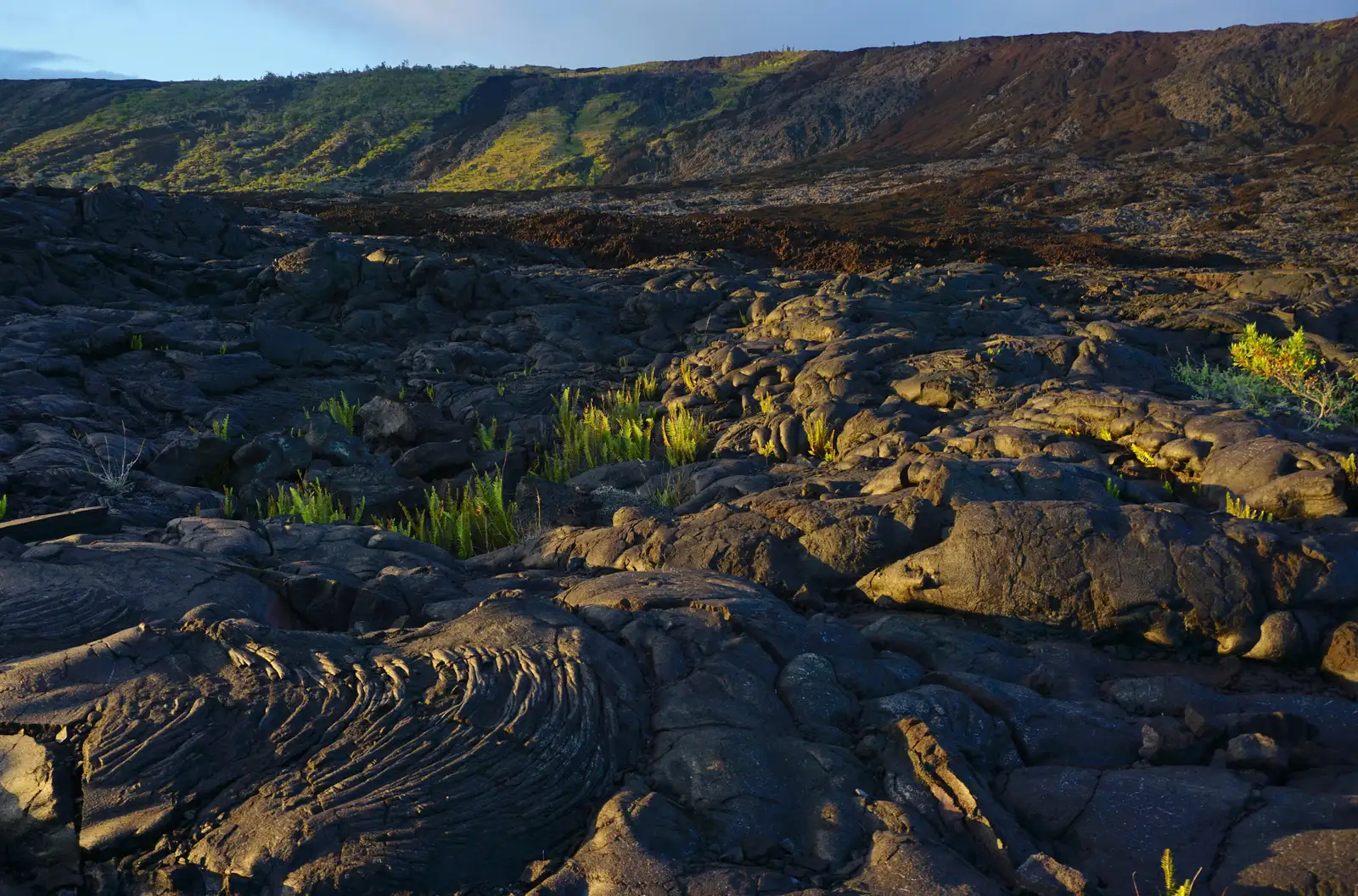
The park runs from sea level to 13,680 feet and holds the summits of Kīlauea and Mauna Loa, two of the most active volcanoes on Earth. The volcanoes get the attention, but the quieter story is what grows back. On cooled black lava, ʻōhiʻa lehua and ferns take hold first, and native forest birds return to reclaim the ground. It is a UNESCO World Heritage Site and International Biosphere Reserve precisely because so much of this life exists nowhere else.
That concentration of rare and endemic living things is not just a fact on a plaque. On a forested trail near the summit you can hear it and see it: honeycreepers, the endangered nēnē, tree molds and cinder cones colonized by green. A place this biologically distinct rewards slow, close attention rather than a quick photo from the overlook.
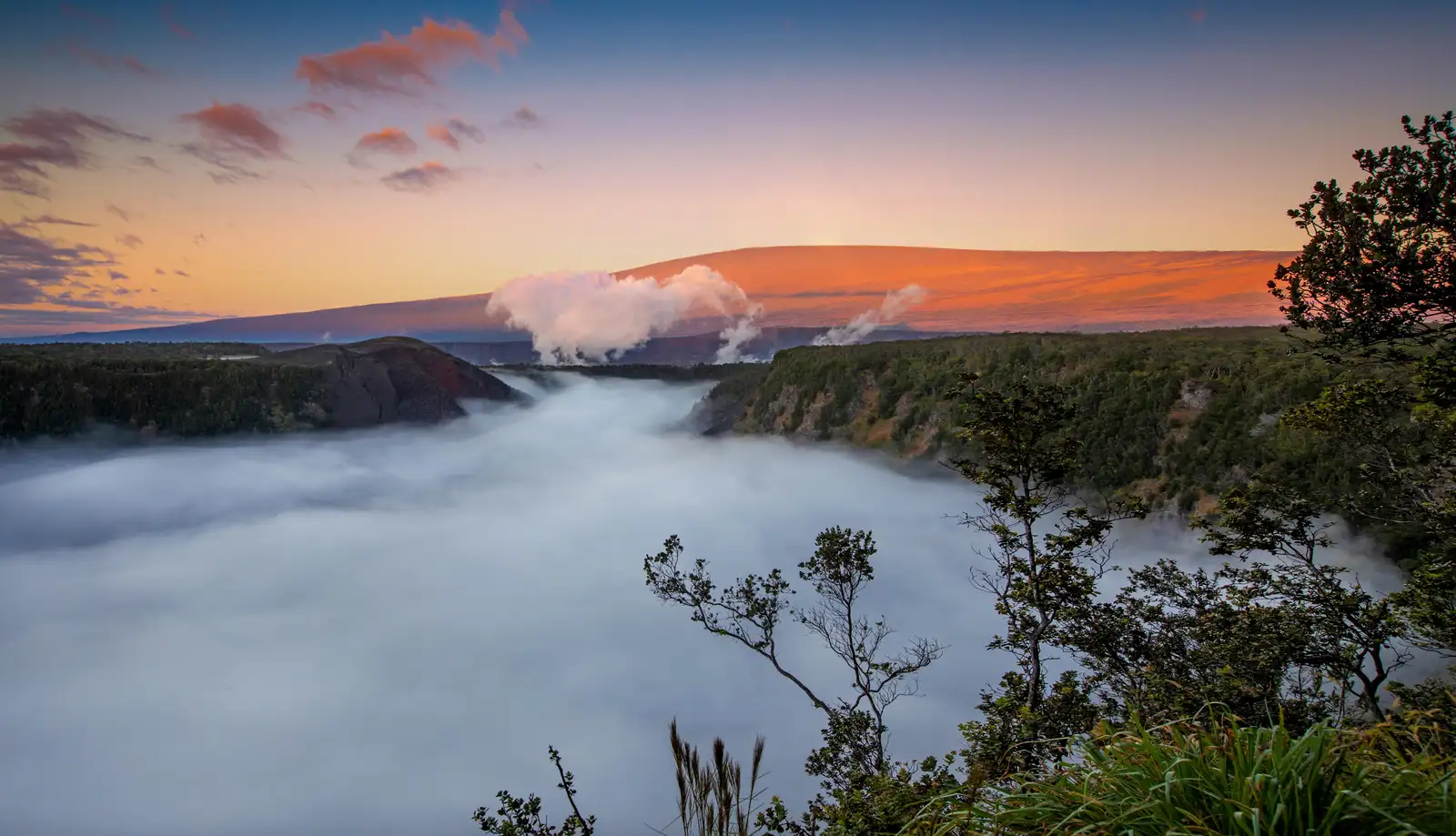
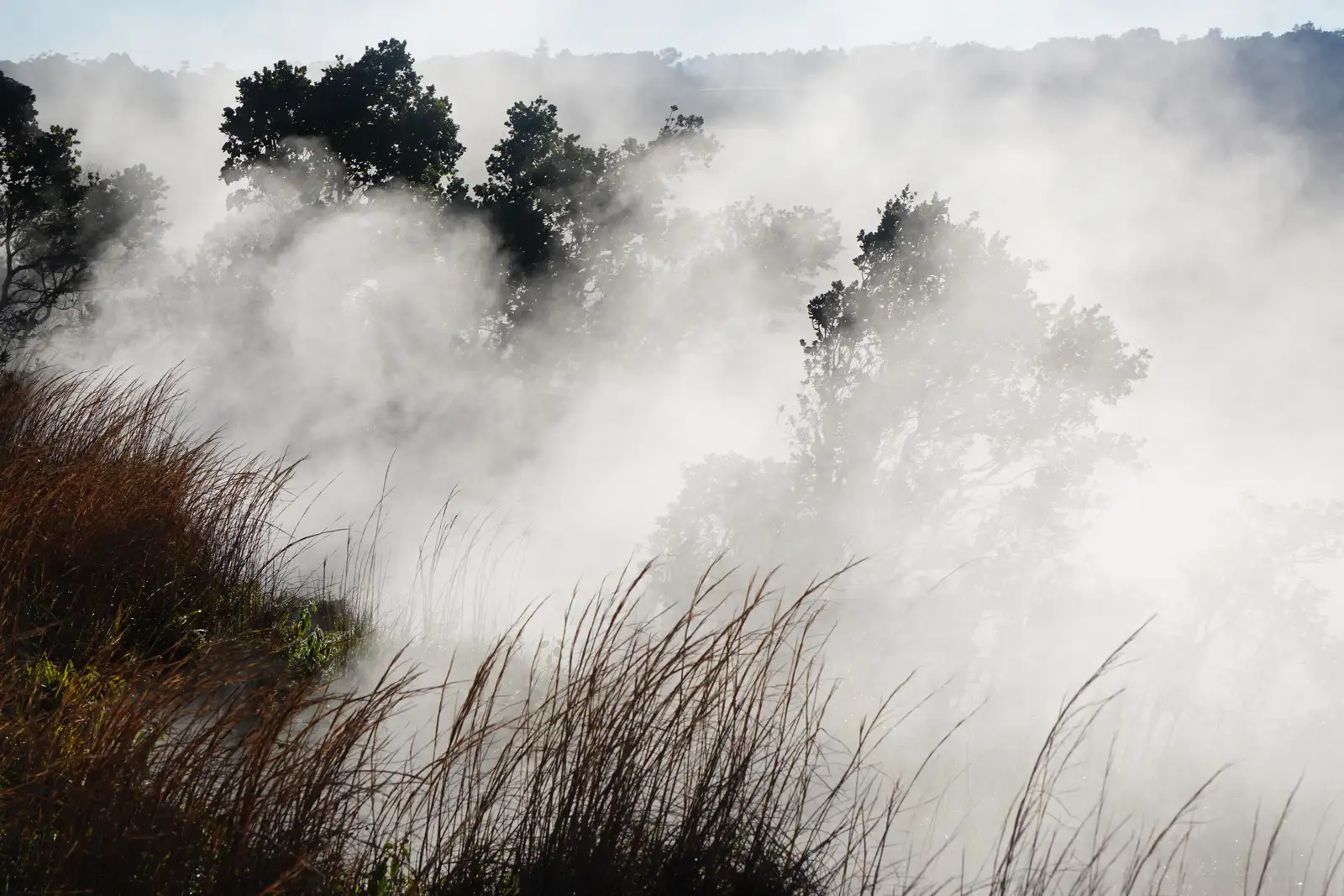
The summit sits around 4,000 feet, where the air is cool and often misty even in summer. That mist, the birdsong, and the strange contrast of fresh rock against returning forest give the mind plenty to settle on. You do not have to be near an eruption to feel the pull of a landscape actively remaking itself.
The science: In a study of urban green spaces, Richard Fuller and colleagues found that the psychological benefit people got from a green place rose with its biodiversity, meaning its richness in plant and bird species. Visitors could in part actually perceive that richness, and the more of it there was, the better they felt. A landscape as biologically unusual as this one gives that effect an unusual amount to work with.
Fuller, Irvine, Devine-Wright, Warren & Gaston (2007) · Biology Letters
Seasonal guide
Crowd levels use NPS monthly visitation, averaged 2015–2025. Excludes 2020 (COVID anomaly) and 2026 (partial year). Temperatures are NOAA climate normals from a nearby representative station. Busy does not mean bad. If a peak month is your only window, the season notes below tell you how to work it.
December and January are the busiest months of the year, and the summit is cool and wet, with highs near 68F, nights in the low 50s, and December averaging over 11 inches of rain. Pack a warm layer and rain shell, since the roughly 4,000-foot summit runs 12 to 15 degrees cooler than the coast. Start early to beat both the crowds and the afternoon showers.
Spring quiets down noticeably, and May is one of the least crowded months all year. Highs sit in the upper 60s to low 70s and rainfall eases into May, making it one of the drier stretches at the summit. It is a good window for the quieter Kahuku trails and unhurried time along Crater Rim.
Summer brings the year's warmest, driest weather at the summit, with highs in the low 70s and nights in the mid 50s, but July is a peak month and the caldera lots fill fast. Arrive before 10 a.m. or plan an evening visit to secure parking. The coastal end of Chain of Craters Road is hot, dry, and windy, so carry water and sun protection down there.
September and October are the quietest months of the year, with mild highs in the low 70s before the rains build again in November. It is the easiest time to find parking at the summit and solitude in Kahuku. Bring rain gear anyway, since the summit can be misty and cool at any time.
This month in the park
Timing changes everything out here. Pick a month to see when the light turns golden, which nights stay darkest for stargazing, and what visitors have actually recorded in bloom and on the move. The new-moon night is the one to plan a sky-watching evening around.
January 2027
In bloom · 57 species on record
- ❀ Bamboo Orchid 20 sightings
- ❀ ʻŌhiʻa Lehua 14 sightings
- ❀ Tapered cudweed 8 sightings
- ❀ Greenleaf Ticktrefoil 6 sightings
- ❀ Pink knotweed 5 sightings
Wildlife on the move · 98 species on record
- Kalij Pheasant 104 sightings
- Hawaiian Goose 103 sightings
- ʻApapane 57 sightings
- Erckel's Spurfowl 21 sightings
- Strawberry Guava Scale 16 sightings
February 2027
In bloom · 21 species on record
- ❀ Bamboo Orchid 13 sightings
- ❀ ʻŌhiʻa Lehua 10 sightings
- ❀ Kahili ginger 5 sightings
- ❀ Koa 5 sightings
- ❀ Pink knotweed 4 sightings
Wildlife on the move · 71 species on record
- Kalij Pheasant 75 sightings
- Hawaiian Goose 50 sightings
- ʻApapane 34 sightings
- Erckel's Spurfowl 17 sightings
- Saffron Finch 10 sightings
March 2027
In bloom · 42 species on record
- ❀ Coprosma rhynchocarpa 15 sightings
- ❀ ʻŌhiʻa Lehua 8 sightings
- ❀ Greenleaf Ticktrefoil 7 sightings
- ❀ Woodland strawberry 3 sightings
- ❀ ‘uki 3 sightings
Wildlife on the move · 87 species on record
- Kalij Pheasant 123 sightings
- ʻApapane 79 sightings
- Hawaiian Goose 41 sightings
- Warbling White-eye 28 sightings
- Erckel's Spurfowl 16 sightings
April 2027
In bloom · 29 species on record
- ❀ ʻŌhiʻa Lehua 10 sightings
- ❀ Pink knotweed 6 sightings
- ❀ Bamboo Orchid 6 sightings
- ❀ Woodland strawberry 3 sightings
- ❀ Common lantana 3 sightings
Wildlife on the move · 79 species on record
- Kalij Pheasant 82 sightings
- ʻApapane 35 sightings
- Hawaiian Goose 15 sightings
- Erckel's Spurfowl 13 sightings
- Warbling White-eye 13 sightings
May 2027
In bloom · 19 species on record
- ❀ ʻŌhiʻa Lehua 8 sightings
- ❀ Greenleaf Ticktrefoil 7 sightings
- ❀ Bamboo Orchid 3 sightings
- ❀ 'ohelo 'ai 2 sightings
- ❀ Three-leaved Rose 2 sightings
Wildlife on the move · 112 species on record
- Kalij Pheasant 121 sightings
- ʻApapane 55 sightings
- Hawaiian Goose 34 sightings
- Steelblue Lady Beetle 19 sightings
- Warbling White-eye 19 sightings
June 2027
In bloom · 55 species on record
- ❀ Bamboo Orchid 14 sightings
- ❀ ʻŌhiʻa Lehua 10 sightings
- ❀ 'ohelo 'ai 5 sightings
- ❀ 'Aiakanene 4 sightings
- ❀ Māmaki 4 sightings
Wildlife on the move · 69 species on record
- Kalij Pheasant 102 sightings
- Hawaiian Goose 48 sightings
- ʻApapane 36 sightings
- Warbling White-eye 14 sightings
- Saffron Finch 10 sightings
July 2026
In bloom · 44 species on record
- ❀ ʻŌhiʻa Lehua 13 sightings
- ❀ Kahili ginger 7 sightings
- ❀ Bamboo Orchid 7 sightings
- ❀ Māmaki 4 sightings
- ❀ Philippine Ground Orchid 3 sightings
Wildlife on the move · 85 species on record
- Kalij Pheasant 88 sightings
- ʻApapane 46 sightings
- Hawaiian Goose 40 sightings
- Warbling White-eye 20 sightings
- Erckel's Spurfowl 17 sightings
August 2026
In bloom · 24 species on record
- ❀ ʻŌhiʻa Lehua 11 sightings
- ❀ Garden Montbretia 6 sightings
- ❀ Greenleaf Ticktrefoil 5 sightings
- ❀ Bamboo Orchid 3 sightings
- ❀ Rattleweed 3 sightings
Wildlife on the move · 92 species on record
- Kalij Pheasant 68 sightings
- Koa Seedworm 45 sightings
- ʻApapane 43 sightings
- Hawaiian Goose 42 sightings
- Hawaiʻi ʻAmakihi 20 sightings
September 2026
In bloom · 36 species on record
- ❀ ʻŌhiʻa Lehua 11 sightings
- ❀ Pink knotweed 8 sightings
- ❀ Bamboo Orchid 8 sightings
- ❀ Garden Montbretia 6 sightings
- ❀ Common lantana 4 sightings
Wildlife on the move · 54 species on record
- Kalij Pheasant 42 sightings
- Hawaiian Goose 31 sightings
- ʻApapane 16 sightings
- ʻOmaʻo 7 sightings
- Steelblue Lady Beetle 7 sightings
October 2026
In bloom · 36 species on record
- ❀ ʻŌhiʻa Lehua 10 sightings
- ❀ Bamboo Orchid 6 sightings
- ❀ Greenleaf Ticktrefoil 5 sightings
- ❀ Rattleweed 5 sightings
- ❀ Akeake 4 sightings
Wildlife on the move · 107 species on record
- Kalij Pheasant 56 sightings
- Hawaiian Goose 49 sightings
- ʻApapane 33 sightings
- Warbling White-eye 17 sightings
- Steelblue Lady Beetle 12 sightings
November 2026
In bloom · 33 species on record
- ❀ Greenleaf Ticktrefoil 16 sightings
- ❀ ʻŌhiʻa Lehua 10 sightings
- ❀ Bamboo Orchid 6 sightings
- ❀ Dubautia scabra 4 sightings
- ❀ Common Cat's-ear 3 sightings
Wildlife on the move · 70 species on record
- Kalij Pheasant 58 sightings
- Hawaiian Goose 51 sightings
- ʻApapane 48 sightings
- Hawaiʻi ʻAmakihi 16 sightings
- Erckel's Spurfowl 13 sightings
December 2026
In bloom · 24 species on record
- ❀ Greenleaf Ticktrefoil 10 sightings
- ❀ ʻŌhiʻa Lehua 9 sightings
- ❀ 'ohelo 'ai 7 sightings
- ❀ Bamboo Orchid 4 sightings
- ❀ Pink knotweed 3 sightings
Wildlife on the move · 73 species on record
- Hawaiian Goose 91 sightings
- Kalij Pheasant 85 sightings
- ʻApapane 50 sightings
- Erckel's Spurfowl 15 sightings
- Saffron Finch 14 sightings
Sun and moon times are computed for the park's coordinates from standard NOAA solar equations and cross-checked against the U.S. Naval Observatory. Species lists are research-grade community observations for Hawaii Volcanoes National Park, US, HI via iNaturalist, retrieved July 2026; sighting counts are all-time records for that calendar month.
Don’t wait for Hawaiʻi Volcanoes.
One big trip a year isn’t what changes how you feel — the small stuff in between is. The 7-Day Nature Reset is one tiny outdoor practice a day, wherever you already are. Day one takes 60 seconds.
No spam. No noise. Just nature.
Day 1 is landing in your inbox right now — go say hi.
Sleep nearby
Most visitors base in Hilo, Hawaii, about 30 miles out. Hilo is the nearest city with far more rooms and better prices. Volcano Village is just 1 mile from the entrance but has fewer rooms. The map opens on Hilo, so pan toward the park to trade rooms and price for a shorter morning drive.
Camping inside the park books through Recreation.gov and is listed separately.
The map is provided by Stay22. If you book through it we may earn a commission at no cost to you, which helps keep Happier Outdoors running. It never changes what we recommend.
Let someone else lead
A guide is worth it when the terrain needs one, or when you would rather look around than navigate. These are the highest-rated trips running around Hawaiʻi Volcanoes, not the cheapest.
 Free cancellation
 Private Tour: Hawaii Volcanoes National Park Eco Tour
- Runs year-round
- Private tour, up to 15
- Stroller accessible
 Free cancellation
 Volcanoes National Park: Guided, Small-Group Hike
- Runs year-round
- Private tour, up to 10
- Moderate fitness needed
 Free cancellation
 Guided 3-Hour Hike in Volcanoes National Park
- Runs year-round
- Up to 10 per booking
- Moderate fitness needed
 Free cancellation
 Hawaii Volcanoes National Park and Hilo Highlights Small Group Tour
- Runs year-round
- Up to 12 per booking
- Moderate fitness needed
Tours are listed by Viator; booking happens there. If you book we may earn a commission at no cost to you, which helps keep Happier Outdoors running. It never changes what we list. Prices checked September 2026 and can change.
Activities & experiences
Beyond the trails
Kīpukapuaulu packs rare and endangered species into a small pocket of biological diversity. Come for the birds.
Two main roads run through the park: Crater Rim Drive and Chain of Craters Road. Both carry you through a shifting geological and cultural landscape.
Kids can earn an official Junior Ranger badge here. A simple way to give young visitors a stake in the place.
The official park bookstores are run by Hawaiʻi Pacific Parks Association. Find them at the Welcome Center and the Kahuku Unit.
For solitude or a longer haul, the backcountry on Kīlauea and Mauna Loa is wide open. Plenty of room to disappear for a while.
Details and current conditions live on nps.gov.
From the field
Common questions
When is the best time to visit Hawaiʻi Volcanoes National Park?
May, September, and October are the quietest months, with visitation at its lowest, while January, July, and December draw the biggest crowds. Temperatures at the roughly 4,000-foot summit stay mild year-round, with highs in the upper 60s to low 70s and cool, damp nights, so the main trade-off is crowds and rain rather than heat.
Is Hawaiʻi Volcanoes National Park dog-friendly?
Leashed pets are allowed only in specific developed areas, such as paved sections of Mauna Loa Road, most paved parking areas, and Nāmakanipaio Campground, on a leash no longer than 6 feet. They are prohibited on all trails, in the backcountry, in wilderness areas, inside visitor centers, and are not permitted on park shuttles. Only authorized service animals may enter restricted areas.
What is the quietest trail in Hawaiʻi Volcanoes National Park?
The least crowded trails are in the Kahuku Unit on the southern slopes of Mauna Loa, including the Palm Trail, Puʻu o Lokuana, Pali o Kaʻeo, and Kamakapaʻa. Most visitors skip them because Kahuku is a separate entrance about an hour from the summit along Highway 11, open Wednesday through Sunday. The popular summit hikes like Kīlauea Iki and Nāhuku (Thurston Lava Tube) absorb most of the crowds.
How crowded does Hawaiʻi Volcanoes National Park get?
The park sees roughly 1.4 to 1.6 million visitors a year, with crowds concentrating at the Kīlauea summit where lots and overlooks often fill between 10 a.m. and 8 p.m. Visitation climbs highest during eruptions and in summer and holiday periods. The Kahuku Unit stays uncrowded by comparison, so it is a reliable fallback when the summit is busy.
Is Hawaiʻi Volcanoes National Park accessible for wheelchairs?
Yes, several paved options are wheelchair accessible, including the 1-mile Devastation Trail, the Steam Vents and Sulphur Banks areas, and the path connecting the Uēkahuna observation deck to Crater Rim Trail. Accessible parking is available at Kīlauea Overlook, the Volcano Art Center Gallery, and Volcano House, which has accessible lodging, shops, and dining. There is no shuttle bus within the park, and lava flow fields such as those in Kahuku are hazardous and not wheelchair accessible.
Can you camp at Hawaiʻi Volcanoes National Park?
Yes, the park has two drive-in campgrounds: Nāmakanipaio with tent sites and A-frame cabins, and Kulanaokuaiki with 9 walk-in sites. Nāmakanipaio tent sites run about $15 a night and cabins start around $80, while Kulanaokuaiki is $10 a night. Both have a 7-day maximum stay, Kulanaokuaiki has no water and no fires, and the park entrance fee applies on top of camping fees.
Where do you park at Hawaiʻi Volcanoes National Park?
Use designated lots such as the Welcome Center ballfield, Uēkahuna, or Kīlauea Overlook, since summit lots can fill by 10 a.m. in peak season. Chain of Craters Road pullouts and its end lot usually have open spaces all day, and the Kahuku Unit is rarely crowded. Arriving before 10 a.m. or later in the evening is the surest way to find a spot near the caldera rim.
How much does it cost to enter Hawaiʻi Volcanoes National Park?
Entry is $30 per private vehicle, $25 per motorcycle, or $15 per person for cyclists and pedestrians, and each pass is valid for 7 days. Visitors aged 15 and under do not need an individual pass. The park is open 24 hours a day, every day of the year.