
Guadalupe Mountains National Park
Salt Flat, Texas
Where distance itself does the work
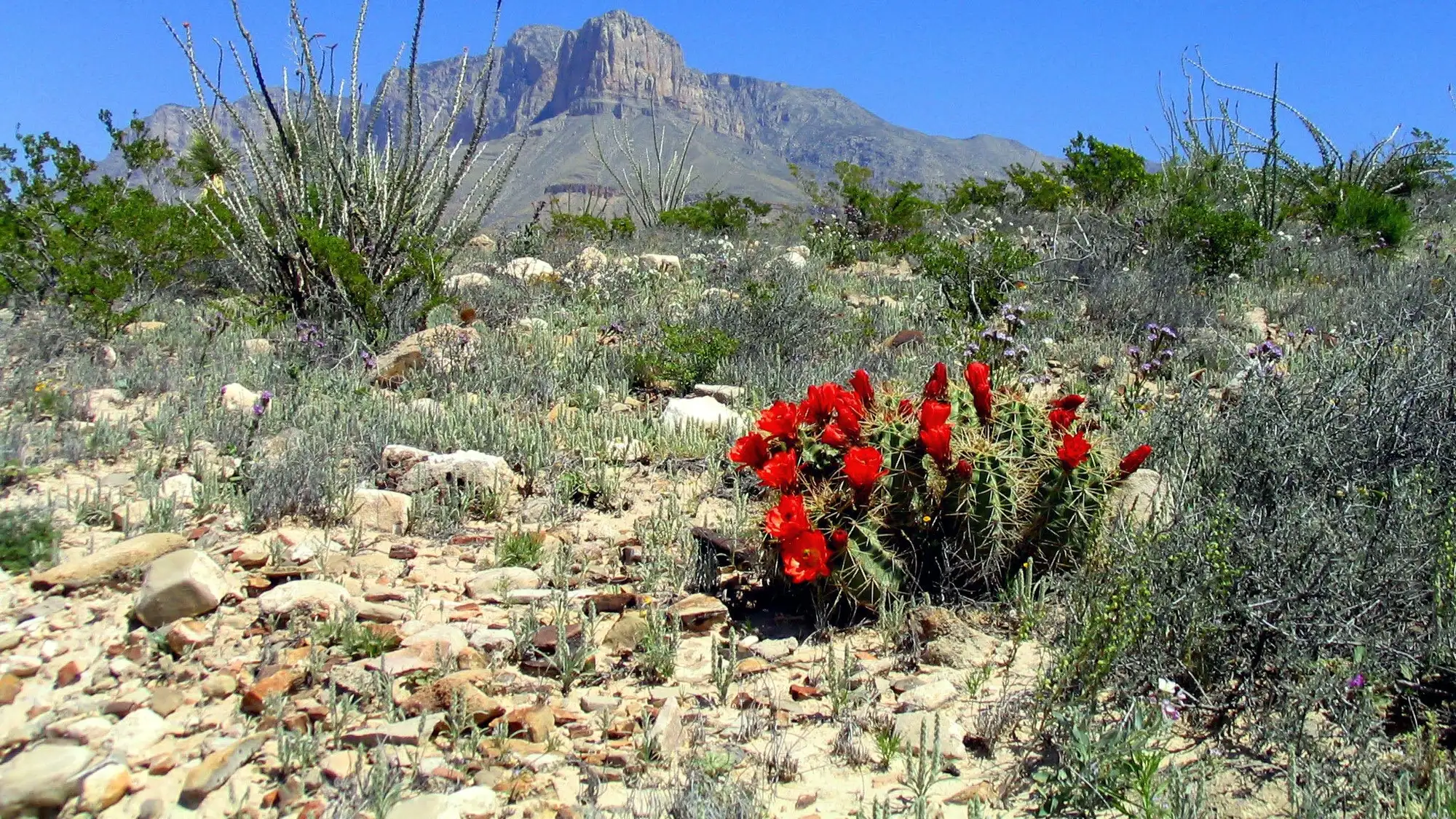
Guadalupe Mountains sits out where the West Texas map goes blank, 110 miles east of El Paso on a two-lane highway with almost nothing between. The park protects the four highest peaks in Texas, the world's most extensive Permian fossil reef, and a stretch of desert that runs into dunes, wooded canyons, and some of the darkest skies in the state. High wind is the constant here, year-round, gusting hard enough that the ridgelines rarely fall silent.
This is also one of the emptier national parks in the country. Even in a record year it drew around 243,000 visits, and much of that lands on a handful of spring and fall weekends near Pine Springs. Drive the extra hour to Dog Canyon, the Salt Basin Dunes, or the far western trails and you can go a long stretch seeing no one at all.
That emptiness is the point. There is nothing out here pulling at you, no signal to check, no line to stand in, no next thing waiting. Just rock laid down by an ancient sea, sky, and the long views off the high country.
The science: Psychologist Stephen Kaplan argued that the focused attention we burn through all day is a depletable resource, and that natural places restore it best when they take us away from the steady pull of demands and decisions. A park this far from any city, where the nearest overflow lodging is an hour's drive, strips those demands away almost by geography. Very little out here is asking anything of you, which is exactly the condition worn-out attention needs to recover.
Kaplan (1995) · Journal of Environmental Psychology
Seasonal guide
Crowd levels use NPS monthly visitation, averaged 2015–2025. Excludes 2020 (COVID anomaly) and 2026 (partial year). Temperatures are NOAA climate normals from a station 5.1 miles away. Busy does not mean bad. If a peak month is your only window, the season notes below tell you how to work it.
Spring is the park's busiest stretch, with highs climbing from the low 60s in March to near 80 by May and the strongest winds of the year, gusting to 60 mph or more on exposed ridges. Pine Springs fills by mid-morning on weekends, so arrive early or head for Dog Canyon or Frijole Ranch, and pack a windproof layer even on warm days.
Summer stays surprisingly quiet, though highs run in the mid-80s and July and August bring the wettest months, with afternoon thunderstorms rolling through. Start hikes at dawn to beat the heat, carry plenty of water, and watch the sky, since storms can build fast over the high country. Elevations above 8,000 feet run about 10F cooler.
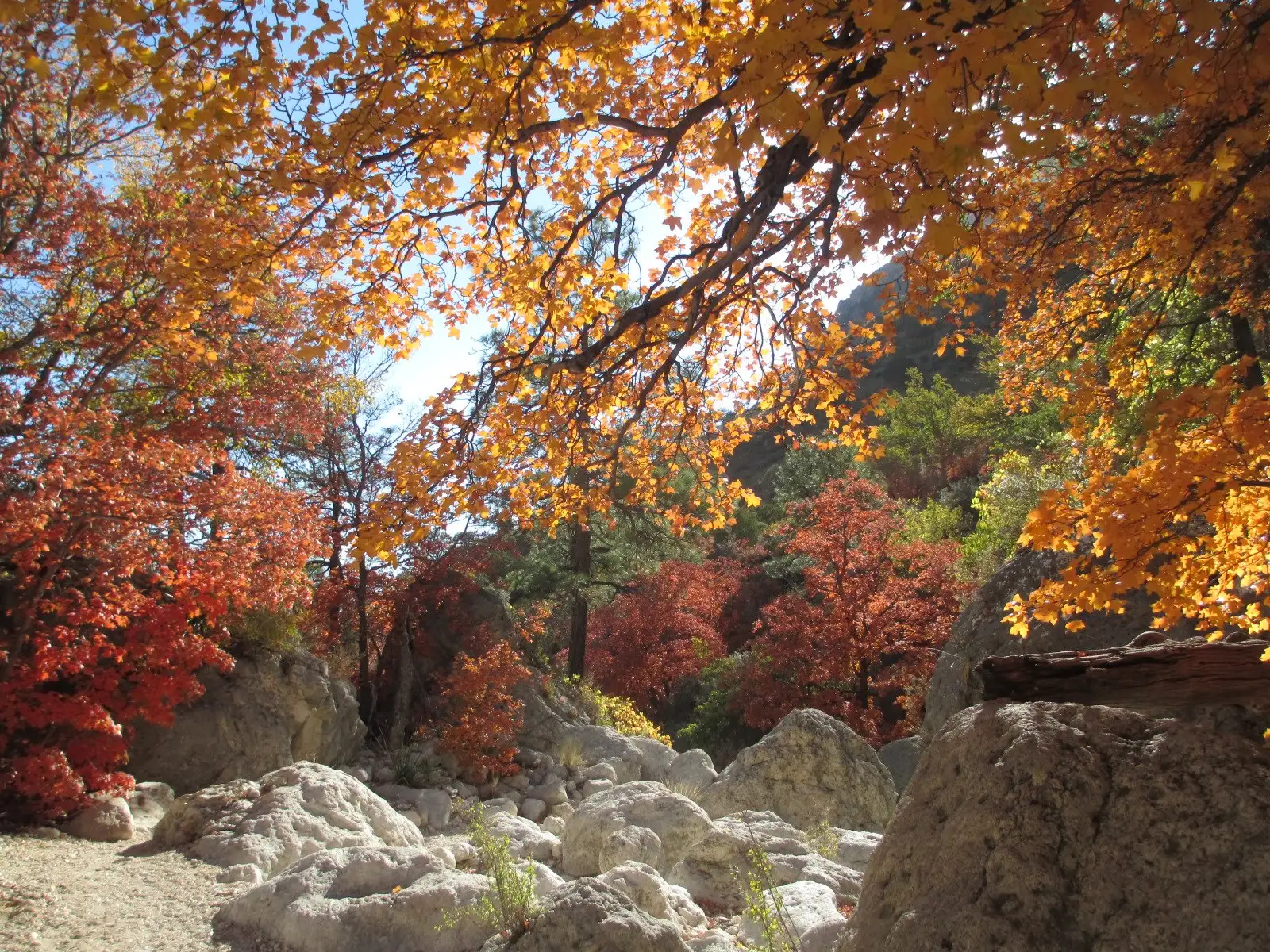
Fall is the sweet spot for weather, with highs sliding from the low 80s in September to the 60s by November and comfortable, milder days. It also draws crowds, especially for McKittrick Canyon's color in October and November, so visit midweek or early in the day to find room at the trailheads.
Winter is the quietest season, with highs in the low-to-mid 50s, lows near or below freezing, and occasional light snow that rarely lasts more than a day. Wind chill can make the peaks feel much colder, so layer heavily, but the solitude is real and the trails are nearly empty.
This month in the park
Timing changes everything out here. Pick a month to see when the light turns golden, which nights stay darkest for stargazing, and what visitors have actually recorded in bloom and on the move. The new-moon night is the one to plan a sky-watching evening around.
January 2027
Wildlife on the move · 76 species on record
- Western Bluebird 27 sightings
- Dark-eyed Junco 21 sightings
- Townsend's Solitaire 18 sightings
- Sage Thrasher 15 sightings
- American Robin 11 sightings
February 2027
In bloom · 2 species on record
- ❀ Agarita 1 sightings
- ❀ Wedgeleaf draba 1 sightings
Wildlife on the move · 78 species on record
- Western Bluebird 19 sightings
- Mule Deer 16 sightings
- Canyon Towhee 14 sightings
- Dark-eyed Junco 13 sightings
- Sage Thrasher 11 sightings
March 2027
In bloom · 20 species on record
- ❀ Texas madrone 20 sightings
- ❀ Mojave ceanothus 8 sightings
- ❀ Agarita 6 sightings
- ❀ Mexican Starleaf Orange 4 sightings
- ❀ Narrowleaf puccoon 2 sightings
Wildlife on the move · 155 species on record
- Ornate Tree Lizard 32 sightings
- Southwestern Fence Lizard 31 sightings
- Mule Deer 23 sightings
- Greater Earless Lizard 22 sightings
- Dark-eyed Junco 12 sightings
April 2027
In bloom · 49 species on record
- ❀ Mojave ceanothus 34 sightings
- ❀ Mexican Starleaf Orange 23 sightings
- ❀ Feather dalea 22 sightings
- ❀ Texas madrone 21 sightings
- ❀ Scarlet hedgehog cactus 19 sightings
Wildlife on the move · 161 species on record
- Greater Earless Lizard 44 sightings
- Southwestern Fence Lizard 42 sightings
- Ornate Tree Lizard 25 sightings
- Obscure Darkling Beetle 16 sightings
- Chipping Sparrow 12 sightings
May 2027
In bloom · 64 species on record
- ❀ Scarlet hedgehog cactus 13 sightings
- ❀ Cliff Fendlerbush 11 sightings
- ❀ Mexican Starleaf Orange 10 sightings
- ❀ Apache plume 9 sightings
- ❀ Feather dalea 6 sightings
Wildlife on the move · 166 species on record
- Greater Earless Lizard 67 sightings
- Southwestern Fence Lizard 65 sightings
- Chihuahuan Spotted Whiptail 38 sightings
- Giant Agave Bug 28 sightings
- Ornate Tree Lizard 17 sightings
June 2027
In bloom · 42 species on record
- ❀ Golden columbine 4 sightings
- ❀ Beardlip Penstemon 3 sightings
- ❀ Parry's agave 2 sightings
- ❀ Needleleaf Bluet 2 sightings
- ❀ James’ beardtongue 2 sightings
Wildlife on the move · 218 species on record
- Chihuahuan Spotted Whiptail 27 sightings
- Southwestern Fence Lizard 22 sightings
- Greater Earless Lizard 20 sightings
- Rufous-crowned Sparrow 16 sightings
- Springwater Dancer 14 sightings
July 2026
In bloom · 23 species on record
- ❀ Apache plume 10 sightings
- ❀ Mojave ceanothus 4 sightings
- ❀ Orange Flameflower 3 sightings
- ❀ Desert zinnia 3 sightings
- ❀ Desert willow 2 sightings
Wildlife on the move · 214 species on record
- Greater Earless Lizard 37 sightings
- Southwestern Fence Lizard 23 sightings
- Chihuahuan Spotted Whiptail 19 sightings
- Giant Agave Bug 16 sightings
- Springwater Dancer 16 sightings
August 2026
In bloom · 43 species on record
- ❀ Nodding onion 16 sightings
- ❀ Apache plume 5 sightings
- ❀ Scarlet Gilia 4 sightings
- ❀ Pitcher's leatherflower 4 sightings
- ❀ Beardlip Penstemon 4 sightings
Wildlife on the move · 197 species on record
- Greater Earless Lizard 18 sightings
- Southwestern Fence Lizard 17 sightings
- Giant Agave Bug 15 sightings
- Chihuahuan Spotted Whiptail 13 sightings
- Rainbow Grasshopper 12 sightings
September 2026
In bloom · 44 species on record
- ❀ Mojave ceanothus 10 sightings
- ❀ Mat rock spiraea 8 sightings
- ❀ Apache plume 5 sightings
- ❀ Nodding onion 5 sightings
- ❀ Golden columbine 5 sightings
Wildlife on the move · 351 species on record
- Greater Earless Lizard 58 sightings
- Southwestern Fence Lizard 37 sightings
- Springwater Dancer 34 sightings
- Rainbow Grasshopper 30 sightings
- Crevice Spiny Lizard 21 sightings
October 2026
In bloom · 30 species on record
- ❀ Apache plume 7 sightings
- ❀ Mat rock spiraea 3 sightings
- ❀ Slimleaf plains-mustard 3 sightings
- ❀ Mojave ceanothus 3 sightings
- ❀ Scarlet Gilia 2 sightings
Wildlife on the move · 206 species on record
- Texas Brown Tarantula 27 sightings
- Plains Lubber Grasshopper 27 sightings
- Mule Deer 22 sightings
- Southwestern Fence Lizard 22 sightings
- Dark-eyed Junco 21 sightings
November 2026
In bloom · 18 species on record
- ❀ Cardinal catchfly 3 sightings
- ❀ Monument plant 2 sightings
- ❀ Apache plume 2 sightings
- ❀ Yellow trumpet flower 1 sightings
- ❀ Scarlet Gilia 1 sightings
Wildlife on the move · 168 species on record
- Dark-eyed Junco 61 sightings
- Western Bluebird 60 sightings
- Cassin's Finch 42 sightings
- Plains Lubber Grasshopper 35 sightings
- Chipping Sparrow 28 sightings
December 2026
Wildlife on the move · 97 species on record
- Western Bluebird 34 sightings
- Dark-eyed Junco 25 sightings
- Townsend's Solitaire 19 sightings
- Chipping Sparrow 16 sightings
- Hermit Thrush 16 sightings
Sun and moon times are computed for the park's coordinates from standard NOAA solar equations and cross-checked against the U.S. Naval Observatory. Species lists are research-grade community observations for Guadalupe Mountains National Park, US, TX via iNaturalist, retrieved July 2026; sighting counts are all-time records for that calendar month.
Don’t wait for Guadalupe Mountains.
One big trip a year isn’t what changes how you feel — the small stuff in between is. The 7-Day Nature Reset is one tiny outdoor practice a day, wherever you already are. Day one takes 60 seconds.
No spam. No noise. Just nature.
Day 1 is landing in your inbox right now — go say hi.
Sleep nearby
Most visitors base in Carlsbad, New Mexico, about 54 miles out. Carlsbad has far more rooms, better prices, and a wider hotel selection than the tiny gateway. Whites City is closer at about 32-35 miles but has only limited motels. The map opens on Carlsbad, so pan toward the park to trade rooms and price for a shorter morning drive.
Camping inside the park books through Recreation.gov and is listed separately.
The map is provided by Stay22. If you book through it we may earn a commission at no cost to you, which helps keep Happier Outdoors running. It never changes what we recommend.
Activities & experiences
Beyond the trails
The primitive dirt road to Williams Ranch takes you close to the remote western escarpment of the Guadalupe Mountains, off the beaten path. You need a high-clearance, four-wheel-drive vehicle. Note: the road is currently closed.
Southeast of the park boundary along U.S. Highway 62/180, this viewpoint gives you a clear look at the summit of Guadalupe Peak.
Climbing Guadalupe Pass on U.S. Highway 62/180, a few miles west of Pine Springs, you will find a roadside pull-off with a wide-open view of the El Capitan summit.
Dog Canyon is the park's remote north district. It sits just seven miles away as the crow flies, but the drive from Pine Springs runs a full two hours one-way through Chihuahuan Desert and mountain country.
Near the end of the Guadalupe Rim Road in the Lincoln National Forest's Guadalupe Ranger District, the Five Points Vista looks out over the Rim and the wider range. It sits in line of sight to Dog Canyon.
From the south, Texas State Highway 54 runs from Van Horn straight to the Guadalupes, between the Delaware Mountains and the Sierra Diablo. On a clear day the mountains are visible ahead of you for forty miles.
Details and current conditions live on nps.gov.
From the field
Common questions
When is the best time to visit Guadalupe Mountains National Park?
Fall, roughly September through November, is the most rewarding window, with highs easing from the low 80s down to the 60s and McKittrick Canyon's color peaking in October and November. Spring brings comfortable temperatures too but the strongest winds and the biggest crowds, while summer stays quiet with highs in the mid-80s and afternoon storms in July and August.
Is Guadalupe Mountains National Park dog-friendly?
Leashed dogs are allowed on only two trails: the Pinery Trail from the visitor center and the connector trail between Pine Springs Campground and the visitor center. They are also welcome within 30 feet of park roads, in parking and picnic areas, and in the developed campgrounds, but they are prohibited on all other trails, in the backcountry, and inside buildings.
What is the quietest trail in Guadalupe Mountains National Park?
The Permian Reef Trail in McKittrick Canyon and the El Capitan Trail are among the least crowded, sitting on the remote western side away from the main visitor centers. The Salt Basin Dunes trail and the trails around Dog Canyon on the north end also see far fewer people, mostly because reaching them takes roughly an hour of driving within the park.
How crowded does Guadalupe Mountains National Park get?
It is one of the less-visited national parks overall, drawing about 243,000 visits in its record 2021 year, but it can feel full on spring and fall weekends. Crowds concentrate at Pine Springs and on the Guadalupe Peak trail, and the park sometimes runs one-in, one-out limits when lots fill, so midweek visits and alternate trailheads stay much calmer.
Is Guadalupe Mountains National Park accessible for wheelchairs?
Yes, the park has two paved, wheelchair-accessible trails: the Pinery Trail (0.75-mile round-trip) and the Manzanita Spring Trail (0.5-mile round-trip). The Pine Springs, Dog Canyon, and McKittrick Canyon visitor centers are fully accessible with designated parking and restrooms, but there are no public shuttles and most backcountry trails have loose rock and uneven footing.
Can you camp at Guadalupe Mountains National Park?
Yes, the park has three developed campgrounds with about 50 sites total: Pine Springs (35 sites), Dog Canyon (14 sites), and the Frijole Horse Corral group site. Individual sites run $20 per night, all reservable through Recreation.gov, and backcountry camping requires a separate Wilderness Use Permit.
Where do you park at Guadalupe Mountains National Park?
Most visitors park at the Pine Springs Trailhead, which has 44 car spaces and often fills to capacity by mid-morning on busy spring and fall weekends. When it is full, overflow shifts to the adjacent Pine Springs Visitor Center lot or the McKittrick Canyon area, and quieter trailheads at Dog Canyon and Frijole Ranch make good backups.