Great Sand Dunes National Park & Preserve
Mosca, Colorado · Rocky Mountains
A sandscape that calms the body
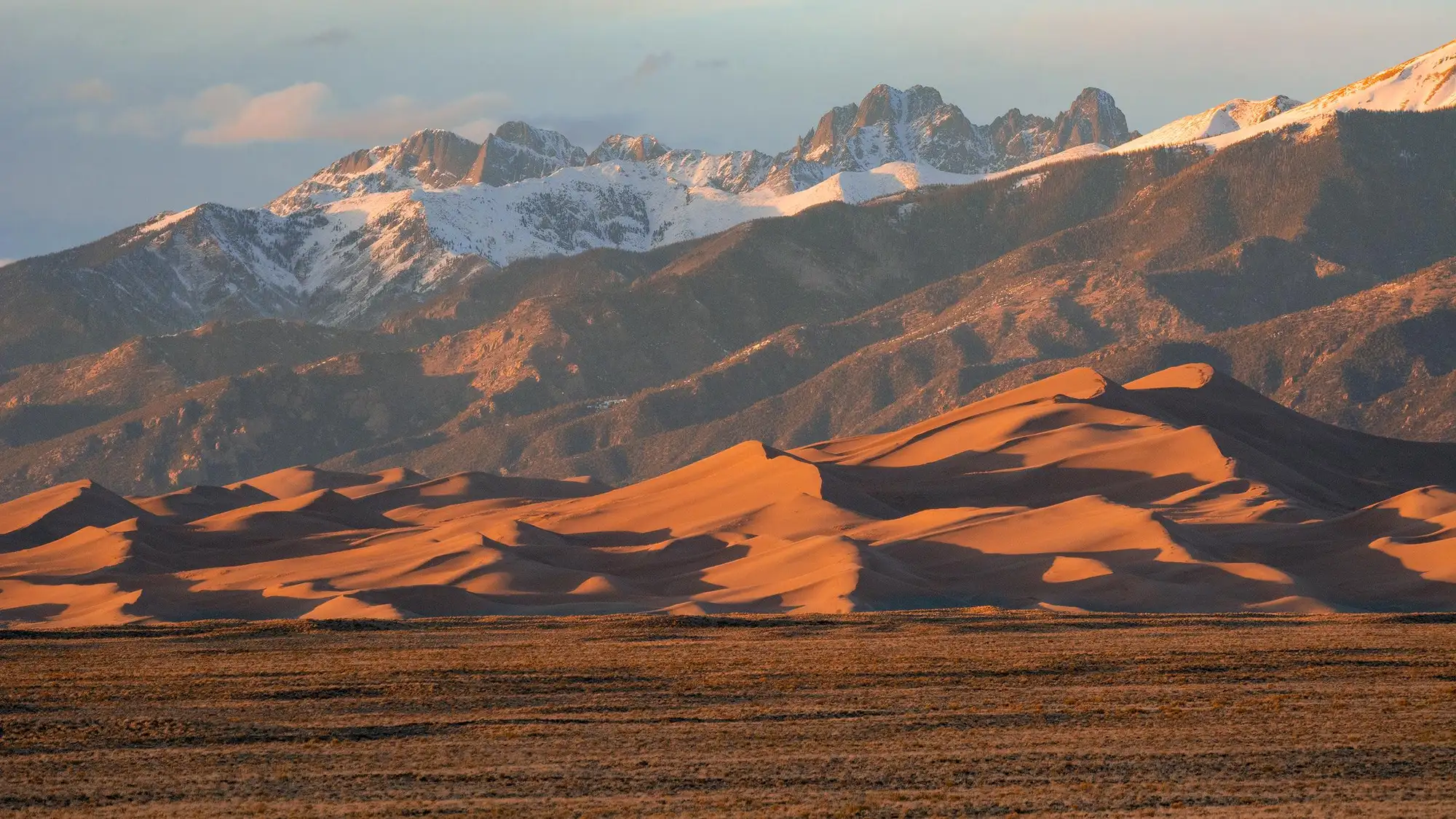
Great Sand Dunes is a landscape stripped down to three things: sand, sky, and mountain. The tallest dunes in North America rise more than 700 feet against the Sangre de Cristo range, and because off-trail travel is permitted across the dunefield, there are no switchbacks to follow and no railings to lean on. You pick your own line up, and the rest of the world drops away behind the ridgelines.
What is striking is how little green there is in the middle of all that calm. The dunefield is bare, arid, and quiet, the opposite of the leafy forest most people picture when they imagine a restful place in nature. Yet the sense of settling that visitors describe there is real, and the science suggests the sand alone can do part of the work.
Above it all sits one more layer. Great Sand Dunes is an International Dark Sky Park, open 24 hours a year-round, and on a moonless night the sky over the dunes fills with more stars than most people ever see from home.
The science: A study led by Yin and colleagues found that after a stressful task, men who spent ten minutes in a virtual desert shown through a VR headset had lower salivary cortisol and lower blood pressure than men who sat in a virtual office, even though the arid scene held almost no greenery. The dunefield here is that bare scene made real, thirty square miles of open sand where the calming does not depend on anything leafy. It is a good reminder that a stripped-back, treeless landscape can still settle a wound-up system.
Yin, Bratman, Browning, Spengler & Olvera-Alvarez (2022) · Journal of Environmental Psychology
Seasonal guide
Crowd levels use NPS monthly visitation, averaged 2015–2025. Excludes 2020 (COVID anomaly) and 2026 (partial year). Temperatures are NOAA climate normals from a station 6 miles away. Busy does not mean bad. If a peak month is your only window, the season notes below tell you how to work it.
January highs sit near 33F with lows around 11F, and nights are frigid, but these are the emptiest months of the year. The park stays open 24/7, and cool, firm sand plus clear dark skies reward anyone who bundles up. Entrance fees are collected only when the visitor center is open, so check hours before you go.
Highs climb from the upper 40s in March to the mid 60s by May, and winds pick up, especially during storm fronts. May weekends get busy as Medano Creek starts flowing, drawing families to the beach-like sand. Pack wind protection and aim for a weekday if you want the dunes closer to yourself.
These are the busiest months, with the campground full almost nightly and midday sand surface temperatures reaching roughly 150F. Explore the dunes at dawn or in the evening, keep footwear on, and watch for afternoon thunderstorms, since July and August are the wettest months. Cooler nights make it a fine time to stay for the stars.
September and October bring mild highs in the 60s and 70s cooling to the 40s by November, with cool nights and shrinking crowds after Labor Day. This is one of the most comfortable stretches for hiking the dunes without the summer heat. Bring layers, as temperatures swing sharply once the sun drops.
This month in the park
Timing changes everything out here. Pick a month to see when the light turns golden, which nights stay darkest for stargazing, and what visitors have actually recorded in bloom and on the move. The new-moon night is the one to plan a sky-watching evening around.
January 2027
Wildlife on the move · 16 species on record
- Mule Deer 5 sightings
- Common Raven 3 sightings
- Pronghorn 2 sightings
- Downy Woodpecker 2 sightings
- Belted Kingfisher 1 sightings
February 2027
Wildlife on the move · 12 species on record
- Pronghorn 4 sightings
- Mule Deer 3 sightings
- Black-billed Magpie 3 sightings
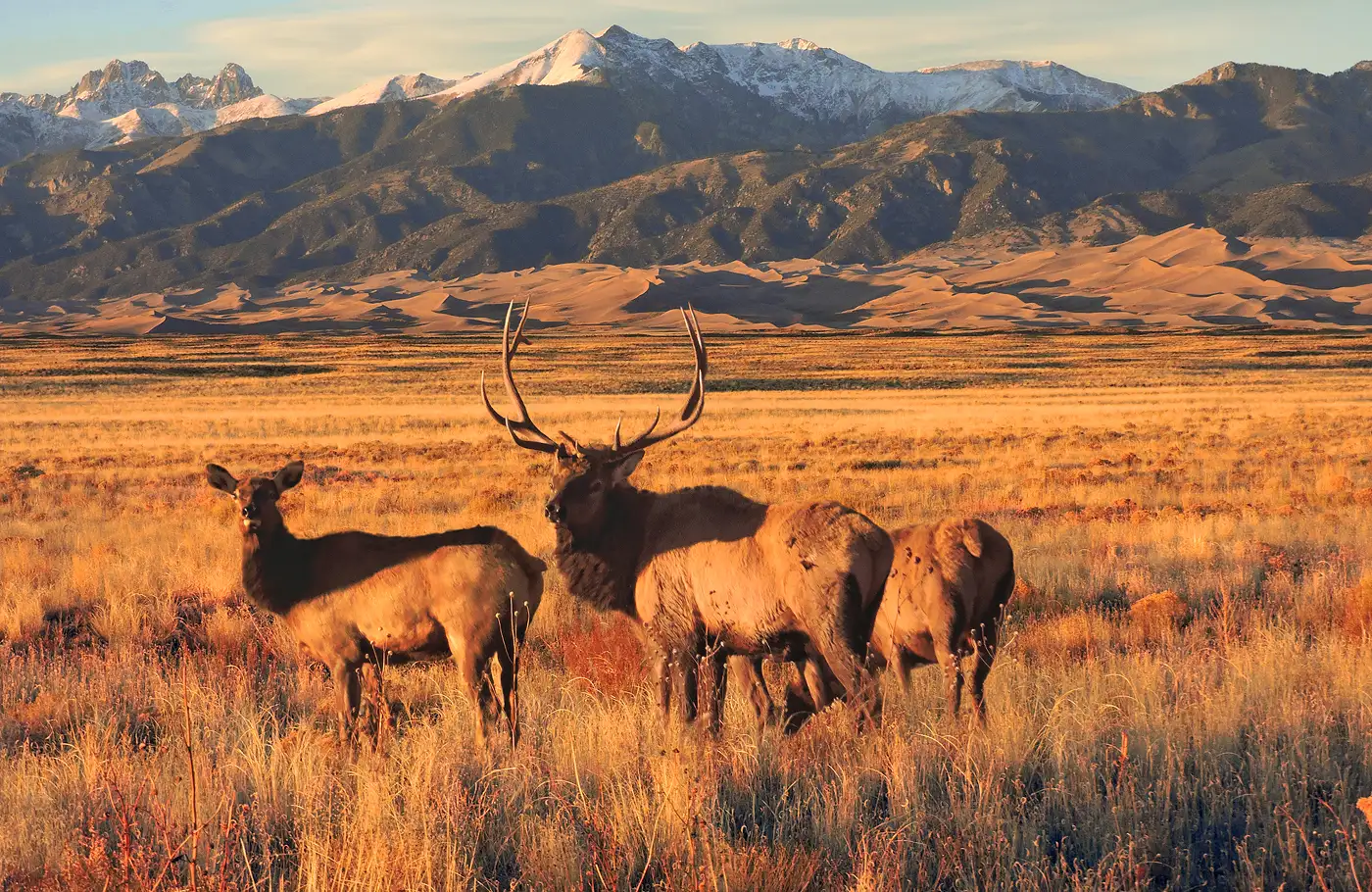
- Wapiti 2 sightings
- Sandhill Crane 2 sightings
March 2027
Wildlife on the move · 59 species on record
- Mule Deer 13 sightings
- Mountain Bluebird 7 sightings
- Cotton-gall Tephritid 6 sightings
- North American Porcupine 5 sightings
- Woodhouse's Scrub-Jay 5 sightings
April 2027
Wildlife on the move · 72 species on record
- Mule Deer 6 sightings
- Wapiti 6 sightings
- Mountain Bluebird 5 sightings
- Coyote 5 sightings
- Mourning Cloak 4 sightings
May 2027
In bloom · 19 species on record
- ❀ Prairie pasqueflower 3 sightings
- ❀ Western Wallflower 2 sightings
- ❀ Wax currant 2 sightings
- ❀ Mountain Ball Cactus 2 sightings
- ❀ Hound's-tongue 1 sightings
Wildlife on the move · 169 species on record
- Plateau Fence Lizard 29 sightings
- Mule Deer 25 sightings
- White-lined Sphinx 11 sightings
- Spotted Towhee 10 sightings
- Lark Sparrow 10 sightings
June 2027
In bloom · 54 species on record
- ❀ Rocky Mountain Beeplant 27 sightings
- ❀ Scarlet hedgehog cactus 11 sightings
- ❀ Plains Pricklypear 9 sightings
- ❀ Blue columbine 5 sightings
- ❀ Showy milkweed 4 sightings
Wildlife on the move · 319 species on record
- Colorado Dune Tiger Beetle 26 sightings
- Plateau Fence Lizard 19 sightings
- Mule Deer 18 sightings
- Giant Sand Treader Camel Cricket 17 sightings
- Western Tiger Swallowtail 16 sightings
July 2026
In bloom · 44 species on record
- ❀ Rocky Mountain Beeplant 56 sightings
- ❀ Gunnison's Mariposa Lily 13 sightings
- ❀ Blue columbine 13 sightings
- ❀ James' Buckwheat 9 sightings
- ❀ Spineless Horsebrush 7 sightings
Wildlife on the move · 339 species on record
- Ten-lined June Beetle 141 sightings
- Mule Deer 50 sightings
- Weidemeyer's Admiral 31 sightings
- Plateau Fence Lizard 24 sightings
- Common Golden-mantled Ground Squirrel 23 sightings
August 2026
In bloom · 35 species on record
- ❀ Rocky Mountain Beeplant 69 sightings
- ❀ James' Buckwheat 12 sightings
- ❀ Blue columbine 11 sightings
- ❀ Scarlet Gilia 6 sightings
- ❀ Flaxflowered Ipomopsis 4 sightings
Wildlife on the move · 276 species on record
- Mule Deer 29 sightings
- Police Car Moth 27 sightings
- Yellow-bellied Marmot 17 sightings
- White-lined Sphinx 15 sightings
- Giant Sand Treader Camel Cricket 15 sightings
September 2026
In bloom · 11 species on record
- ❀ Rocky Mountain Beeplant 13 sightings
- ❀ Perennial fringed gentian 4 sightings
- ❀ Rubber Rabbitbrush 3 sightings
- ❀ James' Buckwheat 3 sightings
- ❀ Scarlet Gilia 1 sightings
Wildlife on the move · 248 species on record
- Mule Deer 23 sightings
- Yellow-bellied Marmot 15 sightings
- American Pika 12 sightings
- Clark's Nutcracker 11 sightings
- Mottled Sand Grasshopper 11 sightings
October 2026
In bloom · 6 species on record
- ❀ Rocky Mountain Beeplant 5 sightings
- ❀ Scarlet Gilia 2 sightings
- ❀ Puncture vine 2 sightings
- ❀ Yellow Sweetclover 1 sightings
- ❀ Prickly Russian Thistle 1 sightings
Wildlife on the move · 102 species on record
- Mule Deer 23 sightings
- Clark's Nutcracker 6 sightings
- Ord's Kangaroo Rat 6 sightings
- Seven-spotted Lady Beetle 5 sightings
- Western Conifer Seed Bug 5 sightings
November 2026
Wildlife on the move · 27 species on record
- Mule Deer 10 sightings
- Giant Sand Treader Camel Cricket 3 sightings
- Common Raven 2 sightings
- Dark-eyed Junco 2 sightings
- Pygmy Nuthatch 2 sightings
December 2026
Wildlife on the move · 20 species on record
- Mule Deer 3 sightings
- Pinyon Jay 2 sightings
- Great Horned Owl 2 sightings
- Belted Kingfisher 1 sightings
- Golden Eagle 1 sightings
Sun and moon times are computed for the park's coordinates from standard NOAA solar equations and cross-checked against the U.S. Naval Observatory. Species lists are research-grade community observations via iNaturalist, retrieved July 2026; sighting counts are all-time records for that calendar month.
Don’t wait for Great Sand Dunes.
One big trip a year isn’t what changes how you feel — the small stuff in between is. The 7-Day Nature Reset is one tiny outdoor practice a day, wherever you already are. Day one takes 60 seconds.
No spam. No noise. Just nature.
Day 1 is landing in your inbox right now — go say hi.
Sleep nearby
Most visitors base in Alamosa, Colorado, about 37 miles out. It is the nearest major city with the greatest concentration of hotels, budget-friendly chains, and better prices. Mosca is closer at ~23 miles from the Visitor Center but lacks significant lodging. The map opens on Alamosa, so pan toward the park to trade rooms and price for a shorter morning drive.
Camping inside the park books through Recreation.gov and is listed separately.
The map is provided by Stay22. If you book through it we may earn a commission at no cost to you, which helps keep Happier Outdoors running. It never changes what we recommend.
Activities & experiences
Beyond the trails
Half the park happens after dark. Depending on the night, you might explore the dunes under a full moon, count stars on a clear moonless sky, listen for owls in the foothills, or watch amphibians migrate after rain.
Medano Creek is a seasonal stream. All ages come to splash in it.
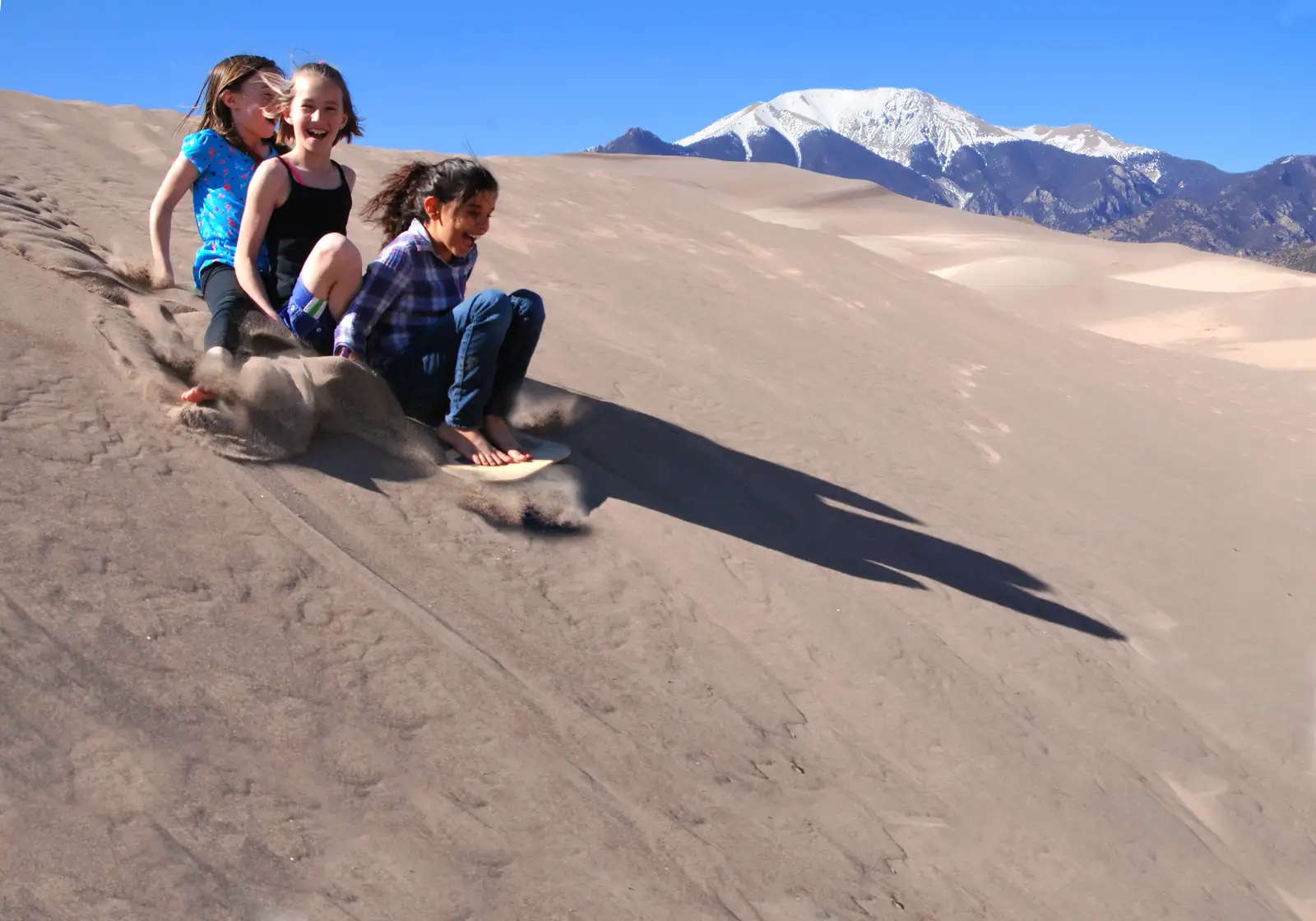
Sandboarding and sand sledding are the most popular things to do on the dunes. Read up before you go so it stays fun and safe.
A 4WD route runs along the eastern edge of the dunes and over a forested mountain pass. Expect soft sand, creek crossings, and rocky terrain.
Details and current conditions live on nps.gov.
From the field
Common questions
When is the best time to visit Great Sand Dunes?
Late spring and early fall are the most comfortable windows for the dunes themselves. May and June bring the seasonal flow of Medano Creek and the biggest crowds, while September and October offer mild days, cool nights, and thinner traffic. In summer the sand surface can reach roughly 150F by midday, so plan dune time for morning or evening.
Is Great Sand Dunes dog-friendly?
Yes, leashed dogs are allowed in the main day use dunefield, Piñon Flats Campground, the Dunes Overlook Trail, Medano Pass Primitive Road, and throughout the preserve including Mosca Pass Trail. They are not permitted in the backcountry dunefield beyond the first high ridge, or inside park buildings. In summer, keep paws off midday sand, which can burn, and never leave a dog in a parked vehicle.
What is the quietest trail at Great Sand Dunes?
Visitors most often point to the Sand Pit Trail and the Wellington Ditch Trail as the least crowded options. The Sand Pit access sits about 1.1 miles down the Medano Pass Primitive Road, so most people without a high-clearance 4WD vehicle turn back before reaching it, and the Wellington Ditch Trail stays quiet simply because it is off the main dune-access route. Most of the crowd concentrates on High Dune and Star Dune from the main trailhead.
How crowded does Great Sand Dunes get?
The park draws over 500,000 visitors a year, with the sharpest crowds on weekends in late May and early June when Medano Creek is flowing. During those peaks the Dunes Parking Lot overflows, traffic backs up near the entrance, and the campground fills almost every night. There are no timed entries or reservations, so arriving early on busy days is the best way to secure parking.
Is Great Sand Dunes accessible for wheelchairs?
The Visitor Center and the Sand Sheet Loop Trail are fully accessible, and the park loans free balloon-tire wheelchairs to reach the sand and Medano Creek. An accessible mat runs from the Dunes Parking Area toward the creek edge, and accessible restrooms are available at the Visitor Center, campground, and Dunes Parking Area. A strong helper is needed to push the balloon-tire chairs through loose sand.
Can you camp at Great Sand Dunes?
Yes, Piñon Flats Campground inside the park offers 88 individual sites and 3 group sites, open April 1 through October 31. Individual sites run $20 a night and all sites must be reserved, with no first-come, first-served availability. The preserve also has 21 primitive first-come sites along the Medano Pass Primitive Road, which requires a high-clearance 4WD vehicle.
Where do you park at Great Sand Dunes?
Most visitors use the Dunes Parking Area, about a mile north of the Visitor Center, with additional parking at the Visitor Center, campground, and trailheads like Mosca Pass and the Amphitheater. No timed entries or advance parking reservations are required, but lots fill quickly on busy summer weekends. Overnight parking is only allowed at designated lots with a Backcountry Use Permit.