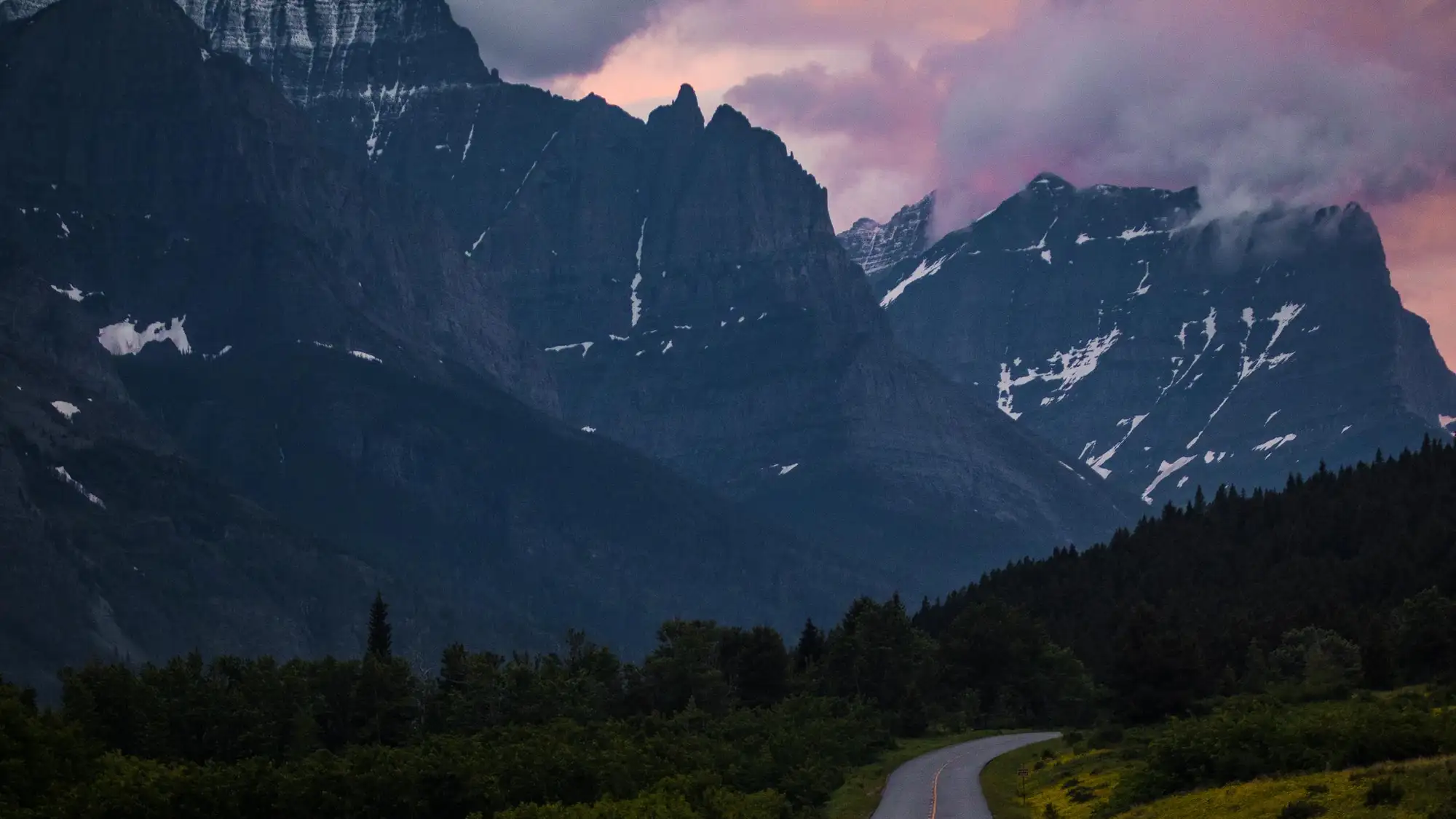
Glacier National Park
West Glacier, Montana · Rocky Mountains
Where the mountain does the lifting
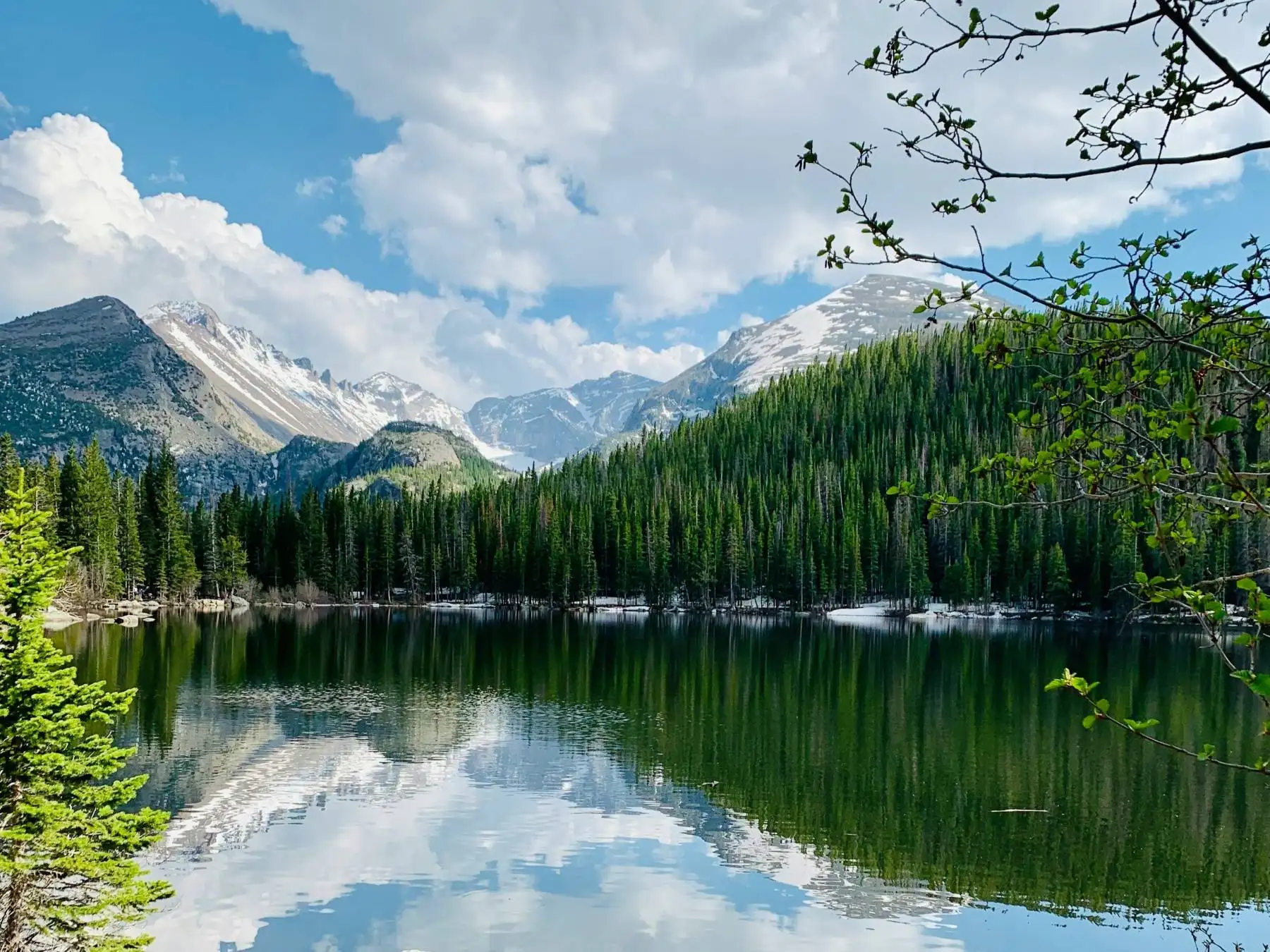
Glacier straddles the Continental Divide, the seam where warm Pacific air runs into cold Arctic air and the weather can turn on you within an hour. What that collision built is a park of carved valleys, alpine meadows, and hundreds of lakes fed by melting ice, laced with more than 700 miles of trail. Almost none of it is flat.
The walking is the point here, and not only because the views are big. Trails climb from cedar-shaded lakeshore up to the open country below the peaks, and the effort itself is doing measurable work on how you feel by the time you stop to look around. The steady grade of a place like this turns an ordinary hike into something your body registers.
The park runs at two speeds, and it is honest about both. Logan Pass and the Going-to-the-Sun Road corridor pull the crowds, while the North Fork lakes and the Two Medicine and Cut Bank valleys stay quiet, reached down gravel roads most buses never attempt. The reset gets easier a few miles off the famous route.
The science: Niedermeier and colleagues sent the same people on a three-hour alpine hike, then compared it against sitting still and against an indoor treadmill matched for effort. Their salivary cortisol fell more than when they sat, but no more than on the treadmill, so the stress-hormone drop came from moving while the mood lift came from the mountain itself. Glacier's 700-plus miles of trail run straight through that kind of high country, from lakeshore forest up to the meadows below the Divide, which means a plain day of walking here delivers both halves at once.
Niedermeier, Grafetstätter, Hartl & Kopp (2017) · International Journal of Environmental Research and Public Health
Seasonal guide
Crowd levels use NPS monthly visitation, averaged 2015–2025. Excludes 2020 (COVID anomaly) and 2026 (partial year). Temperatures are NOAA climate normals from a station 15.2 miles away. Busy does not mean bad. If a peak month is your only window, the season notes below tell you how to work it.
This is the park's quietest stretch, with January highs near 30F, lows around 19F, and heavy snow. The upper Going-to-the-Sun Road is closed to cars, but the lower areas open onto cross-country skiing and snowshoeing, and entrance fees drop to the winter rate. Come prepared for cold and short days, and stick to the accessible lower valleys.
March and April stay quiet and cold, with highs climbing from the low 40s to the low 50s, before May brings warmer 60s and the first real crowds. The Going-to-the-Sun Road opens in stages and its full route may not clear until well into summer, so check road status before you plan. This is a good window for lower-elevation trails and lakeshores while the high country is still under snow.
Summer is peak season and the only time the full Going-to-the-Sun Road is reliably open, with July and August highs near 80F. Crowds are heavy, especially at Logan Pass from mid-morning to early afternoon, so start at dawn or ride the free shuttle to guarantee access. Pack layers, since mountain weather shifts fast across the Divide even on warm days.
September still draws crowds but eases after Labor Day, with highs near 68F cooling to the low 50s by October and into the 30s by November. This is one of the best trade-offs of the year: open high country, thinning traffic, and fall color. Watch for early snow and seasonal road and facility closures as the park winds down toward winter.
This month in the park
Timing changes everything out here. Pick a month to see when the light turns golden, which nights stay darkest for stargazing, and what visitors have actually recorded in bloom and on the move. The new-moon night is the one to plan a sky-watching evening around.
January 2027
Wildlife on the move · 13 species on record
- Bighorn Sheep 3 sightings
- Mountain Goat 3 sightings
- Pileated Woodpecker 2 sightings
- Dusky Grouse 1 sightings
- Common Loon 1 sightings
February 2027
Wildlife on the move · 12 species on record
- Bufflehead 2 sightings
- American Dipper 1 sightings
- Common Raven 1 sightings
- Pileated Woodpecker 1 sightings
- North American River Otter 1 sightings
March 2027
Wildlife on the move · 21 species on record
- Pine Siskin 4 sightings
- Barrow's Goldeneye 3 sightings
- American Dipper 2 sightings
- Brown Bear 2 sightings
- American Red Squirrel 2 sightings
April 2027
In bloom · 5 species on record
- ❀ Prairie pasqueflower 4 sightings
- ❀ Pacific trillium 1 sightings
- ❀ Yellow fritillary 1 sightings
- ❀ Canadian buffalo-berry 1 sightings
- ❀ Utah Honeysuckle 1 sightings
Wildlife on the move · 47 species on record
- Columbian Ground Squirrel 8 sightings
- California Tortoiseshell 4 sightings
- Mourning Cloak 4 sightings
- White-tailed Deer 3 sightings
- Moose 3 sightings
May 2027
In bloom · 44 species on record
- ❀ Pacific trillium 26 sightings
- ❀ Glacier Lily 16 sightings
- ❀ Bearberry 12 sightings
- ❀ Fairy-slipper 10 sightings
- ❀ Utah Honeysuckle 10 sightings
Wildlife on the move · 188 species on record
- Mule Deer 51 sightings
- Columbian Ground Squirrel 38 sightings
- American Black Bear 33 sightings
- Bighorn Sheep 29 sightings
- Barrow's Goldeneye 27 sightings
June 2027
In bloom · 189 species on record
- ❀ Baker's Mariposa Lily 91 sightings
- ❀ Glacier Lily 58 sightings
- ❀ Bride's Bonnet 56 sightings
- ❀ Common beargrass 52 sightings
- ❀ Small camas 42 sightings
Wildlife on the move · 371 species on record
- Columbian Ground Squirrel 227 sightings
- Bighorn Sheep 184 sightings
- Mountain Goat 164 sightings
- Mule Deer 119 sightings
- American Black Bear 111 sightings
July 2026
In bloom · 225 species on record
- ❀ Baker's Mariposa Lily 107 sightings
- ❀ Glacier Lily 74 sightings
- ❀ Yellow columbine 72 sightings
- ❀ Fireweed 66 sightings
- ❀ Pipsissewa 62 sightings
Wildlife on the move · 531 species on record
- Mountain Goat 749 sightings
- Columbian Ground Squirrel 583 sightings
- Bighorn Sheep 518 sightings
- Hoary Marmot 401 sightings
- Common Golden-mantled Ground Squirrel 241 sightings
August 2026
In bloom · 76 species on record
- ❀ Fringed Grass of Parnassus 79 sightings
- ❀ Lewis' monkeyflower 57 sightings
- ❀ Mountain Bog Gentian 48 sightings
- ❀ Fireweed 35 sightings
- ❀ Pearly everlasting 29 sightings
Wildlife on the move · 445 species on record
- Columbian Ground Squirrel 431 sightings
- Mountain Goat 421 sightings
- Bighorn Sheep 389 sightings
- Hoary Marmot 220 sightings
- Common Golden-mantled Ground Squirrel 209 sightings
September 2026
In bloom · 39 species on record
- ❀ Pearly everlasting 12 sightings
- ❀ Fringed Grass of Parnassus 11 sightings
- ❀ Threeleaf Foamflower 9 sightings
- ❀ Fireweed 8 sightings
- ❀ Shrubby cinquefoil 4 sightings
Wildlife on the move · 275 species on record
- Bighorn Sheep 140 sightings
- Spotted Tussock Moth 123 sightings
- Mountain Goat 117 sightings
- Brown Bear 72 sightings
- Moose 71 sightings
October 2026
In bloom · 12 species on record
- ❀ Common yarrow 2 sightings
- ❀ Pearly everlasting 2 sightings
- ❀ White campion 2 sightings
- ❀ Common toadflax 1 sightings
- ❀ Threeleaf Foamflower 1 sightings
Wildlife on the move · 80 species on record
- Steller's Jay 16 sightings
- American Dipper 14 sightings
- Spruce Grouse 14 sightings
- Moose 13 sightings
- Brown Bear 12 sightings
November 2026
Wildlife on the move · 17 species on record
- Gray Wolf 6 sightings
- Steller's Jay 3 sightings
- Mountain Lion 3 sightings
- White-tailed Deer 3 sightings
- Spruce Grouse 3 sightings
December 2026
Wildlife on the move · 16 species on record
- Common Goldeneye 5 sightings
- Gray Wolf 5 sightings
- Barrow's Goldeneye 2 sightings
- White-tailed Deer 2 sightings
- Bighorn Sheep 2 sightings
Sun and moon times are computed for the park's coordinates from standard NOAA solar equations and cross-checked against the U.S. Naval Observatory. Species lists are research-grade community observations for Glacier National Park, US, MT via iNaturalist, retrieved July 2026; sighting counts are all-time records for that calendar month.
Don’t wait for Glacier.
One big trip a year isn’t what changes how you feel — the small stuff in between is. The 7-Day Nature Reset is one tiny outdoor practice a day, wherever you already are. Day one takes 60 seconds.
No spam. No noise. Just nature.
Day 1 is landing in your inbox right now — go say hi.
Sleep nearby
Most visitors base in Kalispell, Montana, about 33 miles out. It is the largest nearby city with far more rooms, better prices, and airport access. Staying at West Glacier puts you right at the entrance but with fewer and pricier rooms. The map opens on Kalispell, so pan toward the park to trade rooms and price for a shorter morning drive.
Camping inside the park books through Recreation.gov and is listed separately.
The map is provided by Stay22. If you book through it we may earn a commission at no cost to you, which helps keep Happier Outdoors running. It never changes what we recommend.
Let someone else lead
A guide is worth it when the terrain needs one, or when you would rather look around than navigate. These are the highest-rated trips running around Glacier, not the cheapest.
 Free cancellation
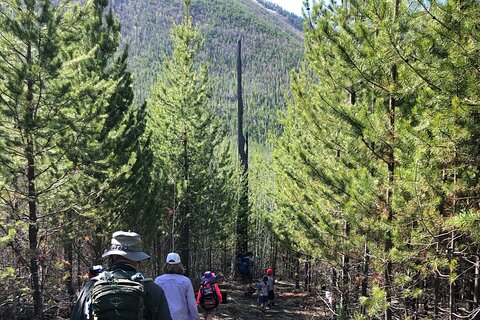
 Nature Walk in Glacier National Park
- Runs May–Oct
- Up to 18 per booking
- Easy for most fitness levels
 Free cancellation
 Glacier National Park – Winter Driving Tour (5-6 hours)
- Runs year-round
- Up to 13 per booking
- Stroller accessible
 Free cancellation
 Sunset LED Clear Kayak Rentals for Glacier Park
- Runs Apr–Oct
- Up to 15 per booking
- Service animals welcome
 Free cancellation
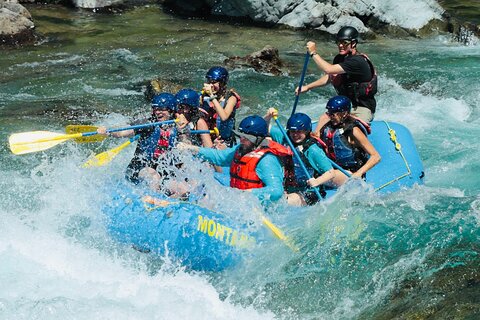
 Full Day Glacier National Park Whitewater Rafting Adventure - With Lunch!
- Runs Jun–Sep
- Up to 9 per booking
- Easy for most fitness levels
Tours are listed by Viator; booking happens there. If you book we may earn a commission at no cost to you, which helps keep Happier Outdoors running. It never changes what we list. Prices checked September 2026 and can change.
Activities & experiences
Beyond the trails
Red foxes range across the northern hemisphere, and in Glacier they use everything from open grassland to dense forest. Look for them most often in riparian areas and along forest edges. The smallest canid in the park, they usually wear reddish-yellow coats with black "socks" on the lower legs and a white-tipped tail.
Through the year, bighorn sheep shift habitats. Summer takes them to meadows, fellfields, and mid-elevation slopes near cliffs and ledges. Winter brings them to windswept, south-facing valleys and ridges where the wind clears forage of snow. You may also spot them in the Logan Pass parking lot, licking antifreeze off the pavement for the salt.
The gray wolves in Glacier are the northern Rocky Mountain subspecies, and they come in gray, white, and black. Secretive and elusive, they are usually seen alone or in pairs.
Elk spend the summer in Glacier, then most move to lower elevations outside the park for winter. The park's animals are Rocky Mountain elk. They eat grasses, sedges, other herbs and shrubs, aspen bark, conifer needles, burned bark, and aquatic plants.
A mid-sized carnivore in the weasel family, the wolverine stays active year-round in cold, snowy country it is built for. It keeps to remote terrain and is rarely seen. It counts among the rarest and most elusive carnivores on Earth.
Two deer are common across Glacier: the northwestern white-tailed deer and the Rocky Mountain mule deer. Both run when threatened. Males grow antlers from April or May into August or September, then shed them in spring.
Details and current conditions live on nps.gov.
From the field
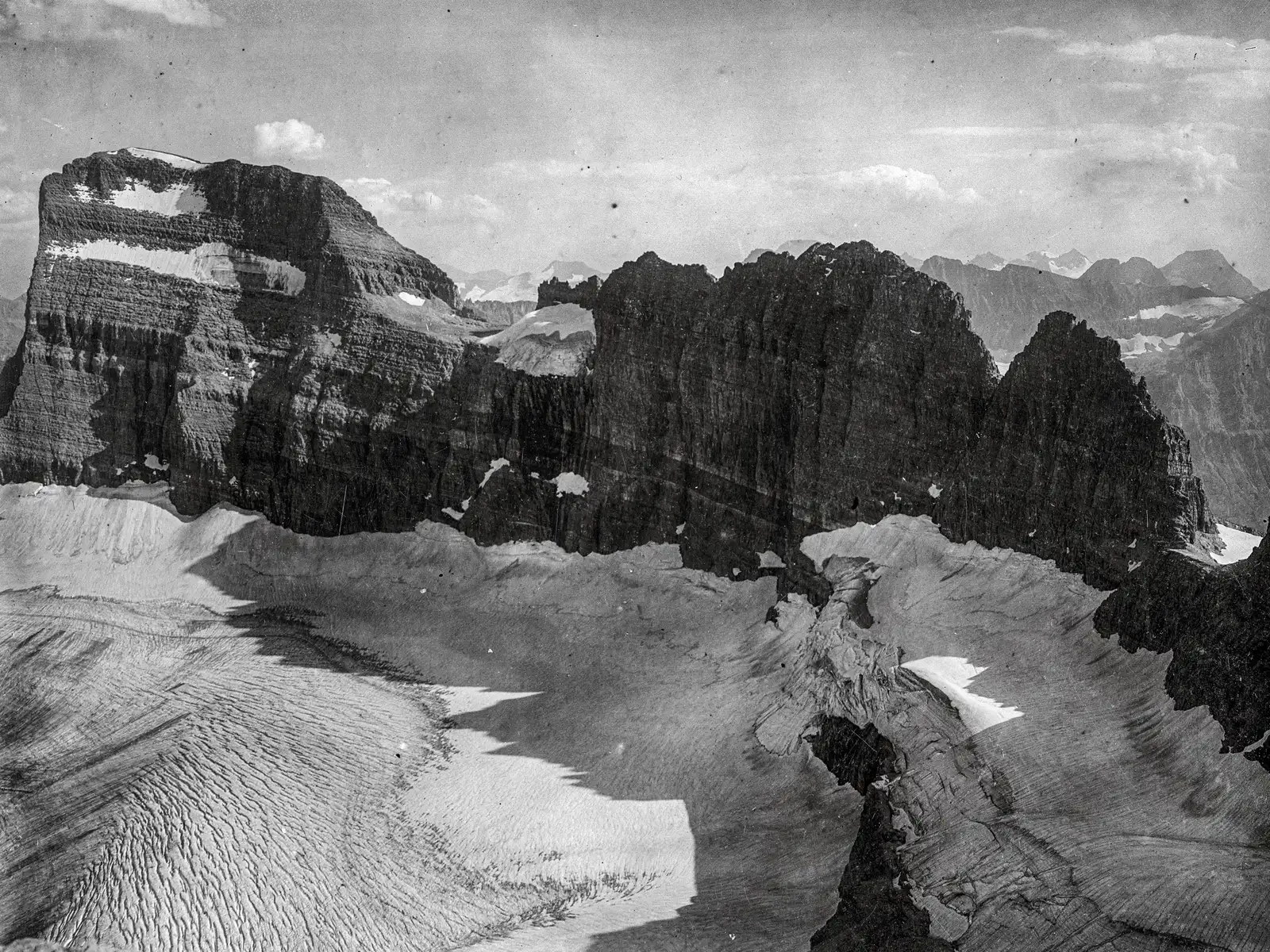
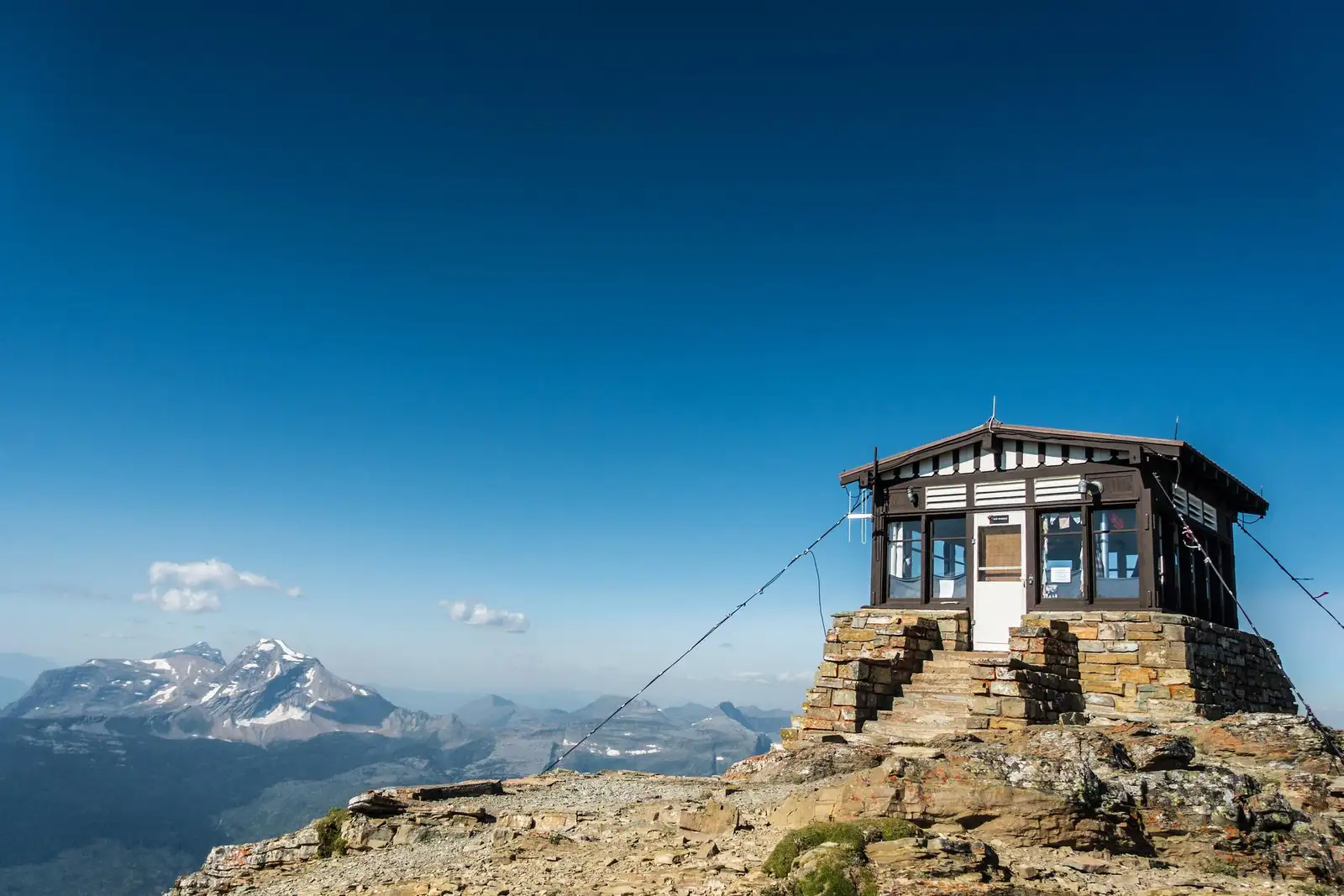
Common questions
When is the best time to visit Glacier National Park?
For fewer crowds with the high country still open, aim for September or early October, when September highs run near 68F and the biggest summer rush has passed. July and August are warmest, with highs around 80F and the full Going-to-the-Sun Road experience, but they also draw the heaviest crowds, together making up nearly 60% of yearly visits. Winter is deeply quiet and snowy, with January highs around 30F.
Is Glacier National Park dog-friendly?
Dogs are allowed only in developed areas and are prohibited on every trail. Leashed pets on a 6-foot leash may be in campgrounds, picnic areas, parking lots, along open roads, and on the Apgar and Fish Creek bike paths, but not in the backcountry, along undeveloped lake shores, or in any buildings.
What is the quietest trail in Glacier National Park?
Hikers and visitors consistently point to remote trails like the Huckleberry Mountain Lookout, Cracker Lake, Siyeh Pass, and the North Fork lakes as among the least crowded in the park. Most stay quiet because they sit off the Going-to-the-Sun Road corridor, require driving gravel roads that buses and RVs cannot use, or are long and strenuous. These are visitor reports rather than official rankings, so conditions and access can change.
How crowded does Glacier National Park get?
Glacier gets very crowded in summer, drawing over 3 million visitors a year, with July and August alone accounting for nearly 60% of that total. Logan Pass is the busiest spot, and congestion on the Going-to-the-Sun Road peaks from mid-morning to early afternoon, roughly 10 AM to 2 PM.
Is Glacier National Park accessible for wheelchairs and strollers?
Yes, Glacier has several paved, wheelchair-accessible options, including the Apgar Bike Path, Trail of the Cedars, Running Eagle Falls, and an ADA-compliant viewpoint at McDonald Falls. Park shuttles along Going-to-the-Sun Road are ADA accessible with ramps and lockdowns, though note that Avalanche Lake and Trail of the Cedars will not be reachable by shuttle in 2026.
Can you camp at Glacier National Park?
Yes, Glacier has 13 front-country campgrounds split between reservation-only and first-come, first-served sites, with summer fees of about $15 to $30 per night. Reservations are made only through Recreation.gov, while the smaller first-come campgrounds require arriving early to claim a spot.
Where do you park at Glacier National Park?
In peak season, lots at popular spots like Logan Pass and Avalanche Creek often fill before sunrise and stay congested most of the day. The simplest fix is the free park shuttle: park at Apgar Visitor Center or West Glacier and ride in. If you drive, arrive before dawn or after 3 PM, when congestion eases.