Glacier Bay National Park & Preserve
Gustavus, Alaska · Alaska
No road in, only water
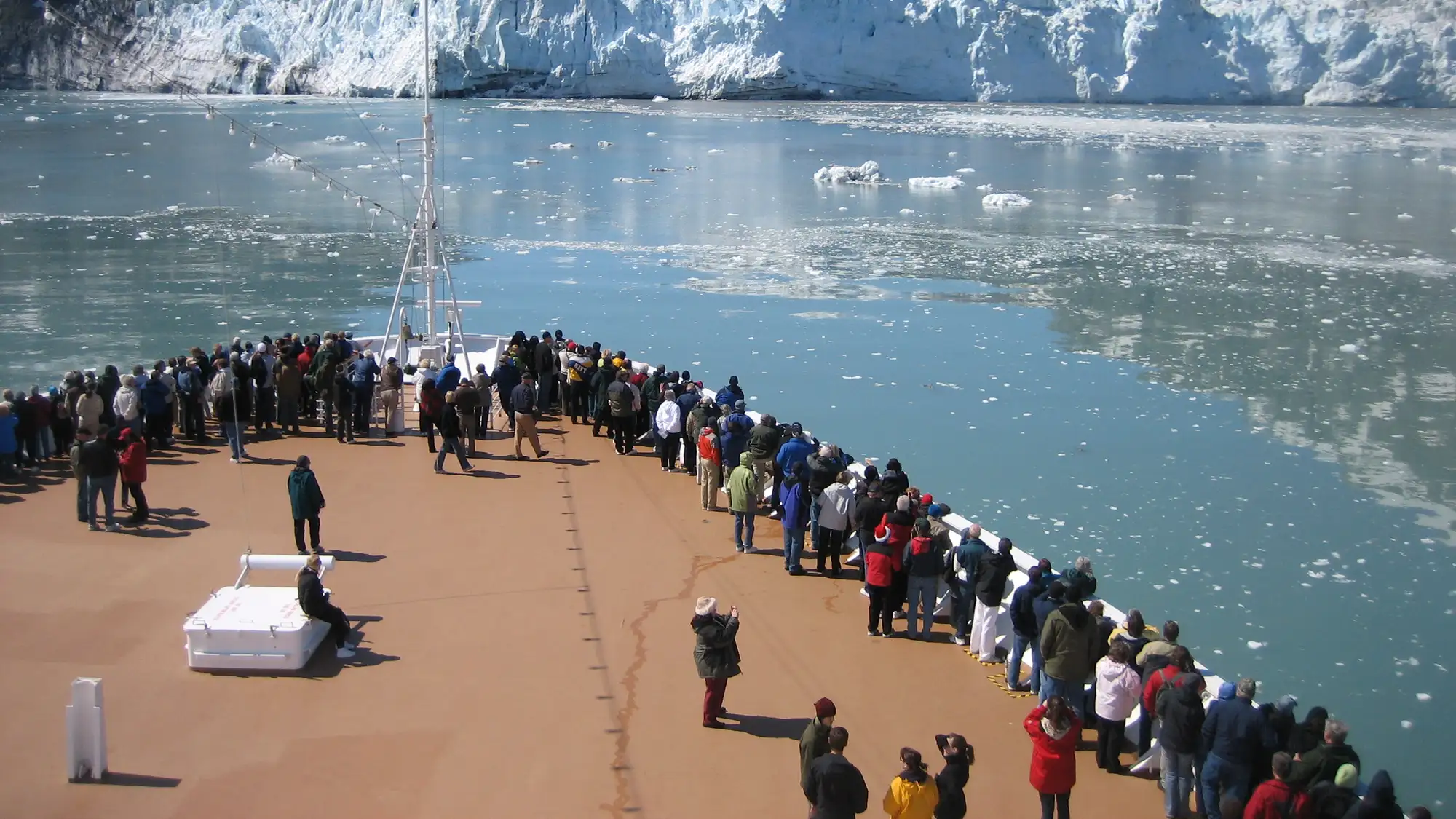
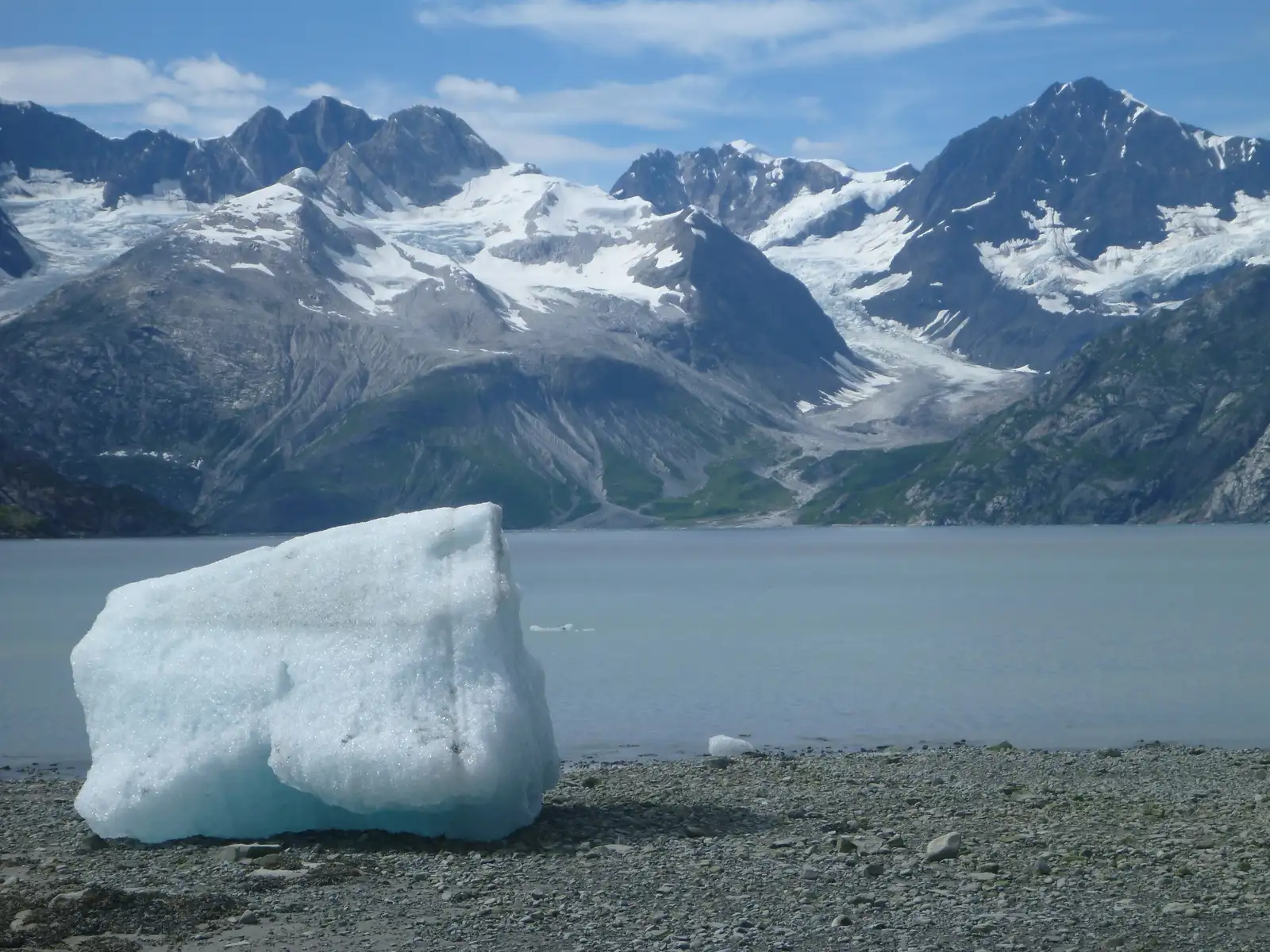
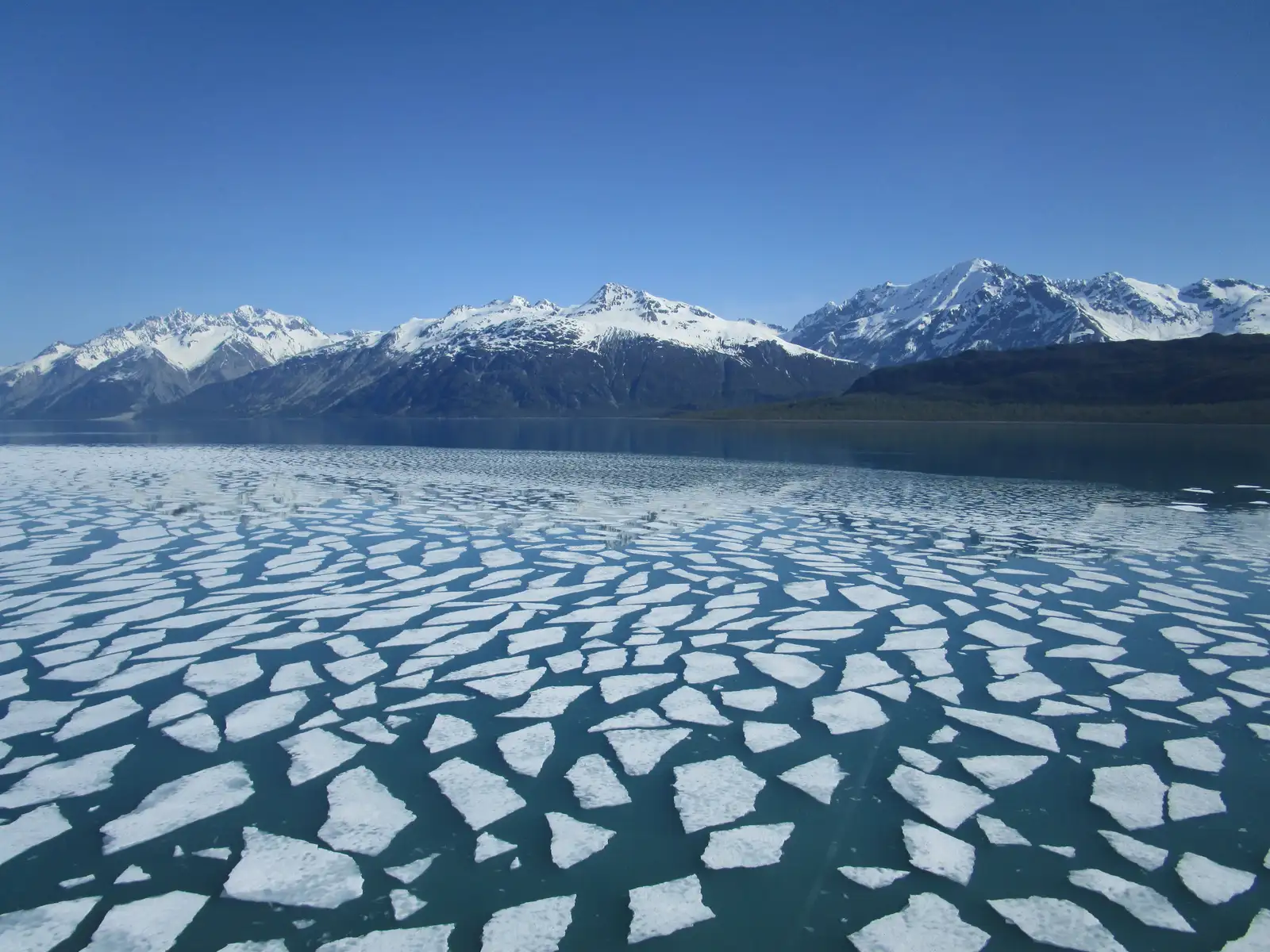
Glacier Bay is a place you enter by boat. One short road runs ten miles between the town of Gustavus and park headquarters at Bartlett Cove, and past that, the park is water. Deep sheltered fjords, wild coastline, and tidewater glaciers spread across 3.3 million acres, and more than nine in ten visitors take it all in from a deck rather than a trail.
The Huna and Yakutat Lingít know this bay as Homeland, and the rhythm of a visit still follows the water. You move slowly past temperate rainforest and bare rock, watching for whales and listening for the crack of a glacier letting go. There is nowhere to rush to, and that is most of the point.
For the small share of visitors who stay ashore at Bartlett Cove, the same water is right there at the dock and along the forest edge. You do not have to board a cruise ship to stand at the meeting point of cold sea and rainforest.
The science: White and colleagues, working from population-scale data, found that contact with blue space, the coasts, rivers, and lakes, tracks with genuinely better mental health, not just a vaguer sense of feeling good. Glacier Bay delivers that contact in an unusually undiluted form, since for hours at a stretch there is nothing around you but cold marine water, forested shore, and ice.
White, Elliott, Gascon, Roberts & Fleming (2021) · Environmental Research
Seasonal guide
Crowd levels use NPS monthly visitation, averaged 2015–2025. Excludes 2020 (COVID anomaly). Temperatures are NOAA climate normals from a station 42.3 miles away. Busy does not mean bad. If a peak month is your only window, the season notes below tell you how to work it.
Early spring is nearly empty and among the driest stretches of the year, with March highs only in the upper 30s climbing to the mid 50s by May. Snow and cold linger, and most park services do not open until late May, when visitors and cruise traffic arrive quickly. Come in April or early May for dry weather and near-solitude, but call ahead, because the lodge, tours, and permit desk may not be running yet.
Summer is the park's short, busy window, with highs of 59 to 61F, long daylight, and the fullest schedule of tours, flights, and lodge service. Crowds peak now, though nearly all of them stay on the water and never touch land. Expect rain in any month, pack good waterproof gear, and start early if you want a parking spot at Bartlett Cove, which fills by morning.
September and October still draw visitors but are the wettest months of the year, with highs sliding from the low 50s into the mid 40s and rain totals near 9 to 10 inches a month. By November the season is over and most services shut down. Come in September for thinner crowds, but plan around steady rain and pack waterproof layers head to toe.
Winter is deep quiet, with fewer than a couple hundred visitors a month and highs only in the low 30s. Most visitor services are closed, access is by small plane or boat only, and daylight is short. This season suits self-sufficient travelers prepared for cold, wet, dark conditions rather than anyone expecting open facilities.
This month in the park
Timing changes everything out here. Pick a month to see when the light turns golden, which nights stay darkest for stargazing, and what visitors have actually recorded in bloom and on the move. The new-moon night is the one to plan a sky-watching evening around.
January 2027
Wildlife on the move · 2 species on record
- Bald Eagle 1 sightings
- Harbor Seal 1 sightings
February 2027
March 2027
April 2027
Wildlife on the move · 7 species on record
- Sea Otter 2 sightings
- Cook Inlet Gull 2 sightings
- Willow Ptarmigan 1 sightings
- Black-legged Kittiwake 1 sightings
- Marbled Murrelet 1 sightings
May 2027
In bloom · 2 species on record
- ❀ Bearberry 1 sightings
- ❀ Rice root 1 sightings
Wildlife on the move · 47 species on record
- Glaucous-winged Gull 29 sightings
- Black-legged Kittiwake 26 sightings
- Mountain Goat 21 sightings
- Sea Otter 20 sightings
- Arctic Tern 15 sightings
June 2027
In bloom · 4 species on record
- ❀ Mountain lady's-slipper 3 sightings
- ❀ Nootka Lupine 1 sightings
- ❀ Oysterplant 1 sightings
- ❀ Dwarf Fireweed 1 sightings
Wildlife on the move · 43 species on record
- Black-legged Kittiwake 48 sightings
- Sea Otter 36 sightings
- Bald Eagle 27 sightings
- Glaucous-winged Gull 25 sightings
- Mountain Goat 21 sightings
July 2026
In bloom · 4 species on record
- ❀ Dwarf Fireweed 3 sightings
- ❀ Giant red paintbrush 1 sightings
- ❀ White bog orchid 1 sightings
- ❀ Heartleaf Twayblade 1 sightings
Wildlife on the move · 46 species on record
- Black-legged Kittiwake 64 sightings
- Sea Otter 58 sightings
- Glaucous-winged Gull 43 sightings
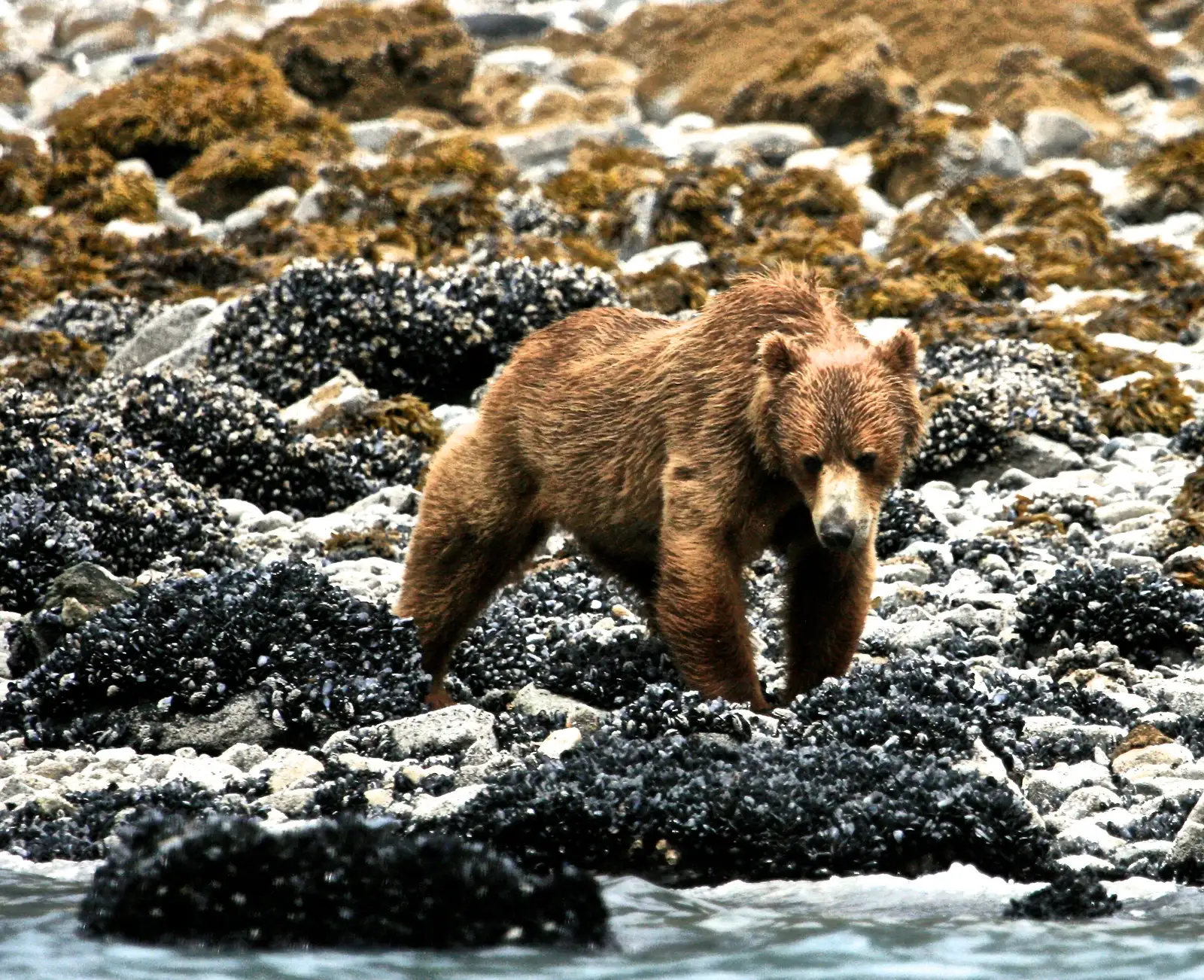
- Brown Bear 34 sightings
- Harbor Seal 31 sightings
August 2026
In bloom · 3 species on record
- ❀ Pearly everlasting 1 sightings
- ❀ Marsh grass-of-Parnassus 1 sightings
- ❀ Dwarf Fireweed 1 sightings
Wildlife on the move · 45 species on record
- Sea Otter 35 sightings
- Mountain Goat 30 sightings
- Black-legged Kittiwake 28 sightings
- Harbor Seal 27 sightings
- Brown Bear 24 sightings
September 2026
Wildlife on the move · 28 species on record
- Black-legged Kittiwake 22 sightings
- Short-billed Gull 19 sightings
- Harbor Seal 17 sightings
- Sea Otter 16 sightings
- Mountain Goat 8 sightings
October 2026
Wildlife on the move · 10 species on record
- Harbor Seal 16 sightings
- Short-billed Gull 9 sightings
- Sea Otter 4 sightings
- Steller Sea Lion 2 sightings
- White-winged Scoter 2 sightings
November 2026
December 2026
Sun and moon times are computed for the park's coordinates from standard NOAA solar equations and cross-checked against the U.S. Naval Observatory. Species lists are research-grade community observations via iNaturalist, retrieved July 2026; sighting counts are all-time records for that calendar month.
Don’t wait for Glacier Bay.
One big trip a year isn’t what changes how you feel — the small stuff in between is. The 7-Day Nature Reset is one tiny outdoor practice a day, wherever you already are. Day one takes 60 seconds.
No spam. No noise. Just nature.
Day 1 is landing in your inbox right now — go say hi.
Sleep nearby
Most visitors base in Juneau, Alaska, about 60 miles out. Juneau has many more rooms and better prices than tiny Gustavus, though it's reached by air or ferry rather than road. Gustavus sits just 10 miles from Bartlett Cove but has very limited accommodation with only a handful of inns and rentals. The map opens on Juneau, so pan toward the park to trade rooms and price for a shorter morning drive.
Camping inside the park books through Recreation.gov and is listed separately.
The map is provided by Stay22. If you book through it we may earn a commission at no cost to you, which helps keep Happier Outdoors running. It never changes what we recommend.
Activities & experiences
Beyond the trails
On a budget, the Beardslee Islands are one of the more accessible wilderness areas in the park. Kayak these calm waters and watch the shoreline for wildlife.
Follow the Łingít trail to the Huna Tribal House. It is the first permanent clan house in Glacier Bay since an advancing glacier destroyed Łingít villages more than 250 years ago.
Bartlett Cove Campground sits steps from views of the Fairweather Mountains and the bay. Sleep in the rainforest and listen for whales from your tent.
Gustavus is the gateway town to Glacier Bay. This small Alaskan community gives travelers plenty to see on the way to the park.
At the Glacier Bay Visitor Center you can catch a program, join a ranger walk, or explore the exhibits on your own. There is something to learn at any age.
Details and current conditions live on nps.gov.
From the field
Common questions
When is the best time to visit Glacier Bay?
The main visitor season runs late May through early September, with July the peak for both settled weather and crowds. Summer highs sit between 50 and 60F, April through June are usually the driest months, and September and October are the wettest, so bring good rain gear no matter when you come.
Is Glacier Bay dog-friendly?
Pets are largely prohibited at Glacier Bay, with a few narrow exceptions in the Bartlett Cove developed area. Leashed pets are allowed on developed park roads, the Bartlett Cove Public Use Dock, within 100 feet of roads and parking, and on one marked beach section, but never on any trails or in the backcountry.
What is the quietest trail at Glacier Bay?
The Bartlett Lake Trail and the Point Gustavus stretch of the Beach Trail are the quietest routes in the park. Both are primitive and rugged, requiring a climb or bushwhacking, so most visitors stay on the maintained Forest and Bartlett River trails near the lodge, leaving these paths nearly empty.
How crowded does Glacier Bay get?
Glacier Bay is busy in summer, but almost entirely on the water rather than on land. The park logged 736,282 visitors in 2024, and over 90 percent arrived by cruise ship without ever setting foot ashore, so Bartlett Cove, the only frontcountry area, sees just about 5 percent of the total, roughly 30,000 people a year.
Is Glacier Bay accessible for wheelchairs and strollers?
Accessibility is limited and concentrated in Bartlett Cove. A half-mile wooden boardwalk on the Forest Trail and the flat gravel Tlingit Trail are the accessible paths, the Glacier Bay Lodge has a ramp and an elevator to the upstairs visitor center, and ADA rooms and restrooms are available, but there are no shuttles for travel within the park and most trails have exposed roots and rocks.
Can you camp at Glacier Bay?
Yes, at the Bartlett Cove Campground, the park's only campground, which has about 90 walk-in sites in a rainforest setting along the cove with no nightly fee. Reservations are not accepted, so camping is first-come, first-served with a free permit obtained in person, plus a mandatory camper orientation at the Visitor Information Station.
Where do you park at Glacier Bay?
Parking is only in Gustavus at the Bartlett Cove Public Use Dock lot, since the park itself is essentially roadless. The lot has very limited capacity and often fills by early morning in peak season, overnight parking is prohibited, and many visitors arrive by boat, small aircraft, or the park's seasonal camper drop-off service instead.