

Gateway Arch National Park
St. Louis, Missouri
Open ground at the city's edge
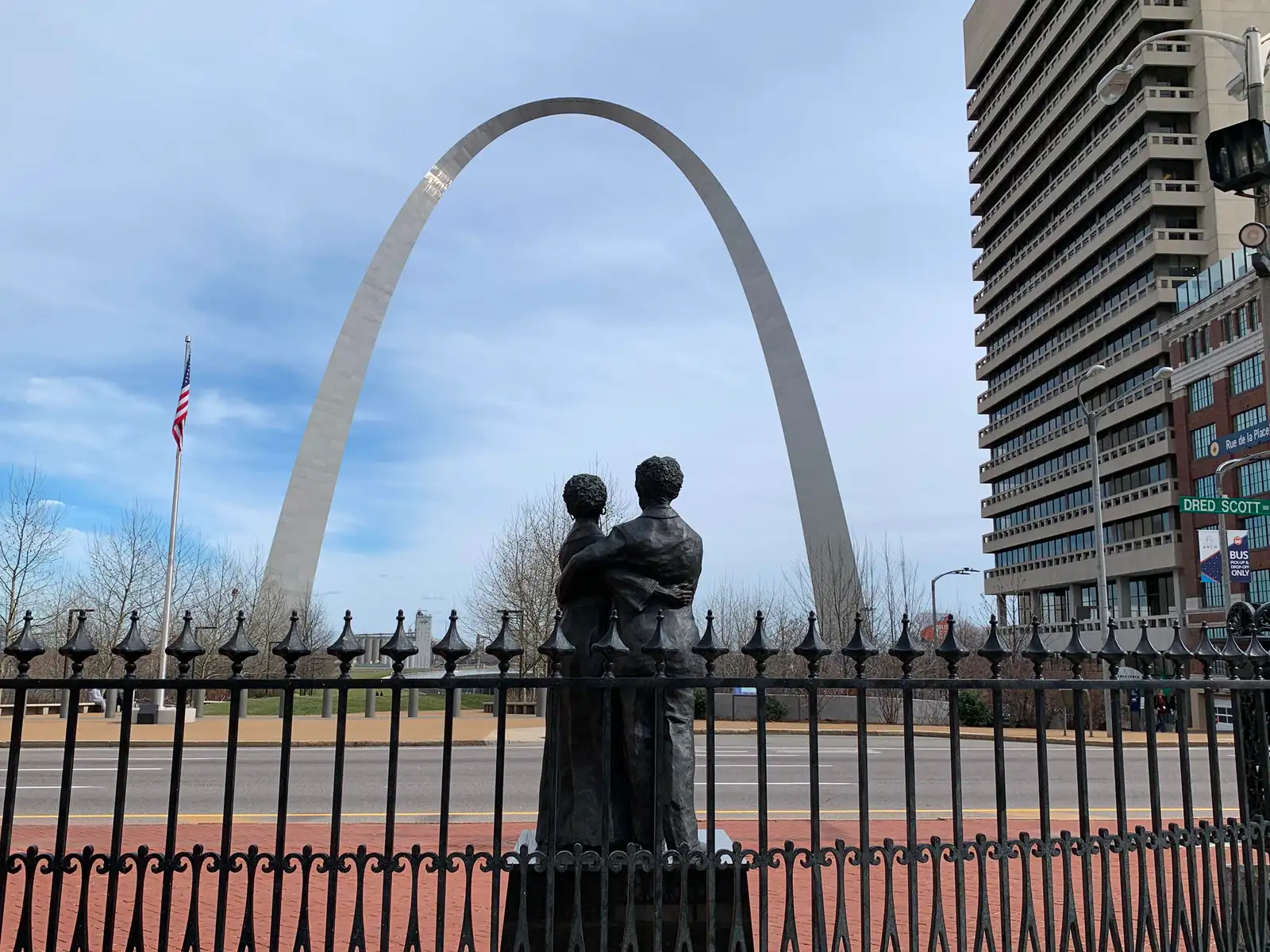
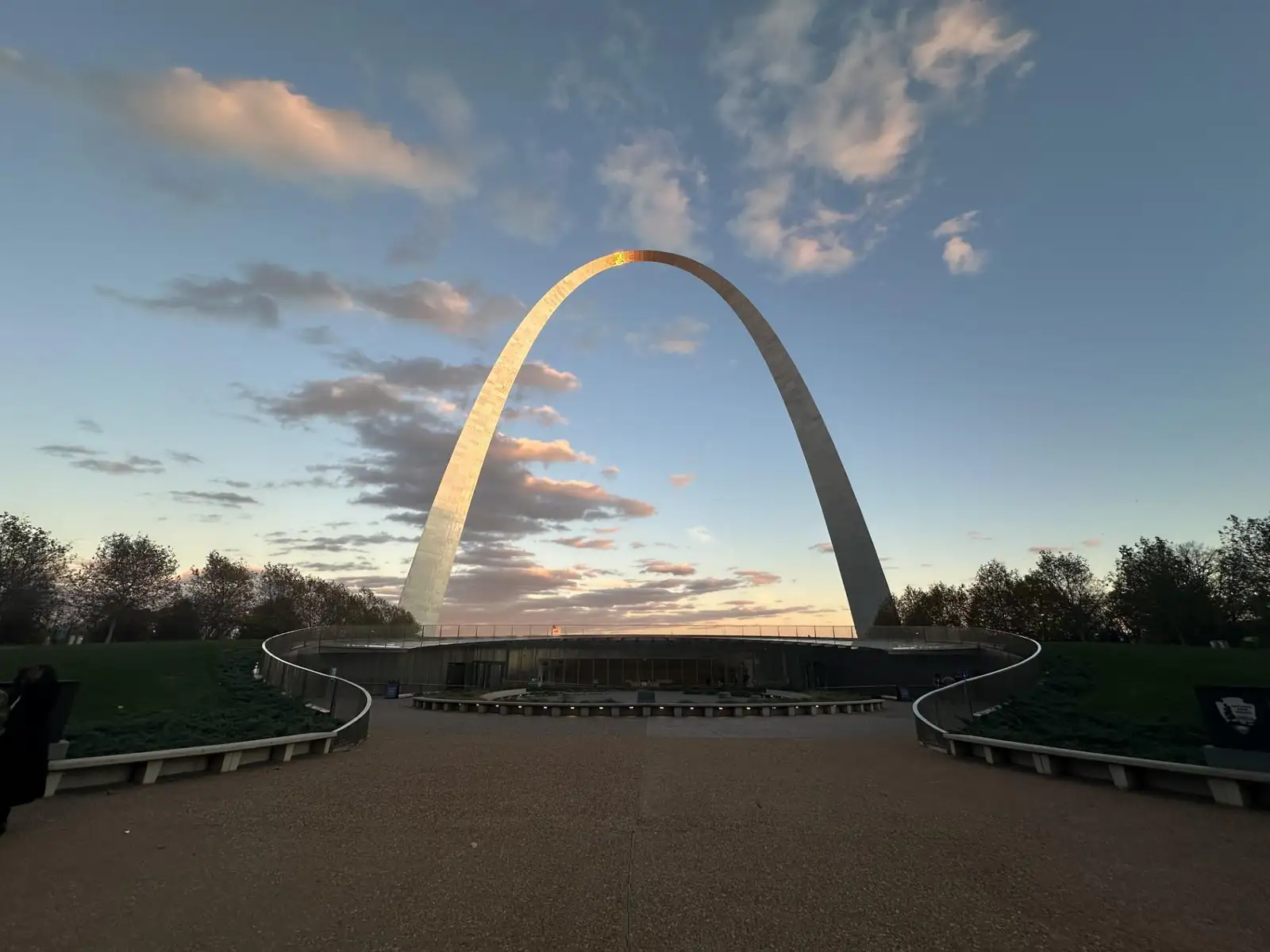
Gateway Arch is a national park set inside a working downtown. The stainless steel arch climbs 630 feet over the Mississippi, and most people come for the tram ride to the top. At ground level, though, the park is something quieter: landscaped grounds of lawn, tree-lined walks, and two ponds threaded by paved loops, a green break in the middle of St. Louis.
That contrast is what a park like this is really for. You step off a city block and onto grass, the river on one side and the skyline on the other. Guides and regular visitors point to the North Pond and South Pond loops, both under a mile, as the calmest stretches to walk when the plaza around the Arch is crowded.
The grounds stay open from early morning until late in the evening, long before and after the tram runs. That leaves plenty of hours when the lawns are open, the paths are near empty, and the loudest thing around is the river and the wind moving through the trees.
The science: In one experiment, students recovering from a stressful exam looked at photographs of eight kinds of landscape, and open fields and lawns produced the strongest systolic blood pressure recovery of the set. The Arch grounds are close to that on the ground: mown lawns opening around the ponds, the monument and sky overhead, and paved loops running between. It is a simple, open green space to walk through when the city has wound you tight.
Zheng, Fang, Zhang, Liu & Huang (2025) · PLOS ONE
Seasonal guide
Crowd levels use NPS monthly visitation, averaged 2015–2025. Excludes 2020 (COVID anomaly) and 2026 (partial year). Temperatures are NOAA climate normals from a station 4.1 miles away. Busy does not mean bad. If a peak month is your only window, the season notes below tell you how to work it.
December through February is the quietest window of the year, with January and February seeing the fewest visitors of any month. Highs sit in the low 40s and nights fall into the 20s, so bundle up for the walk to the tram, but you will rarely wait in line. Tram tickets are easiest to get now, and the grounds stay open even when the plaza is empty.
March and May draw steady crowds while April stays a touch calmer. Highs climb from the mid 50s into the mid 70s, and spring is the wettest stretch, with April and May each averaging close to five inches of rain, so pack a layer and watch the forecast. Weekday mornings beat weekend afternoons for a quieter walk on the grounds.
June through August is peak season, and July is the single busiest month of the year. Highs reach the upper 80s with high humidity, and the tram to the top sells out early on busy days, so reserve timed-entry tickets ahead and start in the morning before midday crowds and heat build. The shaded pond loops give you somewhere cooler to walk.
September stays busy, but October and November settle into some of the calmer months. Highs ease from the low 80s in September down into the 50s by November with plenty of sun, making it comfortable weather for walking the grounds. Weekdays are especially quiet once summer travel winds down.
This month in the park
Timing changes everything out here. Pick a month to see when the light turns golden, which nights stay darkest for stargazing, and what visitors have actually recorded in bloom and on the move. The new-moon night is the one to plan a sky-watching evening around.
January 2027
Wildlife on the move · 8 species on record
- Canada Goose 4 sightings
- Northern Cardinal 3 sightings
- Eastern Gray Squirrel 3 sightings
- Zebra Mussel 2 sightings
- Red-shouldered Hawk 1 sightings
February 2027
Wildlife on the move · 15 species on record
- Canada Goose 19 sightings
- Eastern Gray Squirrel 12 sightings
- Northern Cardinal 3 sightings
- Red-tailed Hawk 2 sightings
- House Finch 2 sightings
March 2027
In bloom · 2 species on record
- ❀ Grey Field-speedwell 2 sightings
- ❀ Shepherd's-purse 1 sightings
Wildlife on the move · 21 species on record
- American Robin 53 sightings
- Canada Goose 20 sightings
- Red-winged Blackbird 16 sightings
- Mallard 11 sightings
- Common Grackle 7 sightings
April 2027
In bloom · 2 species on record
- ❀ Bur Parsley 1 sightings
- ❀ Red deadnettle 1 sightings
Wildlife on the move · 63 species on record
- American Robin 38 sightings
- Red-winged Blackbird 22 sightings
- Canada Goose 16 sightings
- Mallard 13 sightings
- Asian Lady Beetle 12 sightings
May 2027
In bloom · 7 species on record
- ❀ Mock strawberry 2 sightings
- ❀ Dandelions 1 sightings
- ❀ Bur Parsley 1 sightings
- ❀ Catchweed bedstraw 1 sightings
- ❀ Henbit deadnettle 1 sightings
Wildlife on the move · 47 species on record
- American Robin 41 sightings
- Red-winged Blackbird 14 sightings
- European Starling 9 sightings
- Eastern Gray Squirrel 9 sightings
- Common Grackle 8 sightings
June 2027
In bloom · 2 species on record
- ❀ Lanceleaf frogfruit 1 sightings
- ❀ Black-eyed Susan 1 sightings
Wildlife on the move · 50 species on record
- American Robin 43 sightings
- Red-winged Blackbird 25 sightings
- Asian Lady Beetle 10 sightings
- Eastern Gray Squirrel 7 sightings
- Rock Pigeon 5 sightings
July 2026
In bloom · 2 species on record
- ❀ White clover 1 sightings
- ❀ Lanceleaf frogfruit 1 sightings
Wildlife on the move · 40 species on record
- American Robin 17 sightings
- Red-winged Blackbird 10 sightings
- Eastern Cottontail 6 sightings
- Eastern Gray Squirrel 6 sightings
- Brown-belted Bumble Bee 6 sightings
August 2026
Wildlife on the move · 91 species on record
- American Robin 13 sightings
- Monarch 13 sightings
- Common Eastern Bumble Bee 13 sightings
- Canada Goose 11 sightings
- Rock Pigeon 9 sightings
September 2026
Wildlife on the move · 110 species on record
- Western Honey Bee 29 sightings
- Monarch 20 sightings
- Eastern Gray Squirrel 15 sightings
- Common Eastern Bumble Bee 14 sightings
- Eastern Carpenter Bee 11 sightings
October 2026
Wildlife on the move · 54 species on record
- Western Honey Bee 44 sightings
- Eastern Gray Squirrel 18 sightings
- Tan Jumping Spider 8 sightings
- Canada Goose 7 sightings
- Common Eastern Bumble Bee 7 sightings
November 2026
Wildlife on the move · 11 species on record
- Canada Goose 5 sightings
- Virginia Opossum 2 sightings
- Groundhog 2 sightings
- Common Eastern Bumble Bee 2 sightings
- Northern Cardinal 1 sightings
December 2026
Wildlife on the move · 13 species on record
- Canada Goose 5 sightings
- Mallard 2 sightings
- Northern Cardinal 2 sightings
- American Robin 2 sightings
- Eastern Gray Squirrel 2 sightings
Sun and moon times are computed for the park's coordinates from standard NOAA solar equations and cross-checked against the U.S. Naval Observatory. Species lists are research-grade community observations for Gateway Arch National Park, MO, US via iNaturalist, retrieved July 2026; sighting counts are all-time records for that calendar month.
Don’t wait for Gateway Arch.
One big trip a year isn’t what changes how you feel — the small stuff in between is. The 7-Day Nature Reset is one tiny outdoor practice a day, wherever you already are. Day one takes 60 seconds.
No spam. No noise. Just nature.
Day 1 is landing in your inbox right now — go say hi.
Sleep nearby
Places to stay around St. Louis, Missouri. Pan the map to trade a shorter drive for a quieter night.
Camping inside the park books through Recreation.gov and is listed separately.
The map is provided by Stay22. If you book through it we may earn a commission at no cost to you, which helps keep Happier Outdoors running. It never changes what we recommend.
Activities & experiences
Beyond the trails
Ride the train and share St. Louis area history as a Trails & Rails guide.
Take the tram to the top of America's tallest monument. The ride is part of it, and the views up there are worth the trip.
Amtrak's Lincoln Service runs between St. Louis and Springfield. Ride along and pick up local history on the way.
The Junior Ranger program is built for kids ages 5 to 12, though anyone can join. It covers the people, places, and events of St. Louis history and 1800s westward expansion.
The Old Courthouse is one of the park's visitor centers.
Jay Tschetter's brick mural in the Tucker Theater honors the people behind the Arch. It uses 2,500 sculpted bricks to show a 13-foot steel Arch model, construction scenes, and national landmarks, with figures like Eero Saarinen and Luther Ely Smith. It was dedicated in 1998.
Details and current conditions live on nps.gov.
From the field

Common questions
When is the best time to visit Gateway Arch National Park?
December through February is the calmest time to visit, with January and February drawing the fewest visitors all year, while summer brings the biggest crowds and the warmest weather. Winter highs sit in the low 40s and summer highs reach the upper 80s, so pick your window by whether you prefer thin crowds or mild walking weather. Spring and fall split the difference with comfortable temperatures and steadier but manageable traffic.
Is Gateway Arch National Park dog-friendly?
Yes, leashed dogs are welcome across all the outdoor grounds. Leashes must be no longer than six feet, and pets are not allowed inside the Visitor Center, the museum, the Old Courthouse, the Arch Store, or on the tram ride to the top. Owners need to clean up after their dogs right away.
What is the quietest place to walk in the park?
Gateway Arch has no true hiking trails, so walking happens on paved paths, and visitors and local guides tend to point to the North Pond Loop and South Pond Loop as the calmest stretches. Both are under a mile and shaded by trees, and they draw fewer people than the busy plaza right around the Arch. Keep in mind these are still well-used summer pathways rather than remote trails.
How crowded does Gateway Arch National Park get?
The park sees about 2.4 million visitors a year and is busiest in July and August, with most arrivals bunching up at midday. The heaviest crowds concentrate at the Arch entrance plaza, the Visitor Center and museum, and the tram boarding area, where the tram to the top sells out early on busy days. The open grounds stay noticeably calmer than the monument interior.
Is Gateway Arch National Park accessible for wheelchairs and strollers?
The paved grounds paths are fully wheelchair accessible, and the Old Courthouse and museum offer ramps, an elevator, accessible exhibits, and free loaner wheelchairs. The tram ride to the top of the Arch is not accessible, however, since it involves 96 steps and does not allow wheelchairs, scooters, or strollers on the observation deck. The cobblestone levee parking is also not accessible due to its slope.
Where do you park at Gateway Arch National Park?
The park does not run its own parking, so visitors use nearby city garages or street parking. The Stadium East Parking Garage on South Broadway is the primary recommended option, and pre-purchasing ahead is strongly advised to lock in the rate, especially on Cardinals home game days. Oversize and RV vehicles can use the Old Cathedral lot or Lenore K. Sullivan Drive.
Do you need a ticket to visit the Gateway Arch?
Walking the park grounds is free and needs no reservation, but riding the tram to the top requires a timed-entry ticket booked online at GatewayArch.com. Adult tram tickets start around $15, with lower prices for children and park pass holders, and the experience runs about 45 to 60 minutes. The Arch is open daily except Thanksgiving, Christmas, and New Year's Day.