
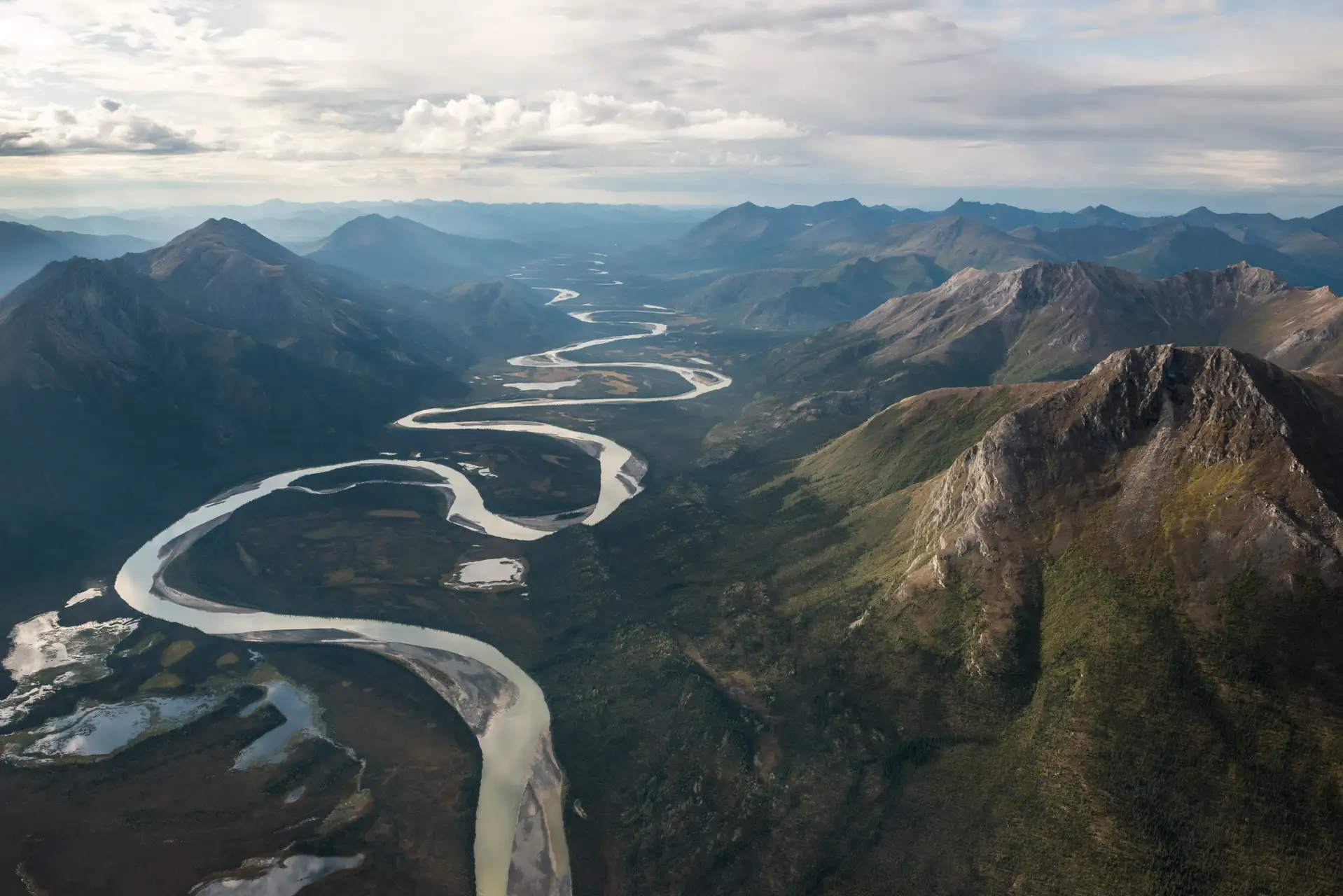
Gates Of The Arctic National Park & Preserve
Fairbanks, Alaska · Alaska
Days in, the noise clears
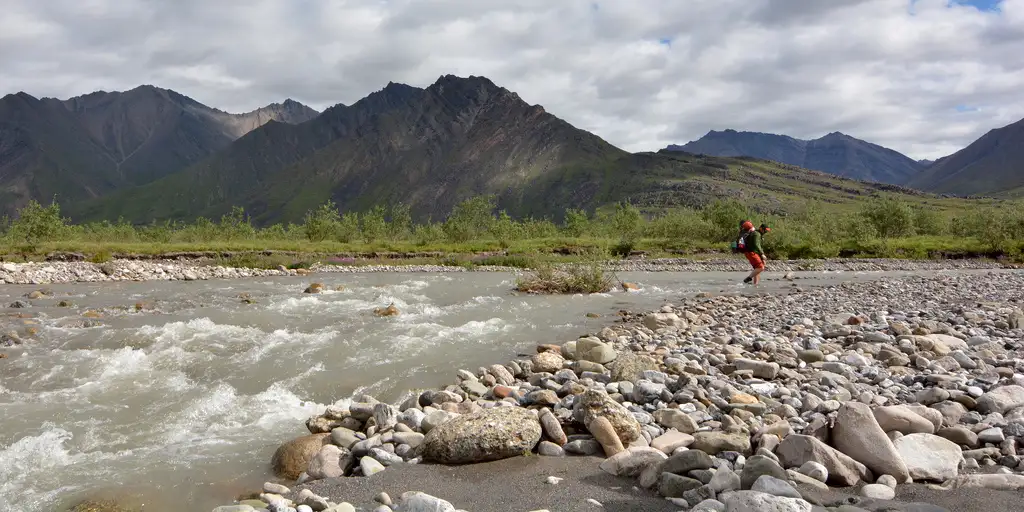
Gates of the Arctic has no roads and no maintained trails anywhere inside it. You reach it by small plane from Fairbanks or by walking in from the Dalton Highway, then you navigate across open tundra and ford rivers on your own read of the current. It is the least-visited national park in the country, with roughly 11,000 recorded visits in 2023, so going days without seeing another person is ordinary here.
That level of removal is the whole character of the place. There is no cell signal, no trail to follow, no schedule beyond daylight and weather. Wild rivers wind through glacier-carved valleys, and caribou move along migration routes older than any map.
None of this happens on a day trip. A visit here is measured in days, and that turns out to matter for what it does to a head that has been running hot.
The science: Researchers who tested backpackers on the fourth day of a device-free wilderness trip found they scored about 50% higher on a creative-reasoning task than backpackers tested before setting out. It was a slow build rather than a quick hit, and Gates of the Arctic is one of the very few places where a trip is measured in days rather than hours. You fly in, you cannot leave on a whim, and the reset has real time to take hold.
Atchley, Strayer & Atchley (2012) · PLOS ONE
Seasonal guide
Crowd levels use NPS monthly visitation, averaged 2015–2025. Excludes 2020 (COVID anomaly) and 2026 (partial year). Temperatures are NOAA climate normals from a nearby representative station. Busy does not mean bad. If a peak month is your only window, the season notes below tell you how to work it.
March highs sit in the mid-teens and rivers stay frozen, warming into the 50s by May as breakup begins. Snow lingers well into the shoulder and cold-weather skills still matter early on. Late spring pairs long daylight with far fewer people than summer, so it rewards well-prepared travelers who plan around river conditions.
Highs reach the upper 60s to low 70s in June and July, the rivers run free of ice, and nearly everyone who visits comes now. Mosquitoes are relentless and August is the wettest month at almost three inches, so bring serious bug protection and rain gear. Charter your air taxi well ahead, since this short window carries almost all the park's traffic.
September highs near 50 drop fast toward the upper 20s by October as the tundra turns color and the aurora returns to darkening skies. Freeze-up begins and flights thin out quickly. Go in early September for milder conditions and long views, and carry full cold-weather gear if you push into October.
This is extreme cold: January highs sit below zero with lows near minus 19, and the park is nearly empty. What you get in return is aurora overhead and solitude few places on earth can match. It demands real cold-weather expertise and proper gear, so travel with experienced guides and a solid plan.
This month in the park
Timing changes everything out here. Pick a month to see when the light turns golden, which nights stay darkest for stargazing, and what visitors have actually recorded in bloom and on the move. The new-moon night is the one to plan a sky-watching evening around.
January 2027
February 2027
March 2027
April 2027
May 2027
June 2027
July 2026
August 2026
September 2026
October 2026
November 2026
December 2026
Sun and moon times are computed for the park's coordinates from standard NOAA solar equations and cross-checked against the U.S. Naval Observatory. Species lists are research-grade community observations via iNaturalist, retrieved July 2026; sighting counts are all-time records for that calendar month.
Don’t wait for Gates Of The Arctic.
One big trip a year isn’t what changes how you feel — the small stuff in between is. The 7-Day Nature Reset is one tiny outdoor practice a day, wherever you already are. Day one takes 60 seconds.
No spam. No noise. Just nature.
Day 1 is landing in your inbox right now — go say hi.
Sleep nearby
Most visitors base in Fairbanks, Alaska, about 280 miles out. Fairbanks has far more rooms and better prices than any proximate community. Coldfoot is the closest Dalton Highway base for hiking and air taxis but has only limited lodging at Coldfoot Camp and nearby Wiseman. The map opens on Fairbanks, so pan toward the park to trade rooms and price for a shorter morning drive.
Camping inside the park books through Recreation.gov and is listed separately.
The map is provided by Stay22. If you book through it we may earn a commission at no cost to you, which helps keep Happier Outdoors running. It never changes what we recommend.
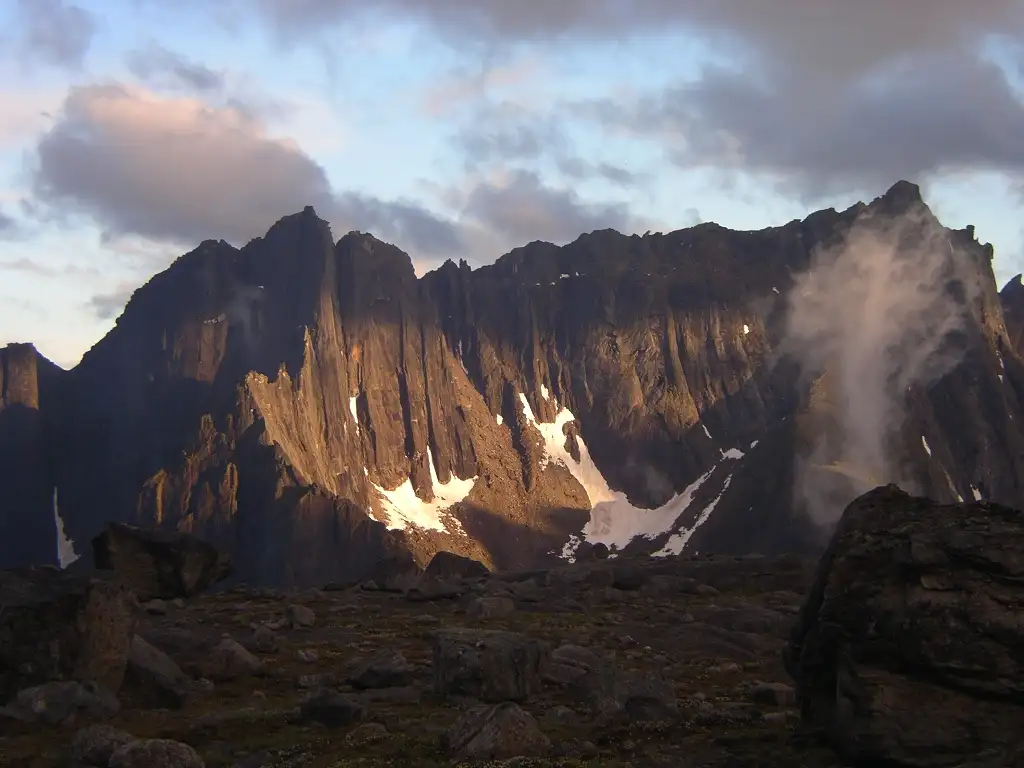
From the field

Common questions
When is the best time to visit Gates of the Arctic?
The main season runs mid-June through August, when the rivers are free of ice and nearly all visitors come. Summer highs sit in the upper 60s to low 70s, though mosquitoes are heavy and August is the wettest month. September adds fall color and returning aurora before deep cold sets in.
Is Gates of the Arctic dog-friendly?
Yes, leashed dogs are allowed throughout the park with no closed areas, on a leash no longer than six feet. They cannot be left unattended at public use cabins or shelters. Air taxi operators set their own pet rules, so confirm with your charter before you fly.
Is there an entrance fee?
There is no entrance fee for Gates of the Arctic. The park charges no admission and requires no timed-entry reservation to visit.
How crowded does Gates of the Arctic get?
Gates of the Arctic is the least-visited national park in the United States, with about 11,045 recreation visits in 2023. Most of that traffic lands between June and August, and it concentrates in just three areas: the Arrigetch Peaks, the Noatak River, and Chandler Lake.
Where are the quietest places to hike?
There are no trails at all in Gates of the Arctic, so travel is entirely off-trail across tundra and river crossings. For the most solitude, plan a route away from the Arrigetch Peaks, Noatak River, and Chandler Lake, where backcountry use concentrates.
Is Gates of the Arctic accessible for wheelchairs?
The park itself has no paved or accessible trails because it has no developed trails of any kind, and all terrain is natural tundra, bog, and river crossings. The Arctic Interagency Visitor Center in Coldfoot is ADA accessible with a ramp, accessible parking, and accessible restrooms.
Can you camp in Gates of the Arctic?
Yes, backcountry camping is open and requires no permit or reservation, and there are no developed campgrounds anywhere in the park. Choose a durable site, follow Leave No Trace, and attend the recommended backcountry orientation at a park visitor center before you head out.
Where do you park at Gates of the Arctic?
There is no parking inside the park because no roads enter it. Most visitors leave vehicles at the Arctic Interagency Visitor Center in Coldfoot or at the BLM Galbraith Lake campground, then charter a flight in.