
Everglades National Park
Homestead, Florida · Southeast
The loudest thing here is birdsong
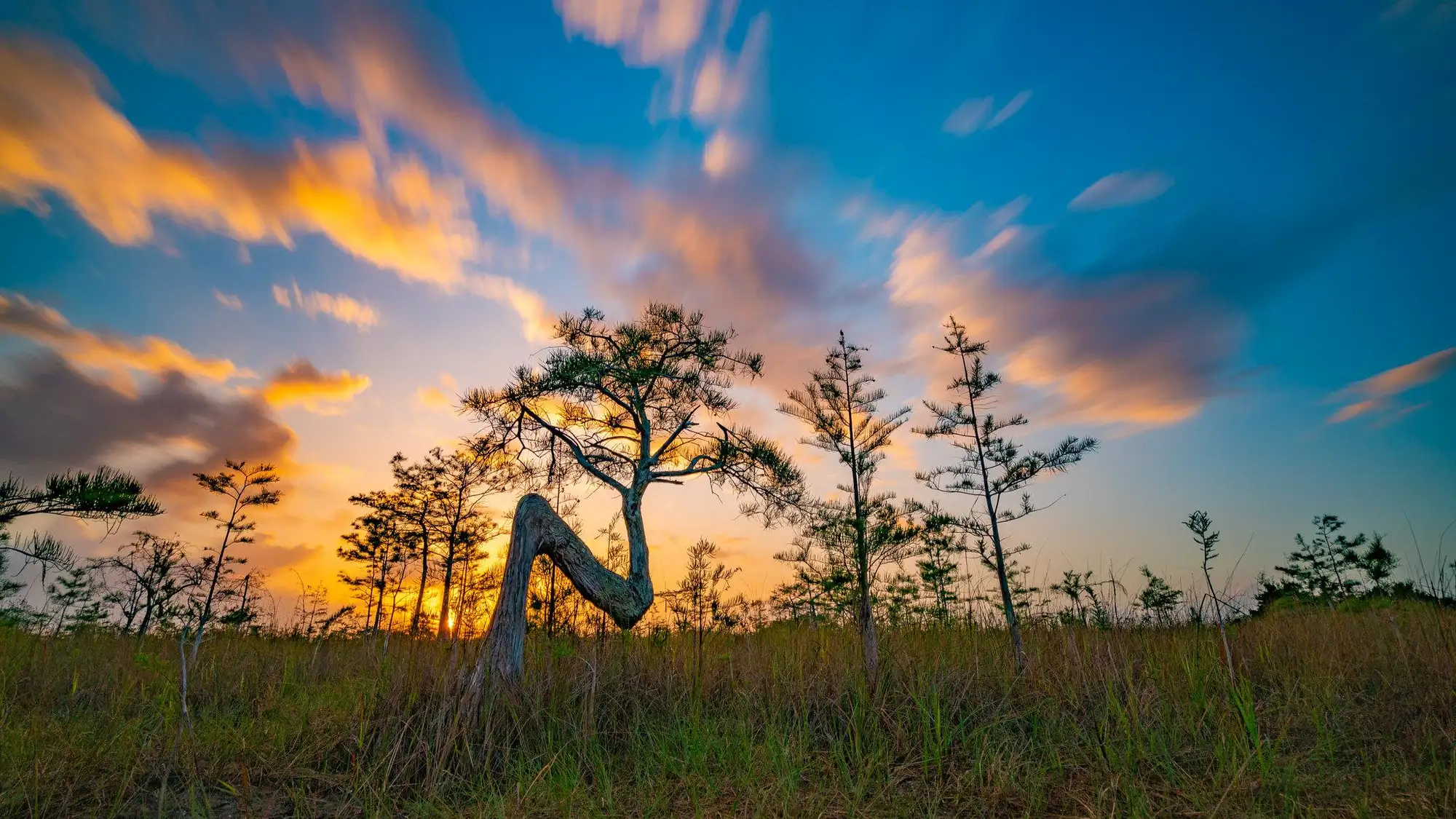
Everglades is flat, wide, and slow. It protects 1.5 million acres of wetland, forest, and marine habitat, and most of it is a shallow sheet of water inching south through sawgrass. There is no summit to climb toward and no dramatic wall to crane your neck at. There is just horizon, water, and the sound of a place that runs on its own time.
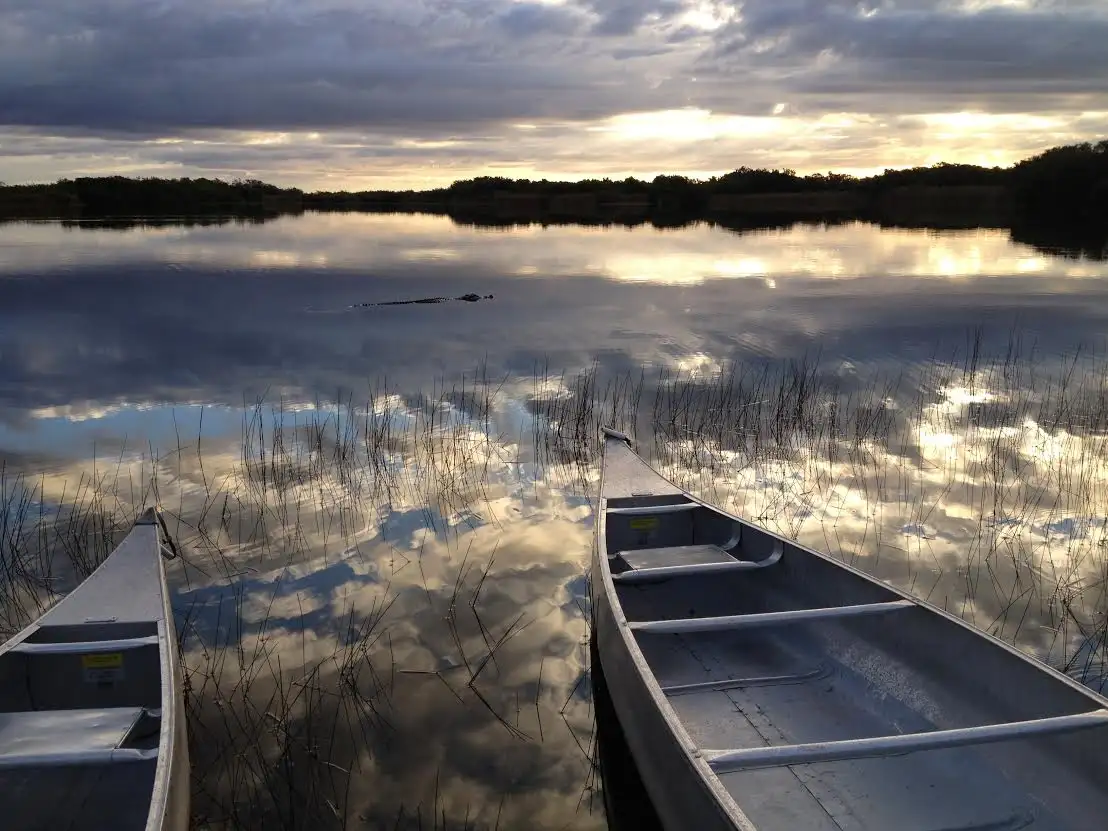
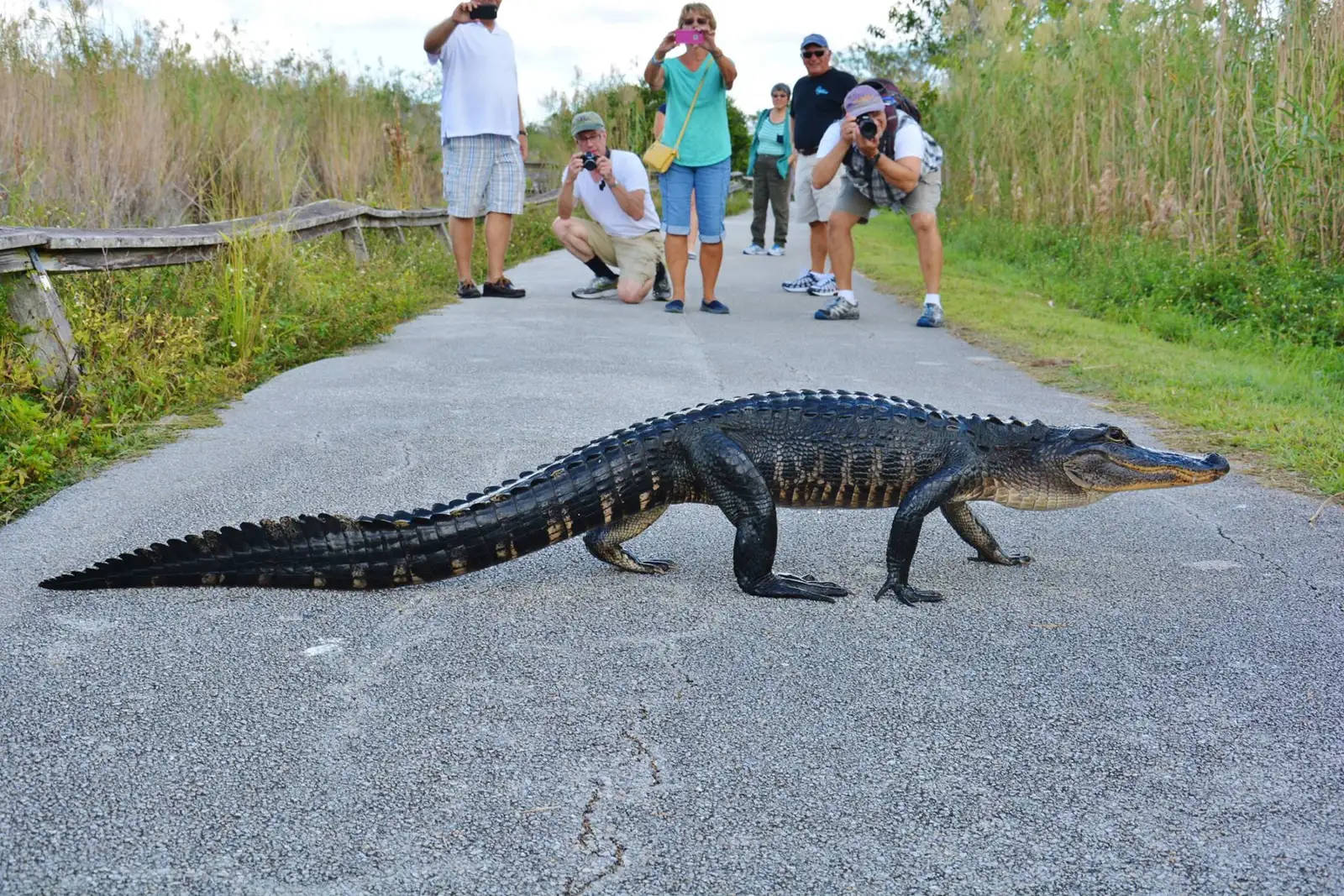
That sound is the thing. Away from the entrance crowds, the human racket drops out and the wetland fills the gap with wading birds, wind through grass, and water moving where you cannot quite see it. It was the first national park created for biodiversity rather than scenery, and that shows in what you hear as much as what you see. Alligators, herons, and mangrove tunnels reward the person willing to slow to the pace of the water.
You do not have to walk far to get inside it. A short boardwalk like the Anhinga Trail or a quiet loop through the pinelands puts you in the middle of the soundscape, where the job is simply to stand still and listen.
The science: Alvarsson and colleagues put people through a stress task and then played them either nature sounds or ordinary noise. The people who heard nature sounds, the kind of birdsong and moving water that fills the Everglades, recovered from the physiological stress response faster, measured through skin conductance. The soundscape itself is doing part of the work.
Alvarsson, Wiens & Nilsson (2010) · International Journal of Environmental Research and Public Health
Seasonal guide
Crowd levels use NPS monthly visitation, averaged 2015–2025. Excludes 2020 (COVID anomaly) and 2026 (partial year). Temperatures are NOAA climate normals from a station 16.1 miles away. Busy does not mean bad. If a peak month is your only window, the season notes below tell you how to work it.
This is the dry season and the busiest stretch, with mild highs near 76 to 78F, cool lows in the upper 50s to low 60s, and blessedly few mosquitoes. Wildlife concentrates around shrinking water holes, making it prime birding and gator viewing. Arrive before 10 a.m., visit on weekdays, and buy your entrance pass ahead to skip gate lines.
March stays peak-busy and dry before crowds thin through April and May, when highs climb from the low 80s into the upper 80s and afternoon rain and mosquitoes start returning. Early mornings are still pleasant and wildlife remains active near water. Start at dawn, carry bug protection by May, and enjoy the emptier trails as the season winds down.
Summer is hot, wet, and quiet, with highs around 89 to 90F, humid nights near 75F, mosquitoes at full force, and 6 to 7 inches of rain a month falling mostly in afternoon storms. This is a real window if it is the one you have. Get out at first light, bring serious insect repellent, plan around midday thunderstorms, and stick to boardwalks and short loops.
September and October are the quietest months of the year, still hot near 87 to 89F with the heaviest rain of the season, before November cools toward the low 80s and crowds begin to build. You will often have trails nearly to yourself. Time your visits for early morning, watch the radar for storms, and take November as the sweet spot when weather eases but crowds have not yet peaked.
This month in the park
Timing changes everything out here. Pick a month to see when the light turns golden, which nights stay darkest for stargazing, and what visitors have actually recorded in bloom and on the move. The new-moon night is the one to plan a sky-watching evening around.
January 2027
In bloom · 124 species on record
- ❀ Eastern Coral Bean 20 sightings
- ❀ Pineland Jacquemontia 19 sightings
- ❀ Southern Swamp Crinum 14 sightings
- ❀ Lanceleaf arrowhead 12 sightings
- ❀ Spurred Neottia 12 sightings
Wildlife on the move · 906 species on record
- American Alligator 902 sightings
- Anhinga 466 sightings
- Great Blue Heron 387 sightings
- Purple Gallinule 370 sightings
- American Crocodile 344 sightings
February 2027
In bloom · 149 species on record
- ❀ Eastern Coral Bean 28 sightings
- ❀ Bristle thistle 24 sightings
- ❀ Pineland Jacquemontia 22 sightings
- ❀ Cardinal airplant 18 sightings
- ❀ Pickerelweed 11 sightings
Wildlife on the move · 779 species on record
- American Alligator 958 sightings
- Anhinga 540 sightings
- Great Blue Heron 402 sightings
- Purple Gallinule 393 sightings
- Double-crested Cormorant 327 sightings
March 2027
In bloom · 125 species on record
- ❀ Tuberous Grasspink 41 sightings
- ❀ Cardinal airplant 35 sightings
- ❀ Eastern Coral Bean 25 sightings
- ❀ Bristle thistle 23 sightings
- ❀ Locustberry 21 sightings
Wildlife on the move · 934 species on record
- American Alligator 1200 sightings
- Anhinga 723 sightings
- Great Blue Heron 575 sightings
- American Crocodile 499 sightings
- Brown Anole 460 sightings
April 2027
In bloom · 110 species on record
- ❀ Locustberry 33 sightings
- ❀ Tuberous Grasspink 28 sightings
- ❀ Cardinal airplant 22 sightings
- ❀ Spotted mule-ear orchid 19 sightings
- ❀ Fewflower milkweed 15 sightings
Wildlife on the move · 989 species on record
- American Alligator 816 sightings
- Anhinga 423 sightings
- Eastern Lubber Grasshopper 329 sightings
- Great Blue Heron 269 sightings
- Brown Anole 253 sightings
May 2027
In bloom · 132 species on record
- ❀ Cardinal airplant 11 sightings
- ❀ Tuberous Grasspink 11 sightings
- ❀ Fewflower milkweed 10 sightings
- ❀ West Indian Lilac 10 sightings
- ❀ Flor de Pasmo 8 sightings
Wildlife on the move · 717 species on record
- Eastern Lubber Grasshopper 416 sightings
- American Alligator 387 sightings
- Great Blue Heron 186 sightings
- Anhinga 180 sightings
- Florida Softshell Turtle 170 sightings
June 2027
In bloom · 61 species on record
- ❀ West Indian Lilac 13 sightings
- ❀ Florida butterfly orchid 9 sightings
- ❀ Fewflower milkweed 4 sightings
- ❀ Rough Velvetseed 4 sightings
- ❀ Buttonbush 3 sightings
Wildlife on the move · 622 species on record
- Eastern Lubber Grasshopper 339 sightings
- American Alligator 237 sightings
- Florida Cottonmouth 190 sightings
- American Crocodile 124 sightings
- Anhinga 117 sightings
July 2026
In bloom · 66 species on record
- ❀ Florida butterfly orchid 9 sightings
- ❀ West Indian Lilac 8 sightings
- ❀ Saltmarsh Morning-glory 5 sightings
- ❀ Balbis' airplant 4 sightings
- ❀ Musky mint 3 sightings
Wildlife on the move · 593 species on record
- Eastern Lubber Grasshopper 238 sightings
- American Alligator 174 sightings
- American Crocodile 103 sightings
- Brown Anole 91 sightings
- Florida Cottonmouth 89 sightings
August 2026
In bloom · 31 species on record
- ❀ Everglades Water-willow 4 sightings
- ❀ Dollar Orchid 3 sightings
- ❀ Mangrovevine 2 sightings
- ❀ Catchfly prairie gentian 1 sightings
- ❀ Hairy groundcherry 1 sightings
Wildlife on the move · 588 species on record
- Eastern Lubber Grasshopper 208 sightings
- American Alligator 125 sightings
- Brown Anole 82 sightings
- Florida Cottonmouth 82 sightings
- American Crocodile 74 sightings
September 2026
In bloom · 63 species on record
- ❀ Dollar Orchid 9 sightings
- ❀ Yellow helmet orchid 6 sightings
- ❀ Musky mint 4 sightings
- ❀ Wedge sandmat 4 sightings
- ❀ Pickerelweed 3 sightings
Wildlife on the move · 506 species on record
- American Alligator 111 sightings
- Eastern Lubber Grasshopper 104 sightings
- Florida Cottonmouth 81 sightings
- Florida Tree Snail 80 sightings
- Brown Anole 75 sightings
October 2026
In bloom · 48 species on record
- ❀ Pineland Jacquemontia 5 sightings
- ❀ Everglades Water-willow 5 sightings
- ❀ Wedge sandmat 5 sightings
- ❀ Longhorn bog orchid 3 sightings
- ❀ Butterfly pea 3 sightings
Wildlife on the move · 500 species on record
- American Alligator 197 sightings
- Eastern Lubber Grasshopper 123 sightings
- Florida Cottonmouth 113 sightings
- Halloween Pennant 102 sightings
- Red-shouldered Hawk 83 sightings
November 2026
In bloom · 134 species on record
- ❀ Musky mint 9 sightings
- ❀ Pickerelweed 8 sightings
- ❀ Marlberry 6 sightings
- ❀ Christmas berry 6 sightings
- ❀ Two-Keeled Hooded Orchid 6 sightings
Wildlife on the move · 890 species on record
- American Alligator 521 sightings
- Anhinga 278 sightings
- Great Blue Heron 252 sightings
- American Crocodile 248 sightings
- Great Egret 247 sightings
December 2026
In bloom · 131 species on record
- ❀ Southern Swamp Crinum 18 sightings
- ❀ Pineland Jacquemontia 12 sightings
- ❀ Musky mint 11 sightings
- ❀ Pickerelweed 10 sightings
- ❀ Chinese Crown Orchid 10 sightings
Wildlife on the move · 810 species on record
- American Alligator 775 sightings
- Anhinga 401 sightings
- Great Blue Heron 322 sightings
- American Crocodile 308 sightings
- Purple Gallinule 297 sightings
Sun and moon times are computed for the park's coordinates from standard NOAA solar equations and cross-checked against the U.S. Naval Observatory. Species lists are research-grade community observations for Everglades National Park, US, FL via iNaturalist, retrieved July 2026; sighting counts are all-time records for that calendar month.
Don’t wait for Everglades.
One big trip a year isn’t what changes how you feel — the small stuff in between is. The 7-Day Nature Reset is one tiny outdoor practice a day, wherever you already are. Day one takes 60 seconds.
No spam. No noise. Just nature.
Day 1 is landing in your inbox right now — go say hi.
Sleep nearby
Most visitors base in Florida City, FL, about 11 miles out. Florida City is the primary southern hub with far more affordable motel rooms than Homestead. Homestead sits closer to the main entrance but has fewer lodging options. The map opens on Florida City, so pan toward the park to trade rooms and price for a shorter morning drive.
Camping inside the park books through Recreation.gov and is listed separately.
The map is provided by Stay22. If you book through it we may earn a commission at no cost to you, which helps keep Happier Outdoors running. It never changes what we recommend.
Let someone else lead
A guide is worth it when the terrain needs one, or when you would rather look around than navigate. These are the highest-rated trips running around Everglades, not the cheapest.
 Free cancellation
 Everglades National Park Naturalist Led Hike, 2 Boat Trips + More
- Runs year-round
- Up to 14 per booking
- Wheelchair accessible
 Free cancellation
 Half-day Everglades National Park Tour and 1-Hour Air Boat Ride
- Runs year-round
- Up to 15 per booking
- Wheelchair accessible
 Free cancellation
 Everglades National Park Biologist Led Adventure: Cruise, Hike + Airboat
- Runs year-round
- Up to 15 per booking
- Wheelchair accessible
 Free cancellation
 Everglades Guided Kayak Tour
- Runs year-round
- Up to 10 per booking
- Service animals welcome
Tours are listed by Viator; booking happens there. If you book we may earn a commission at no cost to you, which helps keep Happier Outdoors running. It never changes what we list. Prices checked September 2026 and can change.
Activities & experiences
Beyond the trails
Flamingo is good for birding along its trails and around the visitor center and marina. Mangrove and coastal prairie habitats draw wading birds, shorebirds, and waterbirds all year. Watch the shoreline too, where crocodiles and manatees sometimes appear.
You can walk Snake Bight Trail any time of year, but winter is easiest, when mosquitoes thin out. It reaches coastal habitats where you might spot Reddish Egret, along with Greater Yellowlegs, Black-necked Stilt, Black-bellied Plover, and various sandpipers. Shorebirds are easiest to see at high tide, when water pushes them off the mudflats.
A good first stop, the Anhinga Trail gives you a quick sample of wetland life: alligators, turtles, fish, plants, and birds. It runs three-quarters of a mile on paved path and boardwalk.
See the Ten Thousand Islands by boat on a tour across Chokoloskee Bay.
Water excursions launch from Flamingo. Whitewater Bay and Florida Bay hold plenty of wildlife and reach parts of the Everglades you can only get to by boat.
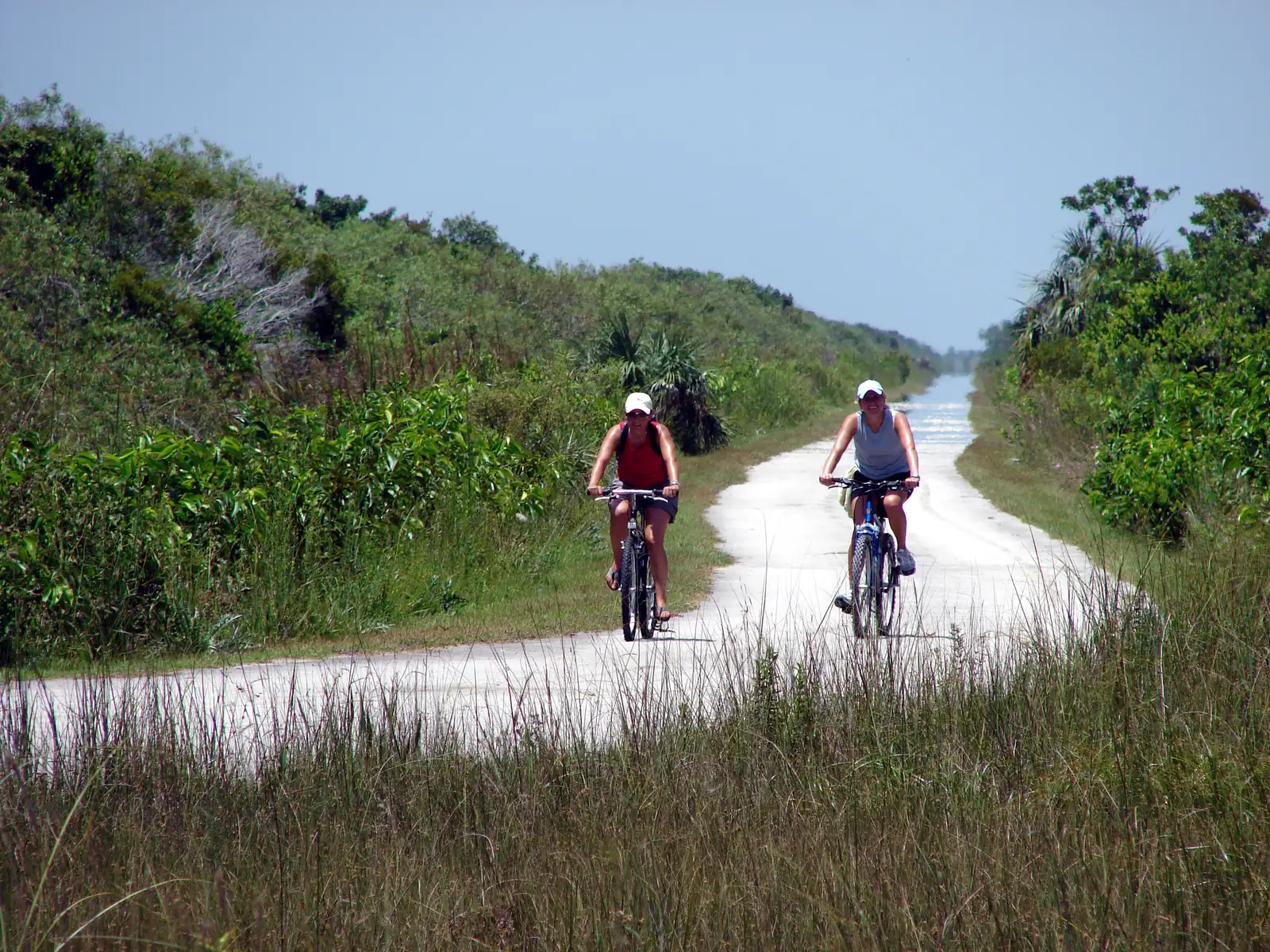
Ride the 15-mile (24 km) Shark Valley Tram Road through the Everglades. It carries you past wide-ranging wildlife and freshwater ecosystems for a different view of the landscape.
Details and current conditions live on nps.gov.
From the field
Common questions
When is the best time to visit Everglades National Park?
The dry season, December through April, brings the most comfortable weather with highs around 76 to 84F, far fewer mosquitoes, and concentrated wildlife, though it is also the busiest and most crowded stretch. The wet season from mid-May to November is hot and humid with heavy afternoon rain and heavy mosquitoes, but it is much quieter and early mornings are still workable.
Is Everglades National Park dog-friendly?
Leashed dogs are allowed only in limited developed areas and are prohibited on all hiking trails. Pets on a 6-foot leash are permitted in parking lots, frontcountry campgrounds, picnic areas, roadways, maintained grounds, and aboard boats, but not on trails, beaches, backcountry sites, or shuttles and boat tours. The park warns that pets left in prohibited areas face real danger from alligators and crocodiles.
What is the quietest trail in Everglades National Park?
The Pinelands, Gumbo Limbo, and Rowdy Bend trails are consistently pointed to as the least crowded. The Pinelands Trail is a short loop through rare pine rocklands near the Ernest Coe entrance, Gumbo Limbo is a paved half-mile through tropical hammock at Royal Palm, and Rowdy Bend tunnels through buttonwood and mangroves near Flamingo. Most visitors miss them because they head straight for the Anhinga Trail and Shark Valley.
How crowded does Everglades National Park get?
The park draws roughly 1.2 million visitors a year, with crowds concentrating heavily in the dry season from December through April. Peak months are January through March, when parking lots at Homestead and Shark Valley can fill by 10 a.m. on winter weekends. Visitation drops sharply in the wet season, with September the quietest month of all.
Is Everglades National Park accessible for wheelchairs?
Yes, the park offers several paved or boardwalk trails and fully accessible visitor centers. Wheelchair-friendly routes include the Anhinga, Gumbo Limbo, Pineland, Mahogany Hammock, and West Lake trails, plus the Pa-hay-okee Overlook and the Bobcat Boardwalk at Shark Valley. All visitor centers have automatic doors, van parking, and Braille and tactile displays, and the Shark Valley tram and Flamingo boat tours offer assistive listening devices, though many backcountry trails and wilderness sites remain inaccessible.
Can you camp at Everglades National Park?
Yes, the park has two drive-up campgrounds plus extensive backcountry wilderness camping. Long Pine Key has 108 first-come sites, and Flamingo has more than 230 sites including electric hookups, walk-in sites, and seasonal eco-tents. Backcountry chickees, ground sites, and beach sites require a permit year-round.
Where do you park at Everglades National Park?
Parking is at the separate entrance visitor centers, Ernest Coe near Homestead, Shark Valley, and Gulf Coast in Everglades City, plus Flamingo at the end of Main Park Road. Lots often fill by 10 a.m. on busy winter weekends, so arrive early and consider weekdays. There is no public transportation or connecting road between entrances, and ride services often cannot provide return trips because of the remoteness.