
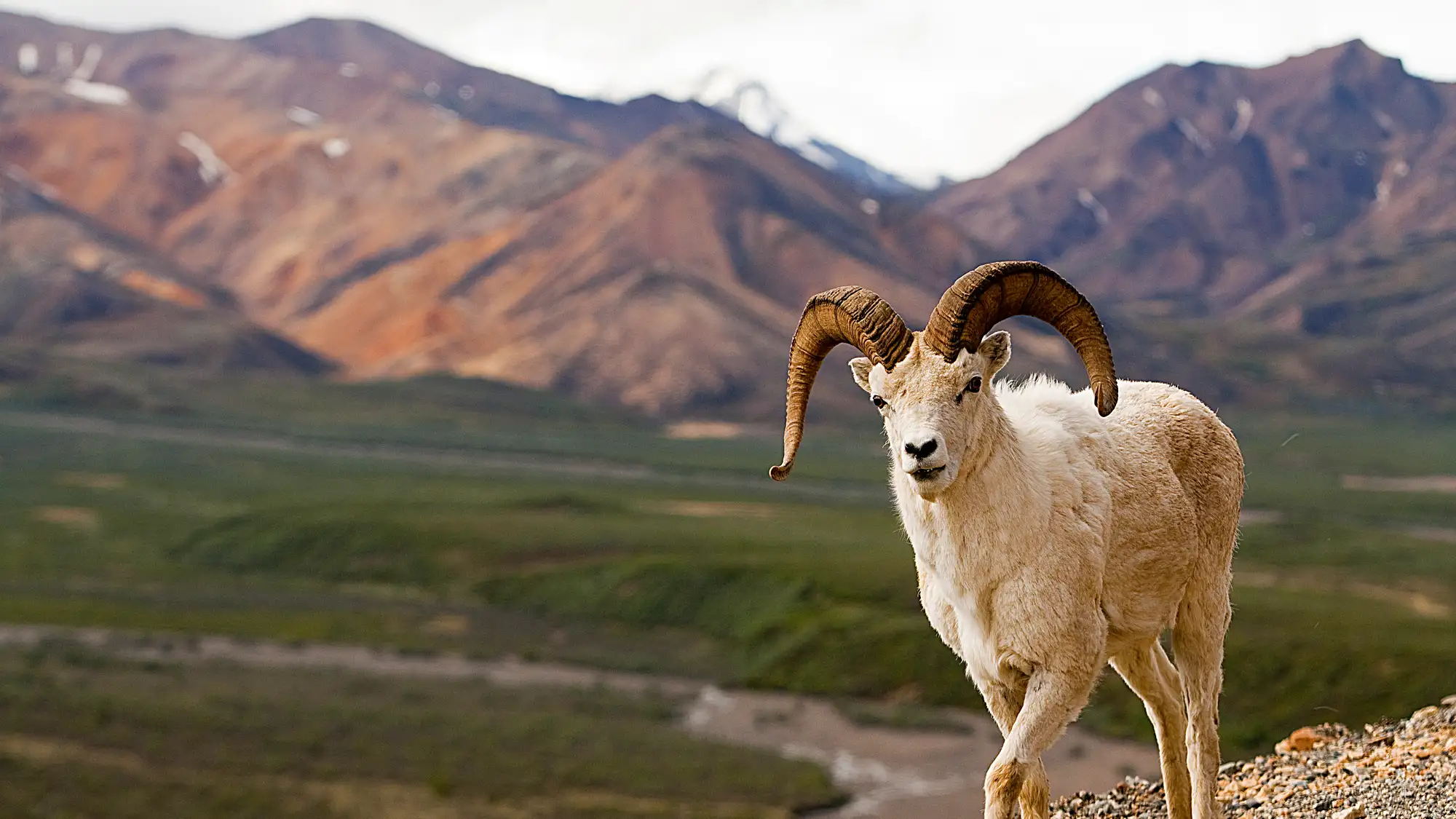
Denali National Park & Preserve
Denali Park, Alaska · Alaska
One road into six million acres
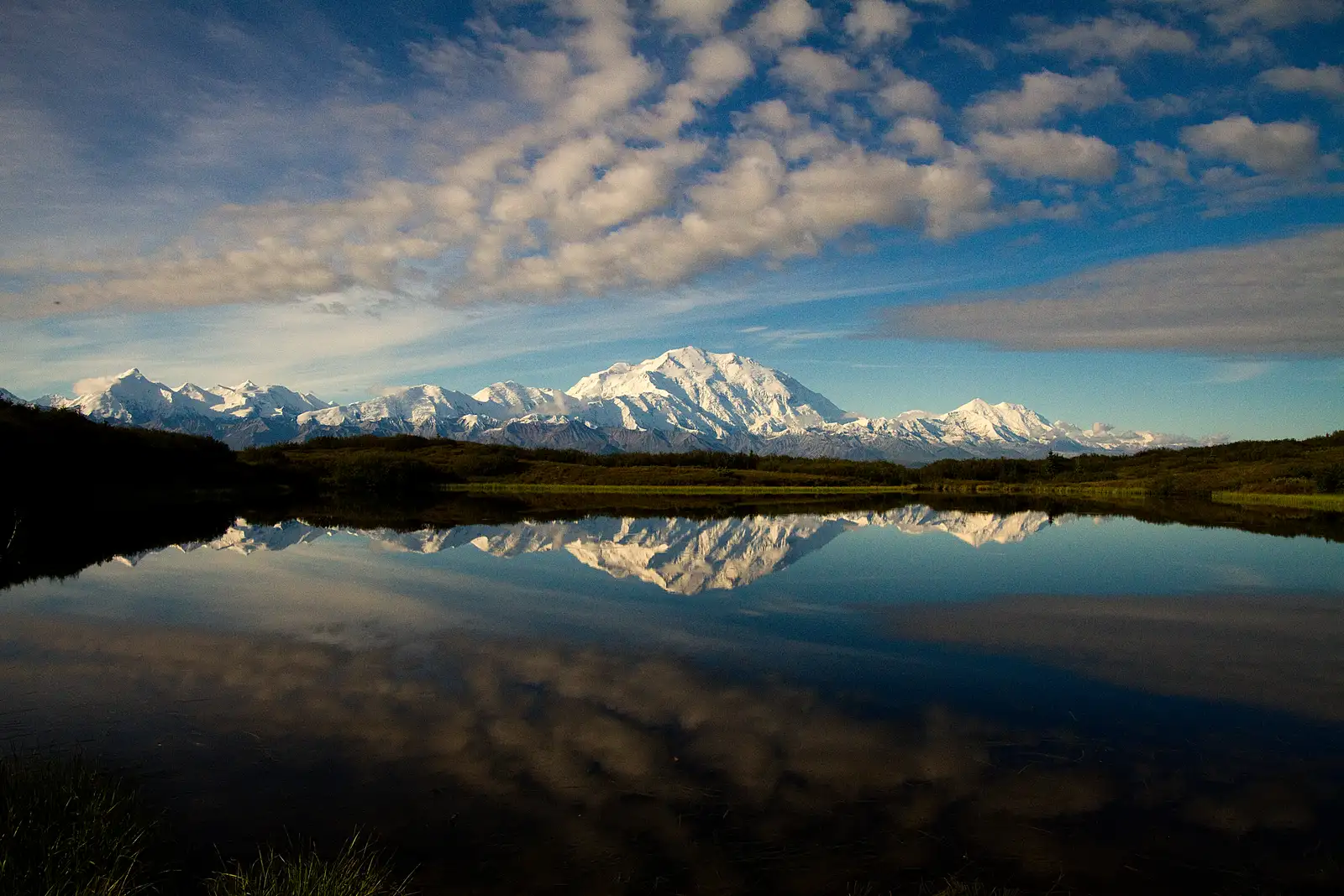
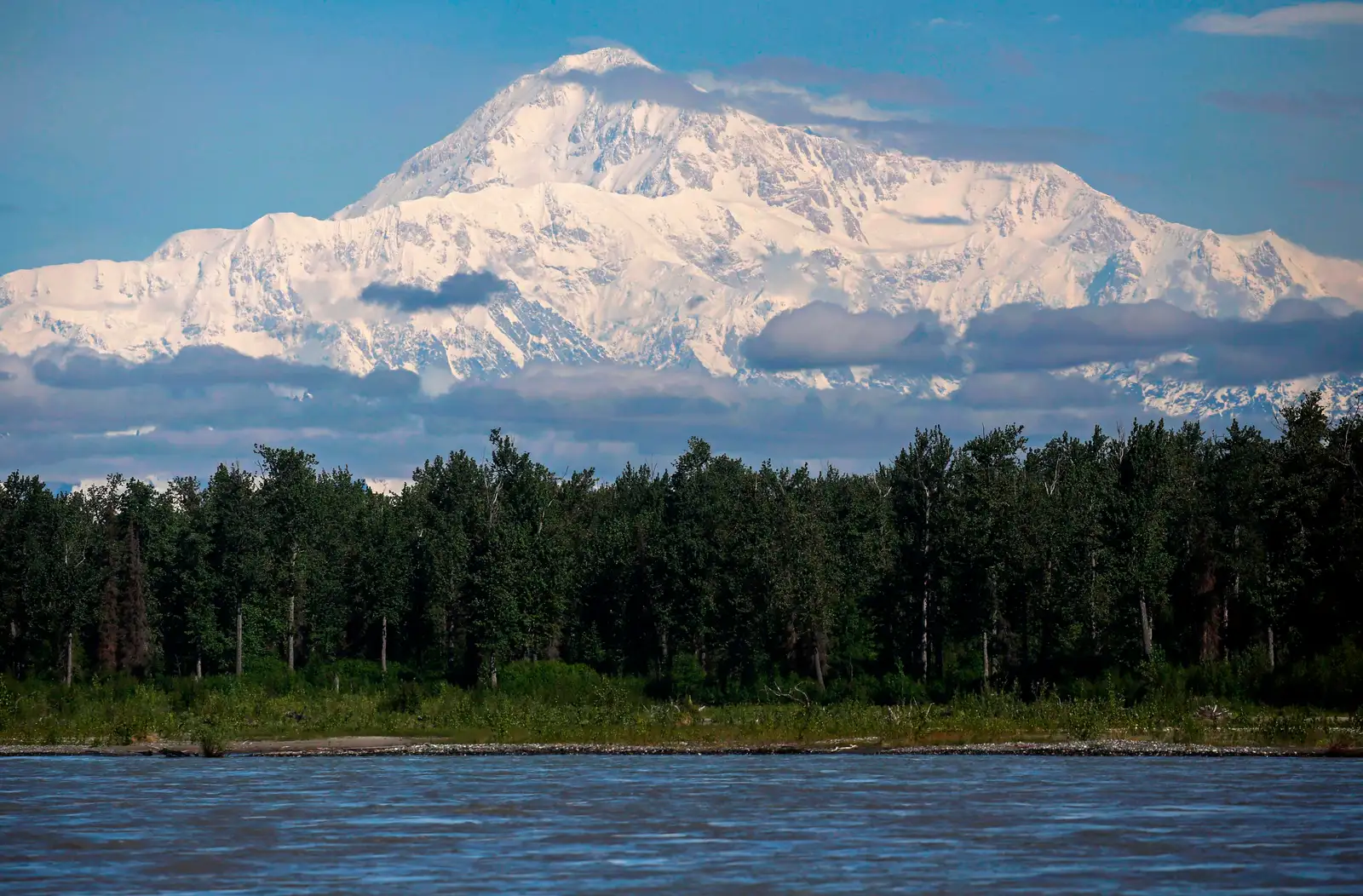
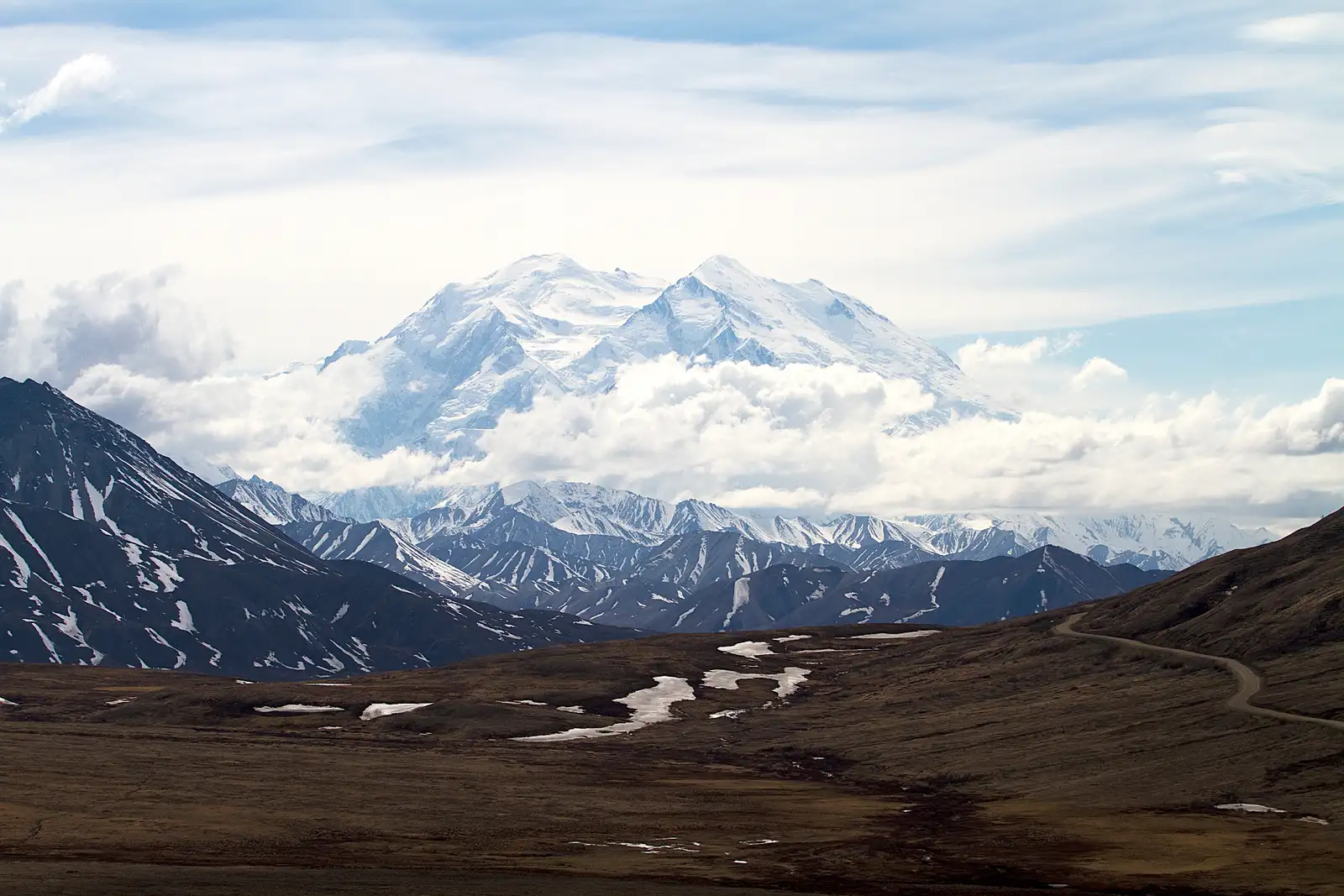
Denali is six million acres of wild land with a single road running through it, and most of that road is closed to your car. Private vehicles turn around at Mile 15, at Savage River. Past that you ride a bus deeper in, watching low taiga forest give way to open alpine tundra and, on a clear day, the 20,310-foot bulk of Mount McKinley. Handing over the driving is the first thing the park quietly takes off your plate.
The land here is unfenced and mostly trailless. Wildlife moves across it on its own terms, and beyond the visitor center and Savage River the vast majority of the park stays genuinely empty. Solitude is not a bonus feature at Denali. It is the default condition of almost everywhere you can go.
That emptiness is the whole point. When there is nothing to manage, nothing to steer, and nothing pulling for your attention, the mind gets room it rarely gets at home. The park does the subtracting for you.
The science: Researchers Atchley and colleagues gave backpackers a creative-reasoning test on the fourth day of a device-free wilderness trip and found scores roughly 50% higher than in backpackers tested just before setting out. Denali is built for exactly that kind of unplugging: six million acres with almost no maintained trails, one road most visitors ride rather than drive, and huge backcountry you enter on foot with a free permit. The authors point to soft fascination and the removal of constant technological demand as the mechanism, while being honest that their design cannot fully separate that from the exercise and novelty of the trip.
Atchley, Strayer & Atchley (2012) · PLOS ONE
Seasonal guide
Crowd levels use NPS monthly visitation, averaged 2015–2025. Excludes 2020 (COVID anomaly) and 2026 (partial year). Temperatures are NOAA climate normals from a station 12 miles away. Busy does not mean bad. If a peak month is your only window, the season notes below tell you how to work it.
Spring is short and cold, with April highs near 38F and May climbing to the low 50s, and nights still dipping below freezing. Snow lingers and the road and services only ramp up toward mid-May. Come now for a quieter shoulder season, pack real cold-weather layers, and check what is open before you rely on it.
Summer brings the park's fullest access and its biggest crowds, with cool, wet days, highs in the upper 50s to low 60s, and July the wettest month at over five inches of rain. Snow can fall any month, so pack warm rain gear even in July. Reserve bus tickets and campsites well ahead, start early to beat the shuttle rush, and head past Mile 13 where most people never go.
Fall color sweeps the tundra and then the valleys in early September, when highs sit near 50F before October drops them to freezing. Crowds thin quickly and services begin winding down by mid-September. Time a visit to early September for peak color with the road still running, and carry insulated layers as the light and warmth fade fast.
Winter is deeply cold and deeply quiet, with highs in the teens to mid-20s and January lows that can plunge toward -40F. This is the season for aurora, dog sledding, snowshoeing, and free camping with a permit, though services are minimal and only the entrance area is easily reached. Dress for extreme cold, keep plans flexible, and treat the solitude as the reward.
This month in the park
Timing changes everything out here. Pick a month to see when the light turns golden, which nights stay darkest for stargazing, and what visitors have actually recorded in bloom and on the move. The new-moon night is the one to plan a sky-watching evening around.
January 2027
February 2027
March 2027
Wildlife on the move · 4 species on record
- Willow Ptarmigan 1 sightings
- Canada Jay 1 sightings
- Great Horned Owl 1 sightings
- Black-billed Magpie 1 sightings
April 2027
Wildlife on the move · 5 species on record
- Willow Ptarmigan 2 sightings
- Gyrfalcon 1 sightings
- Bald Eagle 1 sightings
- Snowshoe Hare 1 sightings
- Moose 1 sightings
May 2027
In bloom · 7 species on record
- ❀ Alpine azalea 4 sightings
- ❀ Arctic Butterbur 2 sightings
- ❀ Prairie pasqueflower 2 sightings
- ❀ Few-flower Corydalis 1 sightings
- ❀ Lapland Azalea 1 sightings
Wildlife on the move · 62 species on record
- Willow Ptarmigan 30 sightings
- Caribou 23 sightings
- Moose 18 sightings
- Thinhorn Sheep 14 sightings
- Brown Bear 9 sightings
June 2027
In bloom · 18 species on record
- ❀ Dwarf Fireweed 7 sightings
- ❀ Alpine azalea 5 sightings
- ❀ Arctic Butterbur 2 sightings
- ❀ Few-flower Corydalis 2 sightings
- ❀ Canadian bunchberry 1 sightings
Wildlife on the move · 99 species on record
- Caribou 70 sightings
- Brown Bear 60 sightings
- Moose 53 sightings
- Thinhorn Sheep 43 sightings
- Arctic Ground Squirrel 37 sightings
July 2026
In bloom · 28 species on record
- ❀ Marsh grass-of-Parnassus 9 sightings
- ❀ Fireweed 4 sightings
- ❀ Dwarf Fireweed 4 sightings
- ❀ Larkspurleaf Monkshood 3 sightings
- ❀ Pygmy gentian 3 sightings
Wildlife on the move · 100 species on record
- Caribou 64 sightings
- Brown Bear 56 sightings
- Moose 53 sightings
- Arctic Ground Squirrel 44 sightings
- Willow Ptarmigan 34 sightings
August 2026
In bloom · 13 species on record
- ❀ Marsh grass-of-Parnassus 4 sightings
- ❀ Fireweed 3 sightings
- ❀ Mountain Harebell 2 sightings
- ❀ Woolly cranesbill 1 sightings
- ❀ Larkspurleaf Monkshood 1 sightings
Wildlife on the move · 107 species on record
- Caribou 58 sightings
- Brown Bear 51 sightings
- Moose 48 sightings
- Arctic Ground Squirrel 34 sightings
- Willow Ptarmigan 31 sightings
September 2026
In bloom · 5 species on record
- ❀ Marsh grass-of-Parnassus 1 sightings
- ❀ Northern goldenrod 1 sightings
- ❀ Northern Larkspur 1 sightings
- ❀ Alaskan pincushion plant 1 sightings
- ❀ Alpine azalea 1 sightings
Wildlife on the move · 30 species on record
- Brown Bear 28 sightings
- Moose 21 sightings
- Caribou 16 sightings
- Thinhorn Sheep 14 sightings
- Arctic Ground Squirrel 11 sightings
October 2026
Wildlife on the move · 2 species on record
- Thinhorn Sheep 1 sightings
- American Goshawk 1 sightings
November 2026
December 2026
Sun and moon times are computed for the park's coordinates from standard NOAA solar equations and cross-checked against the U.S. Naval Observatory. Species lists are research-grade community observations via iNaturalist, retrieved July 2026; sighting counts are all-time records for that calendar month.
Don’t wait for Denali.
One big trip a year isn’t what changes how you feel — the small stuff in between is. The 7-Day Nature Reset is one tiny outdoor practice a day, wherever you already are. Day one takes 60 seconds.
No spam. No noise. Just nature.
Day 1 is landing in your inbox right now — go say hi.
Let someone else lead
A guide is worth it when the terrain needs one, or when you would rather look around than navigate. These are the highest-rated trips running around Denali, not the cheapest.
 Free cancellation
 Denali Park Nature Walk (3 Hours) w/Expert Naturalist
- Runs May–Sep
- Up to 12 per booking
- Service animals welcome
 Free cancellation
 Denali Off-Trail Hiking Adventure (4 Hours) w/Expert Naturalist
- Runs Jun–Sep
- Up to 12 per booking
- Service animals welcome
 Free cancellation
 Denali Alaska Range 5hr Mountain Hike w/Views & Naturalist Guide
- Runs May–Sep
- Up to 12 per booking
- Service animals welcome
 Free cancellation
 Denali Primitive Survival - 4hr Easy Hiking & Survival Workshop
- Runs Jun–Sep
- Up to 11 per booking
- Service animals welcome
Tours are listed by Viator; booking happens there. If you book we may earn a commission at no cost to you, which helps keep Happier Outdoors running. It never changes what we list. Prices checked September 2026 and can change.
Activities & experiences
Beyond the trails
Aurora comes with a daily forecast, much like weather. But it needs a dark far-north sky, and the predictions are far less precise than a rain forecast. Any dark night in Alaska is worth a look outside for signs of the Northern Lights.
Denali is home to 39 species of mammals, 169 species of birds, 14 species of fish, and one amphibian. The big draws, the moose, caribou, Dall sheep, grizzly bears, and wolves known as the Big Five, can be surprisingly hard to spot. The longer you stay, the better your odds of seeing wildlife.
On foot, skis, or snowshoes, winter opens up the park. Snow can start falling as early as September, though some years the skiing isn't good until December, and it lingers into April or May.
Cycling the Park Road lets you take in the landscape slower than any vehicle. In just a few hours you can pedal from forest up to wide tundra views, then coast back down toward a river.
In summer, most sightseeing happens by bus, with several trips to choose from. Narrated tour buses cost more than the non-narrated transit buses. Sitting up high lets you see over the roadside brush to the scenery and wildlife.
Buses handle most summer sightseeing here, and there are several options. Transit buses are the cheapest and most flexible, though they come without narration. The high vantage point lets you see over the roadside brush to the scenery and wildlife.
Details and current conditions live on nps.gov.
From the field
Common questions
When is the best time to visit Denali?
Summer, roughly June through August, is the prime window because that is when the park road, shuttle buses, and most services are running. Expect cool, wet days with highs in the upper 50s to low 60s, and know it is also the busiest stretch. For fewer people with much of the season still open, aim for late May or September, when fall color moves across the tundra.
Is Denali dog-friendly?
Leashed dogs are allowed only in developed frontcountry areas, and never on the buses or the wilderness trails. Under park rules, pets on a 6-foot leash may go along the Denali Park Road, in parking lots, on campground roads, and on the Roadside Trail and Bike Path, but they are prohibited on all other trails, off-trail, and on every shuttle.
What is the quietest trail in Denali?
The Triple Lakes Trail is the least-trafficked front-country trail, running nearly 10 miles, and the short McKinley Station Trail near the visitor center stays quiet despite its convenience. Farther in, the 4.6-mile round-trip McKinley Bar Trail offers real solitude, since most visitors default to popular short hikes like Horseshoe Lake or the Savage River Loop.
How crowded does Denali get?
July is the single busiest month, and June through August together account for about 77% of all annual visits. Crowds concentrate at the visitor center, Savage River near Mile 13, and along the most-used trails, while the vast majority of visitors never travel beyond Mile 13, so quiet is easy to find deeper in.
Is Denali accessible for wheelchairs?
The frontcountry is largely accessible even though most of the park's trails are not. The Mountain Vista Loop is the only fully ADA-compliant trail, the visitor center and bus depot have paved routes and accessible restrooms, and wheelchair-accessible shuttle buses are available, but backcountry trails have native soil, rocks, and steep grades that are not wheelchair accessible.
Can you camp at Denali?
Yes, Denali has six developed campgrounds, five of which are open in summer: Riley Creek, Savage River, Sanctuary River, Teklanika River, and Igloo Creek, with Wonder Lake currently closed. Sanctuary River and Igloo Creek are tent-only and reachable by bus only, and camping is free in winter with a backcountry permit.
Where do you park at Denali?
Private vehicles can only drive the first 15 miles to Savage River, where parking is very limited and often fills by midday in summer. The free Savage River Shuttle is the most reliable option; you can also park at the Denali Visitor Center at Mile 1.5 or the Mountain Vista Rest Area at Mile 13 and ride from there, and RVs should plan on the shuttle since Savage River has no RV parking.