Crater Lake National Park
Crater Lake, Oregon · Pacific Northwest
The deepest blue steadies the mind
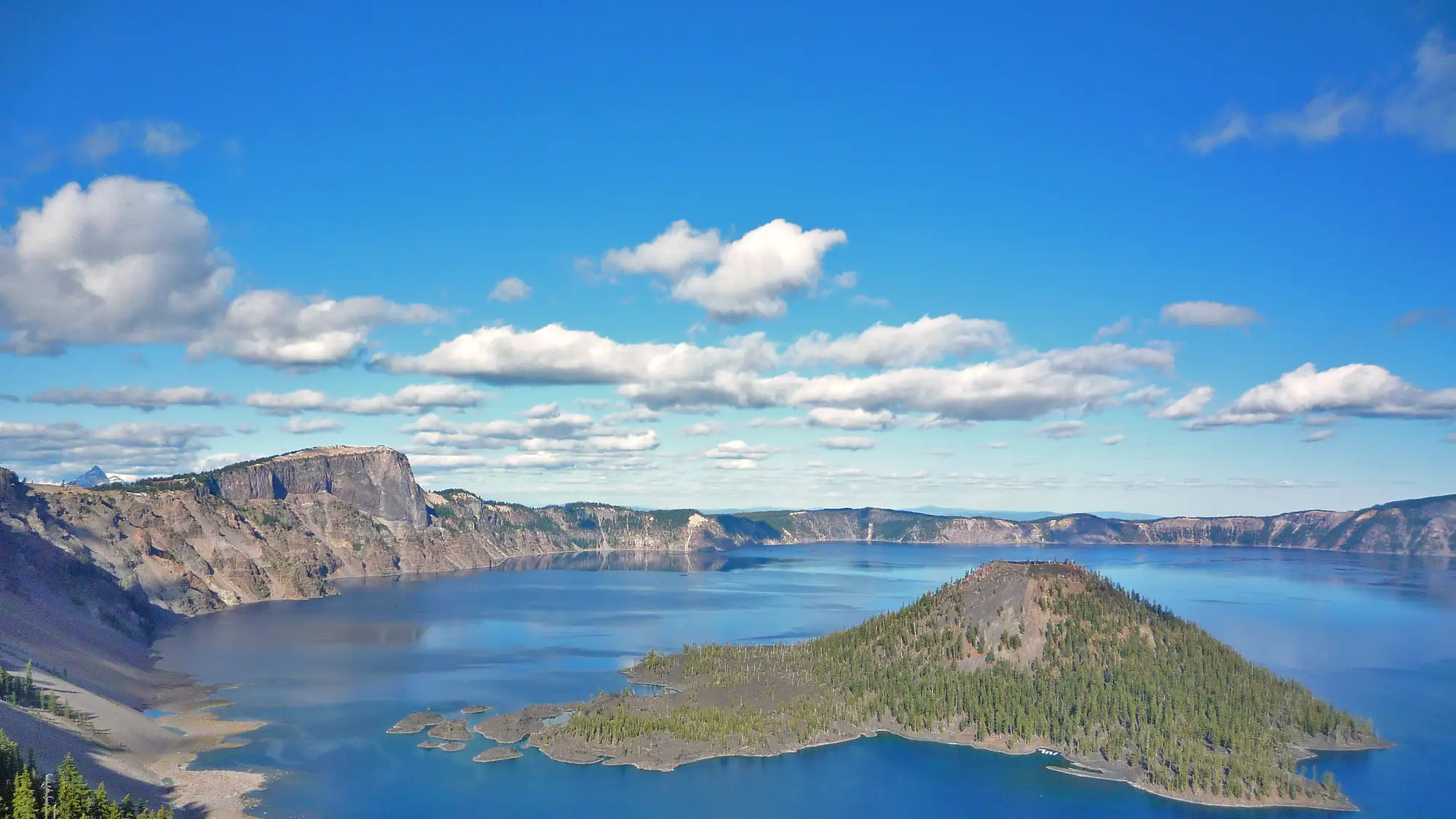
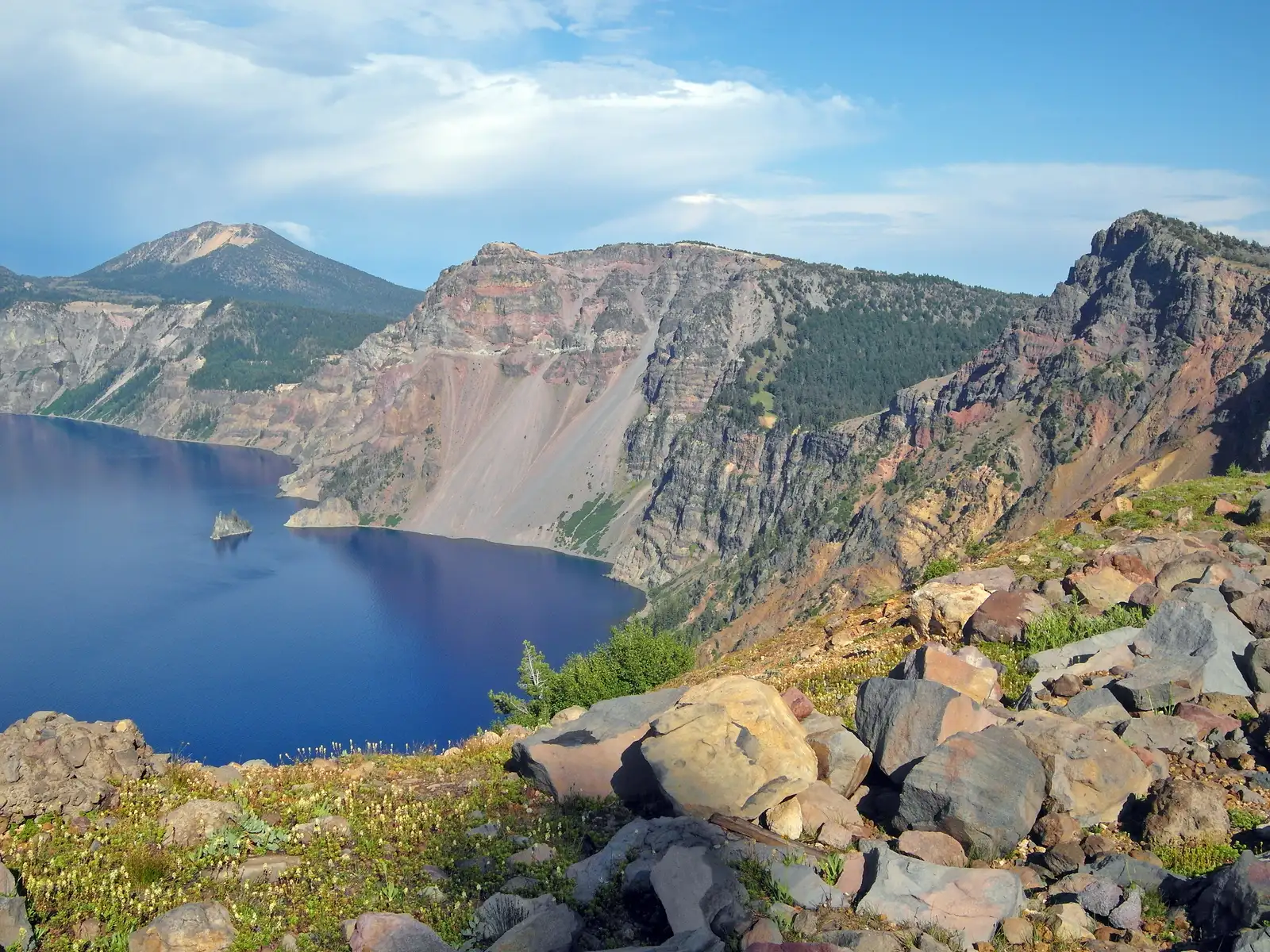
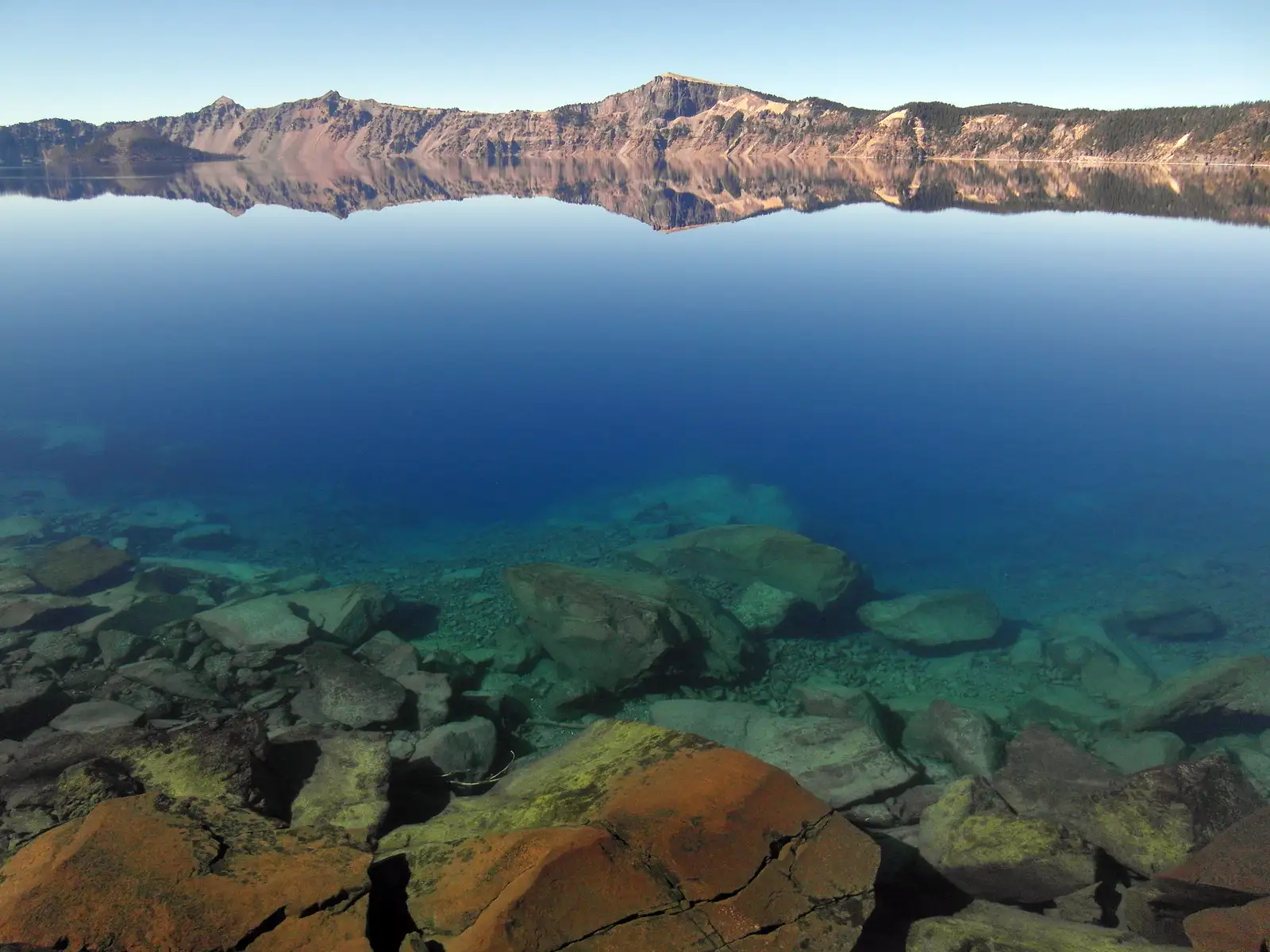
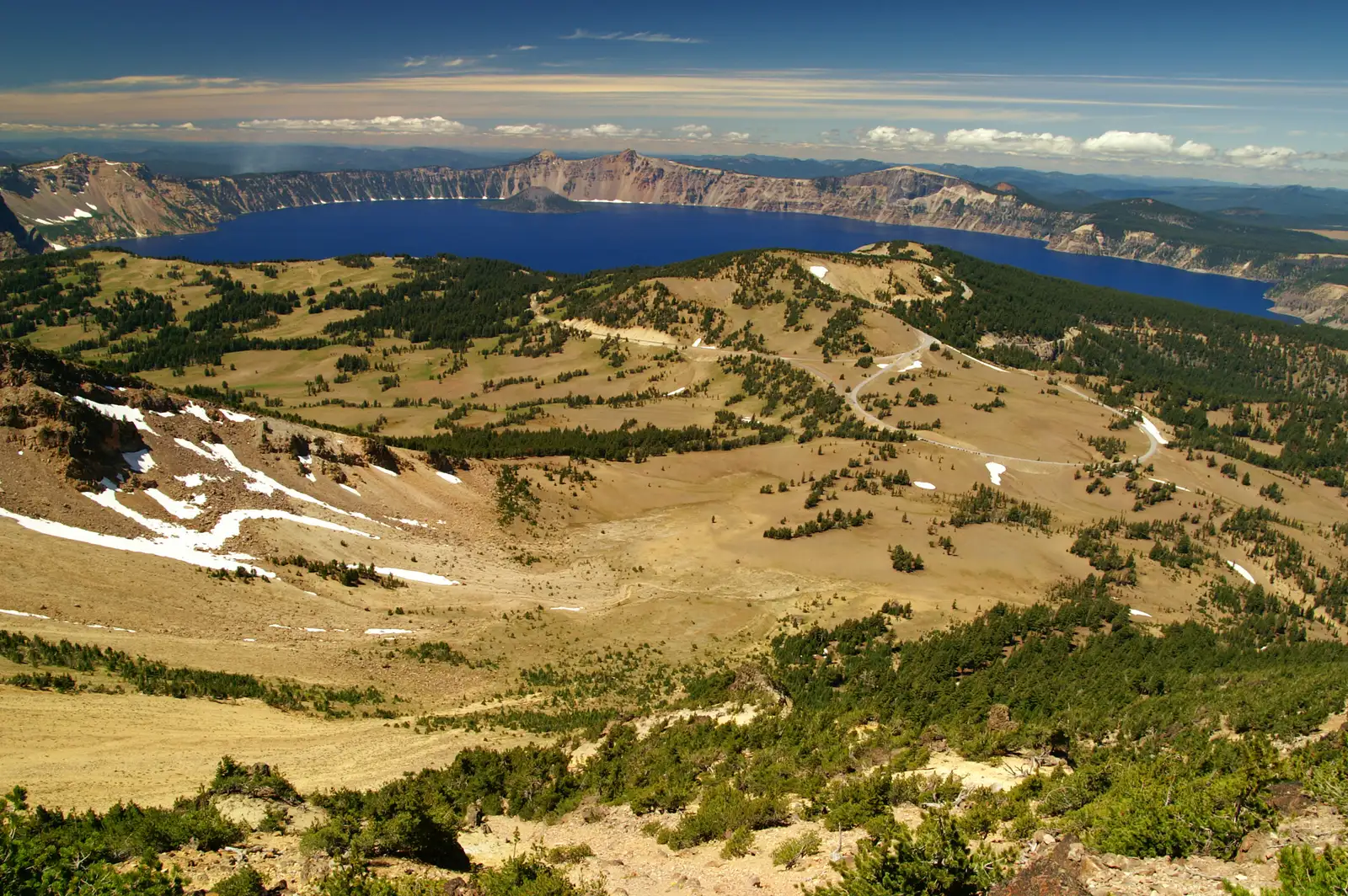
Crater Lake is what a volcano leaves behind. When Mount Mazama collapsed roughly 7,700 years ago, the caldera filled with nothing but rain and snowmelt, and it has stayed that way ever since. No rivers run in or out, which is why it is the deepest lake in the country and among the purest on Earth, and why the water reads as a blue most people have never seen anywhere else.
You mostly meet it from above. Rim Drive circles the caldera more than a thousand feet over the surface, and the overlooks hand you the same wide, motionless expanse from every angle. There is little to do with a view like that except let your eyes rest on it, and that is the point.
Away from Rim Village the park stays calm. Trails near Mazama Village and the Pinnacles see a fraction of the traffic, and the conifer forest and streams that ring the caldera offer the same water and quiet without the crush at the marquee overlooks.
The science: White and colleagues, drawing on large population studies, found that contact with blue space is tied to better mental health and wellbeing, and that lakes and rivers, not only the coast, carry that link. Crater Lake is almost nothing but water and sky, a single pool of glacier-clear blue filling a collapsed volcano and seen from a rim more than a thousand feet above. Looking out over water that still and that quiet is the kind of exposure that research describes.
White, Elliott, Gascon, Roberts & Fleming (2021) · Environmental Research
Seasonal guide
Crowd levels use NPS monthly visitation, averaged 2015–2025. Excludes 2020 (COVID anomaly) and 2026 (partial year). Temperatures are NOAA climate normals from a station 3 miles away. Busy does not mean bad. If a peak month is your only window, the season notes below tell you how to work it.
Winters are long and snowy, with highs near freezing and Pacific storms dropping an annual average of 41 feet of snow. The lake is hidden by clouds about half the time and the rim roads are closed, so come for snowshoeing and cross-country skiing from the west and south entrances, check current conditions first, and treat any clear view of the water as a bonus.
Snow lingers deep into spring, with March highs in the mid-30s warming to the high 40s by May and the rim drives still closed for plowing. This is the quietest stretch before the summer rush, so it rewards snowshoers and anyone happy to base at Mazama Village and watch the crowds stay away.
July and August bring the warmest, driest weather, with highs near 69F, and together they draw half the year's visitors. West Rim Drive tends to open in early June and East Rim Drive by early July, so arrive at Rim Village and Cleetwood Cove before mid-morning, use the shuttles, and explore quieter trails near Mazama Village to sidestep the peak.
September stays warm and busy with highs around 63F, then October cools into the 50s and November drops toward winter as snow returns and roads begin closing around November 1. Early fall is a strong compromise of good weather and thinning crowds, so go in September or early October and watch the forecast as the first storms arrive.
This month in the park
Timing changes everything out here. Pick a month to see when the light turns golden, which nights stay darkest for stargazing, and what visitors have actually recorded in bloom and on the move. The new-moon night is the one to plan a sky-watching evening around.
January 2027
Wildlife on the move · 5 species on record
- Canada Jay 7 sightings
- Clark's Nutcracker 3 sightings
- Common Golden-mantled Ground Squirrel 2 sightings
- Red Fox 1 sightings
- Pacific Marten 1 sightings
February 2027
Wildlife on the move · 7 species on record
- Clark's Nutcracker 5 sightings
- Canada Jay 4 sightings
- Common Raven 1 sightings
- American Crow 1 sightings
- Steller's Jay 1 sightings
March 2027
Wildlife on the move · 7 species on record
- Canada Jay 7 sightings
- Clark's Nutcracker 3 sightings
- Pacific Marten 2 sightings
- Dark-eyed Junco 1 sightings
- American Pika 1 sightings
April 2027
Wildlife on the move · 7 species on record
- Canada Jay 11 sightings
- Clark's Nutcracker 5 sightings
- Steller's Jay 2 sightings
- Dark-eyed Junco 2 sightings
- Red-breasted Nuthatch 1 sightings
May 2027
In bloom · 4 species on record
- ❀ Western skunk cabbage 1 sightings
- ❀ Saskatoon 1 sightings
- ❀ Mahala mat 1 sightings
- ❀ Daggerpod 1 sightings
Wildlife on the move · 29 species on record
- Clark's Nutcracker 35 sightings
- Canada Jay 33 sightings
- Common Golden-mantled Ground Squirrel 14 sightings
- Steller's Jay 10 sightings
- Yellow-bellied Marmot 6 sightings
June 2027
In bloom · 41 species on record
- ❀ White pasqueflower 12 sightings
- ❀ Pinemat Manzanita 9 sightings
- ❀ Mount Hood pussypaws 8 sightings
- ❀ Pacific Bleeding Heart 5 sightings
- ❀ Dwarf Lupine 4 sightings
Wildlife on the move · 104 species on record
- Clark's Nutcracker 128 sightings
- Common Golden-mantled Ground Squirrel 88 sightings
- California Tortoiseshell 42 sightings
- Yellow-bellied Marmot 26 sightings
- Steller's Jay 18 sightings
July 2026
In bloom · 103 species on record
- ❀ Lewis' monkeyflower 46 sightings
- ❀ Pacific Bleeding Heart 26 sightings
- ❀ Western columbine 25 sightings
- ❀ Cascade Monkeyflower 25 sightings
- ❀ Pacific coralroot 23 sightings
Wildlife on the move · 258 species on record
- Clark's Nutcracker 223 sightings
- Common Golden-mantled Ground Squirrel 215 sightings
- California Tortoiseshell 98 sightings
- Clodius Parnassian 70 sightings
- Yellow-bellied Marmot 54 sightings
August 2026
In bloom · 76 species on record
- ❀ Lewis' monkeyflower 47 sightings
- ❀ White bog orchid 22 sightings
- ❀ Pearly everlasting 19 sightings
- ❀ Western columbine 18 sightings
- ❀ Marumleaf buckwheat 17 sightings
Wildlife on the move · 200 species on record
- Common Golden-mantled Ground Squirrel 283 sightings
- Clark's Nutcracker 133 sightings
- California Tortoiseshell 113 sightings
- Mule Deer 43 sightings
- Yellow-bellied Marmot 43 sightings
September 2026
In bloom · 28 species on record
- ❀ Pearly everlasting 13 sightings
- ❀ Greene's goldenbush 11 sightings
- ❀ Cascade Monkeyflower 6 sightings
- ❀ Pacific Bleeding Heart 5 sightings
- ❀ Scarlet Gilia 5 sightings
Wildlife on the move · 106 species on record
- Common Golden-mantled Ground Squirrel 154 sightings
- Clark's Nutcracker 55 sightings
- Canada Jay 32 sightings
- Mule Deer 26 sightings
- California Tortoiseshell 17 sightings
October 2026
In bloom · 10 species on record
- ❀ Pearly everlasting 4 sightings
- ❀ Cascade aster 2 sightings
- ❀ Wall Lettuce 1 sightings
- ❀ Pacific Bleeding Heart 1 sightings
- ❀ Scarlet Gilia 1 sightings
Wildlife on the move · 41 species on record
- Canada Jay 24 sightings
- Common Golden-mantled Ground Squirrel 22 sightings
- Clark's Nutcracker 15 sightings
- Cascades Frog 7 sightings
- Mule Deer 6 sightings
November 2026
Wildlife on the move · 7 species on record
- Canada Jay 4 sightings
- Clark's Nutcracker 2 sightings
- Common Loon 1 sightings
- Steller's Jay 1 sightings
- American Pika 1 sightings
December 2026
Wildlife on the move · 9 species on record
- Canada Jay 10 sightings
- Clark's Nutcracker 2 sightings
- Red Crossbill 1 sightings
- Black-backed Woodpecker 1 sightings
- Western Fence Lizard 1 sightings
Sun and moon times are computed for the park's coordinates from standard NOAA solar equations and cross-checked against the U.S. Naval Observatory. Species lists are research-grade community observations for Crater Lake National Park, US, OR via iNaturalist, retrieved July 2026; sighting counts are all-time records for that calendar month.
Don’t wait for Crater Lake.
One big trip a year isn’t what changes how you feel — the small stuff in between is. The 7-Day Nature Reset is one tiny outdoor practice a day, wherever you already are. Day one takes 60 seconds.
No spam. No noise. Just nature.
Day 1 is landing in your inbox right now — go say hi.
Sleep nearby
Most visitors base in Klamath Falls, Oregon, about 60 miles out. It has the nearest full hotel market with far more rooms and better prices. Prospect is only 28 miles from the entrance but is a tiny community with very limited lodging. The map opens on Klamath Falls, so pan toward the park to trade rooms and price for a shorter morning drive.
Camping inside the park books through Recreation.gov and is listed separately.
The map is provided by Stay22. If you book through it we may earn a commission at no cost to you, which helps keep Happier Outdoors running. It never changes what we recommend.
Activities & experiences
Beyond the trails
The historic Rim Drive runs 33 miles (53 km) past lake views, forests, and meadows. Its contours were designed to blend into the landscape, so the road seems to vanish when you look across the lake.
Winter here is long. Snowshoeing is one of the popular ways to spend it.
More cyclists come each year to ride the Rim Drive, a demanding 33 mile (53 km) loop around the lake. Steep hills at high elevation may push even fit riders to stop at the road's thirty overlooks and pullouts. The reward is the scenery, taken at a slower pace than most visitors allow.
Details and current conditions live on nps.gov.
From the field
Common questions
When is the best time to visit Crater Lake?
July, August, and September offer the warmest, driest weather, with summer highs near 69F and very little rain. May, June, and October trade sunny days with rain and snow, and in winter the lake is hidden by clouds about half the time, so the reliable window for seeing the water clearly is mid-summer through early fall.
Is Crater Lake National Park dog-friendly?
Yes, leashed pets are allowed but only in limited areas and on four trails: Lady of the Woods, Godfrey Glen, Annie Spur, and the Pacific Crest Trail. They are also welcome in the campgrounds, picnic areas, along roads, and on paved walkways, but not on other hiking trails, in the backcountry, inside buildings, or on shuttles, and leashes must be 6 feet or shorter.
What is the quietest trail at Crater Lake?
Visitors consistently point to the Annie Creek Canyon Trail, the Pinnacles Trail, and the Stuart Falls Trail as the least crowded options. These sit away from the main rim overlooks, tucked near Mazama Village or in the backcountry, so they see far lighter traffic than the popular Cleetwood Cove Trail and Rim Village.
How crowded does Crater Lake get?
Crater Lake is busiest from July through mid-September, with July and August alone accounting for about half of the roughly 560,000 annual visitors. Crowds concentrate at Rim Village, along Rim Drive, and at Wizard Island boat access during midday, while May, June, October, and the winter months are far quieter.
Is Crater Lake accessible for wheelchairs?
The fully wheelchair-accessible trail is the 1-mile Godfrey Glen Trail, which has minimal cross-slopes and no grade over 9 percent. The paved promenade at Rim Village is the most accessible path, the park shuttles are wheelchair accessible, and both the Steel Information Center and Rim Visitor Center are open and accessible, though the Sinnott Overlook has stairs and is not accessible.
Can you camp at Crater Lake National Park?
Yes, Mazama Village Campground is the park's one developed public campground, with 205 sites for tents and RVs up to 35 feet at $5 per person per night. The other developed campground, Lost Creek, is currently closed, and backcountry camping requires a free permit obtained in person the day of or day before your trip.
Where do you park at Crater Lake?
Parking is limited at Rim Village and the Cleetwood Cove Trailhead, and those lots often fill by early morning in peak summer, typically between 7 and 9 AM. From the south, the large lot at Mazama Village is a good fallback, and from the north the Pumice Desert and PCT lots offer alternatives; large vehicles and RVs are best left unhitched below the rim.