
Congaree National Park
Hopkins, South Carolina · Southeast
The largest old-growth forest left standing
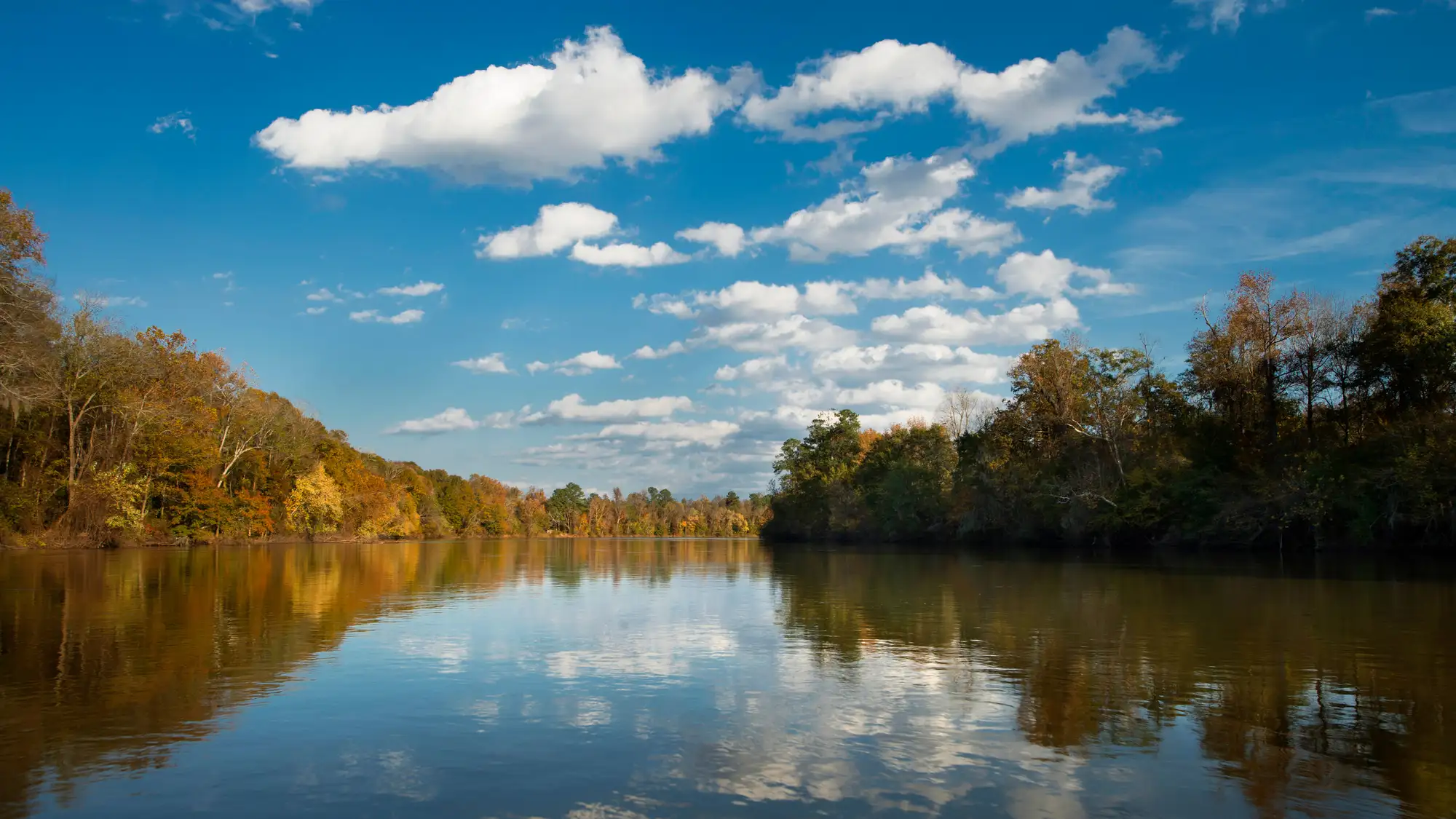
Congaree protects the biggest intact stretch of old-growth bottomland hardwood forest left in the Southeast. The Congaree and Wateree rivers spill across the floodplain and feed it, which is why the trees grow to national- and state-champion size here. Walking the boardwalk under that canopy is a slow, low-effort way to spend real time inside a mature forest, not just look at one.
This matters beyond the scenery. A dense, biodiverse forest is exactly the kind of environment that field research keeps tying to measurable changes in the body, not just the mood. You do not need a summit or a long push to get inside it. The 2.6-mile boardwalk delivers the whole thing at a flat, unhurried pace.
Go quiet and the effect deepens. Past the boardwalk, trails like Oak Ridge and the remote Kingsnake see so few people that the loudest sound is often birdsong over standing water. That combination, big trees and near-silence, is the point of the place.
The science: Researchers led by Qing Li found that forest-bathing trips raised participants' natural killer cell activity, a marker of immune function, with the boost still measurable more than 30 days later. Matched trips to a city produced no such effect. It is one of the clearer signs that time spent inside a real forest reaches past mood and into the body.
Li (2010) · Environmental Health and Preventive Medicine
Seasonal guide
Crowd levels use NPS monthly visitation, averaged 2015–2025. Excludes 2020 (COVID anomaly) and 2026 (partial year). Temperatures are NOAA climate normals from a station 15.1 miles away. Busy does not mean bad. If a peak month is your only window, the season notes below tell you how to work it.
Winter is the calmest window, with highs from the upper 50s to low 60s and lows near freezing, and the fewest visitors of the year in January. Bare trees open up sightlines on the boardwalk and biting insects fade. Flooding can still happen with little warning, so check Cedar Creek and Congaree River levels before you go and pack layers for cold mornings.
Spring is peak season, with highs climbing from the upper 60s in March to the low 80s in May and the year's largest crowds. The synchronous firefly event in mid-May runs on a paid Recreation.gov lottery and closes the boardwalk and frontcountry trails daily at 4:30 p.m. To dodge the busiest days, aim for March or an early-morning weekday start.
Summer is hot and humid, with July and August highs around 90 and June the wettest month at over five inches of rain. Crowds thin sharply in July and August, so you can have the quieter trails nearly to yourself. Start at dawn, carry water and bug protection, and watch for storm-driven flooding on low trails.
Fall cools steadily from the mid-80s in September to the upper 60s by November, making it one of the most pleasant times to walk the forest. October and November draw steady crowds on the boardwalk, though September stays quiet. Weekday mornings and the less-traveled trails keep the experience calm.
This month in the park
Timing changes everything out here. Pick a month to see when the light turns golden, which nights stay darkest for stargazing, and what visitors have actually recorded in bloom and on the move. The new-moon night is the one to plan a sky-watching evening around.
January 2027
In bloom · 2 species on record
- ❀ Butterweed 2 sightings
- ❀ Red maple 1 sightings
Wildlife on the move · 96 species on record
- Hermit Thrush 23 sightings
- Pileated Woodpecker 16 sightings
- Black-and-white Warbler 15 sightings
- Red-headed Woodpecker 12 sightings
- Barred Owl 12 sightings
February 2027
In bloom · 4 species on record
- ❀ Yellow jessamine 4 sightings
- ❀ Red maple 1 sightings
- ❀ Butterweed 1 sightings
- ❀ Mayberry 1 sightings
Wildlife on the move · 147 species on record
- Hermit Thrush 32 sightings
- Wild Boar 22 sightings
- Eastern Gray Squirrel 17 sightings
- Yellow-bellied Sapsucker 13 sightings
- Green Anole 13 sightings
March 2027
In bloom · 36 species on record
- ❀ Common pawpaw 29 sightings
- ❀ Butterweed 15 sightings
- ❀ Yellow jessamine 15 sightings
- ❀ Cross vine 8 sightings
- ❀ Southern dewberry 4 sightings
Wildlife on the move · 264 species on record
- Green Anole 38 sightings
- Hermit Thrush 35 sightings
- Brown Watersnake 33 sightings
- Plain-bellied Watersnake 33 sightings
- Pileated Woodpecker 29 sightings
April 2027
In bloom · 39 species on record
- ❀ Partridgeberry 31 sightings
- ❀ Butterweed 13 sightings
- ❀ Common pawpaw 11 sightings
- ❀ Cross vine 7 sightings
- ❀ White fringetree 4 sightings
Wildlife on the move · 353 species on record
- Forest Tent Caterpillar Moth 75 sightings
- Brown Watersnake 54 sightings
- Plain-bellied Watersnake 54 sightings
- Common Five-lined Skink 48 sightings
- Northern Cottonmouth 41 sightings
May 2027
In bloom · 40 species on record
- ❀ Woodland pinkroot 13 sightings
- ❀ Lizard's tail 12 sightings
- ❀ Aquatic Milkweed 9 sightings
- ❀ Carolina horsenettle 8 sightings
- ❀ Butterweed 7 sightings
Wildlife on the move · 330 species on record
- Plain-bellied Watersnake 68 sightings
- Great Blue Skimmer 67 sightings
- Barred Owl 52 sightings
- Forest Tent Caterpillar Moth 48 sightings
- Broad-headed Skink 44 sightings
June 2027
In bloom · 17 species on record
- ❀ Aquatic Milkweed 13 sightings
- ❀ Carolina birds-in-a-nest 5 sightings
- ❀ American trumpet vine 3 sightings
- ❀ Yellow star grass 2 sightings
- ❀ Carolina ruellia 2 sightings
Wildlife on the move · 289 species on record
- Great Blue Skimmer 46 sightings
- Northern Cottonmouth 35 sightings
- Golden Silk Spider 34 sightings
- Barred Owl 30 sightings
- Common Five-lined Skink 28 sightings
July 2026
In bloom · 16 species on record
- ❀ Carolina birds-in-a-nest 12 sightings
- ❀ Aquatic Milkweed 5 sightings
- ❀ American beautyberry 2 sightings
- ❀ Cardinal flower 1 sightings
- ❀ Yellow passionflower 1 sightings
Wildlife on the move · 309 species on record
- Golden Silk Spider 93 sightings
- Great Blue Skimmer 32 sightings
- Common Five-lined Skink 28 sightings
- Broad-headed Skink 28 sightings
- Northern Cottonmouth 28 sightings
August 2026
In bloom · 10 species on record
- ❀ Cardinal flower 4 sightings
- ❀ Aquatic Milkweed 4 sightings
- ❀ Sharpwing monkeyflower 3 sightings
- ❀ Yellow passionflower 2 sightings
- ❀ Crane-fly orchid 2 sightings
Wildlife on the move · 248 species on record
- Golden Silk Spider 69 sightings
- Red-femured Spotted Orbweaver 24 sightings
- Northern Cottonmouth 23 sightings
- Great Blue Skimmer 20 sightings
- Red-spotted Admiral 18 sightings
September 2026
In bloom · 17 species on record
- ❀ Cardinal flower 6 sightings
- ❀ American hog-peanut 4 sightings
- ❀ Carolina horsenettle 2 sightings
- ❀ Common jewelweed 1 sightings
- ❀ Broadleaf arrowhead 1 sightings
Wildlife on the move · 323 species on record
- Golden Silk Spider 67 sightings
- Clouded Skipper 32 sightings
- Red-femured Spotted Orbweaver 30 sightings
- Carolina Satyr 28 sightings
- Northern Cottonmouth 27 sightings
October 2026
In bloom · 14 species on record
- ❀ Marsh Ladies' Tresses 7 sightings
- ❀ Cardinal flower 3 sightings
- ❀ Blue mistflower 2 sightings
- ❀ Blue Curls 2 sightings
- ❀ Maryland golden-aster 2 sightings
Wildlife on the move · 249 species on record
- Golden Silk Spider 70 sightings
- Southern Pearly-eye 27 sightings
- Green Anole 20 sightings
- Red-femured Spotted Orbweaver 20 sightings
- Pileated Woodpecker 19 sightings
November 2026
In bloom · 6 species on record
- ❀ Marsh Ladies' Tresses 4 sightings
- ❀ Cardinal flower 1 sightings
- ❀ Deerberry 1 sightings
- ❀ Maryland golden-aster 1 sightings
- ❀ Camphor-weed 1 sightings
Wildlife on the move · 168 species on record
- Golden Silk Spider 45 sightings
- Green Anole 24 sightings
- Eastern Gray Squirrel 21 sightings
- Yellow-bellied Sapsucker 12 sightings
- Ruby-crowned Kinglet 12 sightings
December 2026
Wildlife on the move · 110 species on record
- Eastern Gray Squirrel 41 sightings
- Pileated Woodpecker 21 sightings
- Hermit Thrush 19 sightings
- Barred Owl 13 sightings
- Yellow-bellied Sapsucker 12 sightings
Sun and moon times are computed for the park's coordinates from standard NOAA solar equations and cross-checked against the U.S. Naval Observatory. Species lists are research-grade community observations for Congaree National Park, US, SC via iNaturalist, retrieved July 2026; sighting counts are all-time records for that calendar month.
Don’t wait for Congaree.
One big trip a year isn’t what changes how you feel — the small stuff in between is. The 7-Day Nature Reset is one tiny outdoor practice a day, wherever you already are. Day one takes 60 seconds.
No spam. No noise. Just nature.
Day 1 is landing in your inbox right now — go say hi.
Sleep nearby
Most visitors base in Columbia, South Carolina, about 20 miles out. Columbia offers the largest selection of rooms and better prices as the nearest major city. Hopkins sits right at the park entrance but is a small community with very limited lodging. The map opens on Columbia, so pan toward the park to trade rooms and price for a shorter morning drive.
Camping inside the park books through Recreation.gov and is listed separately.
The map is provided by Stay22. If you book through it we may earn a commission at no cost to you, which helps keep Happier Outdoors running. It never changes what we recommend.
Common questions
When is the best time to visit Congaree National Park?
Spring and fall bring the most comfortable temperatures, with highs from the upper 60s to low 80s, but they are also the busiest stretches, especially May. For thinner crowds pick winter or late summer, when average monthly visitation drops to its lowest, and always check water levels because flooding can close trails at any season.
Is Congaree National Park dog-friendly?
Yes, leashed dogs are welcome on every trail at Congaree, including the full boardwalk, and in the Longleaf and Bluff campgrounds. Leashes must be no longer than six feet, and dogs are not allowed in the backcountry, inside park buildings, on ranger-guided canoe tours, or anywhere in the park during the mid-May synchronous firefly event.
What is the quietest trail in Congaree?
The Kingsnake, Oak Ridge, and Bates Ferry trails are the park's least crowded routes, since most visitors only walk the Boardwalk Loop near the visitor center and leave. Kingsnake starts miles away at the Cedar Creek Canoe Launch and is a favorite of birders, while Bates Ferry sits on the park's eastern side far from the main entrance.
How crowded does Congaree get?
Congaree is relatively small in visitation but growing fast, setting a record of about 250,000 visitors in 2023. May is the busiest month, and the crowding concentrates almost entirely on the enclosed Boardwalk Loop, so stepping onto any other trail thins the crowd quickly.
Is Congaree accessible for wheelchairs and strollers?
The 2.6-mile Boardwalk Loop is the park's one wheelchair- and stroller-accessible trail, an elevated flat surface with benches along the way. The visitor center has accessible parking and picnic tables, and Longleaf Campground has one accessible site, but the remaining dirt-and-gravel trails are not accessible and flood periodically.
Can you camp at Congaree National Park?
Yes, Congaree has two tent-only frontcountry campgrounds, Longleaf and Bluff, plus permitted backcountry camping. Longleaf and Bluff sites are reserved through Recreation.gov, while backcountry trips need a free permit requested by email at least 72 hours ahead.
Where do you park at Congaree?
Park at the Harry Hampton Visitor Center, which has three lots including accessible and oversized-vehicle spaces. Follow the brown-and-white park signs off SC Hwy 48/Bluff Road to Old Bluff Road, then continue to the entrance sign and on to the visitor center.