Carlsbad Caverns National Park
Carlsbad, New Mexico · Southwest
Below ground, the mind stops racing
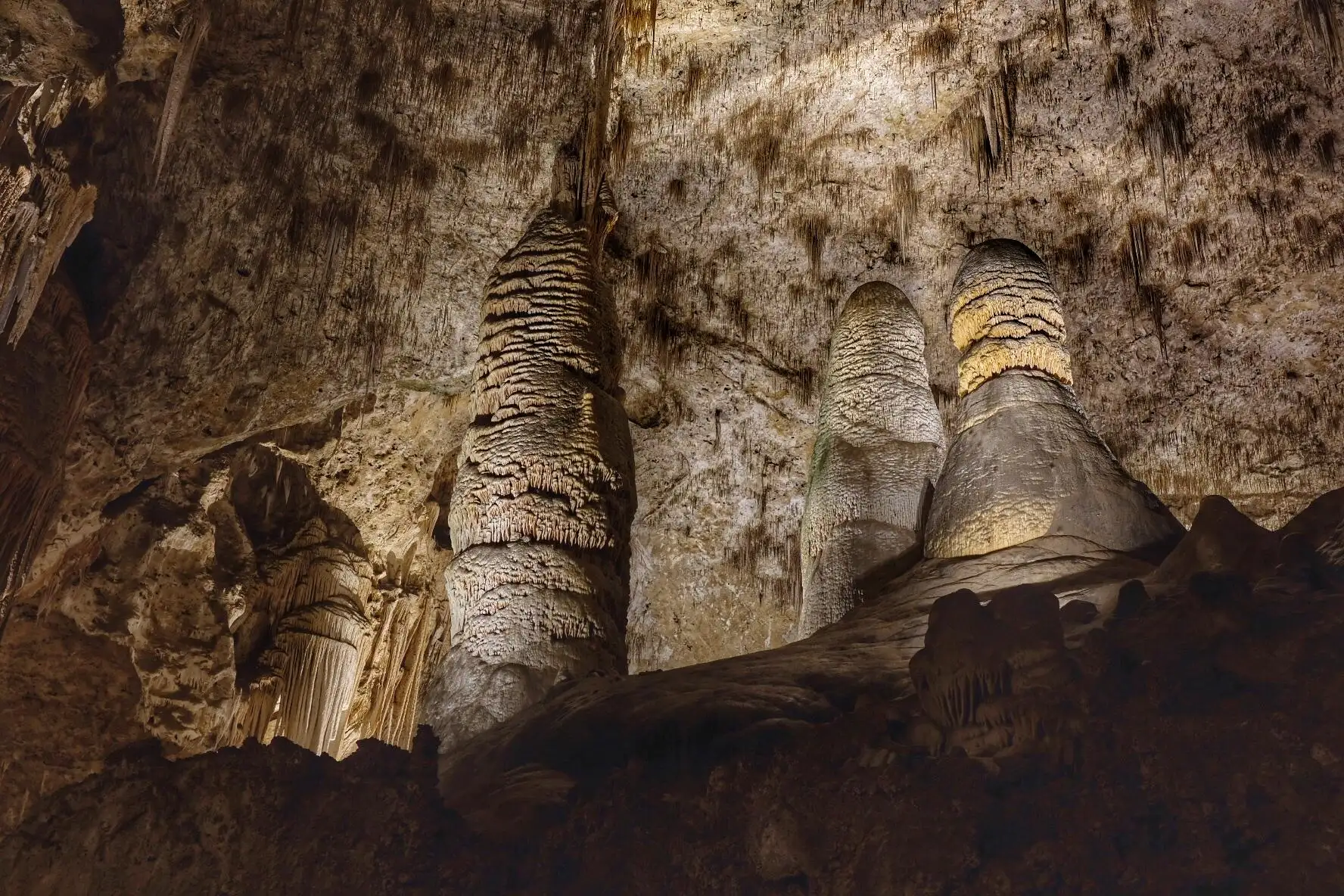
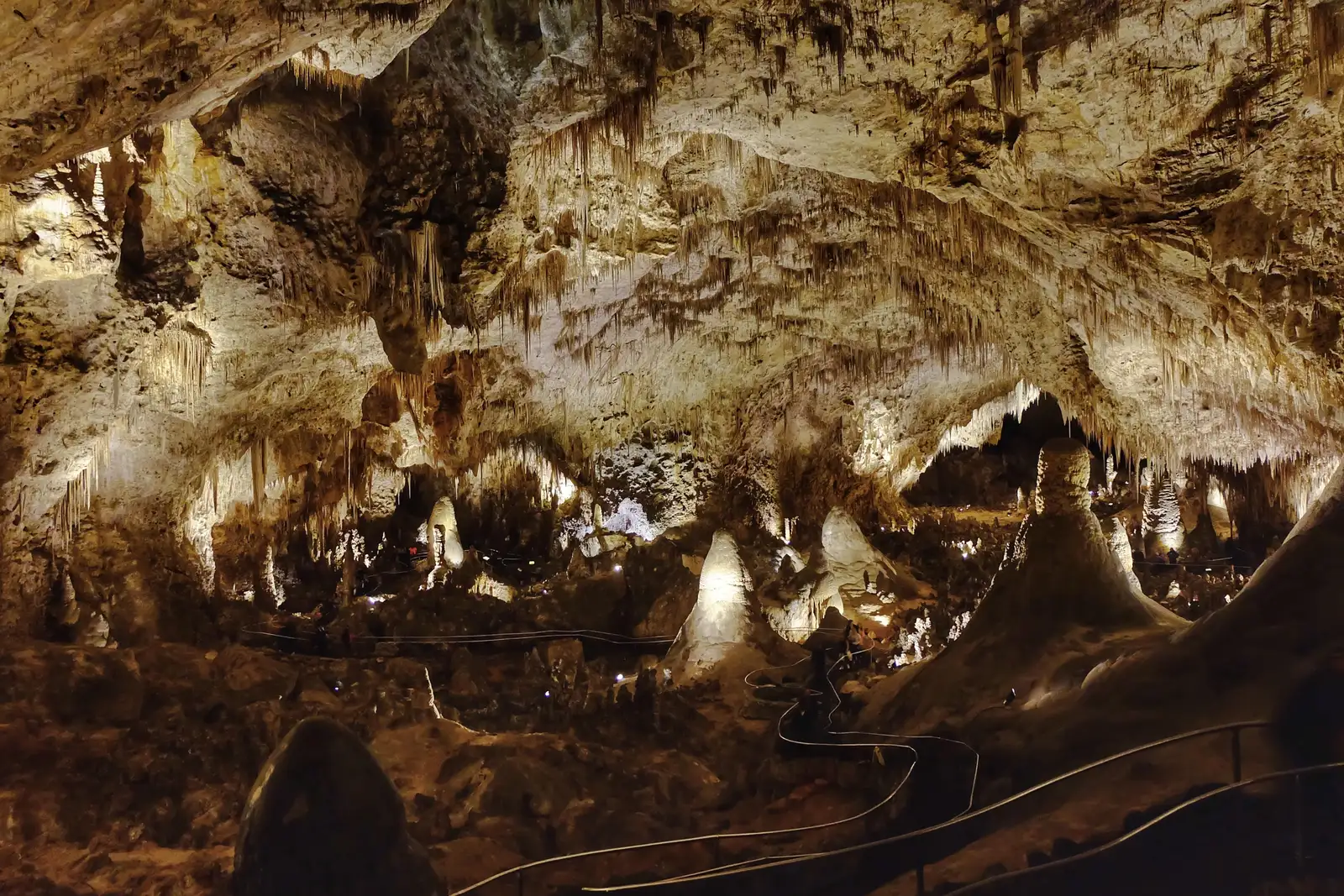
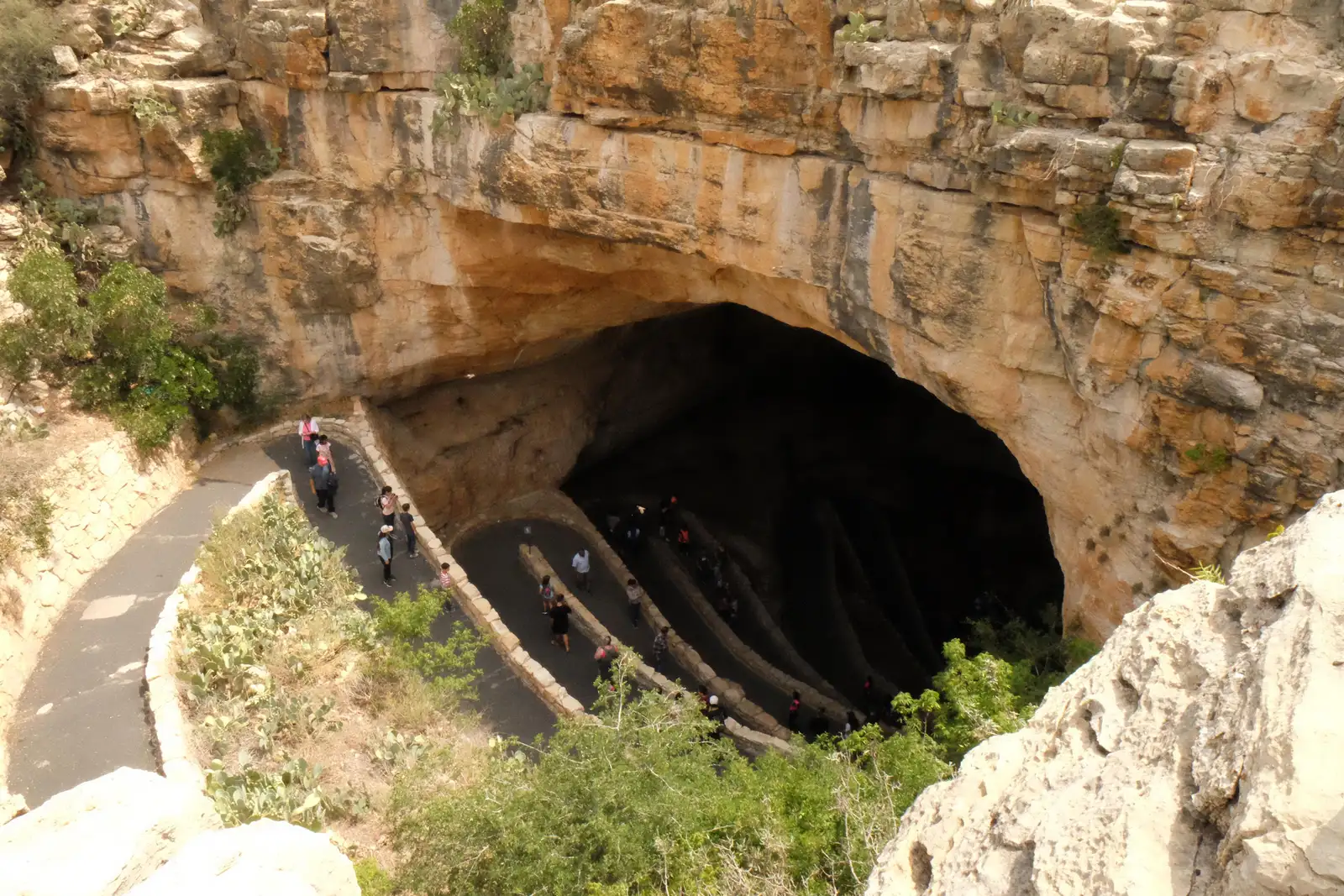
The pull at Carlsbad Caverns is downward. You can take the paved Natural Entrance Trail, which drops about 830 feet into the dark over a mile and a quarter, or ride the elevator straight to the Big Room. Either way, the surface world falls off behind you. No signal, no traffic, dim light, and a quiet most people never encounter aboveground.
That stripping-away is the point. A mind stuck in a loop needs things to grab onto, and a cave gives it almost nothing. You are left with a slow walk through chambers that sulfuric acid dissolved out of ancient limestone, one of more than 119 caves under this stretch of desert. The looping tends to slacken when there is so little to feed it.
The surface has its own version of the same calm. This is the Chihuahuan Desert, with roughly 278 sunny days a year, wide blue sky, and night skies dark enough that the park runs stargazing programs. In summer the Mexican free-tailed bats pour out of the natural entrance at dusk, a sight that quiets a crowd of a thousand people down to almost nothing.
The science: In a 2015 study published in PNAS, Bratman and colleagues found that a 90-minute walk in a natural setting lowered self-reported rumination and reduced activity in the subgenual prefrontal cortex, a brain region tied to that kind of repetitive brooding. An equivalent walk in a busy urban setting did not. Less to churn on, less churning.
Bratman, Hamilton, Hahn, Daily & Gross (2015) · PNAS
Seasonal guide
Crowd levels use NPS monthly visitation, averaged 2015–2025. Excludes 2020 (COVID anomaly) and 2026 (partial year). Temperatures are NOAA climate normals from a station 6.9 miles away. Busy does not mean bad. If a peak month is your only window, the season notes below tell you how to work it.
Winter is the emptiest time here, with surface highs from 56 to 61 degrees and lows near freezing, plus occasional snow and icy conditions. Since the cavern is the main event, the cold matters mostly for driving in and the surface trails. Come now for near-solitude on the cave routes and pack layers for the walk from the parking lot.
Spring brings a big March spike and steady crowds through May, with mild highs climbing from the upper 60s to the mid-80s. Expect wind and generally dry, comfortable days for the desert trails. Book your timed entry ahead and start early to beat the mid-morning ticket rush.
Summer is the busiest season and the peak of the Mexican free-tailed bat flights, but surface highs reach the low 90s and afternoon monsoon storms roll in from July through September. Plan cave time for the middle of the day when it is too hot to be out in the desert, and stay for the evening bat program once the heat breaks. Arrive early, since mornings fill fast.
Fall is the calmest good-weather window, with thinning crowds and highs easing from the low 80s in September to the mid-60s by November. Early September can be rainy, so check the forecast for surface hikes. This is a strong choice if you want the cave routes without the summer lines.
This month in the park
Timing changes everything out here. Pick a month to see when the light turns golden, which nights stay darkest for stargazing, and what visitors have actually recorded in bloom and on the move. The new-moon night is the one to plan a sky-watching evening around.
January 2027
Wildlife on the move · 60 species on record
- Aoudad 12 sightings
- Blue Mockingbird 6 sightings
- White-crowned Sparrow 4 sightings
- Loggerhead Shrike 4 sightings
- Largemouth Bass 4 sightings
February 2027
In bloom · 2 species on record
- ❀ Texas stork's bill 1 sightings
- ❀ Lyre-leaf greeneyes 1 sightings
Wildlife on the move · 56 species on record
- White-crowned Sparrow 5 sightings
- Aoudad 4 sightings
- Rock Wren 3 sightings
- Black-throated Sparrow 3 sightings
- Aztec Dancer 3 sightings
March 2027
In bloom · 16 species on record
- ❀ Agarita 10 sightings
- ❀ Early shaggytuft 8 sightings
- ❀ Little buckthorn 3 sightings
- ❀ Torrey's Yucca 3 sightings
- ❀ Okennon's Anemone 3 sightings
Wildlife on the move · 155 species on record
- Aoudad 44 sightings
- Vermilion Flycatcher 30 sightings
- Wild Turkey 23 sightings
- Cave Swallow 15 sightings
- Rock Wren 10 sightings
April 2027
In bloom · 44 species on record
- ❀ Early shaggytuft 9 sightings
- ❀ Scarlet hedgehog cactus 8 sightings
- ❀ Roundflower Catclaw 8 sightings
- ❀ Mexican buckeye 5 sightings
- ❀ Parry's ruellia 4 sightings
Wildlife on the move · 197 species on record
- Vermilion Flycatcher 25 sightings
- Aoudad 25 sightings
- Wild Turkey 20 sightings
- Southwestern Fence Lizard 17 sightings
- Yellow-rumped Warbler 15 sightings
May 2027
In bloom · 25 species on record
- ❀ Ocotillo 4 sightings
- ❀ Desert willow 3 sightings
- ❀ Purple groundcherry 2 sightings
- ❀ Narrowleaf globemallow 2 sightings
- ❀ Pitcher's leatherflower 2 sightings
Wildlife on the move · 180 species on record
- Vermilion Flycatcher 19 sightings
- Summer Tanager 14 sightings
- Chihuahuan Spotted Whiptail 11 sightings
- Eastern Collared Lizard 10 sightings
- Cave Swallow 9 sightings
June 2027
In bloom · 14 species on record
- ❀ Whitemouth dayflower 2 sightings
- ❀ Narrowleaf globemallow 2 sightings
- ❀ Strawberry hedgehog cactus 2 sightings
- ❀ Purple groundcherry 1 sightings
- ❀ Creosote Bush 1 sightings
Wildlife on the move · 175 species on record
- Desert Millipede 29 sightings
- Common Checkered Whiptail 17 sightings
- Eastern Collared Lizard 14 sightings
- Cave Swallow 12 sightings
- Black Swallowtail 9 sightings
July 2026
In bloom · 16 species on record
- ❀ Catclaw mimosa 2 sightings
- ❀ Creosote Bush 2 sightings
- ❀ Apache plume 2 sightings
- ❀ American basketflower 2 sightings
- ❀ Desert willow 1 sightings
Wildlife on the move · 239 species on record
- Cave Swallow 23 sightings
- Chihuahuan Spotted Whiptail 18 sightings
- Eastern Ringtail 17 sightings
- Desert Millipede 16 sightings
- White-lined Bird Grasshopper 15 sightings
August 2026
In bloom · 5 species on record
- ❀ Desert willow 2 sightings
- ❀ Wavyleaf twinevine 1 sightings
- ❀ Lechuguilla 1 sightings
- ❀ Hawkweed Buckwheat 1 sightings
- ❀ Mexican clammyweed 1 sightings
Wildlife on the move · 202 species on record
- Queen 14 sightings
- Eastern Ringtail 13 sightings
- Desert Millipede 11 sightings
- Kiowa Dancer 10 sightings
- Yellow-legged Ringtail 9 sightings
September 2026
In bloom · 23 species on record
- ❀ Rose Heath 2 sightings
- ❀ Orange Flameflower 2 sightings
- ❀ Yellow trumpet flower 1 sightings
- ❀ Purple groundcherry 1 sightings
- ❀ Greater plantain 1 sightings
Wildlife on the move · 253 species on record
- Yellow-legged Ringtail 25 sightings
- Vermilion Flycatcher 20 sightings
- American Rubyspot 18 sightings
- Monarch 14 sightings
- Variable Dancer 14 sightings
October 2026
In bloom · 10 species on record
- ❀ Apache plume 3 sightings
- ❀ Ocotillo 1 sightings
- ❀ Creosote Bush 1 sightings
- ❀ Blackfoot daisy 1 sightings
- ❀ Pigeonberry 1 sightings
Wildlife on the move · 236 species on record
- Rock Wren 9 sightings
- Yellow-legged Ringtail 9 sightings
- Wild Turkey 7 sightings
- Sooty Dancer 7 sightings
- Aoudad 6 sightings
November 2026
In bloom · 3 species on record
- ❀ Apache plume 3 sightings
- ❀ Ocotillo 1 sightings
- ❀ Feather dalea 1 sightings
Wildlife on the move · 115 species on record
- American Rubyspot 11 sightings
- Blue Mockingbird 10 sightings
- Rock Wren 9 sightings
- Reakirt's Blue 8 sightings
- Aoudad 6 sightings
December 2026
In bloom · 3 species on record
- ❀ Apache plume 1 sightings
- ❀ Texas Pricklyleaf 1 sightings
- ❀ Agarita 1 sightings
Wildlife on the move · 96 species on record
- Blue Mockingbird 11 sightings
- White-crowned Sparrow 10 sightings
- Variegated Meadowhawk 10 sightings
- Kiowa Dancer 10 sightings
- Sleepy Orange 9 sightings
Sun and moon times are computed for the park's coordinates from standard NOAA solar equations and cross-checked against the U.S. Naval Observatory. Species lists are research-grade community observations for Carlsbad Caverns National Park, US, NM via iNaturalist, retrieved July 2026; sighting counts are all-time records for that calendar month.
Don’t wait for Carlsbad Caverns.
One big trip a year isn’t what changes how you feel — the small stuff in between is. The 7-Day Nature Reset is one tiny outdoor practice a day, wherever you already are. Day one takes 60 seconds.
No spam. No noise. Just nature.
Day 1 is landing in your inbox right now — go say hi.
Sleep nearby
Most visitors base in Carlsbad, New Mexico, about 20 miles out. Carlsbad offers a full range of hotels, far more rooms, and better prices than the tiny service town at the entrance. Whites City sits just outside the park gate but is a tiny service town with far fewer rooms. The map opens on Carlsbad, so pan toward the park to trade rooms and price for a shorter morning drive.
Camping inside the park books through Recreation.gov and is listed separately.
The map is provided by Stay22. If you book through it we may earn a commission at no cost to you, which helps keep Happier Outdoors running. It never changes what we recommend.
Activities & experiences
Beyond the trails
A short unpaved drive with canyon views. Watch for desert plants and wildlife along the way.
Back in 1924, National Geographic expedition members wrote about the wonders of Lower Cave. You can still see the traces those explorers and others left behind.
Four heavily decorated chambers, including the deepest part of the cavern open to the public. This tour takes you through all of them.
The Guadalupe Ridge Trail runs 100 miles (161 km) across Carlsbad Caverns, Lincoln National Forest, BLM land, and Guadalupe Mountains National Park. More than 20 miles (32 km) fall within this park.
Tall cottonwood trees, a quiet spot to eat, and plenty of birds to watch for.
Rangers lead night sky programs after dark. A good reason to stay past sunset.
Details and current conditions live on nps.gov.
From the field
Common questions
When is the best time to visit Carlsbad Caverns?
September through November is the sweet spot, with quieter crowds and mild surface highs in the 65 to 83 degree range. Summer draws the biggest crowds and the bat flights but brings 90-degree heat and monsoon rain, while winter is the emptiest, coldest stretch. The cave itself is the main draw, so surface weather matters most for the bat program and desert trails.
Can I bring my dog to Carlsbad Caverns?
Dogs are not allowed inside the caverns, on unpaved trails, in the visitor center, or at the bat flight program. Leashed pets are limited to paved pullouts and parking areas, the Walnut Canyon Desert Drive loop road, and the Rattlesnake Springs picnic area. A temperature-controlled day-use kennel is available at the visitor center for $15 per day, since pets cannot be left in vehicles.
What is the quietest trail at Carlsbad Caverns?
Visitors and the park point to the surface backcountry as the quietest ground, with the rugged Rattlesnake Canyon Trail and the primitive Slaughter Canyon area drawing far fewer people. Nearly everyone sticks to the self-guided Big Room and Natural Entrance routes inside the cavern, leaving the desert trails empty. Some surface trails have had restricted access from storm damage in recent years, so check current conditions at the visitor center first.
How crowded does Carlsbad Caverns get?
It gets busiest from May through October and during morning hours, roughly 9:30 am to early afternoon, when ticket sales and cave entries peak. The Big Room and Natural Entrance routes concentrate the most people, and the summer bat flight can draw up to 1,000 visitors on a single evening. Arriving early or visiting in the quieter fall and winter months eases the congestion.
Is Carlsbad Caverns accessible for wheelchairs?
Accessibility is limited, and the Big Room Trail reached by elevator from the visitor center is the only wheelchair-accessible route inside the cave. The Natural Entrance Trail is steep and not accessible, and ranger-led tours are not wheelchair accessible. The visitor center is fully accessible, and staff at the information desk can provide maps of accessible areas.
Can you camp at Carlsbad Caverns?
There are no developed campgrounds inside the park, only free primitive backcountry camping by permit. Permits are issued in person at the visitor center on the day of arrival and cannot be reserved ahead. For campgrounds with amenities and reservations, use the nearby towns of Whites City or Carlsbad.
Where do you park at Carlsbad Caverns?
There are two parking lots at the visitor center, a west lot for RVs, buses, and large vehicles and an east lot for standard cars. There is no day-parking reservation system, and a small accessible lot sits near the Natural Entrance for those with disability parking needs. Overnight parking in the developed lots is not allowed.
Do you need a reservation to enter the cavern?
Yes, a timed-entry reservation is required to enter Carlsbad Cavern, including the self-guided route. Reserve it online at Recreation.gov or by phone for $1, then buy the $15 per-person entrance pass at the visitor center on arrival. Ranger-guided tours cost extra and should also be reserved in advance.