Capitol Reef National Park
Torrey, Utah · Southwest
An orchard in the desert
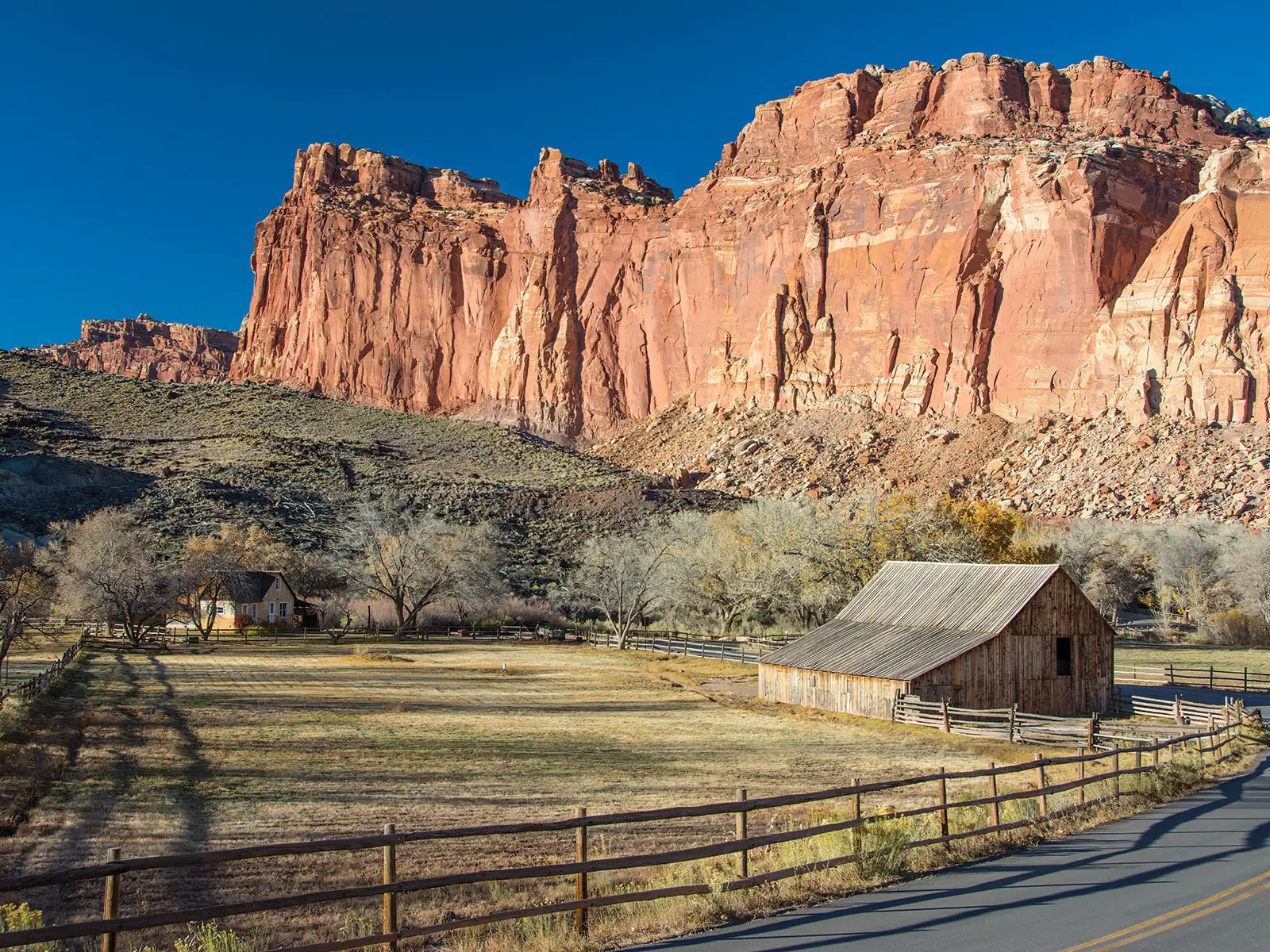
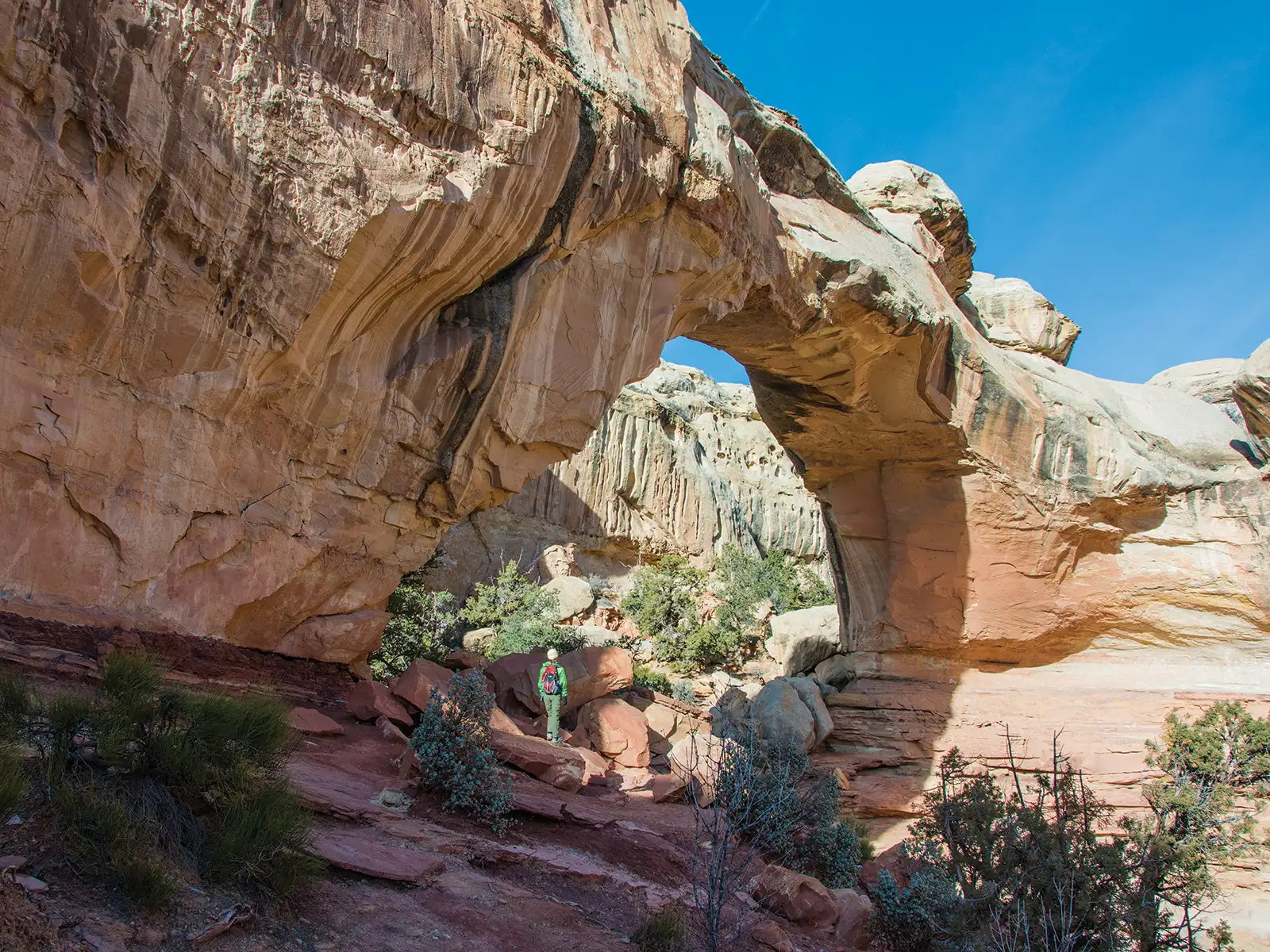
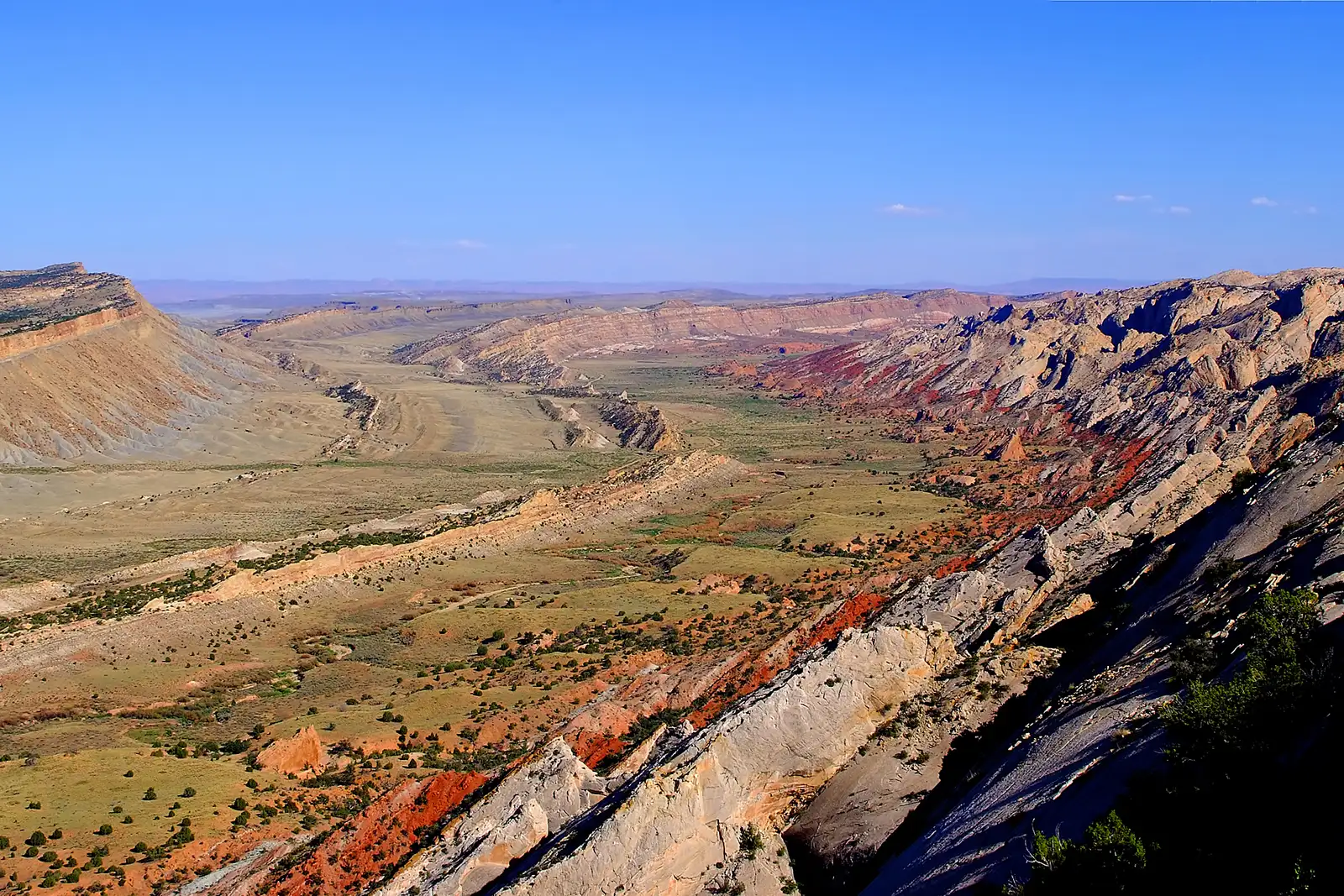
Most of Capitol Reef is stone. The Waterpocket Fold is a wrinkle in the earth running almost 100 miles, and the park stacks cliffs, domes, canyons, and bridges out of it in cream, rust, and deep red. It is beautiful, and it is also relentlessly dry.
Then you reach Fruita. Tucked along the Fremont River at the park's center is a green pocket of historic orchards and irrigated ground, a working piece of shade in the middle of all that rock. The contrast is the whole point. You feel the difference between hard country and a place that holds water, and that difference lands somewhere below thinking.
The park sits at about 5,500 feet and stays far from any interstate, so it draws fewer people than Utah's other red-rock parks. That leaves room to move slowly, which is exactly what a spot like this rewards.
The science: Researchers led by MacKerron and Mourato tracked tens of thousands of people through a smartphone app that pinged them at random moments and logged where they were. People reported being substantially and consistently happier when they were in green or natural environments than when they were in built-up ones. A place like Fruita, green ground set inside stone country, is that mood shift made obvious.
MacKerron & Mourato (2013) · Global Environmental Change
Seasonal guide
Crowd levels use NPS monthly visitation, averaged 2015–2025. Excludes 2020 (COVID anomaly) and 2026 (partial year). Temperatures are NOAA climate normals from a station 1 miles away. Busy does not mean bad. If a peak month is your only window, the season notes below tell you how to work it.
Winter is the emptiest season, with January highs near 41F and lows around 20F. Snow and rain can turn the dirt roads to Cathedral Valley and other remote areas impassable, so stick to the paved Scenic Drive and check conditions at the visitor center. You trade some comfort for near-total quiet on the main trails.
Spring warms fast, from March highs in the upper 50s to May highs in the mid-70s, and it draws crowds, peaking in May. March is the quiet edge of the season and often the sweet spot. Book Fruita Campground well ahead and start popular trailheads early, since lots like Grand Wash fill by mid-morning.
Summer is hot and stormy, with July highs around 91F and the monsoon bringing the year's heaviest rain in July and August. Do not enter narrow canyons if rain threatens, since flash floods are a real hazard, and hike early to beat both heat and afternoon storms. August is the quietest of the three months if you want the season with fewer people.
Fall cools steadily, from September highs near 80F to November highs around 51F, and September sees one of the year's biggest crowd surges. October offers mild days and thinning traffic, and November quiets down considerably. It is one of the best windows for comfortable hiking, so plan camping ahead early in the season.
This month in the park
Timing changes everything out here. Pick a month to see when the light turns golden, which nights stay darkest for stargazing, and what visitors have actually recorded in bloom and on the move. The new-moon night is the one to plan a sky-watching evening around.
January 2027
Wildlife on the move · 10 species on record
- Bighorn Sheep 5 sightings
- Cotton-gall Tephritid 2 sightings
- Wild Turkey 1 sightings
- American Robin 1 sightings
- Ringtail 1 sightings
February 2027
Wildlife on the move · 14 species on record
- Mule Deer 7 sightings
- Bighorn Sheep 3 sightings
- Red-tailed Hawk 1 sightings
- Black Rosy-Finch 1 sightings
- Dark-eyed Junco 1 sightings
March 2027
In bloom · 23 species on record
- ❀ Woolly Locoweed 11 sightings
- ❀ Utah Serviceberry 5 sightings
- ❀ Fremont barberry 5 sightings
- ❀ Crossflower 4 sightings
- ❀ Roundleaf buffaloberry 4 sightings
Wildlife on the move · 60 species on record
- Common Side-blotched Lizard 29 sightings
- Mule Deer 13 sightings
- Plateau Fence Lizard 10 sightings
- Hopi Chipmunk 8 sightings
- Yellow-bellied Marmot 7 sightings
April 2027
In bloom · 36 species on record
- ❀ Kingcup Cactus 13 sightings
- ❀ Utah Beardtongue 11 sightings
- ❀ Nakedstem Sunray 7 sightings
- ❀ Fremont barberry 6 sightings
- ❀ Firecracker penstemon 5 sightings
Wildlife on the move · 92 species on record
- Common Side-blotched Lizard 47 sightings
- American Robin 19 sightings
- Mule Deer 19 sightings
- Bighorn Sheep 18 sightings
- Plateau Fence Lizard 18 sightings
May 2027
In bloom · 52 species on record
- ❀ Nakedstem Sunray 27 sightings
- ❀ Kingcup Cactus 14 sightings
- ❀ Tamarix chinensis 10 sightings
- ❀ Showy milkweed 9 sightings
- ❀ Stansbury's Cliffrose 8 sightings
Wildlife on the move · 136 species on record
- Common Side-blotched Lizard 98 sightings
- Plateau Fence Lizard 76 sightings
- Western Whiptail 52 sightings
- Mule Deer 39 sightings
- Yellow-bellied Marmot 19 sightings
June 2027
In bloom · 37 species on record
- ❀ Showy milkweed 24 sightings
- ❀ Fendler's Sandmat 14 sightings
- ❀ Notch-leaf Scorpionweed 7 sightings
- ❀ Apache plume 6 sightings
- ❀ Palmer's penstemon 4 sightings
Wildlife on the move · 136 species on record
- Plateau Fence Lizard 50 sightings
- Common Side-blotched Lizard 49 sightings
- Western Whiptail 40 sightings
- Mule Deer 39 sightings
- Bighorn Sheep 16 sightings
July 2026
In bloom · 13 species on record
- ❀ Wyoming Paintbrush 3 sightings
- ❀ Utah milkweed 3 sightings
- ❀ Hemp dogbane 2 sightings
- ❀ Alfalfa 1 sightings
- ❀ Rubber Rabbitbrush 1 sightings
Wildlife on the move · 119 species on record
- Mule Deer 47 sightings
- Plateau Fence Lizard 33 sightings
- Western Whiptail 32 sightings
- Common Side-blotched Lizard 19 sightings
- Western Terrestrial Garter Snake 16 sightings
August 2026
In bloom · 5 species on record
- ❀ Utah milkweed 2 sightings
- ❀ Fendler's Sandmat 2 sightings
- ❀ Wyoming Paintbrush 1 sightings
- ❀ Pale Evening Primrose 1 sightings
- ❀ Western blanketflower 1 sightings
Wildlife on the move · 86 species on record
- Mule Deer 28 sightings
- Plateau Fence Lizard 18 sightings
- Common Side-blotched Lizard 13 sightings
- Say's Phoebe 8 sightings
- Bighorn Sheep 8 sightings
September 2026
In bloom · 20 species on record
- ❀ Hooker's wild buckwheat 5 sightings
- ❀ Wyoming Paintbrush 3 sightings
- ❀ Rubber Rabbitbrush 2 sightings
- ❀ Hoary Tansyaster 2 sightings
- ❀ Apache plume 2 sightings
Wildlife on the move · 81 species on record
- Common Side-blotched Lizard 37 sightings
- Plateau Fence Lizard 32 sightings
- Mule Deer 30 sightings
- Western Whiptail 11 sightings
- Gopher Snake 8 sightings
October 2026
In bloom · 11 species on record
- ❀ Rubber Rabbitbrush 3 sightings
- ❀ Narrow-leaved wirelettuce 2 sightings
- ❀ Western aster 2 sightings
- ❀ Trailing Windmills 1 sightings
- ❀ Wyoming Paintbrush 1 sightings
Wildlife on the move · 76 species on record
- Mule Deer 52 sightings
- Common Side-blotched Lizard 28 sightings
- Plateau Fence Lizard 13 sightings
- Bighorn Sheep 11 sightings
- Ornate Tree Lizard 7 sightings
November 2026
In bloom · 10 species on record
- ❀ Rubber Rabbitbrush 2 sightings
- ❀ Wyoming Paintbrush 2 sightings
- ❀ Apache plume 2 sightings
- ❀ Greenstem paperflower 2 sightings
- ❀ Scarlet Gilia 1 sightings
Wildlife on the move · 27 species on record
- Mule Deer 13 sightings
- Common Side-blotched Lizard 9 sightings
- Bighorn Sheep 7 sightings
- Western Leaf-footed Bug 3 sightings
- Cotton-gall Tephritid 3 sightings
December 2026
In bloom · 2 species on record
- ❀ Yellow Sweetclover 1 sightings
- ❀ Fremont barberry 1 sightings
Wildlife on the move · 11 species on record
- Mule Deer 11 sightings
- White-tailed Antelope Squirrel 4 sightings
- Bighorn Sheep 2 sightings
- Cotton-gall Tephritid 2 sightings
- Northern Pygmy-Owl 1 sightings
Sun and moon times are computed for the park's coordinates from standard NOAA solar equations and cross-checked against the U.S. Naval Observatory. Species lists are research-grade community observations for Capitol Reef National Park, US, UT via iNaturalist, retrieved July 2026; sighting counts are all-time records for that calendar month.
Don’t wait for Capitol Reef.
One big trip a year isn’t what changes how you feel — the small stuff in between is. The 7-Day Nature Reset is one tiny outdoor practice a day, wherever you already are. Day one takes 60 seconds.
No spam. No noise. Just nature.
Day 1 is landing in your inbox right now — go say hi.
Sleep nearby
Places to stay around Torrey, Utah. Pan the map to trade a shorter drive for a quieter night.
Camping inside the park books through Recreation.gov and is listed separately.
The map is provided by Stay22. If you book through it we may earn a commission at no cost to you, which helps keep Happier Outdoors running. It never changes what we recommend.
Let someone else lead
A guide is worth it when the terrain needs one, or when you would rather look around than navigate. These are the highest-rated trips running around Capitol Reef, not the cheapest.
 Free cancellation
 Private Capitol Reef Half Day Temple of the Sun and Moon
- Runs year-round
- Private tour, up to 4
- Stroller accessible
 Free cancellation
 2-Hour Horse Rides Capitol Reef
- Runs Apr–Nov
- Up to 10 per booking
- Easy for most fitness levels

Stargazing and Milky Way Portrait in Capitol Reef National Park
- Private tour, up to 10
- Service animals welcome
 Free cancellation
 Capitol Reef National Park Self-Guided Driving Audio Tour
- Easy for most fitness levels
Tours are listed by Viator; booking happens there. If you book we may earn a commission at no cost to you, which helps keep Happier Outdoors running. It never changes what we list. Prices checked September 2026 and can change.
Activities & experiences
Beyond the trails
The night skies here are extremely dark. That makes it a fine place to stargaze.
Colorful cliffs and deep, narrow canyons line the Scenic Drive. You can take it all in from your vehicle.
The Burr Trail runs 67 miles one-way, from Glen Canyon's Bullfrog district along the base of Capitol Reef, through Grand Staircase, to Boulder, Utah. Expect a mix of paved and dirt roads that turn impassable when wet, with four-wheel drive sometimes required. No RVs.
By bicycle, you can follow paved and unpaved roads across the park. Routes pass through colorful canyons, red rock vistas, and the green Fruita Historic District.
Native people of the Fremont Culture lived here from 600 to 1300 C.E. The petroglyphs they carved into the Wingate sandstone are still visible today.
Several picnic spots wait in the Fruita Historic District: the Doc Inglesby and Chesnut areas, plus tables and a water fountain near the Gifford House. At the end of Capitol Gorge Road, off the Scenic Drive, you will find covered tables and a pit toilet.
Details and current conditions live on nps.gov.
From the field
Common questions
When is the best time to visit Capitol Reef?
Spring and fall bring the most comfortable weather, with April and October highs in the mid-60s and cool nights. May, June, and September are the peak crowd months, while January, February, and December are the quietest by a wide margin. If you want mild days without the heaviest traffic, aim for March or November.
Is Capitol Reef dog-friendly?
Leashed pets are allowed, but only in developed areas, not on most trails. Dogs can join you on the path from the visitor center to Fruita Campground, on the Fremont River Trail up to Hattie's Field, in the unfenced orchards, at the Chesnut and Doc Inglesby picnic areas, in the campground, and within 50 feet of any road. They are not permitted on other hiking trails, in the backcountry, or inside buildings.
What is the quietest trail in Capitol Reef?
Hikers consistently point to the Cohab Canyon and Frying Pan trails as the least crowded. Cohab Canyon starts across from Fruita Campground and has a steep first section that turns casual walkers back, while the Frying Pan Trail connects two popular hikes but sees little foot traffic along its own length. Note that these are visitor picks, not an official ranking.
How crowded does Capitol Reef get?
Capitol Reef is moderately busy, with about 1.27 million visitors in 2023 and its heaviest months running March through October. Crowds concentrate hard in the Fruita area and its trailheads, which fill fastest. Because the park sits far from major interstates, it stays noticeably quieter than Zion or Arches.
Is Capitol Reef accessible for wheelchairs?
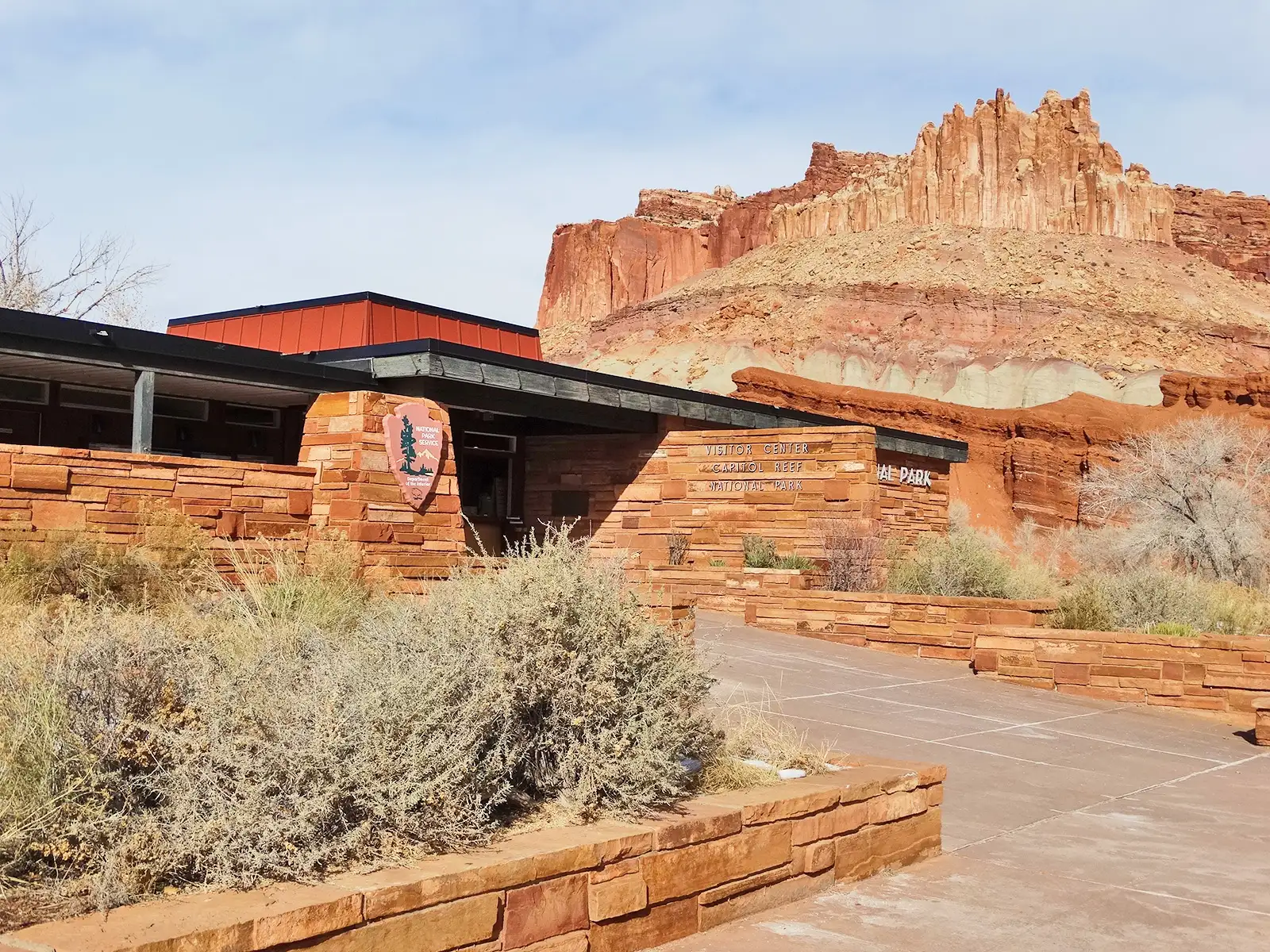
The main accessible experiences are the paved 8-mile Scenic Drive, the fully accessible visitor center, and a portion of the Fremont River Trail near the Gifford House. The Fremont culture petroglyphs are reachable by a boardwalk along Highway 24, and Fruita Campground has four accessible sites. No trails are paved, so most hikes cross slickrock, gravel, and stone steps that standard wheelchairs cannot manage.
Can you camp at Capitol Reef?
Yes, the developed Fruita Campground has 71 individual sites at $25 per night, plus a group site, and there are two free primitive campgrounds at Cathedral Valley and Cedar Mesa. The primitive sites are first-come, first-served with pit toilets and no water, and they are not suitable for RVs.
Where do you park at Capitol Reef?
Park at designated trailhead lots off the Scenic Drive or Highway 24, but expect the Grand Wash and Capitol Gorge lots to fill by 9 or 10 a.m. in peak season. Those two lots have a 23-foot limit, so RVs and oversized vehicles should use the Highway 24 pullouts, the Doc Inglesby Picnic Area, or Jorgensen Pasture. Arriving early or late in the day is the surest way to find a spot.
How much does it cost to enter Capitol Reef?
Entry is $20 per private vehicle, $15 per motorcycle, or $10 per person on foot or bike. A park annual pass is $35, and the park is open 24 hours a day, year-round.