Canyonlands National Park
Moab, Utah · Southwest
Where the canyons put you in scale
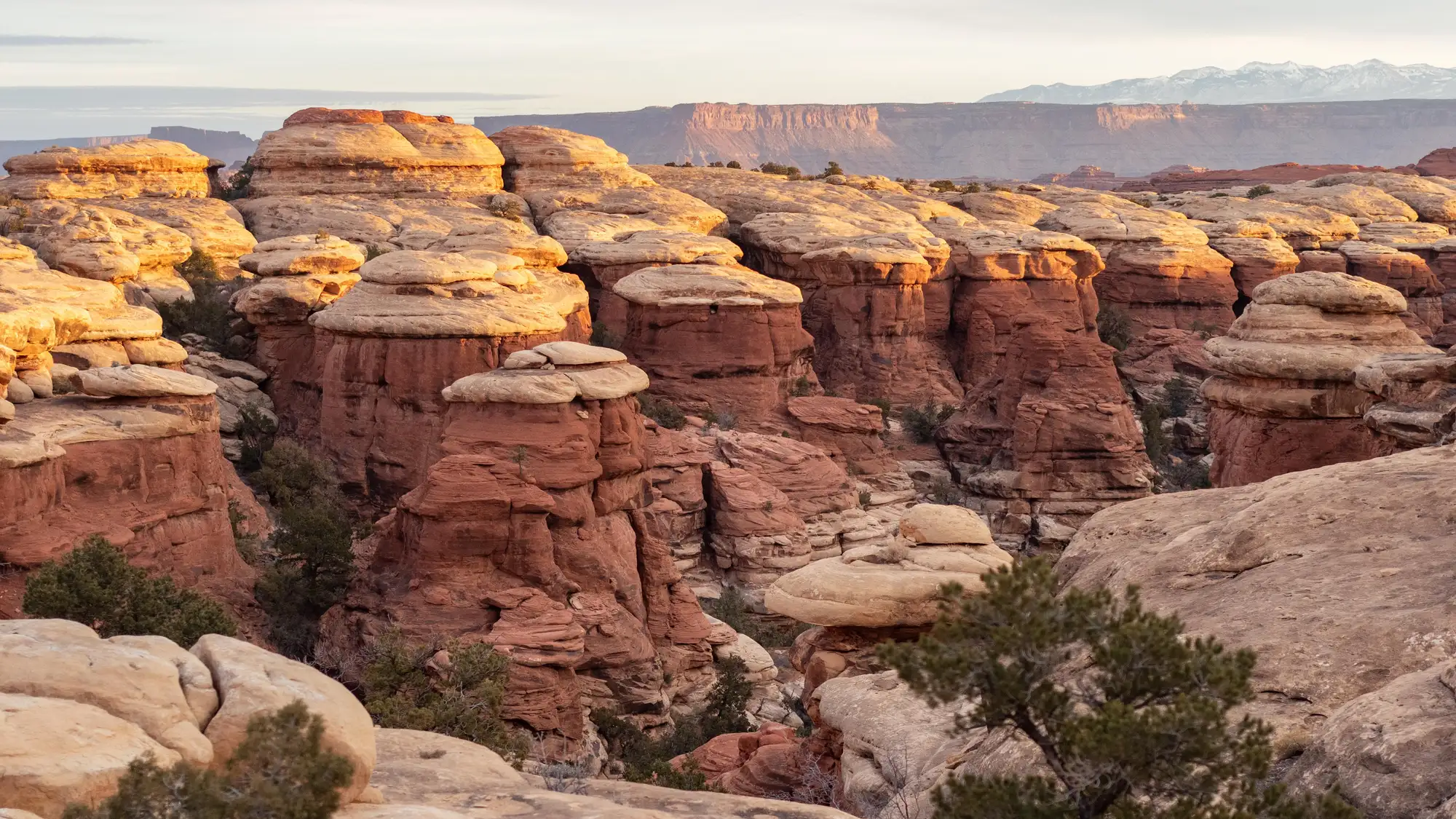
Canyonlands is less a single place than a sprawling basin the Green and Colorado rivers spent ages cutting apart. Stand at Grand View Point on the Island in the Sky mesa and the ground drops away in bench after bench of layered rock, buttes and spires scattered below like a model of a world. Four districts share this desert but no road joins them, so the sense of open, unbroken distance is the whole point.
There is a name for what a view like that does. Researchers led by Piff found that experiences of awe, the feeling of being small before something vast, measurably reduced people's self-focus and made them more generous toward others. A long look off a rim in Canyonlands is close to a pure dose of it, because there is almost nothing in the frame to bring you back to your own list of problems.
The remoteness helps the effect land. Canyonlands draws far fewer people than nearby Arches, and the farther districts stay genuinely empty, so the quiet you get at an overlook is real rather than borrowed. You do not have to earn it with a hard hike; the biggest views here are the ones a short walk from the paved road.
The science: In a series of studies, Piff and colleagues found that experiences of awe reduced people's self-focus and increased their prosocial behavior. Standing before a landscape too large to take in at once is one of the most reliable ways to trigger it, which is exactly what the rim overlooks here deliver.
Piff, Dietze, Feinberg, Stancato & Keltner (2015) · Journal of Personality and Social Psychology
Seasonal guide
Crowd levels use NPS monthly visitation, averaged 2015–2025. Excludes 2020 (COVID anomaly) and 2026 (partial year). Temperatures are NOAA climate normals from a station 8.5 miles away. Busy does not mean bad. If a peak month is your only window, the season notes below tell you how to work it.
Spring is the sweet spot, with March highs near 59F warming to the upper 70s by May and cool nights that drop toward freezing early on. It is also one of the busiest windows, and campgrounds and trailhead lots fill early around Easter and Memorial Day. Come anyway, but arrive at dawn, carry water, and have a backup viewpoint in mind if the main lots are full.
Summer is hot, with highs climbing into the low 90s and often topping 100F, and there is little shade out on the mesa and canyon rims. Start hikes at first light, carry far more water than feels necessary, and save the paved overlooks for the midday heat. Late summer brings afternoon monsoon storms, so watch the sky and stay out of drainages when clouds build.
Fall brings back comfortable temperatures, with September and October highs in the 60s and 70s and crisp nights, though Utah's fall break in October packs the entrance at Island in the Sky. Mid-September through October is ideal hiking weather if you enter before 9 a.m. By November the crowds thin sharply and days turn cold, rewarding anyone willing to bundle up.
Winter is the emptiest season by far, with highs in the 40s and lows dipping toward the teens, and the park mostly to yourself. Roads can be icy and daylight is short, so bring layers, check road conditions, and plan a compact day around the accessible overlooks. The trade-off is solitude at viewpoints that are shoulder-to-shoulder in spring.
This month in the park
Timing changes everything out here. Pick a month to see when the light turns golden, which nights stay darkest for stargazing, and what visitors have actually recorded in bloom and on the move. The new-moon night is the one to plan a sky-watching evening around.
January 2027
Wildlife on the move · 15 species on record
- Common Raven 13 sightings
- Ornate Tree Lizard 5 sightings
- Plateau Fence Lizard 5 sightings
- Common Side-blotched Lizard 3 sightings
- Mule Deer 3 sightings
February 2027
In bloom · 2 species on record
- ❀ Utah Desertparsley 2 sightings
- ❀ Woolly Locoweed 2 sightings
Wildlife on the move · 27 species on record
- Common Raven 26 sightings
- Common Side-blotched Lizard 21 sightings
- Cotton-gall Tephritid 4 sightings
- Juniper Titmouse 3 sightings
- Mountain Lion 3 sightings
March 2027
In bloom · 18 species on record
- ❀ Woolly Locoweed 12 sightings
- ❀ Wedgeleaf draba 5 sightings
- ❀ Western Wallflower 3 sightings
- ❀ Utah Serviceberry 3 sightings
- ❀ Fremont barberry 3 sightings
Wildlife on the move · 71 species on record
- Common Side-blotched Lizard 53 sightings
- Common Raven 46 sightings
- Ornate Tree Lizard 13 sightings
- Hairy Bear Scarab Beetle 13 sightings
- Hopi Chipmunk 13 sightings
April 2027
In bloom · 61 species on record
- ❀ Woolly Locoweed 17 sightings
- ❀ Kingcup Cactus 13 sightings
- ❀ Notch-leaf Scorpionweed 11 sightings
- ❀ Desert Paintbrush 8 sightings
- ❀ Narrowleaf puccoon 7 sightings
Wildlife on the move · 113 species on record
- Common Side-blotched Lizard 87 sightings
- Plateau Fence Lizard 41 sightings
- Ornate Tree Lizard 26 sightings
- Hopi Chipmunk 25 sightings
- Western Whiptail 22 sightings
May 2027
In bloom · 121 species on record
- ❀ Cushion buckwheat 23 sightings
- ❀ Kingcup Cactus 14 sightings
- ❀ Woolly Locoweed 14 sightings
- ❀ Brenda's Yellow Cryptantha 14 sightings
- ❀ Smallflower Fishhook Cactus 13 sightings
Wildlife on the move · 144 species on record
- Common Side-blotched Lizard 109 sightings
- Plateau Fence Lizard 92 sightings
- Western Whiptail 75 sightings
- Common Raven 50 sightings
- Ornate Tree Lizard 44 sightings
June 2027
In bloom · 43 species on record
- ❀ Small-leaf Globemallow 10 sightings
- ❀ Fendler's Sandmat 8 sightings
- ❀ Butterfly milkweed 6 sightings
- ❀ Cushion buckwheat 6 sightings
- ❀ Desert Prince's Plume 6 sightings
Wildlife on the move · 114 species on record
- Common Side-blotched Lizard 63 sightings
- Western Whiptail 55 sightings
- Plateau Fence Lizard 44 sightings
- Common Sagebrush Lizard 38 sightings
- Common Raven 36 sightings
July 2026
In bloom · 9 species on record
- ❀ Butterfly milkweed 2 sightings
- ❀ Scarlet Gilia 1 sightings
- ❀ Sacred Datura 1 sightings
- ❀ Broadleaf milkweed 1 sightings
- ❀ Silvery lupine 1 sightings
Wildlife on the move · 110 species on record
- Common Side-blotched Lizard 55 sightings
- Plateau Fence Lizard 47 sightings
- Common Raven 37 sightings
- Western Whiptail 23 sightings
- Common Sagebrush Lizard 19 sightings
August 2026
In bloom · 18 species on record
- ❀ Apricot globemallow 1 sightings
- ❀ Scarlet Gilia 1 sightings
- ❀ Flatspine Bursage 1 sightings
- ❀ Rubber Rabbitbrush 1 sightings
- ❀ Desert Prince's Plume 1 sightings
Wildlife on the move · 88 species on record
- Common Raven 28 sightings
- Common Side-blotched Lizard 28 sightings
- Plateau Fence Lizard 26 sightings
- Hopi Chipmunk 21 sightings
- Ornate Tree Lizard 17 sightings
September 2026
In bloom · 19 species on record
- ❀ Crispleaf buckwheat 5 sightings
- ❀ Slender Buckwheat 4 sightings
- ❀ Rubber Rabbitbrush 2 sightings
- ❀ Wyoming Paintbrush 2 sightings
- ❀ Broom Snakeweed 2 sightings
Wildlife on the move · 102 species on record
- Common Side-blotched Lizard 53 sightings
- Plateau Fence Lizard 35 sightings
- Common Raven 26 sightings
- Hopi Chipmunk 18 sightings
- Red-spotted Toad 10 sightings
October 2026
In bloom · 23 species on record
- ❀ Rubber Rabbitbrush 10 sightings
- ❀ Saltlover 7 sightings
- ❀ Small-leaf Globemallow 5 sightings
- ❀ Crispleaf buckwheat 5 sightings
- ❀ Scarlet Gilia 3 sightings
Wildlife on the move · 111 species on record
- Common Side-blotched Lizard 51 sightings
- Common Raven 33 sightings
- Hopi Chipmunk 25 sightings
- Plateau Fence Lizard 24 sightings
- Wild Turkey 8 sightings
November 2026
In bloom · 8 species on record
- ❀ Scarlet Gilia 2 sightings
- ❀ Hoary Tansyaster 2 sightings
- ❀ Woolly Locoweed 2 sightings
- ❀ Wyoming Paintbrush 1 sightings
- ❀ Broom Snakeweed 1 sightings
Wildlife on the move · 40 species on record
- Common Raven 21 sightings
- Common Side-blotched Lizard 14 sightings
- Hopi Chipmunk 7 sightings
- Woodhouse's Scrub-Jay 7 sightings
- Dark-eyed Junco 4 sightings
December 2026
Wildlife on the move · 13 species on record
- Common Raven 19 sightings
- Woodhouse's Scrub-Jay 4 sightings
- Mule Deer 3 sightings
- House Finch 3 sightings
- Juniper Titmouse 2 sightings
Sun and moon times are computed for the park's coordinates from standard NOAA solar equations and cross-checked against the U.S. Naval Observatory. Species lists are research-grade community observations for Canyonlands National Park, US, UT via iNaturalist, retrieved July 2026; sighting counts are all-time records for that calendar month.
Don’t wait for Canyonlands.
One big trip a year isn’t what changes how you feel — the small stuff in between is. The 7-Day Nature Reset is one tiny outdoor practice a day, wherever you already are. Day one takes 60 seconds.
No spam. No noise. Just nature.
Day 1 is landing in your inbox right now — go say hi.
Sleep nearby
Places to stay around Moab, Utah. Pan the map to trade a shorter drive for a quieter night.
Camping inside the park books through Recreation.gov and is listed separately.
The map is provided by Stay22. If you book through it we may earn a commission at no cost to you, which helps keep Happier Outdoors running. It never changes what we recommend.
Let someone else lead
A guide is worth it when the terrain needs one, or when you would rather look around than navigate. These are the highest-rated trips running around Canyonlands, not the cheapest.
 Free cancellation
 Discover 3 Moab Parks In 1 Day: Arches Canyonlands Dead Horse Pt
- Runs year-round
- Up to 10 per booking
- Service animals welcome
 Free cancellation
 3 Moab Parks In 1 Day: PRIVATE Arches, Canyonlands, Dead Horse Pt
- Runs Jun–Oct
- Private tour, up to 11
- Service animals welcome
 Free cancellation
 Canyonlands National Park Backcountry Adventure
- Runs Sep–Dec
- Up to 12 per booking
- Easy for most fitness levels
 Free cancellation
 Canyonlands National Park: White Rim Backcountry Tour
- Runs year-round
- Up to 12 per booking
- Service animals welcome
Tours are listed by Viator; booking happens there. If you book we may earn a commission at no cost to you, which helps keep Happier Outdoors running. It never changes what we list. Prices checked September 2026 and can change.
Activities & experiences
Beyond the trails
Rangers lead stargazing programs from time to time across southeast Utah, including Arches and Canyonlands national parks and Hovenweep and Natural Bridges national monuments. Check the schedule ahead of your visit. Even when no program is running, the parks stay open after dark for you to enjoy on your own.
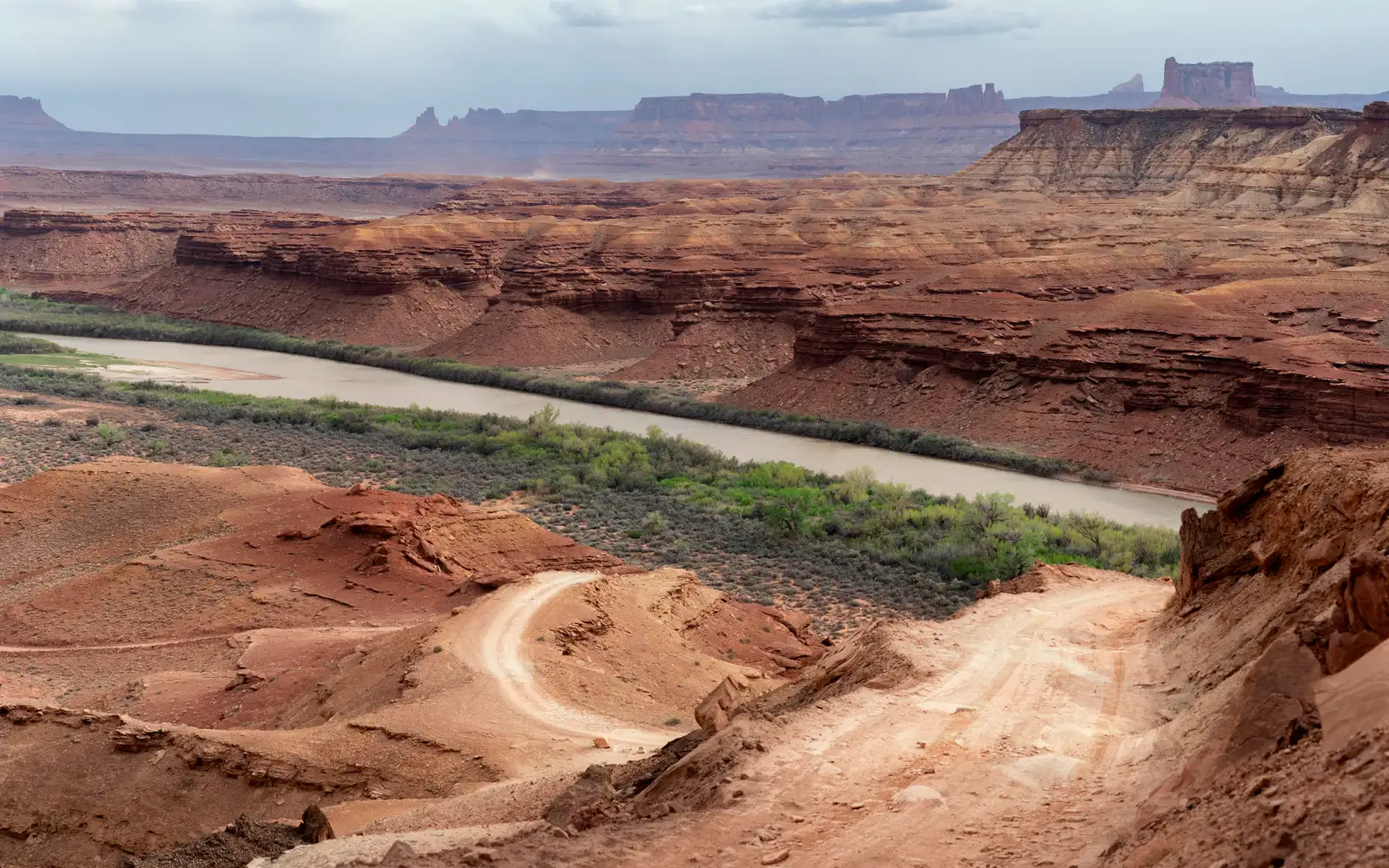
The Shafer Trail is a challenging, unpaved backcountry road for people who want a demanding drive. You will need a high-clearance 4WD vehicle with low range gear (4LO). ATVs, OHVs, and UTVs are not allowed in the park.
Hundreds of miles of unpaved roads reach backcountry campsites, trailheads, and viewpoints here. Most require high-clearance, low-range four-wheel-drive, and they range from intermediate to extremely technical. Research your route thoroughly before you go.
Kids can become junior rangers a few different ways. Free activity booklets are available at the visitor centers or as a download from the park website. Finish the exercises to earn a badge and a signed certificate.
The Colorado and Green rivers carved much of this landscape. Boating shows you the park from the bottom up, a perspective you cannot get any other way.
Rock climbers head mostly to the sandstone towers at the Island in the Sky. The rest of the park sees few climbers, thanks to poor rock quality and a lack of established routes.
Details and current conditions live on nps.gov.
From the field
Common questions
When is the best time to visit Canyonlands?
Spring, roughly April through May, and fall, mid-September through October, are the most comfortable times to visit, with daytime highs in the 60s to low 80s and cool nights. Summer highs regularly exceed 100F and make strenuous hiking difficult, while winter is cold but strikingly empty. Pick spring or fall for the easiest conditions, but expect these to also be the busiest months.
Is Canyonlands dog-friendly?
Leashed pets are allowed only in front-country areas: campgrounds, picnic areas, parking lots, and along the paved scenic roads. They are not permitted on any hiking trails, at overlooks, in the backcountry, on river trips, or inside visitor centers. Service animals are the exception and may go anywhere in the park.
What is the quietest trail in Canyonlands?
The least crowded trails are the longer, steeper routes and those in the remote districts, since most visitors stop at short roadside viewpoints like Mesa Arch and Grand View Point. On Island in the Sky, the Syncline Loop, Lathrop Trail, and Murphy Point see far fewer people, and in the Needles district, Chesler Park Loop and Druid Arch stay uncrowded because of their distance and rough access.
How crowded does Canyonlands get?
Canyonlands draws about 800,000 visits a year, which makes it noticeably quieter than nearby Arches, though it still gets busy from March through November. The heaviest use falls in spring and fall and between about 9 a.m. and 3 p.m., especially around Easter, Memorial Day, Labor Day, and Utah's fall break. Arriving early in the morning or later in the afternoon avoids the worst of the crowds and entrance-line waits.
Is Canyonlands accessible for wheelchairs?
Island in the Sky is the most accessible district, with paved overlooks at Buck Canyon, Green River, and Grand View Point, an accessible visitor center, and accessible restrooms. The Maze has no accessible trails, most backcountry roads require high-clearance 4WD, and there are no park shuttles, so getting around requires a private vehicle.
Can you camp at Canyonlands?
Yes, the park has two front-country campgrounds plus group sites in the Needles. Willow Flat at Island in the Sky has 12 sites at $15 a night, first-come, first-served and open year-round, while the Needles Campground charges $20 a night, with Loop A first-come and Loop B reservable in spring and fall. Backcountry camping anywhere in the park requires a permit and advance reservation.
Where do you park at Canyonlands?
Parking is at designated trailheads, overlooks, and visitor centers in each district, since there is no shuttle system. Lots at popular Island in the Sky viewpoints and Needles trailheads often fill between March and November, especially on holiday weekends, so arriving very early or choosing a less-visited destination is the reliable move.