Bryce Canyon National Park
Bryce, Utah · Southwest
Thousands of spires, one easy gaze
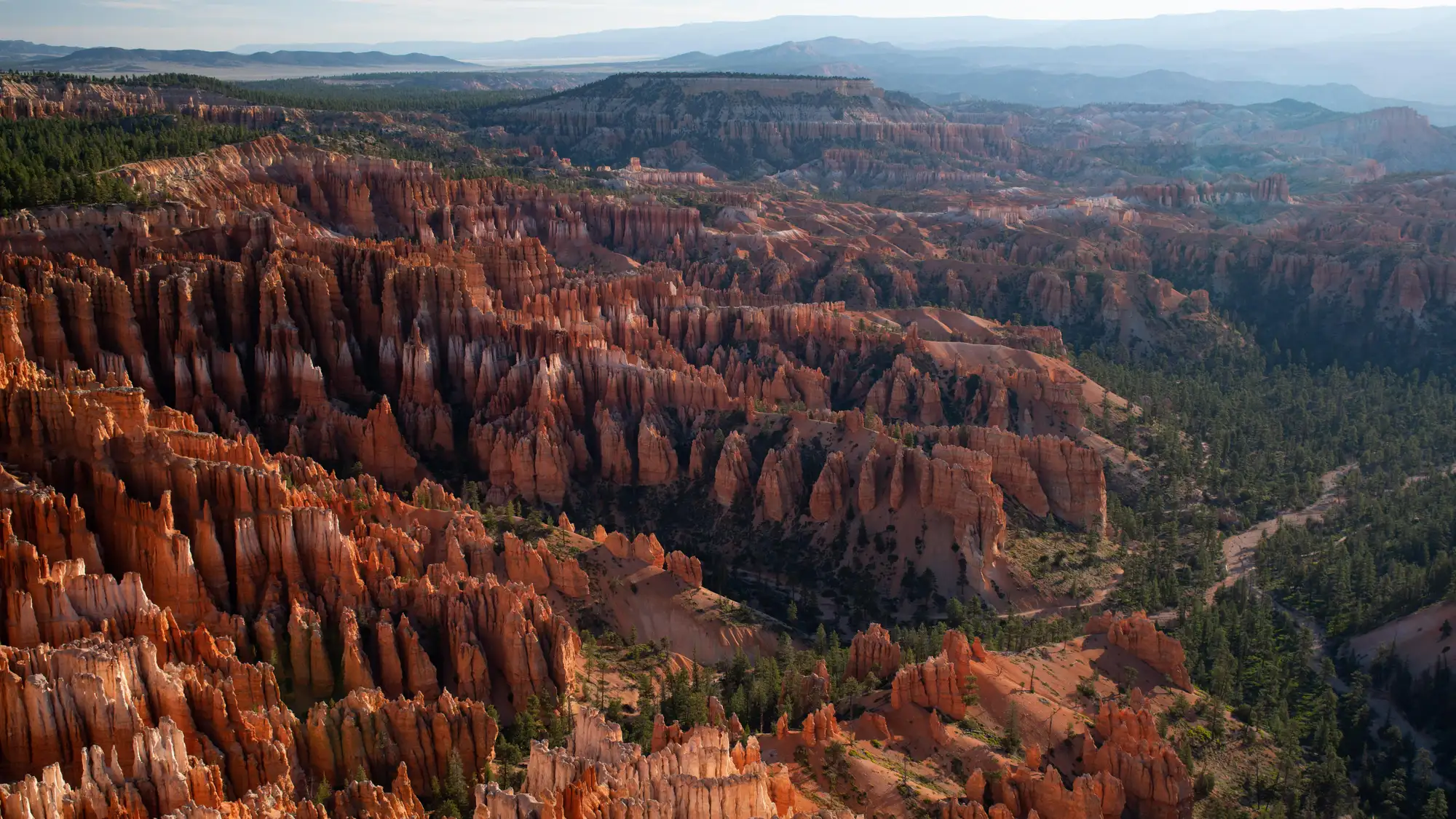
Bryce isn't really a canyon. It's a run of natural amphitheaters cut into the edge of a high plateau, and when you stand at the rim you look down into a field of thousands of stone spires, the largest concentration of hoodoos found anywhere on Earth. The eye has endless places to land and nothing it has to solve.
That is a particular kind of looking. The shapes hold your gaze without asking you to analyze them, the sort of soft, effortless attention that lets the harder, deliberate kind of focus recover. Sitting near 8,000 feet, with thin dry air and a natural quiet that carries, the whole place runs at low demand.
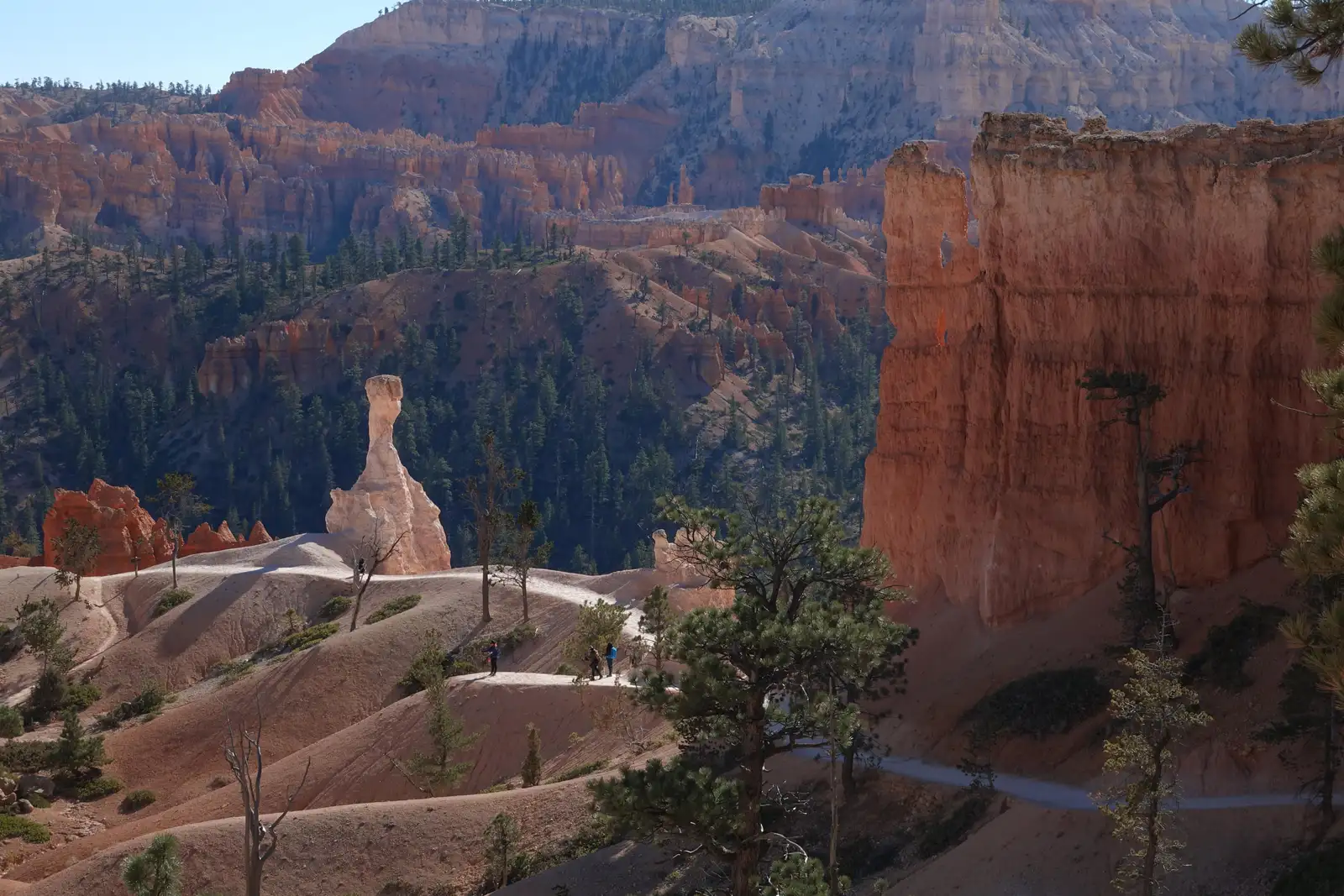
The forest backs it up. Ponderosa and bristlecone pine line the rim, and the paved half-mile of Rim Trail between Sunrise and Sunset Points lets you take the amphitheater in slowly. The trails that drop down among the hoodoos reward the effort, but the reset starts at the railing.
The science: Psychologists Berman, Jonides, and Kaplan found that walking in nature, or even just viewing photographs of it, improved people's performance on a demanding attention and working-memory task, while equivalent urban exposure did not. A landscape that pulls the eye gently, the way a field of hoodoos does, gives worn-out concentration room to come back.
Berman, Jonides & Kaplan (2008) · Psychological Science
Seasonal guide
Crowd levels use NPS monthly visitation, averaged 2015–2025. Excludes 2020 (COVID anomaly) and 2026 (partial year). Temperatures are NOAA climate normals from a station 4 miles away. Busy does not mean bad. If a peak month is your only window, the season notes below tell you how to work it.
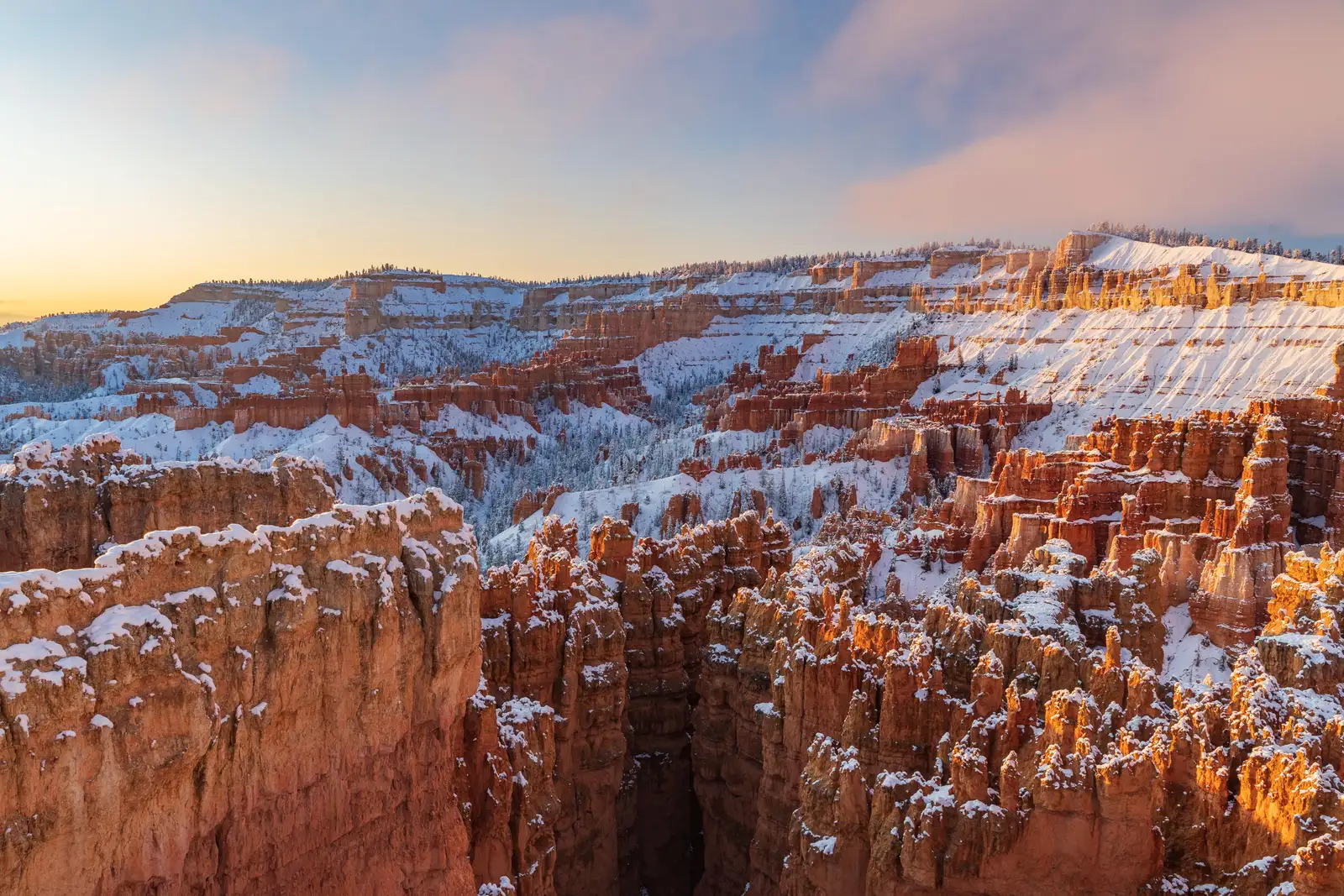
This is the quietest and coldest stretch, with highs in the upper 30s F and nights well below freezing, often with snow on the red hoodoos. Come prepared with traction and warm layers, check road and weather conditions before you drive, and you can have the rim nearly to yourself, plus snowshoeing and cross-country skiing when snow is deep enough.
Spring runs cold to mild, with highs climbing from the mid-40s in March to the low 60s in May, and freezing nights lingering into May. March and April storms can still drop heavy snow that affects travel, so pack layers and stay flexible; the trade-off is thinner crowds until visitation ramps up in May.
Summer is peak season, though the elevation keeps highs in the 70s and 80s F, far cooler than the desert below. Afternoon thunderstorms are common in July and August, so hike early, watch the sky, and beat the parking crunch by arriving before 8 a.m. or riding the free shuttle from Bryce Canyon City.
September stays busy and warm with highs near 70 F, then October cools into the 50s and November drops toward the 40s with far fewer people. October is a sweet spot for crisp air and open space, and by November you get near-solitude on the rim if you dress for cold nights.
This month in the park
Timing changes everything out here. Pick a month to see when the light turns golden, which nights stay darkest for stargazing, and what visitors have actually recorded in bloom and on the move. The new-moon night is the one to plan a sky-watching evening around.
January 2027
Wildlife on the move · 19 species on record
- Steller's Jay 15 sightings
- Common Raven 12 sightings
- Mountain Chickadee 7 sightings
- White-breasted Nuthatch 6 sightings
- Townsend's Solitaire 4 sightings
February 2027
In bloom · 2 species on record
- ❀ Greenleaf manzanita 1 sightings
- ❀ Least Ground-Daisy 1 sightings
Wildlife on the move · 13 species on record
- Common Raven 15 sightings
- Steller's Jay 10 sightings
- Mountain Chickadee 3 sightings
- Wild Turkey 2 sightings
- American Robin 2 sightings
March 2027
In bloom · 6 species on record
- ❀ Greenleaf manzanita 10 sightings
- ❀ Creeping mahonia 4 sightings
- ❀ Least Ground-Daisy 2 sightings
- ❀ Narrowleaf puccoon 1 sightings
- ❀ Roundleaf buffaloberry 1 sightings
Wildlife on the move · 29 species on record
- Steller's Jay 62 sightings
- Common Raven 36 sightings
- Common Golden-mantled Ground Squirrel 19 sightings
- Mountain Chickadee 15 sightings
- Mule Deer 14 sightings
April 2027
In bloom · 12 species on record
- ❀ Greenleaf manzanita 25 sightings
- ❀ Creeping mahonia 10 sightings
- ❀ Utah Serviceberry 3 sightings
- ❀ Common starlily 2 sightings
- ❀ Antelope Bitterbrush 2 sightings
Wildlife on the move · 51 species on record
- Steller's Jay 65 sightings
- Common Golden-mantled Ground Squirrel 48 sightings
- Common Raven 34 sightings
- Dark-eyed Junco 34 sightings
- Western Bluebird 31 sightings
May 2027
In bloom · 34 species on record
- ❀ Greenleaf manzanita 50 sightings
- ❀ Creeping mahonia 14 sightings
- ❀ Arrowleaf balsamroot 8 sightings
- ❀ Red Canyon Beardtongue 8 sightings
- ❀ Narrowleaf puccoon 6 sightings
Wildlife on the move · 117 species on record
- Common Golden-mantled Ground Squirrel 153 sightings
- Steller's Jay 81 sightings
- Common Raven 75 sightings
- Uinta Chipmunk 70 sightings
- Western Bluebird 51 sightings
June 2027
In bloom · 47 species on record
- ❀ Greenleaf manzanita 22 sightings
- ❀ Arrowleaf balsamroot 15 sightings
- ❀ Howard's Evening Primrose 14 sightings
- ❀ Utah Columbine 11 sightings
- ❀ Manyflowered gromwell 10 sightings
Wildlife on the move · 148 species on record
- Common Golden-mantled Ground Squirrel 179 sightings
- Uinta Chipmunk 71 sightings
- Common Raven 64 sightings
- Steller's Jay 55 sightings
- Common Sagebrush Lizard 41 sightings
July 2026
In bloom · 33 species on record
- ❀ Spineless Horsebrush 11 sightings
- ❀ Wyoming Paintbrush 7 sightings
- ❀ Arizona thistle 6 sightings
- ❀ Sego Lily 5 sightings
- ❀ Monument plant 4 sightings
Wildlife on the move · 141 species on record
- Common Golden-mantled Ground Squirrel 169 sightings
- Steller's Jay 82 sightings
- Uinta Chipmunk 62 sightings
- Common Raven 56 sightings
- Mule Deer 53 sightings
August 2026
In bloom · 8 species on record
- ❀ Spineless Horsebrush 3 sightings
- ❀ Wyoming Paintbrush 2 sightings
- ❀ Mat penstemon 2 sightings
- ❀ Rubber Rabbitbrush 1 sightings
- ❀ Pleated gentian 1 sightings
Wildlife on the move · 95 species on record
- Common Golden-mantled Ground Squirrel 91 sightings
- Steller's Jay 72 sightings
- Uinta Chipmunk 61 sightings
- Mule Deer 33 sightings
- Common Raven 21 sightings
September 2026
In bloom · 17 species on record
- ❀ Rubber Rabbitbrush 7 sightings
- ❀ Scarlet Gilia 4 sightings
- ❀ Lewis flax 3 sightings
- ❀ Wyoming Paintbrush 3 sightings
- ❀ Spotted knapweed 3 sightings
Wildlife on the move · 81 species on record
- Uinta Chipmunk 59 sightings
- Common Raven 50 sightings
- Common Golden-mantled Ground Squirrel 50 sightings
- Steller's Jay 47 sightings
- Mule Deer 33 sightings
October 2026
In bloom · 9 species on record
- ❀ Scarlet Gilia 2 sightings
- ❀ Wyoming Paintbrush 2 sightings
- ❀ Spotted knapweed 2 sightings
- ❀ Yellow Sweetclover 1 sightings
- ❀ Mountain coyote mint 1 sightings
Wildlife on the move · 57 species on record
- Common Raven 47 sightings
- Uinta Chipmunk 46 sightings
- Steller's Jay 40 sightings
- Mule Deer 20 sightings
- Mountain Chickadee 14 sightings
November 2026
Wildlife on the move · 23 species on record
- Common Raven 25 sightings
- Uinta Chipmunk 13 sightings
- Steller's Jay 12 sightings
- Mule Deer 12 sightings
- Townsend's Solitaire 7 sightings
December 2026
Wildlife on the move · 19 species on record
- Common Raven 15 sightings
- Steller's Jay 14 sightings
- Mountain Chickadee 11 sightings
- Townsend's Solitaire 7 sightings
- White-breasted Nuthatch 6 sightings
Sun and moon times are computed for the park's coordinates from standard NOAA solar equations and cross-checked against the U.S. Naval Observatory. Species lists are research-grade community observations for Bryce Canyon National Park, US, UT via iNaturalist, retrieved July 2026; sighting counts are all-time records for that calendar month.
Don’t wait for Bryce Canyon.
One big trip a year isn’t what changes how you feel — the small stuff in between is. The 7-Day Nature Reset is one tiny outdoor practice a day, wherever you already are. Day one takes 60 seconds.
No spam. No noise. Just nature.
Day 1 is landing in your inbox right now — go say hi.
Let someone else lead
A guide is worth it when the terrain needs one, or when you would rather look around than navigate. These are the highest-rated trips running around Bryce Canyon, not the cheapest.
 Free cancellation
 Bryce Canyon Private Tour
- Runs Jan–Nov
- Private tour, up to 12
- Easy for most fitness levels
 Free cancellation
 Bryce Canyon National Park: Private Guided Hike & Picnic
- Runs year-round
- Private tour, up to 15
- Service animals welcome
 Free cancellation
 Bryce Canyon Full Day Private Tour & Hike
- Runs year-round
- Private tour, up to 10
- Service animals welcome
 Free cancellation
 Zion and Bryce Canyon National Park Small Group Tour
- Runs year-round
- Up to 13 per booking
- Easy for most fitness levels
Tours are listed by Viator; booking happens there. If you book we may earn a commission at no cost to you, which helps keep Happier Outdoors running. It never changes what we list. Prices checked September 2026 and can change.
Activities & experiences
Beyond the trails
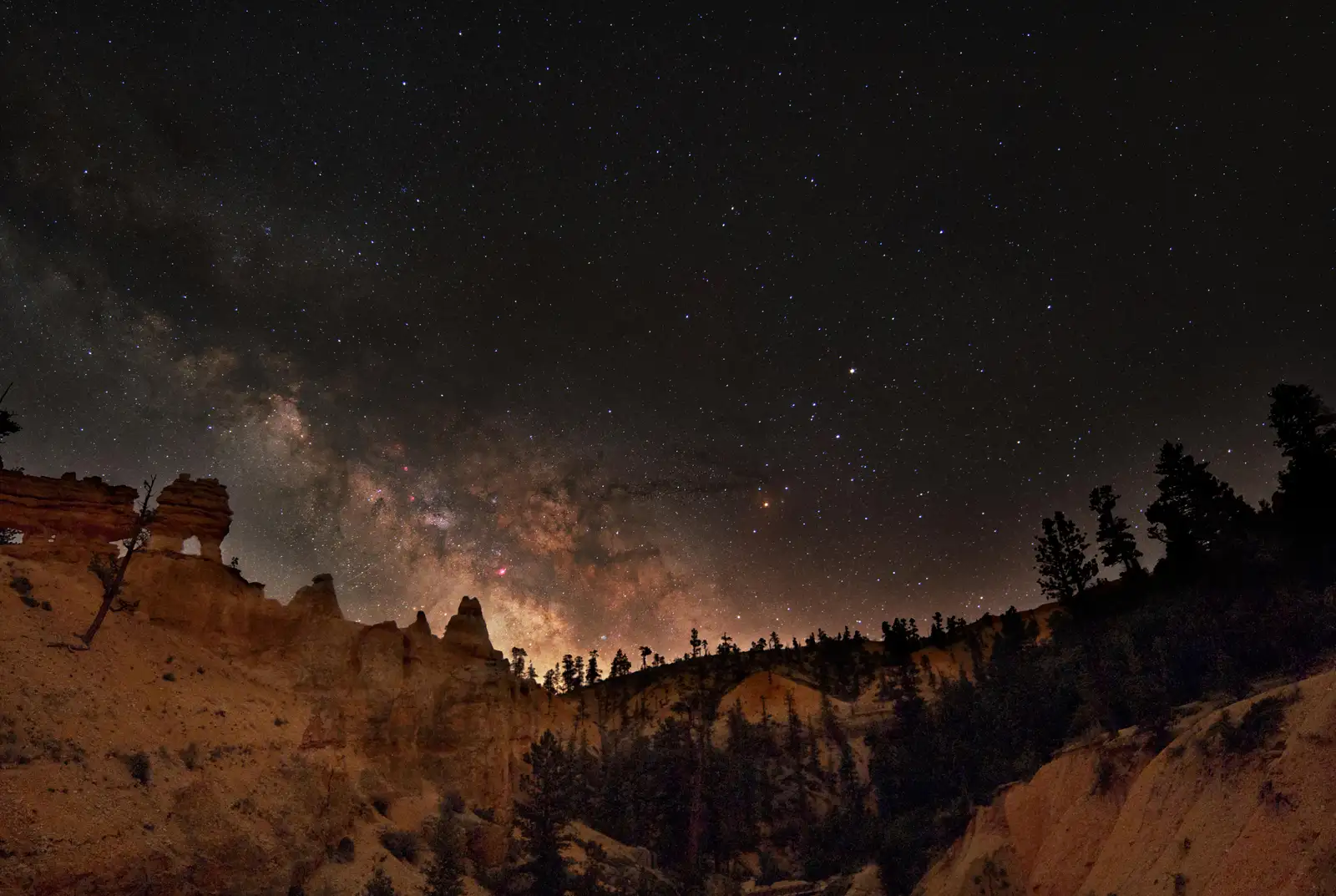
The park protects some of the darkest skies anywhere. That earned Bryce Canyon a Gold Tier International Dark Sky Park designation in 2019. The park stays open 24 hours, so you can find a viewpoint on your own or join a night sky ranger program.
High elevation, clean air, and a remote location combine to make these skies among the darkest in the country, a fact recognized in 2019 with official International Dark Sky status. On a clear, moonless night you can see thousands of stars and the band of the Milky Way crossing the sky.
Many animals move through the canyons and forested plateau, paying no mind to park boundaries. Migratory hummingbirds, nesting Peregrine Falcon, Rocky Mountain Elk, and Pronghorn cross daily in search of food, water, and shelter. Populations rise and fall together, each part of one connected community.
Birders have documented 175 species here. Some are just passing through. Others stay a season, and a few charismatic ones live here year-round.
At 8,000 feet (2,438 m), winter reshapes the scenery. You can snowshoe any trail in the park, on your own or on a ranger-led hike. Ranger hikes run in winter as weather and snow allow, and welcome every level from beginner to expert.
You can snowshoe every trail in the park. Even so, it is strenuous work, though snowshoes let you cross deep powder. Popular routes include the Rim Trail, Bristlecone Loop, Fairyland Road, and Paria Road.
Details and current conditions live on nps.gov.
From the field
Common questions
When is the best time to visit Bryce Canyon?
Late spring and early fall offer the most comfortable balance of weather and space, with warm days and thinner crowds than midsummer. Summer highs sit in the 70s and 80s F but June through September draws about 60% of the year's visitors, while October cools into the 50s with fewer people and November quiets down further before winter snow sets in.
Is Bryce Canyon dog-friendly?
Leashed pets are welcome only on paved surfaces at Bryce Canyon, with a leash no longer than six feet. That includes the campgrounds, paved viewpoints, the paved half-mile of Rim Trail between Sunrise and Sunset Points, and the Shared Use Path, but dogs are not allowed on unpaved trails, below the rim, or on the park shuttle.
What is the quietest trail at Bryce Canyon?
The Fairyland Loop is the park's least crowded named trail, an eight-mile circuit far longer than the popular Queen's Garden and Navajo Loop combination that draws most summer hikers. Rangers and visitors also point to Mossy Cave at the quiet northern end and the trails along the Southern Scenic Drive as places where the crowds thin out fast.
How crowded does Bryce Canyon get?
Bryce Canyon receives close to two million visits a year, and it is busiest from May through September, with peaks in June, July, and September. The crowding concentrates almost entirely in the Bryce Amphitheater along the first three miles of road, so arriving before 8 a.m. or after 6 p.m., or heading south along the scenic drive, gives you far more room.
Is Bryce Canyon accessible for wheelchairs?
Yes, Bryce Canyon has two wheelchair-accessible paved routes, the half-mile Rim Trail between Sunset and Sunrise Points and the Shared Use Path, plus wheelchair-accessible shuttles and an accessible Visitor Center. Most Bryce Amphitheater viewpoints are accessible, though backcountry trails and up-close hoodoo views from below the rim are not.
Can you camp at Bryce Canyon?
Yes, Bryce Canyon has two campgrounds, North Campground (open year-round) and Sunset Campground (closed in winter), both reservation-only through recreation.gov at $30 per site per night. There are no first-come, first-served sites, so plan to book ahead.
Where do you park at Bryce Canyon?
Parking at the main amphitheater viewpoints (Sunrise, Sunset, Inspiration, and Bryce Points) fills early, often by 8 or 9 a.m. in peak season, when the lots close temporarily until space opens. Park at the Additional Parking Lot near the Visitor Center or the shuttle station in Bryce Canyon City and ride the free shuttle, which runs mid-April through mid-October.