Black Canyon Of The Gunnison National Park
Montrose, Colorado · Rocky Mountains
The looking alone does something
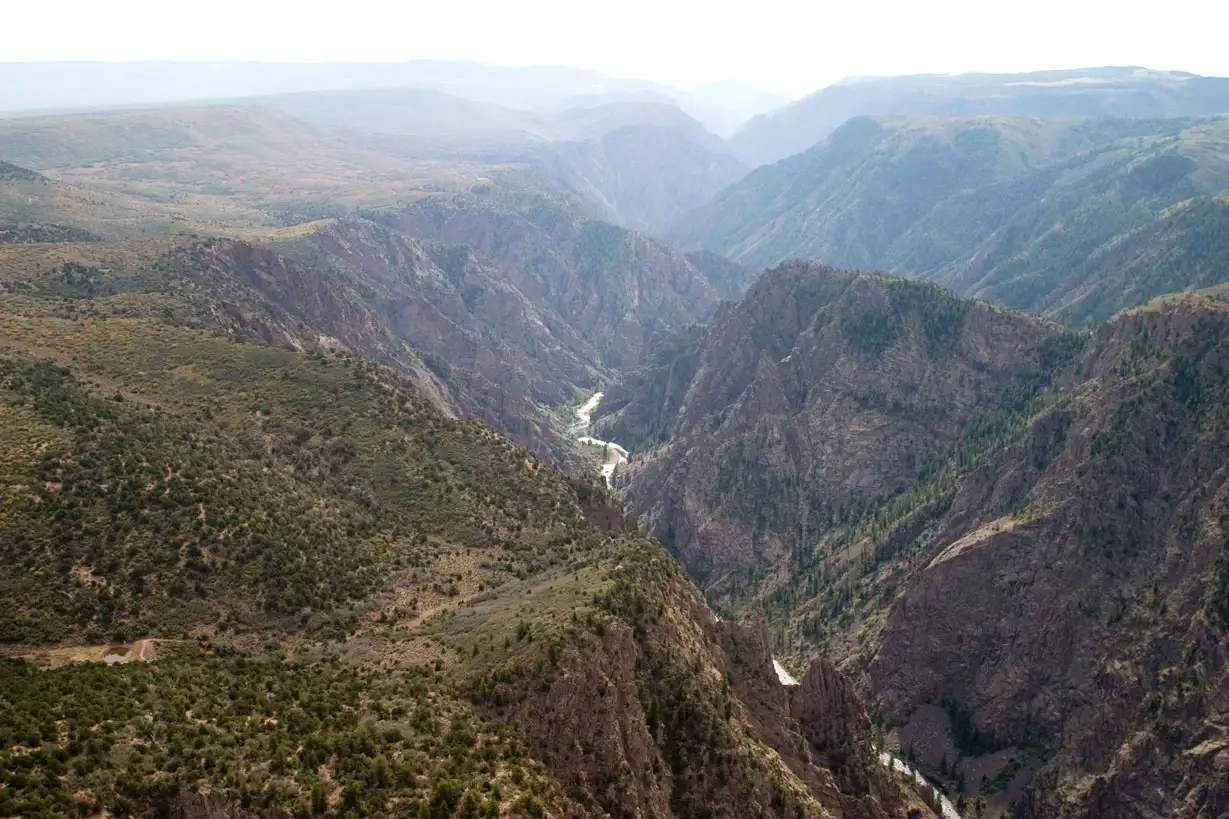
Black Canyon is a place you come to see more than to conquer. The Gunnison River spent roughly two million years cutting a gorge so steep and narrow that it holds some of the tallest cliffs, oldest rock, and craggiest spires in North America. Most people never go below the rim. They stand at an overlook along the paved South Rim drive and take in a vertical world of rock, water, and sky, and that is the whole point.
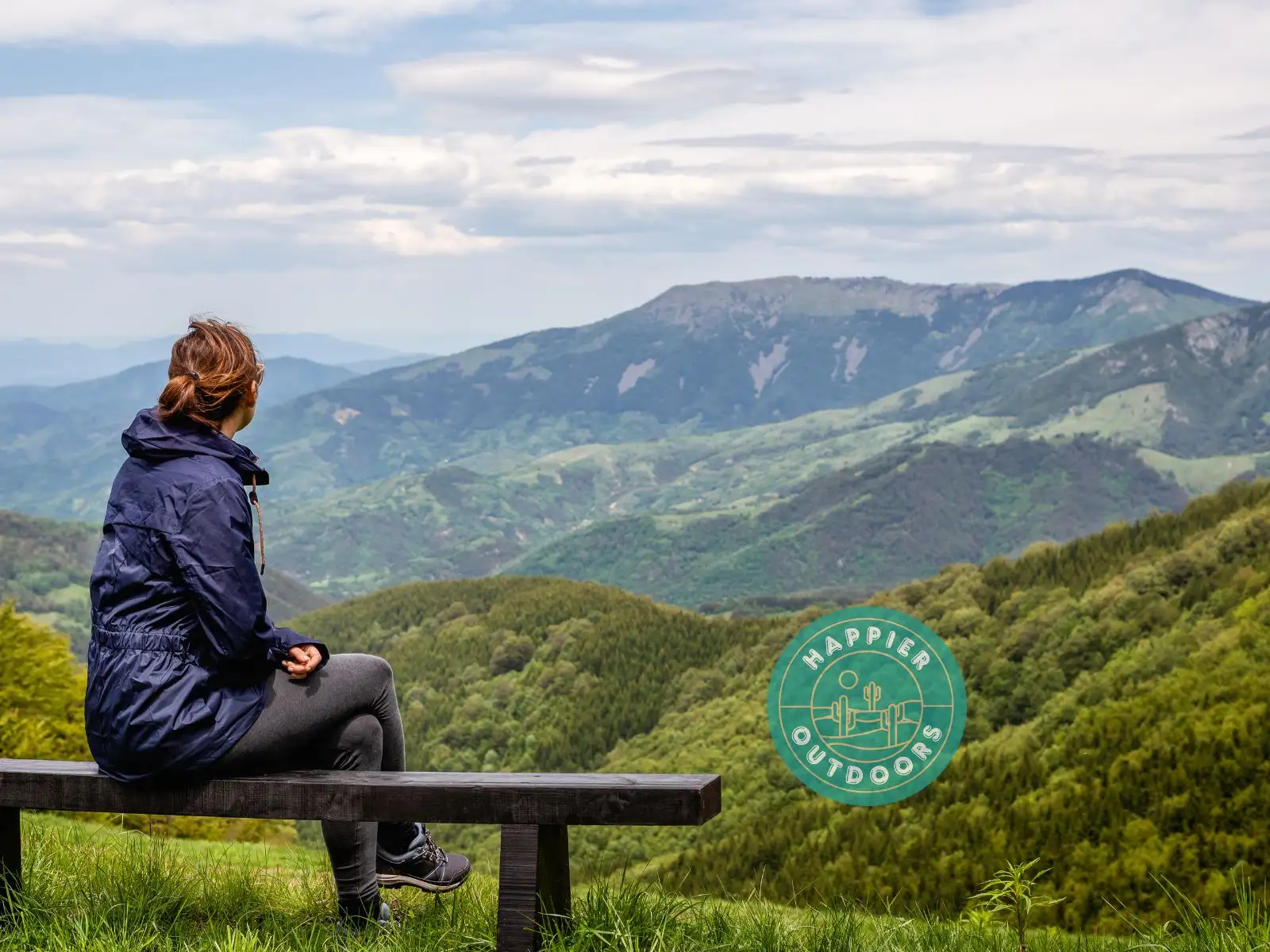
There is real evidence that this kind of looking is not idle. The view itself carries the benefit, which matters here because the inner canyon is expert-only wilderness and the overlooks are where the park meets almost everyone. You do not have to earn the payoff with a hard descent.
The depth also brings quiet. Sound falls away over the edge, the night sky here is dark enough that the park runs astronomy programs, and standing at a railing above a two-million-year-old cut has a way of putting a bad week in proportion. A slow morning tracing the rim from Tomichi Point to Gunnison Point gives you the reset without asking much of your legs.
The science: Roger Ulrich found that surgical patients whose hospital rooms looked out on trees recovered faster, needed less pain medication, and drew fewer negative notes from nurses than matched patients whose window faced a brick wall. The simple act of viewing nature did measurable work. At a park built around overlooks, that finding is the whole case for standing still and looking.
Ulrich (1984) · Science
Seasonal guide
Crowd levels use NPS monthly visitation, averaged 2015–2025. Excludes 2020 (COVID anomaly) and 2026 (partial year). Temperatures are NOAA climate normals from a station 2.6 miles away. Busy does not mean bad. If a peak month is your only window, the season notes below tell you how to work it.
Winter is the emptiest stretch, with highs in the 30s and nights dropping into the low teens. The North Rim road closes and snow accumulation varies year to year, but the South Rim stays open 24 hours and turns into a cross-country ski and snowshoe destination. Dress in layers, watch for ice at the overlooks, and you will often have the rim to yourself.
Spring warms fast, from March highs near 48F to May highs in the mid-60s, with cold nights lingering early on. March and April stay genuinely quiet before crowds ramp up in May. It is a fine window for uncrowded overlooks, though snow can still linger, so check conditions on the North Rim road before making the drive.
Summer is the busiest season, with highs in the upper 70s to low 80s and afternoon thunderstorms a near-daily feature. The South Rim lot fills and congestion is worst from 10 a.m. to 2 p.m., so start at dawn, watch the sky for building storms, and cross to the North Rim for space. Evenings bring the park's excellent dark-sky stargazing.
Fall cools steadily, from September highs in the low 70s to November days in the mid-40s with freezing nights. September and October stay busy but pleasant, and by November the crowds thin sharply. Come early in the season for warm days and open access, and layer up as temperatures drop into late fall.
This month in the park
Timing changes everything out here. Pick a month to see when the light turns golden, which nights stay darkest for stargazing, and what visitors have actually recorded in bloom and on the move. The new-moon night is the one to plan a sky-watching evening around.
January 2027
Wildlife on the move · 2 species on record
- Woodhouse's Scrub-Jay 2 sightings
- Western Tanager 1 sightings
February 2027
March 2027
Wildlife on the move · 5 species on record
- Eastern Collared Lizard 1 sightings
- American Black Bear 1 sightings
- Bighorn Sheep 1 sightings
- Common Golden-mantled Ground Squirrel 1 sightings
- Pinyon Spindlegall Midge 1 sightings
April 2027
In bloom · 3 species on record
- ❀ Curveseed Butterwort 2 sightings
- ❀ Lanceleaf Springbeauty 1 sightings
- ❀ Sagebrush buttercup 1 sightings
Wildlife on the move · 50 species on record
- Dusky Grouse 23 sightings
- Common Golden-mantled Ground Squirrel 18 sightings
- Evening Grosbeak 16 sightings
- Spotted Towhee 10 sightings
- Woodhouse's Scrub-Jay 10 sightings
May 2027
In bloom · 30 species on record
- ❀ Upland larkspur 9 sightings
- ❀ Saskatoon 4 sightings
- ❀ Arrowleaf balsamroot 3 sightings
- ❀ Lanceleaf Springbeauty 3 sightings
- ❀ Foothill deathcamas 3 sightings
Wildlife on the move · 84 species on record
- Common Golden-mantled Ground Squirrel 17 sightings
- Eastern Collared Lizard 16 sightings
- Bighorn Sheep 16 sightings
- Spotted Towhee 15 sightings
- Plateau Fence Lizard 12 sightings
June 2027
In bloom · 51 species on record
- ❀ Gunnison's Mariposa Lily 23 sightings
- ❀ Sulfur buckwheat 22 sightings
- ❀ Brittle Pricklypear 21 sightings
- ❀ Upland larkspur 14 sightings
- ❀ Kingcup Cactus 10 sightings
Wildlife on the move · 143 species on record
- Plateau Fence Lizard 41 sightings
- Common Golden-mantled Ground Squirrel 34 sightings
- Eastern Collared Lizard 27 sightings
- Green-tailed Towhee 25 sightings
- Spotted Towhee 22 sightings
July 2026
In bloom · 16 species on record
- ❀ Gunnison's Mariposa Lily 66 sightings
- ❀ Curved Buckwheat 12 sightings
- ❀ Sulfur buckwheat 5 sightings
- ❀ Common yarrow 2 sightings
- ❀ Hooker's onion 2 sightings
Wildlife on the move · 118 species on record
- Common Golden-mantled Ground Squirrel 36 sightings
- Plateau Fence Lizard 32 sightings
- Weidemeyer's Admiral 16 sightings
- Spotted Towhee 12 sightings
- Eastern Collared Lizard 12 sightings
August 2026
In bloom · 5 species on record
- ❀ Curved Buckwheat 3 sightings
- ❀ Reed canary grass 1 sightings
- ❀ Hoary Tansyaster 1 sightings
- ❀ Cutleaf coneflower 1 sightings
- ❀ Redroot Buckwheat 1 sightings
Wildlife on the move · 87 species on record
- Plateau Fence Lizard 29 sightings
- Common Golden-mantled Ground Squirrel 14 sightings
- Mule Deer 12 sightings
- Rock Squirrel 10 sightings
- Woodhouse's Scrub-Jay 9 sightings
September 2026
In bloom · 2 species on record
- ❀ Rubber Rabbitbrush 1 sightings
- ❀ Sulfur buckwheat 1 sightings
Wildlife on the move · 48 species on record
- Plateau Fence Lizard 17 sightings
- Rock Squirrel 5 sightings
- Common Golden-mantled Ground Squirrel 5 sightings
- Dusky Grouse 4 sightings
- Hunt's Bumble Bee 4 sightings
October 2026
Wildlife on the move · 28 species on record
- Northern Flicker 3 sightings
- Mule Deer 3 sightings
- Plateau Fence Lizard 3 sightings
- Woodhouse's Scrub-Jay 3 sightings
- Red-tailed Hawk 2 sightings
November 2026
In bloom · 2 species on record
- ❀ Yellow Sweetclover 1 sightings
- ❀ Great mullein 1 sightings
Wildlife on the move · 6 species on record
- Dusky Grouse 2 sightings
- Mule Deer 2 sightings
- Woodhouse's Scrub-Jay 2 sightings
- Bald Eagle 1 sightings
- Black Rosy-Finch 1 sightings
December 2026
Wildlife on the move · 3 species on record
- Mountain Cottontail 1 sightings
- Mountain Chickadee 1 sightings
- Woodhouse's Scrub-Jay 1 sightings
Sun and moon times are computed for the park's coordinates from standard NOAA solar equations and cross-checked against the U.S. Naval Observatory. Species lists are research-grade community observations for Black Canyon of the Gunnison National Park, US, CO via iNaturalist, retrieved July 2026; sighting counts are all-time records for that calendar month.
Don’t wait for Black Canyon Of The Gunnison.
One big trip a year isn’t what changes how you feel — the small stuff in between is. The 7-Day Nature Reset is one tiny outdoor practice a day, wherever you already are. Day one takes 60 seconds.
No spam. No noise. Just nature.
Day 1 is landing in your inbox right now — go say hi.
Sleep nearby
Places to stay around Montrose, Colorado. Pan the map to trade a shorter drive for a quieter night.
Camping inside the park books through Recreation.gov and is listed separately.
The map is provided by Stay22. If you book through it we may earn a commission at no cost to you, which helps keep Happier Outdoors running. It never changes what we recommend.
Activities & experiences
Beyond the trails
The night skies here are exceptional. For the best stargazing and astrophotography, pick an overlook well away from the road, or join a ranger telescope program in summer.
This paved scenic road runs 7 miles along the rim from Tomichi Point to High Point, with 12 overlooks to stop and take in the canyon.
A steep, winding road drops down to the Gunnison River. East Portal sits within Curecanti National Recreation Area but is only reachable from inside the park. Vehicles over 22 feet are not allowed.
Reach the North Rim by gravel road from the east end of Crawford State Park. Six overlooks line the way, and the walls here are nearly vertical.
Winter thins out access and services, but the park still leaves room for cold-weather recreation.
Once winter closes South Rim Drive to vehicles past the visitor center at Gunnison Point, rangers groom the rest for cross-country skiing and snowshoeing when staffing and snow allow. Both skate and classic skiing work here.
Details and current conditions live on nps.gov.
Common questions
When is the best time to visit Black Canyon of the Gunnison?
Late spring and fall offer the best balance of open access and thinner crowds, with April, October, and November far quieter than the June-through-August peak. Summer days reach the low 80s with common afternoon thunderstorms, while the shoulder months bring cooler, calmer conditions and highs in the 50s and 60s. Winter is quietest of all but cold, with highs in the 30s and a closed North Rim road.
Is Black Canyon of the Gunnison dog-friendly?
Leashed dogs are allowed only in developed areas and on two named trails, the Rim Rock Trail on the South Rim and the Chasm View Nature Trail on the North Rim. Pets are prohibited on all other hiking trails, in the wilderness, and in the inner canyon, and the Rim Rock Trail is closed to pets in summer because deer become aggressive protecting fawns. In winter, leashed pets are also welcome on the ungroomed South Rim Road and the ski and snowshoe trail.
What is the quietest trail at Black Canyon of the Gunnison?
The North Rim trails see the least foot traffic, with visitors regularly pointing to the Deadhorse Trail and the North Vista Trail to Exclamation Point as the calmest options. The North Rim is reached by an unpaved road and is more remote than the developed South Rim, so most people never make the trip. Keep in mind this is visitor consensus rather than an official ranking.
How crowded does Black Canyon of the Gunnison get?
It is one of the less-visited national parks, drawing roughly 300,000 to 400,000 people a year, but the crowds concentrate hard on the South Rim in summer. Congestion is worst between 10 a.m. and 2 p.m. nearly every day from May through October, and the entrance station can back up on holiday weekends. Arriving early or late, or crossing to the North Rim, avoids most of it.
Is Black Canyon of the Gunnison accessible for wheelchairs?
The South Rim is the most accessible area, with paved paths, accessible restrooms, and a paved viewing platform at Tomichi Point. The Visitor Center has accessible parking and paved sidewalks, though it lacks push-button doors and plumbed water. No hiking trails are fully paved or wheelchair accessible, the North Rim facilities are unpaved, and there is no shuttle service within the park.
Can you camp at Black Canyon of the Gunnison?
Yes, the park has three campgrounds: South Rim, North Rim, and East Portal. South Rim is reservation-only through Recreation.gov, while the smaller North Rim and East Portal campgrounds are first-come, first-served. All payment is cashless, drinking water at the South Rim runs mid-May through mid-October, and East Portal closes in winter.
Where do you park at Black Canyon of the Gunnison?
Most visitors park at the South Rim lot near the visitor center, which often fills during summer. There is an overflow area across from Loop A at the South Rim campground for ranger-program attendees who are not camping, and the more remote North Rim is a good alternative when the South Rim is crowded. Check current park alerts for real-time conditions before you go.
What does it cost to enter Black Canyon of the Gunnison?
Entrance is $30 per private vehicle for a 7-day pass, $25 per motorcycle, or $15 per person on foot or bicycle. An annual park pass is $55. Youth 15 and under enter free.
What are the park hours?
The South Rim is open 24 hours a day, year-round. That means you can arrive before dawn or stay after dark for stargazing, though the North Rim road closes in winter.