
Biscayne National Park
Homestead, Florida · Southeast
Almost all of it is water
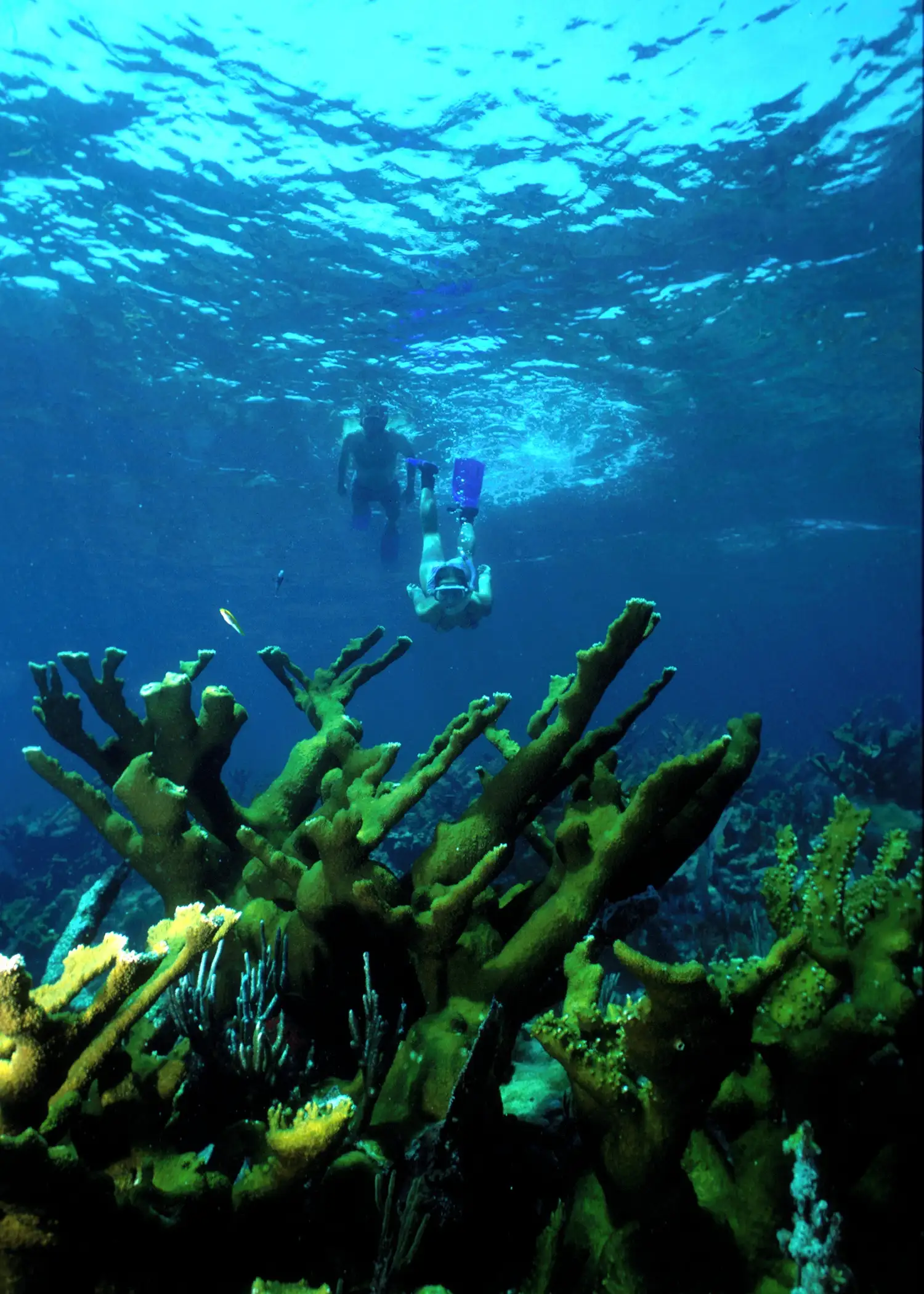
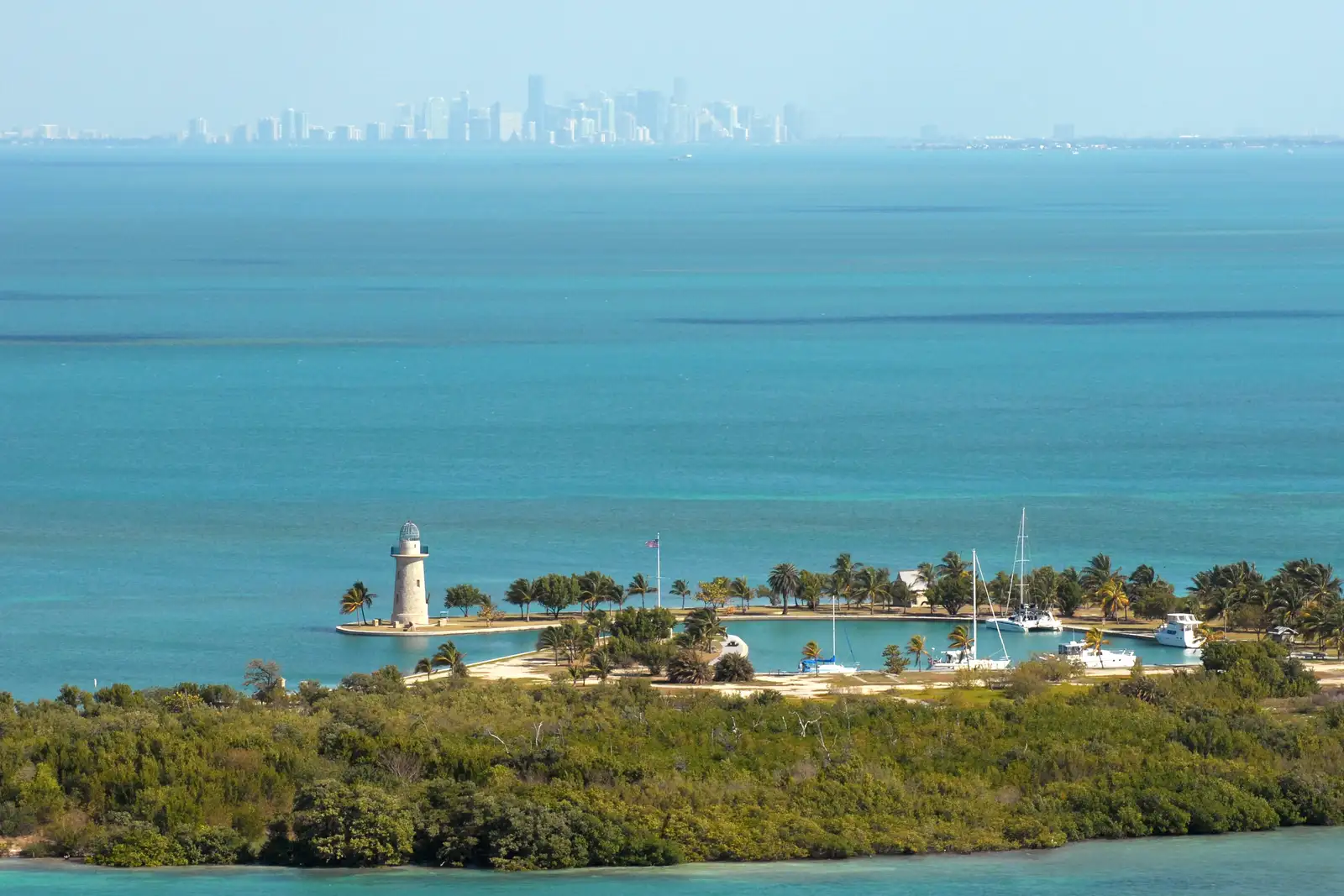
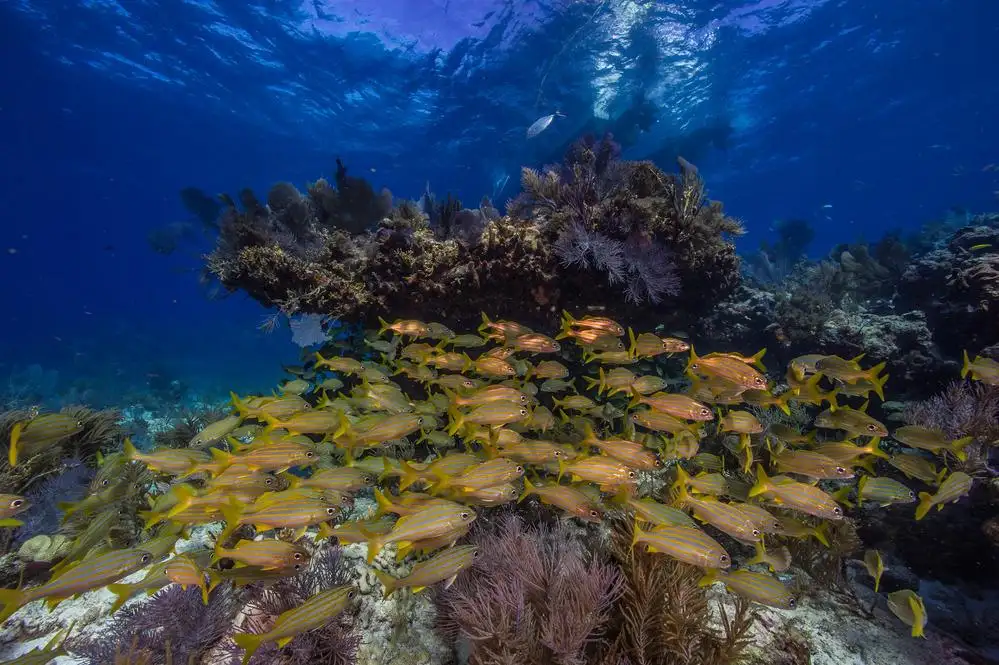
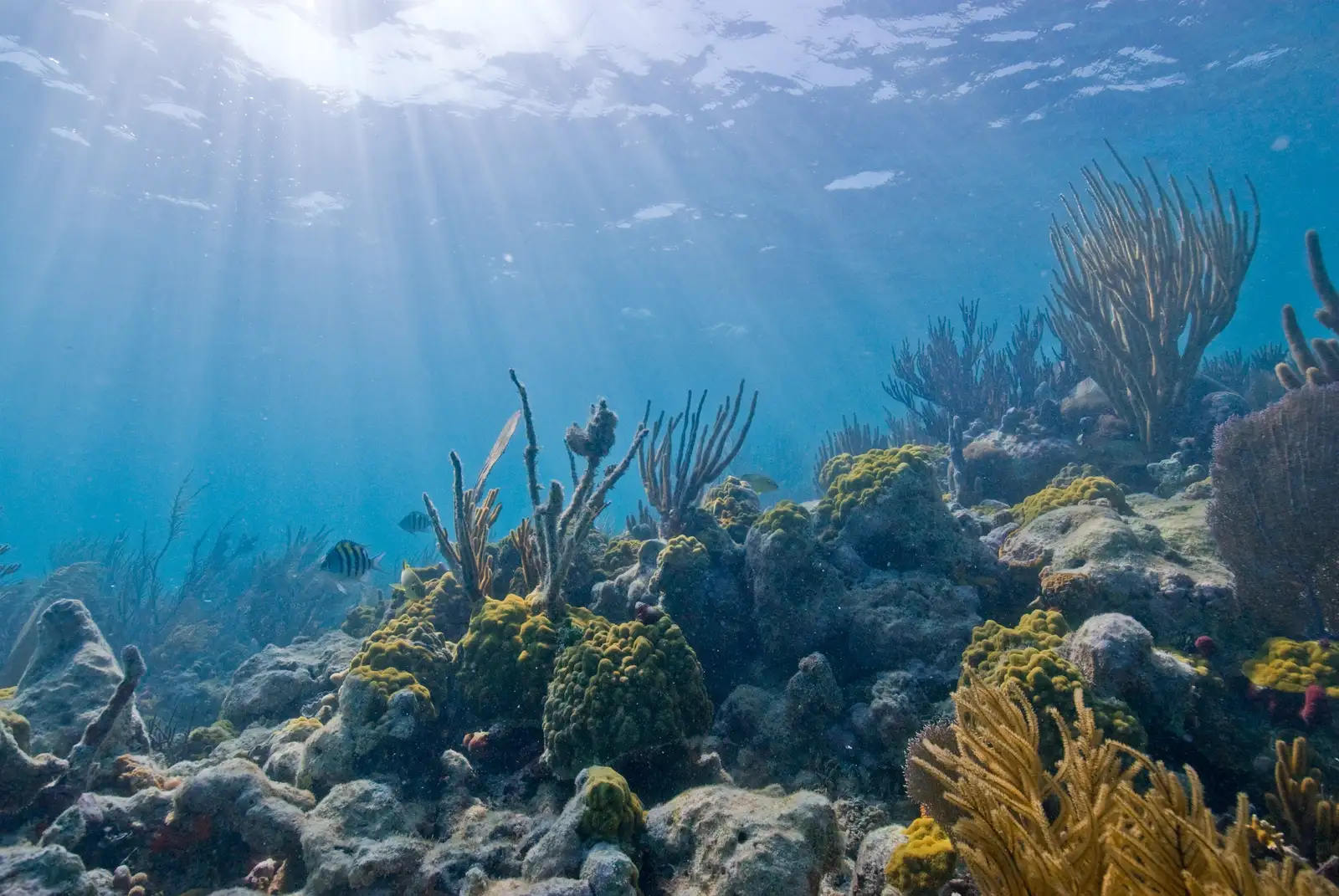
Biscayne is 97 percent water. Within sight of Miami's skyline, the park protects a shallow aquamarine bay, a chain of emerald keys, and coral reefs stitched with fish. Most people who come here get on the water, by boat, kayak, paddleboard, or mask and snorkel, and that is the whole point of the place.
What the water gives back is steadier than the view suggests. Warm, calm, and close to eye level, Biscayne Bay is the kind of blue space you can sit beside on the Convoy Point jetty or drift across on a guided boat tour without any particular skill or effort. The horizon does the work while you stop bracing for the next thing.
You do not have to reach a reef for it to land. Watching light move over shallow water from the lawn, or paddling a slow line along the mangroves, puts you in the same wide, low, unhurried scene the divers came for.
The science: Population-level research by White and colleagues found that contact with and living near 'blue space,' meaning coasts, rivers, and lakes, is associated with better mental health and wellbeing. At a park that is almost entirely water, that association is close to the whole experience.
White, Elliott, Gascon, Roberts & Fleming (2021) · Environmental Research
Seasonal guide
Crowd levels use NPS monthly visitation, averaged 2015–2025. Excludes 2020 (COVID anomaly) and 2026 (partial year). Temperatures are NOAA climate normals from a station 13 miles away. Busy does not mean bad. If a peak month is your only window, the season notes below tell you how to work it.
Winter is the mild, dry stretch, with January highs near 77F, lows around 63F, and low rainfall. It is the most comfortable season on the water and one of the quietest for crowds. Bring a windbreaker, since occasional cold fronts push in wind and chop on the bay.
Spring warms from the low 80s into the mid 80s and brings the busiest visitation of the year. Rain stays light through March and April before climbing sharply in May. Book guided boat tours ahead, arrive early at Convoy Point, and get out on the water before afternoon heat builds.
Summer is hot and humid, with highs around 90F and heavy afternoon thunderstorms, and hurricane season runs June through November. Start early, watch the marine forecast closely, and be off the open water before storms build in the afternoon. Warm, clear water makes this prime snorkeling season when weather cooperates.
Fall is the quietest time to visit, though September and October are the wettest months and the heart of hurricane season. Temperatures ease from the upper 80s into the low 80s by November. Watch tropical forecasts, keep plans flexible, and you will have the bay close to yourself between systems.
This month in the park
Timing changes everything out here. Pick a month to see when the light turns golden, which nights stay darkest for stargazing, and what visitors have actually recorded in bloom and on the move. The new-moon night is the one to plan a sky-watching evening around.
January 2027
In bloom · 5 species on record
- ❀ Baycedar 5 sightings
- ❀ Firebush 3 sightings
- ❀ Narrow-leaved blue-eyed grass 1 sightings
- ❀ Scarlet Cordia 1 sightings
- ❀ Stiffhair Waxweed 1 sightings
Wildlife on the move · 190 species on record
- Double-crested Cormorant 39 sightings
- Great Blue Heron 35 sightings
- Brown Pelican 31 sightings
- Laughing Gull 28 sightings
- Royal Tern 25 sightings
February 2027
In bloom · 5 species on record
- ❀ Sea ox-eye 3 sightings
- ❀ Oceanblue morning glory 1 sightings
- ❀ Firebush 1 sightings
- ❀ Necklace pod 1 sightings
- ❀ Baycedar 1 sightings
Wildlife on the move · 184 species on record
- Peters's Rock Agama 41 sightings
- Royal Tern 31 sightings
- Double-crested Cormorant 29 sightings
- Brown Pelican 20 sightings
- Great Blue Heron 17 sightings
March 2027
In bloom · 6 species on record
- ❀ Black mangrove 2 sightings
- ❀ Scorpion's-tail 1 sightings
- ❀ Largeflower Mexican clover 1 sightings
- ❀ Sea ox-eye 1 sightings
- ❀ Baycedar 1 sightings
Wildlife on the move · 152 species on record
- Peters's Rock Agama 45 sightings
- Brown Pelican 30 sightings
- Brown Anole 20 sightings
- Great Barracuda 18 sightings
- Double-crested Cormorant 16 sightings
April 2027
In bloom · 17 species on record
- ❀ Poisonwood 3 sightings
- ❀ Tree Seaside Tansy 2 sightings
- ❀ Sea ox-eye 2 sightings
- ❀ Baycedar 2 sightings
- ❀ Alkali heliotrope 1 sightings
Wildlife on the move · 213 species on record
- Double-crested Cormorant 39 sightings
- Peters's Rock Agama 31 sightings
- Brown Anole 26 sightings
- Brown Pelican 21 sightings
- Green Iguana 21 sightings
May 2027
In bloom · 11 species on record
- ❀ Sea ox-eye 2 sightings
- ❀ Common lantana 1 sightings
- ❀ Largeflower Mexican clover 1 sightings
- ❀ Alkali heliotrope 1 sightings
- ❀ Horseweed 1 sightings
Wildlife on the move · 171 species on record
- Peters's Rock Agama 28 sightings
- Brown Anole 23 sightings
- Atlantic Sergeant Major 17 sightings
- Green Iguana 16 sightings
- Great Barracuda 16 sightings
June 2027
In bloom · 3 species on record
- ❀ Oceanblue morning glory 1 sightings
- ❀ Baycedar 1 sightings
- ❀ Perfumed spiderlily 1 sightings
Wildlife on the move · 155 species on record
- Blue Land Crab 21 sightings
- Peters's Rock Agama 20 sightings
- Brown Anole 18 sightings
- Magnificent Frigatebird 16 sightings
- Double-crested Cormorant 15 sightings
July 2026
Wildlife on the move · 183 species on record
- Magnificent Frigatebird 15 sightings
- Brown Anole 14 sightings
- Golden Silk Spider 14 sightings
- Green Iguana 11 sightings
- Peters's Rock Agama 11 sightings
August 2026
Wildlife on the move · 135 species on record
- Magnificent Frigatebird 13 sightings
- Yellow-crowned Night Heron 11 sightings
- Atlantic Sergeant Major 9 sightings
- Golden Silk Spider 9 sightings
- Great Barracuda 8 sightings
September 2026
Wildlife on the move · 145 species on record
- Peters's Rock Agama 9 sightings
- Green Iguana 8 sightings
- Spotted Sandpiper 8 sightings
- Golden Silk Spider 8 sightings
- Magnificent Frigatebird 7 sightings
October 2026
Wildlife on the move · 106 species on record
- Peters's Rock Agama 14 sightings
- Green Iguana 9 sightings
- Great Blue Heron 7 sightings
- Double-crested Cormorant 7 sightings
- Brown Anole 6 sightings
November 2026
In bloom · 3 species on record
- ❀ Turkey tangle frogfruit 1 sightings
- ❀ Shrubby false buttonweed 1 sightings
- ❀ White beggarticks 1 sightings
Wildlife on the move · 171 species on record
- Purple Sea Fan 33 sightings
- Double-crested Cormorant 24 sightings
- Great Barracuda 22 sightings
- Atlantic Sergeant Major 16 sightings
- Bluestriped Grunt 15 sightings
December 2026
In bloom · 4 species on record
- ❀ Baycedar 2 sightings
- ❀ Firebush 1 sightings
- ❀ Necklace pod 1 sightings
- ❀ Christmas berry 1 sightings
Wildlife on the move · 138 species on record
- Green Iguana 39 sightings
- Double-crested Cormorant 34 sightings
- Brown Pelican 20 sightings
- Peters's Rock Agama 20 sightings
- Great Barracuda 19 sightings
Sun and moon times are computed for the park's coordinates from standard NOAA solar equations and cross-checked against the U.S. Naval Observatory. Species lists are research-grade community observations for Biscayne National Park, US, FL via iNaturalist, retrieved July 2026; sighting counts are all-time records for that calendar month.
Don’t wait for Biscayne.
One big trip a year isn’t what changes how you feel — the small stuff in between is. The 7-Day Nature Reset is one tiny outdoor practice a day, wherever you already are. Day one takes 60 seconds.
No spam. No noise. Just nature.
Day 1 is landing in your inbox right now — go say hi.
Sleep nearby
Places to stay around Homestead, Florida. Pan the map to trade a shorter drive for a quieter night.
Camping inside the park books through Recreation.gov and is listed separately.
The map is provided by Stay22. If you book through it we may earn a commission at no cost to you, which helps keep Happier Outdoors running. It never changes what we recommend.
Let someone else lead
A guide is worth it when the terrain needs one, or when you would rather look around than navigate. These are the highest-rated trips running around Biscayne, not the cheapest.
 Free cancellation
 Sail Biscayne Bay: An Intimate Eco-Adventure with Snorkeling
- Runs year-round
- Up to 10 per booking
- Easy for most fitness levels
 Free cancellation
 Biscayne Bay Island and Nature Exploration
- Runs year-round
- Service animals welcome
 Free cancellation
 Private Sailing on the Miami Bay - Biscayne Bay
- Runs year-round
- Private tour, up to 6
- Service animals welcome
Tours are listed by Viator; booking happens there. If you book we may earn a commission at no cost to you, which helps keep Happier Outdoors running. It never changes what we list. Prices checked September 2026 and can change.
Activities & experiences
Beyond the trails
Boca Chita draws serious bird activity. The park protects habitat for migratory stopover, feeding, and nesting, including protected species. Winter is the best time to watch them.
Elliott Key sits along migratory routes, with habitat for stopover, feeding, and nesting. Protected bird species live here alongside the marine life. Come in winter for the most activity.
Convoy Point offers a good vantage on the park's birds, including protected species. The natural habitats support migratory stopover, feeding, and nesting, and winter brings the best viewing.
The Junior Ranger program spans three South Florida parks: Big Cypress National Preserve, Biscayne, and Everglades. Pick up a booklet at the visitor center and complete the activities to earn a badge. Finish the whole book for three badges plus an exclusive South Florida patch.
Fishing here is world-class. The park's marine habitat and nursery environments sustain spiny lobster, snapper, grouper, tarpon, and bonefish.
Details and current conditions live on nps.gov.
From the field
Common questions
When is the best time to visit Biscayne National Park?
Winter, from December through April, is the most comfortable time to visit, with mild, mostly dry weather and fewer bugs. January highs sit around 77F with low rainfall, while summer turns hot, humid, and stormy with afternoon thunderstorms. Note that June through November is hurricane season.
Can you bring dogs to Biscayne National Park?
Leashed dogs are allowed only in limited areas, and the leash must be no longer than six feet. Pets are permitted on the Convoy Point grounds, roads, parking lots, and picnic areas, and in developed areas of Elliott Key, but not on any trails, on Boca Chita Key, at swimming beaches, inside buildings, or on park shuttles. Service animals are allowed wherever visitors go.
What is the quietest trail in Biscayne National Park?
Visitors and hiking guides point to the Black Point Jetty Trail on the mainland and the Spite Highway Trail on Elliott Key as the least crowded options. The Black Point jetty is described as quieter than the popular Convoy Point jetty and better for birdwatching, while Spite Highway, the park's longest trail at around seven miles, stays lightly traveled largely because Elliott Key is only reachable by boat.
How crowded does Biscayne National Park get?
Biscayne is far less crowded than most mainland parks, drawing roughly 700,000 visitors a year across a park that is almost entirely open water. Crowds concentrate at the Convoy Point day-use area, meaning the visitor center grounds, boat dock, and short jetty trail, while the busiest stretch runs through the mild winter months.
Is Biscayne National Park accessible for wheelchairs?
Accessibility is centered at Convoy Point, where the Jetty Walk boardwalk is wheelchair accessible and the grounds have designated accessible parking, picnic tables, and restrooms. Most island trails and water access lack paved paths, and because there are no bridges or ferries, reaching the keys requires a private boat or a guided tour, some of which may be accessible.
Can you camp at Biscayne National Park?
Yes, but only on the islands and only by boat, at the Elliott Key and Boca Chita Key campgrounds. Sites cost $35 per night and are limited to six people and two tents each, with a stay limit of 14 consecutive days. There is no backcountry camping and no road access to either campground.
Where do you park at Biscayne National Park?
Parking is free at the Convoy Point grounds near the Dante Fascell Visitor Center, and the lot opens at 7:00 a.m. daily. Parking on grass, shoulders, or the main road is prohibited, and four spaces are reserved for island residents. Since there are no bridges or ferries, this lot is the mainland access point for the jetty trail, ranger programs, and guided boat tours.