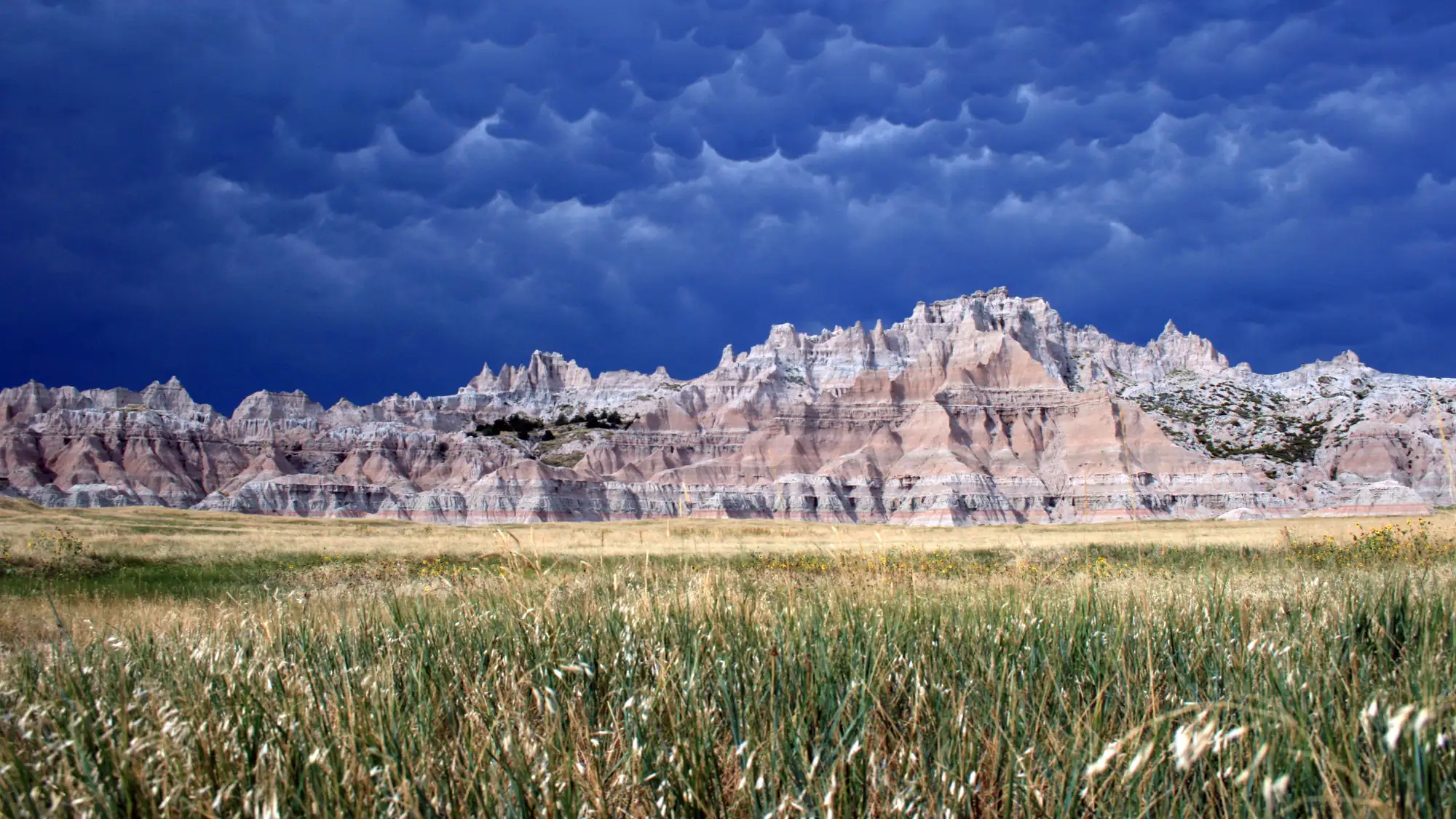
Badlands National Park
Interior, South Dakota
The prairie here settles your body
Most people arrive for the spires, those eroded ridges of banded rock that look almost built. But the great majority of Badlands is grass. The park protects 244,000 acres of mixed-grass prairie, and once you step past the overlooks near Cedar Pass, the land opens into a wide green sweep with bison, bighorn sheep, and prairie dog towns spread across it.
That openness is the point. There is almost nothing to fix your gaze on and nothing pulling at your attention, just grass, sky, and the slow movement of animals across it. Wildlife watching and scenic driving are the main draws for a reason, and both let you take in the space at the pace your body wants rather than the pace a schedule demands.
The prairie also delivers a soundscape you rarely get anywhere else: wind through grass, birdsong, and the chatter of prairie dogs, with the human racket thinning fast beyond the loop road. Add some of the darkest night skies in the country, and the whole place asks very little of you while giving your nervous system somewhere quiet to reset.
The science: A large review by Twohig-Bennett and Jones pooled dozens of studies and found that more time spent in green, open landscapes was linked to measurably lower cortisol, heart rate, and blood pressure. The same review tied greater greenspace exposure to reduced risk of cardiovascular problems and type II diabetes. A prairie this vast is exactly the kind of green space that research describes.
Twohig-Bennett & Jones (2018) · Environmental Research
Seasonal guide
Crowd levels use NPS monthly visitation, averaged 2015–2025. Excludes 2020 (COVID anomaly) and 2026 (partial year). Temperatures are NOAA climate normals from a station 20.6 miles away. Busy does not mean bad. If a peak month is your only window, the season notes below tell you how to work it.
Winter is the emptiest stretch, with highs around 37 to 40F, lows near 10F, and 12 to 24 inches of total snowfall across the season. The park stays open all year except for weather closures, so pack layers, watch the forecast, and treat the Badlands Loop Road overlooks as your main plan. You may have the spires and prairie almost entirely to yourself.
Spring warms fast, from highs near 51F in March to 69F by May, and it stays quiet until visitation jumps in May. This is prime wildlife-watching time as bison and other animals move across the greening prairie. May brings the heaviest rain of the year, so carry rain gear and check road conditions before heading down the unpaved Sage Creek Rim Road.
Summer is the busiest and hottest season, with highs near 88F in July and recorded extremes reaching 116F, plus violent afternoon thunderstorms that can bring hail and even tornadoes. Start early, carry far more water than you think you need, and be off exposed trails when storms build in the afternoon. Beat the mid-day crush by visiting overlooks at dawn or dusk and exploring the quieter South Unit.
Fall cools steadily from highs near 78F in September to 49F by November, and crowds thin quickly after the summer peak. September and October offer comfortable days for hiking and wildlife watching, while November is genuinely quiet with cold nights. Bring layers for the wide day-to-night temperature swings and enjoy the softer light on the formations.
This month in the park
Timing changes everything out here. Pick a month to see when the light turns golden, which nights stay darkest for stargazing, and what visitors have actually recorded in bloom and on the move. The new-moon night is the one to plan a sky-watching evening around.
January 2027
Wildlife on the move · 14 species on record
- Bighorn Sheep 6 sightings
- Black-tailed Prairie Dog 6 sightings
- Mule Deer 3 sightings
- Black-billed Magpie 3 sightings
- North American Porcupine 2 sightings
February 2027
Wildlife on the move · 11 species on record
- Bighorn Sheep 3 sightings
- Black-tailed Prairie Dog 3 sightings
- American Bison 3 sightings
- Pronghorn 2 sightings
- Mountain Bluebird 1 sightings
March 2027
Wildlife on the move · 26 species on record
- Bighorn Sheep 13 sightings
- American Bison 13 sightings
- Mule Deer 8 sightings
- Black-tailed Prairie Dog 8 sightings
- Western Meadowlark 4 sightings
April 2027
In bloom · 7 species on record
- ❀ Common starlily 1 sightings
- ❀ Carrotleaf Desert-parsley 1 sightings
- ❀ African mustard 1 sightings
- ❀ Curveseed Butterwort 1 sightings
- ❀ Golden bean 1 sightings
Wildlife on the move · 44 species on record
- Bighorn Sheep 28 sightings
- American Bison 28 sightings
- Black-tailed Prairie Dog 14 sightings
- Western Meadowlark 13 sightings
- Mountain Bluebird 12 sightings
May 2027
In bloom · 24 species on record
- ❀ Textile onion 8 sightings
- ❀ Fragrant evening primrose 6 sightings
- ❀ Sego Lily 4 sightings
- ❀ Lambert's Locoweed 4 sightings
- ❀ Spotted fritillary 3 sightings
Wildlife on the move · 120 species on record
- Bighorn Sheep 160 sightings
- Black-tailed Prairie Dog 141 sightings
- American Bison 136 sightings
- Western Meadowlark 53 sightings
- Mule Deer 43 sightings
June 2027
In bloom · 51 species on record
- ❀ Sego Lily 25 sightings
- ❀ Showy milkweed 22 sightings
- ❀ Plains Pricklypear 12 sightings
- ❀ Field bindweed 10 sightings
- ❀ Scarlet Globemallow 8 sightings
Wildlife on the move · 185 species on record
- Bighorn Sheep 235 sightings
- American Bison 174 sightings
- Black-tailed Prairie Dog 146 sightings
- Cliff Swallow 81 sightings
- Western Meadowlark 65 sightings
July 2026
In bloom · 32 species on record
- ❀ Showy milkweed 11 sightings
- ❀ Field bindweed 8 sightings
- ❀ Common Sunflower 6 sightings
- ❀ Hoary vervain 6 sightings
- ❀ Few-flower buckwheat 5 sightings
Wildlife on the move · 185 species on record
- Bighorn Sheep 229 sightings
- Black-tailed Prairie Dog 175 sightings
- American Bison 119 sightings
- Cliff Swallow 68 sightings
- Mountain Bluebird 54 sightings
August 2026
In bloom · 11 species on record
- ❀ Curlycup Gumweed 6 sightings
- ❀ Buffalo-bur 2 sightings
- ❀ Hoary vervain 2 sightings
- ❀ Field bindweed 1 sightings
- ❀ American vetch 1 sightings
Wildlife on the move · 169 species on record
- Bighorn Sheep 195 sightings
- Black-tailed Prairie Dog 141 sightings
- American Bison 109 sightings
- Rock Wren 53 sightings
- Pronghorn 36 sightings
September 2026
In bloom · 8 species on record
- ❀ Rubber Rabbitbrush 1 sightings
- ❀ Common Sunflower 1 sightings
- ❀ Curlycup Gumweed 1 sightings
- ❀ Long-leaved groundcherry 1 sightings
- ❀ Western aster 1 sightings
Wildlife on the move · 154 species on record
- Bighorn Sheep 150 sightings
- Black-tailed Prairie Dog 109 sightings
- American Bison 81 sightings
- Pronghorn 39 sightings
- Western Meadowlark 35 sightings
October 2026
In bloom · 3 species on record
- ❀ Alfalfa 1 sightings
- ❀ Curlycup Gumweed 1 sightings
- ❀ Few-flower buckwheat 1 sightings
Wildlife on the move · 72 species on record
- Bighorn Sheep 84 sightings
- American Bison 52 sightings
- Black-tailed Prairie Dog 49 sightings
- Mule Deer 22 sightings
- Black-billed Magpie 20 sightings
November 2026
Wildlife on the move · 29 species on record
- Bighorn Sheep 24 sightings
- American Bison 11 sightings
- Black-tailed Prairie Dog 7 sightings
- Mule Deer 5 sightings
- Anthophora affabilis 5 sightings
December 2026
Wildlife on the move · 29 species on record
- Bighorn Sheep 18 sightings
- Mule Deer 8 sightings
- Black-tailed Prairie Dog 8 sightings
- American Bison 8 sightings
- Townsend's Solitaire 4 sightings
Sun and moon times are computed for the park's coordinates from standard NOAA solar equations and cross-checked against the U.S. Naval Observatory. Species lists are research-grade community observations for Badlands National Park, US, SD via iNaturalist, retrieved July 2026; sighting counts are all-time records for that calendar month.
Don’t wait for Badlands.
One big trip a year isn’t what changes how you feel — the small stuff in between is. The 7-Day Nature Reset is one tiny outdoor practice a day, wherever you already are. Day one takes 60 seconds.
No spam. No noise. Just nature.
Day 1 is landing in your inbox right now — go say hi.
Sleep nearby
Places to stay around Wall, South Dakota. Pan the map to trade a shorter drive for a quieter night.
Camping inside the park books through Recreation.gov and is listed separately.
The map is provided by Stay22. If you book through it we may earn a commission at no cost to you, which helps keep Happier Outdoors running. It never changes what we recommend.
Let someone else lead
A guide is worth it when the terrain needs one, or when you would rather look around than navigate. These are the highest-rated trips running around Badlands, not the cheapest.

Badlands Sunset & Wildlife: Nature's Evening Glow
- Runs Jul–Oct
- Private tour, up to 8
- Service animals welcome

Wildlife Biologist’s Field Expedition: The Badlands Uncovered
- Runs Sep–Dec
- Private tour, up to 8
- Easy for most fitness levels

Private Badlands National Park Wildlife and Scenic Tour
- Runs Sep–Dec
- Private tour, up to 6
- Service animals welcome
 Free cancellation
 Badlands National Park - Sunset and Stargazing (Private)
- Runs Jun–Sep
- Private tour, up to 14
- Stroller accessible
Tours are listed by Viator; booking happens there. If you book we may earn a commission at no cost to you, which helps keep Happier Outdoors running. It never changes what we list. Prices checked September 2026 and can change.
Activities & experiences
Beyond the trails
The Badlands are home to many animals. This page tells you what lives here and where to look.
A drive around the South Unit's perimeter opens up wide views of the landscape.
Sheep Mountain Table sits in the South Unit, with wide views of the Badlands. It works for hiking, sunset photography, or simply looking around.
Sage Creek Rim Road is a dirt road in the North Unit. Expect badlands formations and the chance to see wildlife along the way.
The park's most popular drive is Badlands Loop Road, also called Highway 240. You'll pass landscapes, exhibits, and wildlife.
Early mornings and late evenings bring out the best light here. This page lists the good spots for sunrise and sunset.
Details and current conditions live on nps.gov.
From the field
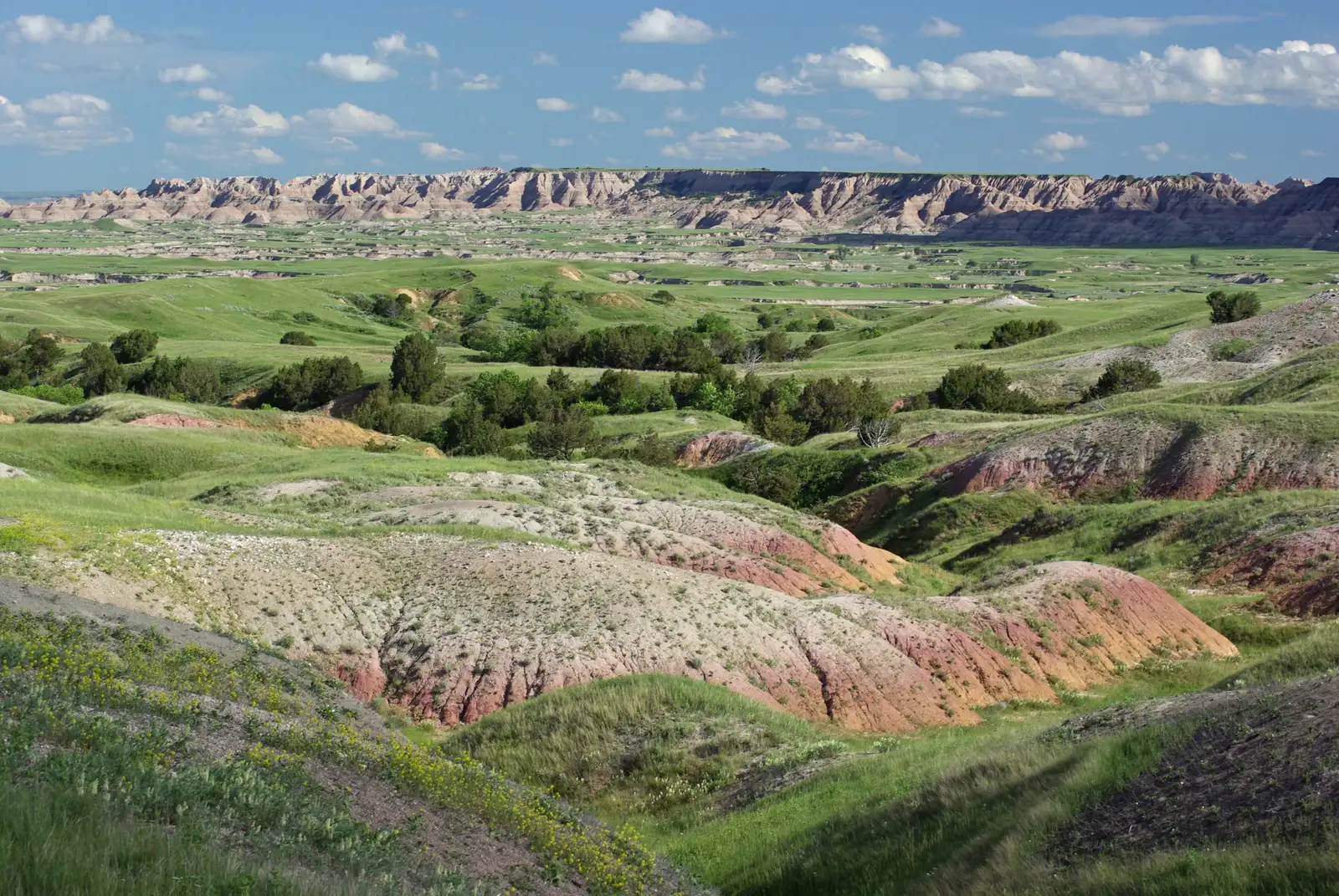
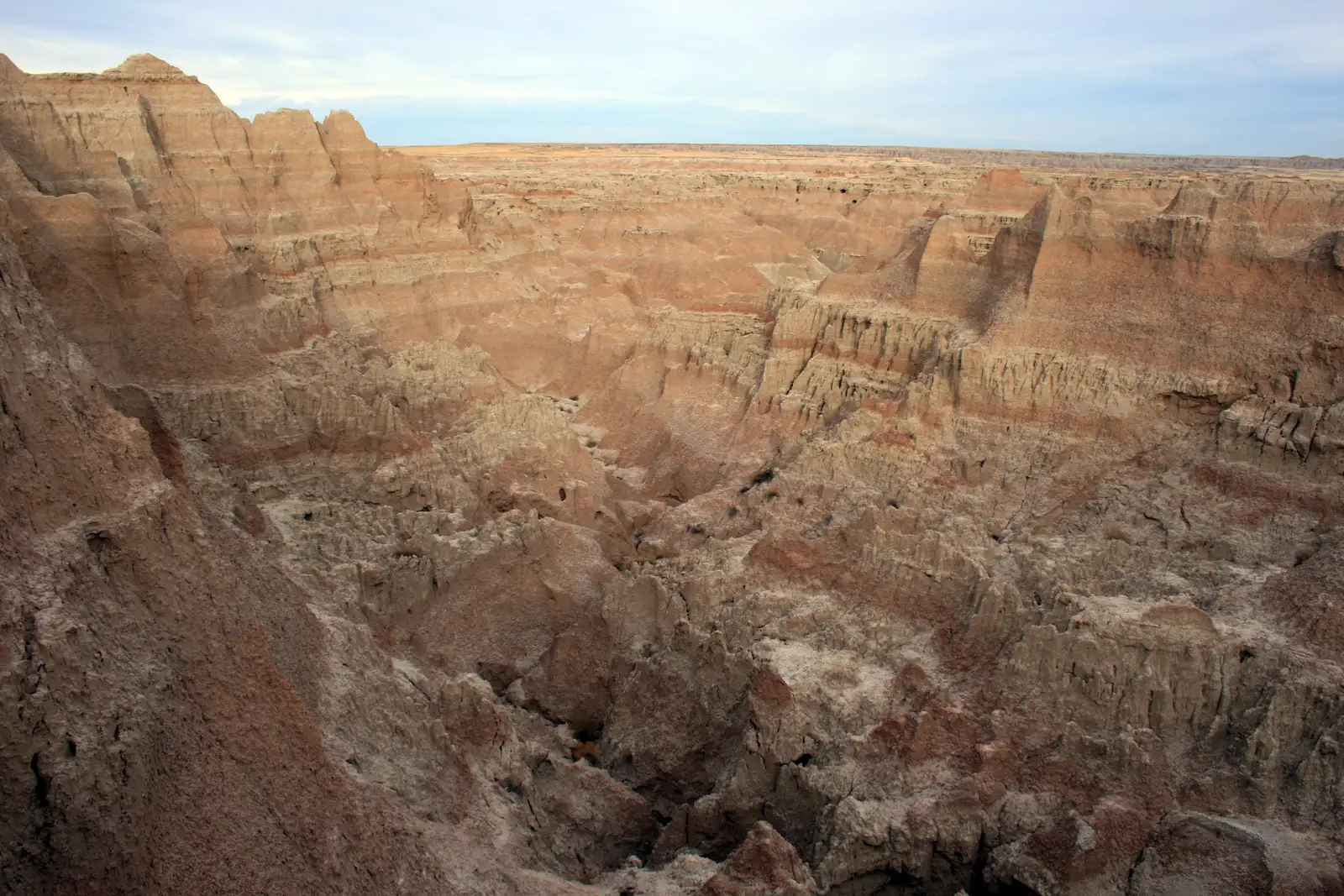
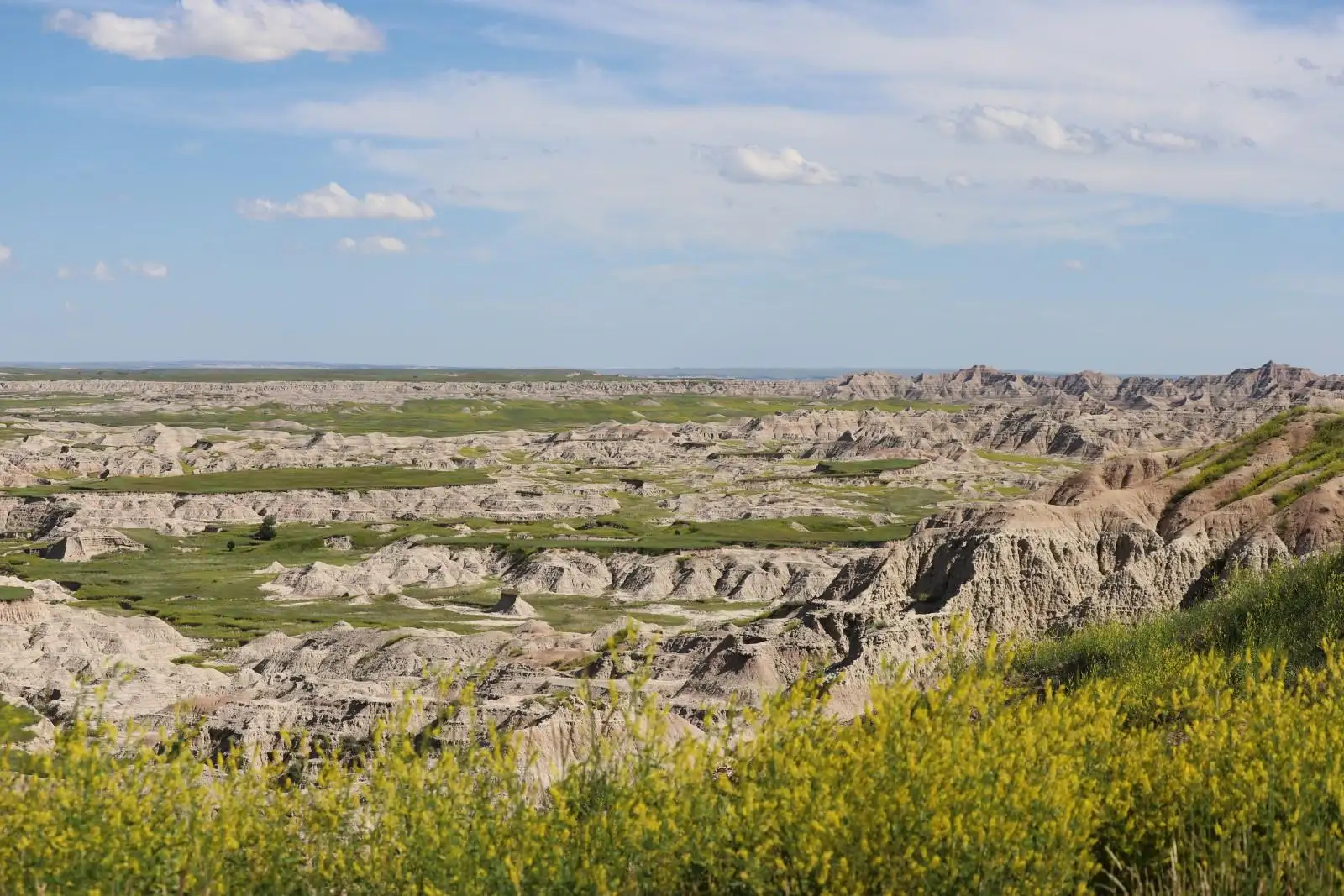
Common questions
When is the best time to visit Badlands National Park?
Late spring and early fall hit the best balance of mild weather and thinner crowds. May sees highs near 69F before the summer rush, while September cools to the high 70s after the July and August peak, when the park draws its heaviest visitation. Both windows avoid the extreme summer heat and the deep winter cold.
Is Badlands National Park dog-friendly?
Dogs are allowed but only on a leash no longer than six feet and only in developed areas like campgrounds, picnic areas, parking lots, and roadways. They are not permitted on any hiking trails, in public buildings, or in the backcountry and wilderness. Keep pets away from prairie dog colonies, including the one at Sage Creek Campground.
What is the quietest trail in Badlands National Park?
Visitors and trail writers consistently point to the Sage Creek Wilderness Loop and Deer Haven Trail as the least crowded, since both sit in the remote backcountry away from the main loop road. The Cedar Butte Trail in the less-visited South Unit is also described as quiet and underrated. The popular Door, Window, and Notch trails near the visitor center draw most of the foot traffic instead.
How crowded does Badlands National Park get?
Badlands draws about 1.05 million visitors a year, with June, July, and August accounting for roughly 70 percent of that total. Crowds concentrate mid-day, from about 10 a.m. to 4 p.m., and cluster in the Cedar Pass area near the Ben Reifel Visitor Center. The Sage Creek Rim Road and the South Unit stay significantly quieter.
Is Badlands National Park accessible for wheelchairs and strollers?
Yes, the park has wheelchair-accessible visitor centers, several boardwalk trails, and accessible overlooks. The Fossil Exhibit Trail and Window Trail are fully accessible boardwalks, and the first portions of the Door and Cliff Shelf trails are as well. Most overlooks along the Badlands Loop Road have gentle boardwalk access, though ranger-led hikes and the backcountry are generally not accessible.
Can you camp at Badlands National Park?
Yes, the park has two front-country campgrounds. Cedar Pass Campground has around 96 sites with flush toilets and coin showers, charging $23 for tent sites and $38 for RV sites with electric. Sage Creek Campground is free and first-come, first-served but sits on an unpaved road and does not allow RVs or trailers longer than 18 feet.