Arches National Park
Moab, Utah · Southwest
The red rock works quickly
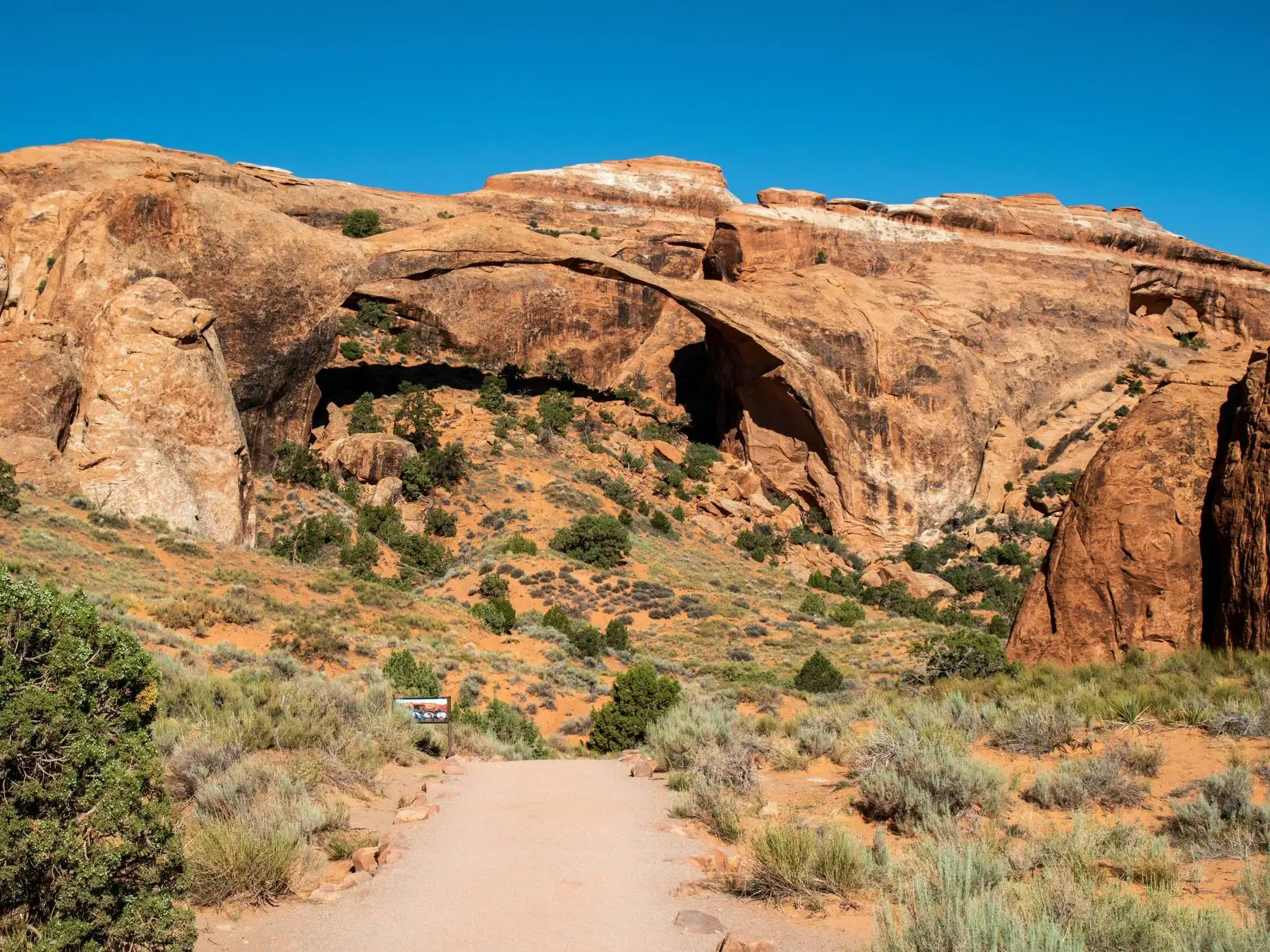
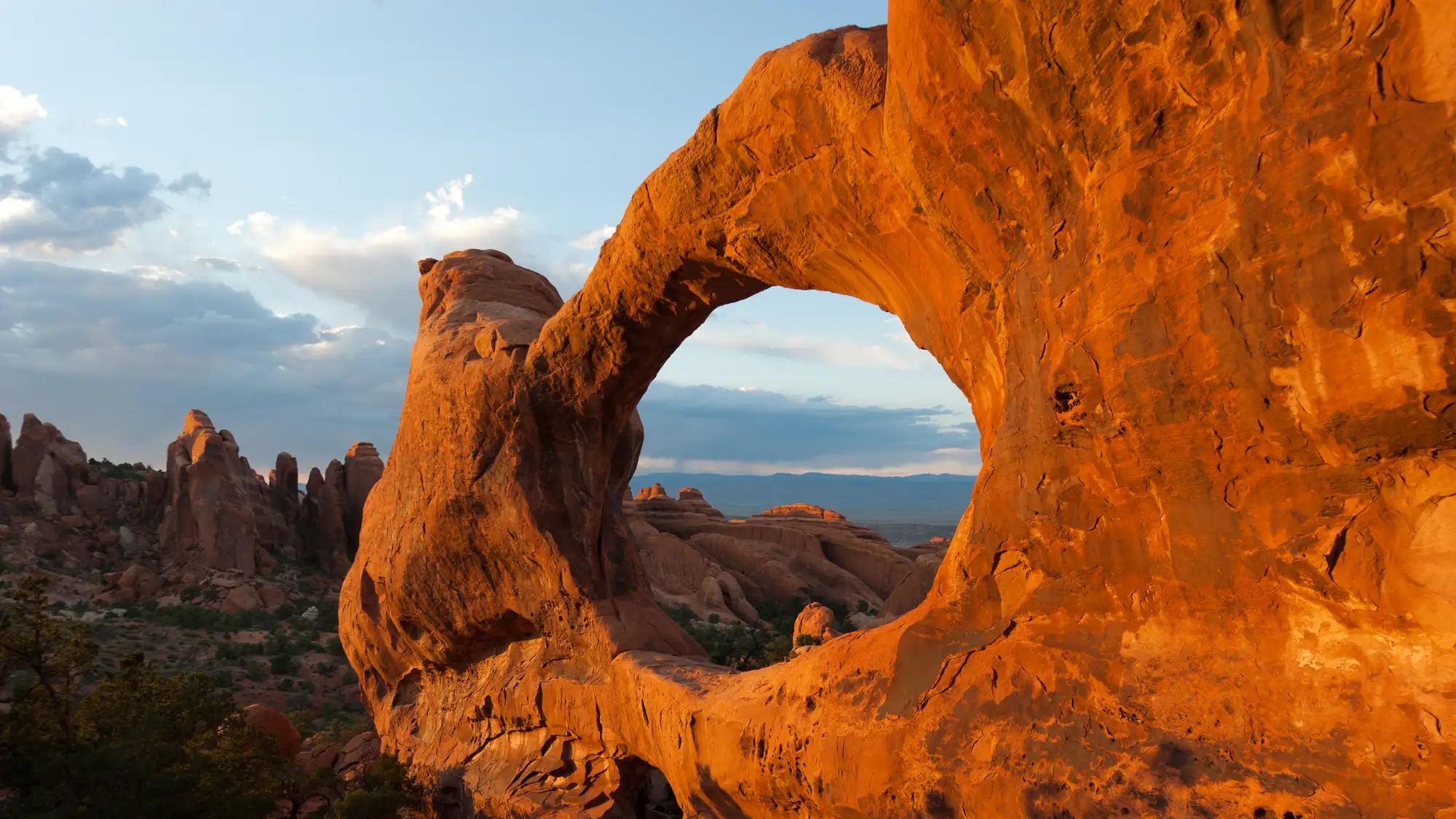
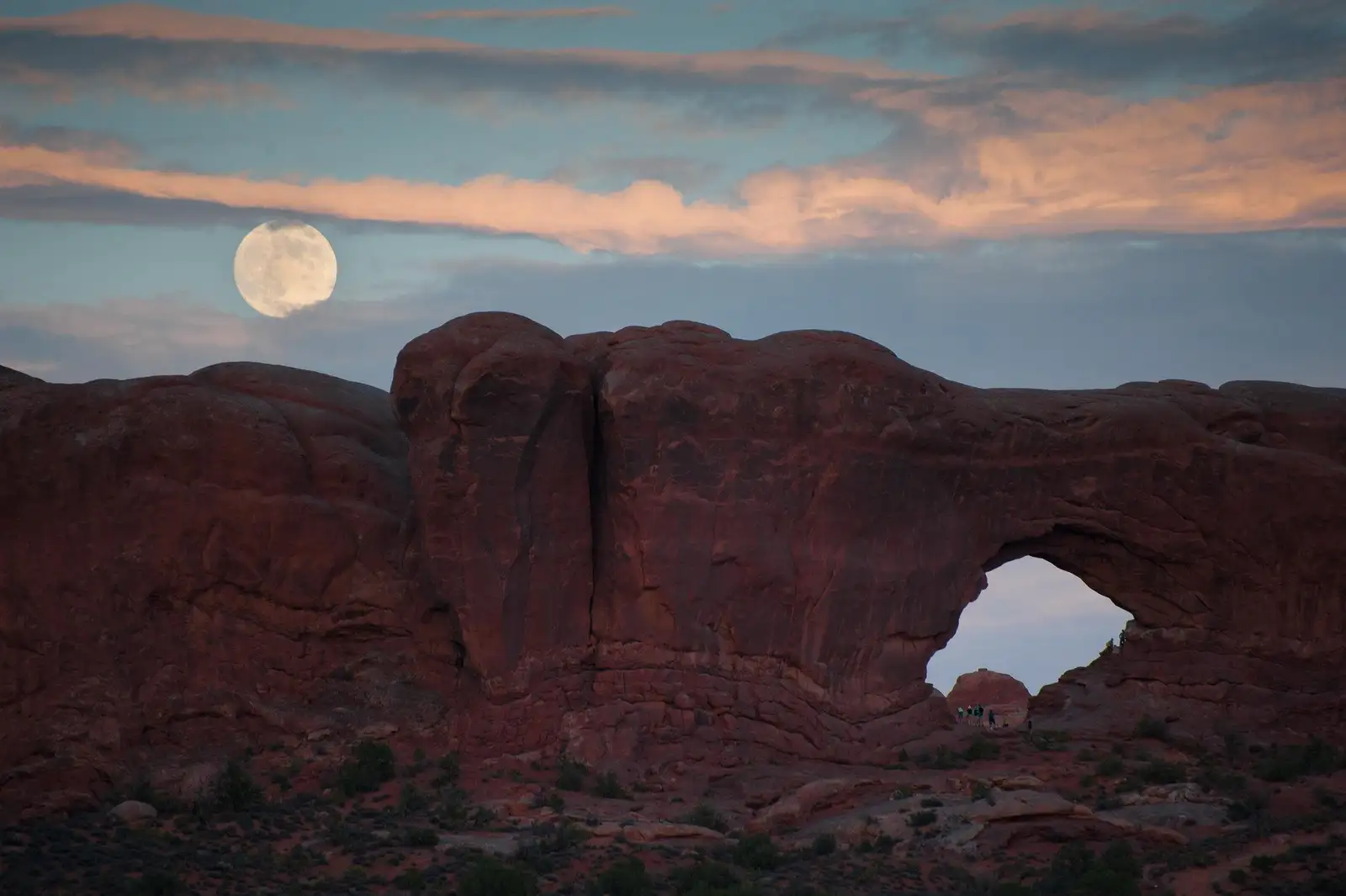
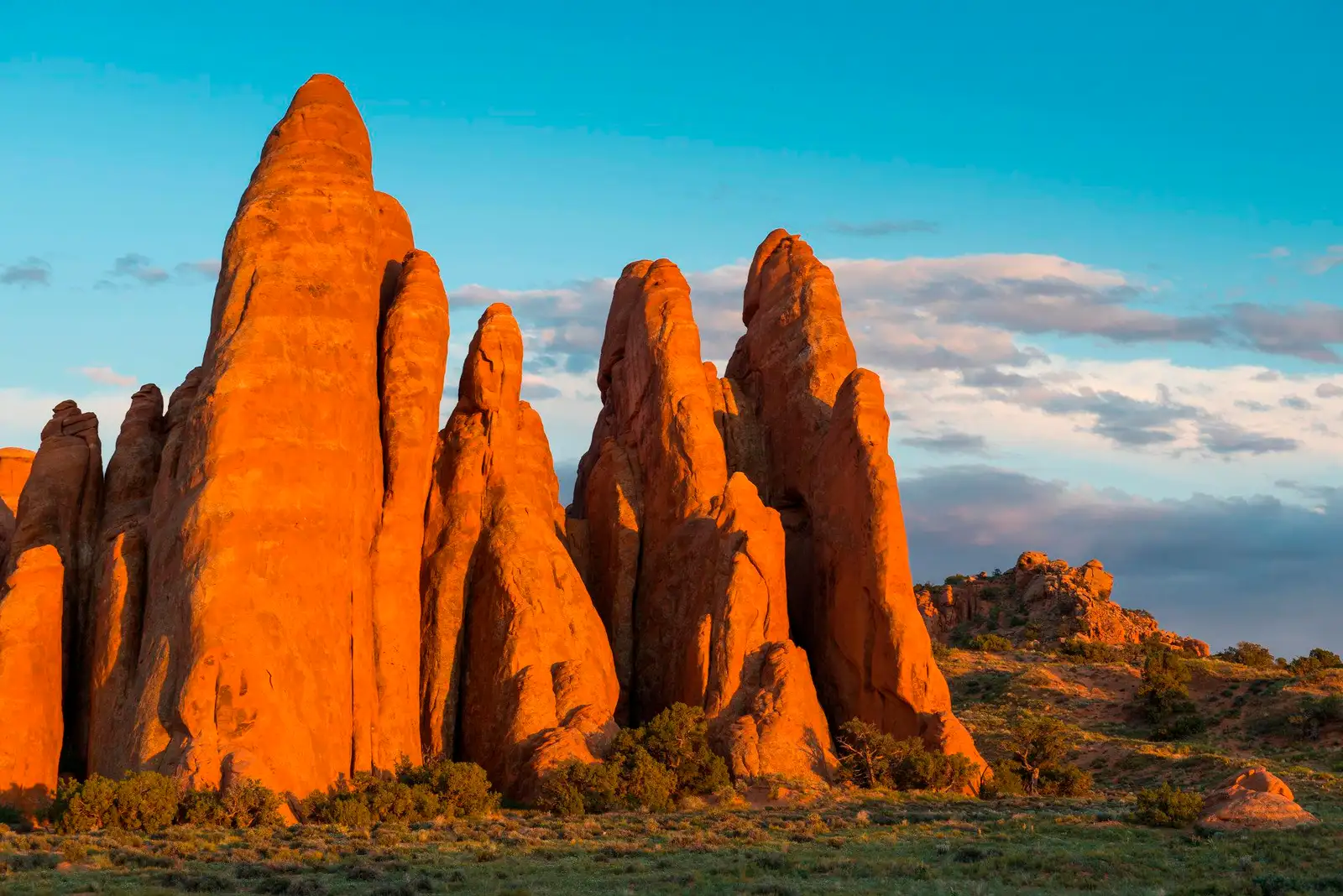
Arches is not a place that asks for a full day of effort. The formations do the heavy lifting. Over 2,000 stone arches, balanced rocks, and rows of fins stand out against red sandstone and open sky, and many of them sit within a short walk of the road. Balanced Rock is a loop of a few hundred yards. The Windows and Delicate Arch reward you fast.
That matters more than it sounds. Parking is tight and summer heat can push past 100F, so most people move through Arches in short bursts: a viewpoint, a quick walk, a stretch of shade. The strange thing is that a brief stop is enough to do something real for a stressed head. You do not have to earn the calm with a long march.
The high desert also strips the setting down to color, shape, and quiet. Wide temperature swings, dark night skies over Moab, and formations that look built rather than eroded give the eye something new to settle on without any demand attached.
The science: Research by MaryCarol Hunter and colleagues tracked people taking short daily 'nature pills' and measured their stress hormone cortisol. The biggest drop per minute came from brief contact, with the effect most efficient somewhere between 20 and 30 minutes. A quick stop at a viewpoint or a short walk to an arch is well inside that window.
Hunter, Gillespie & Chen (2019) · Frontiers in Psychology
Seasonal guide
Crowd levels use NPS monthly visitation, averaged 2015–2025. Excludes 2020 (COVID anomaly) and 2026 (partial year). Temperatures are NOAA climate normals from a station 7.6 miles away. Busy does not mean bad. If a peak month is your only window, the season notes below tell you how to work it.
Spring is the sweet spot for comfort, with highs climbing from the low 60s in March to around 80F by May and cool nights. Crowds build fast, and by May the park is at its peak, so start early and have a backup plan when lots fill. March is noticeably quieter if you can go before the spring break rush.
Summer is hot and packed, with July highs near 99F and June and August close behind. Strenuous hiking is genuinely risky midday, so start at dawn, carry far more water than feels necessary, and save short paved walks like Balanced Rock for the heat of the afternoon. Sunset and the dark night skies are the real payoff once temperatures drop.
Fall cools steadily, from September highs in the upper 80s to comfortable 70s in October and crisp 50s by November. September still draws crowds, but October and November thin out while daytime conditions stay pleasant. October is the wettest month on average, so pack a layer and watch the forecast.
Winter is the quietest stretch by a wide margin, with highs in the 40s and lows dipping toward the teens and single digits. Snow can dust the red rock for striking, empty scenery, and Devils Garden Campground switches to first-come, first-served. Dress warm, watch for ice on trails, and enjoy having viewpoints nearly to yourself.
This month in the park
Timing changes everything out here. Pick a month to see when the light turns golden, which nights stay darkest for stargazing, and what visitors have actually recorded in bloom and on the move. The new-moon night is the one to plan a sky-watching evening around.
January 2027
Wildlife on the move · 27 species on record
- Common Raven 22 sightings
- Desert Cottontail 8 sightings
- Mule Deer 6 sightings
- Cotton-gall Tephritid 5 sightings
- White-crowned Sparrow 4 sightings
February 2027
In bloom · 2 species on record
- ❀ London rocket 1 sightings
- ❀ Woolly Locoweed 1 sightings
Wildlife on the move · 33 species on record
- Common Raven 25 sightings
- Common Side-blotched Lizard 14 sightings
- Mule Deer 9 sightings
- Woodhouse's Scrub-Jay 6 sightings
- Cotton-gall Tephritid 4 sightings
March 2027
In bloom · 30 species on record
- ❀ Redstem Stork's-bill 11 sightings
- ❀ Utah Desertparsley 6 sightings
- ❀ Woolly Locoweed 6 sightings
- ❀ Narrowleaf puccoon 4 sightings
- ❀ Flatspine Stickseed 4 sightings
Wildlife on the move · 69 species on record
- Common Raven 48 sightings
- Common Side-blotched Lizard 48 sightings
- Hopi Chipmunk 23 sightings
- Mule Deer 14 sightings
- Woodhouse's Scrub-Jay 12 sightings
April 2027
In bloom · 61 species on record
- ❀ Blackbrush 13 sightings
- ❀ Stansbury's Cliffrose 12 sightings
- ❀ Largeflower onion 11 sightings
- ❀ Firecracker penstemon 9 sightings
- ❀ Pale Evening Primrose 9 sightings
Wildlife on the move · 94 species on record
- Common Side-blotched Lizard 71 sightings
- Hopi Chipmunk 45 sightings
- Common Raven 31 sightings
- Plateau Fence Lizard 26 sightings
- Western Whiptail 19 sightings
May 2027
In bloom · 56 species on record
- ❀ Stansbury's Cliffrose 14 sightings
- ❀ Kingcup Cactus 13 sightings
- ❀ Sego Lily 13 sightings
- ❀ Badlands Mule-ears 13 sightings
- ❀ Desert Prince's Plume 11 sightings
Wildlife on the move · 128 species on record
- Western Whiptail 113 sightings
- Common Side-blotched Lizard 90 sightings
- Common Raven 83 sightings
- Long-nosed Leopard Lizard 59 sightings
- Hopi Chipmunk 44 sightings
June 2027
In bloom · 29 species on record
- ❀ Desert Prince's Plume 8 sightings
- ❀ Desert Trumpet 4 sightings
- ❀ Utah Fleabane 4 sightings
- ❀ Plains Pricklypear 4 sightings
- ❀ Small Wirelettuce 2 sightings
Wildlife on the move · 103 species on record
- Western Whiptail 87 sightings
- Common Raven 83 sightings
- Long-nosed Leopard Lizard 71 sightings
- Plateau Fence Lizard 48 sightings
- Common Side-blotched Lizard 47 sightings
July 2026
In bloom · 8 species on record
- ❀ Rubber Rabbitbrush 1 sightings
- ❀ Desert Prince's Plume 1 sightings
- ❀ Sacred Datura 1 sightings
- ❀ Desert Trumpet 1 sightings
- ❀ Mountain Pepperweed 1 sightings
Wildlife on the move · 90 species on record
- Common Raven 74 sightings
- Western Whiptail 53 sightings
- Long-nosed Leopard Lizard 43 sightings
- Common Side-blotched Lizard 39 sightings
- Plateau Fence Lizard 33 sightings
August 2026
In bloom · 7 species on record
- ❀ Prickly Russian Thistle 1 sightings
- ❀ Sacred Datura 1 sightings
- ❀ Broom Snakeweed 1 sightings
- ❀ Frosted Mint 1 sightings
- ❀ Fendler's Sandmat 1 sightings
Wildlife on the move · 96 species on record
- Western Whiptail 49 sightings
- Common Side-blotched Lizard 47 sightings
- Plateau Fence Lizard 35 sightings
- Long-nosed Leopard Lizard 34 sightings
- Common Raven 33 sightings
September 2026
In bloom · 15 species on record
- ❀ Sacred Datura 13 sightings
- ❀ Rubber Rabbitbrush 5 sightings
- ❀ Eastwood's monkeyflower 5 sightings
- ❀ Mountain Deathcamas 3 sightings
- ❀ Crispleaf buckwheat 3 sightings
Wildlife on the move · 75 species on record
- Common Side-blotched Lizard 61 sightings
- Common Raven 52 sightings
- Hopi Chipmunk 46 sightings
- Plateau Fence Lizard 37 sightings
- Western Whiptail 31 sightings
October 2026
In bloom · 20 species on record
- ❀ Rubber Rabbitbrush 9 sightings
- ❀ Saltlover 7 sightings
- ❀ Sacred Datura 6 sightings
- ❀ Hoary Tansyaster 6 sightings
- ❀ Broom Snakeweed 6 sightings
Wildlife on the move · 67 species on record
- Common Side-blotched Lizard 42 sightings
- Common Raven 40 sightings
- Hopi Chipmunk 35 sightings
- Plateau Fence Lizard 17 sightings
- Desert Cottontail 12 sightings
November 2026
In bloom · 9 species on record
- ❀ Scarlet Gilia 2 sightings
- ❀ Sacred Datura 2 sightings
- ❀ Hairy Gumweed 1 sightings
- ❀ Rubber Rabbitbrush 1 sightings
- ❀ Frosted Mint 1 sightings
Wildlife on the move · 43 species on record
- Common Raven 49 sightings
- Common Side-blotched Lizard 19 sightings
- Woodhouse's Scrub-Jay 15 sightings
- Mule Deer 13 sightings
- Hopi Chipmunk 11 sightings
December 2026
Wildlife on the move · 14 species on record
- Common Raven 39 sightings
- Mule Deer 8 sightings
- Woodhouse's Scrub-Jay 8 sightings
- Loggerhead Shrike 4 sightings
- Cotton-gall Tephritid 4 sightings
Sun and moon times are computed for the park's coordinates from standard NOAA solar equations and cross-checked against the U.S. Naval Observatory. Species lists are research-grade community observations for Arches National Park, US, UT via iNaturalist, retrieved July 2026; sighting counts are all-time records for that calendar month.
Don’t wait for Arches.
One big trip a year isn’t what changes how you feel — the small stuff in between is. The 7-Day Nature Reset is one tiny outdoor practice a day, wherever you already are. Day one takes 60 seconds.
No spam. No noise. Just nature.
Day 1 is landing in your inbox right now — go say hi.
Sleep nearby
Places to stay around Moab, Utah. Pan the map to trade a shorter drive for a quieter night.
Camping inside the park books through Recreation.gov and is listed separately.
The map is provided by Stay22. If you book through it we may earn a commission at no cost to you, which helps keep Happier Outdoors running. It never changes what we recommend.
Let someone else lead
A guide is worth it when the terrain needs one, or when you would rather look around than navigate. These are the highest-rated trips running around Arches, not the cheapest.
 Free cancellation
 HIGHLY RATED Arches National Park Sightseeing Tour From Moab Utah
- Runs year-round
- Up to 14 per booking
- Service animals welcome
 Free cancellation
 Discover 3 Moab Parks In 1 Day: Arches Canyonlands Dead Horse Pt
- Runs year-round
- Up to 10 per booking
- Service animals welcome
 Free cancellation
 Astro-Photo, Hiking and Stargazing Tour in Arches National Park
- Runs Jun–Oct
- Up to 8 per booking
- Easy for most fitness levels
 Free cancellation
 Arches Full Day Private Tour & Hike
- Runs year-round
- Private tour, up to 10
- Wheelchair accessible
Tours are listed by Viator; booking happens there. If you book we may earn a commission at no cost to you, which helps keep Happier Outdoors running. It never changes what we list. Prices checked September 2026 and can change.
Activities & experiences
Beyond the trails
Rangers lead stargazing programs at parks across southeast Utah from time to time. You can check the schedule for Arches and Canyonlands national parks and Hovenweep and Natural Bridges national monuments. Even without a formal program, you are welcome to stay after dark on your own.
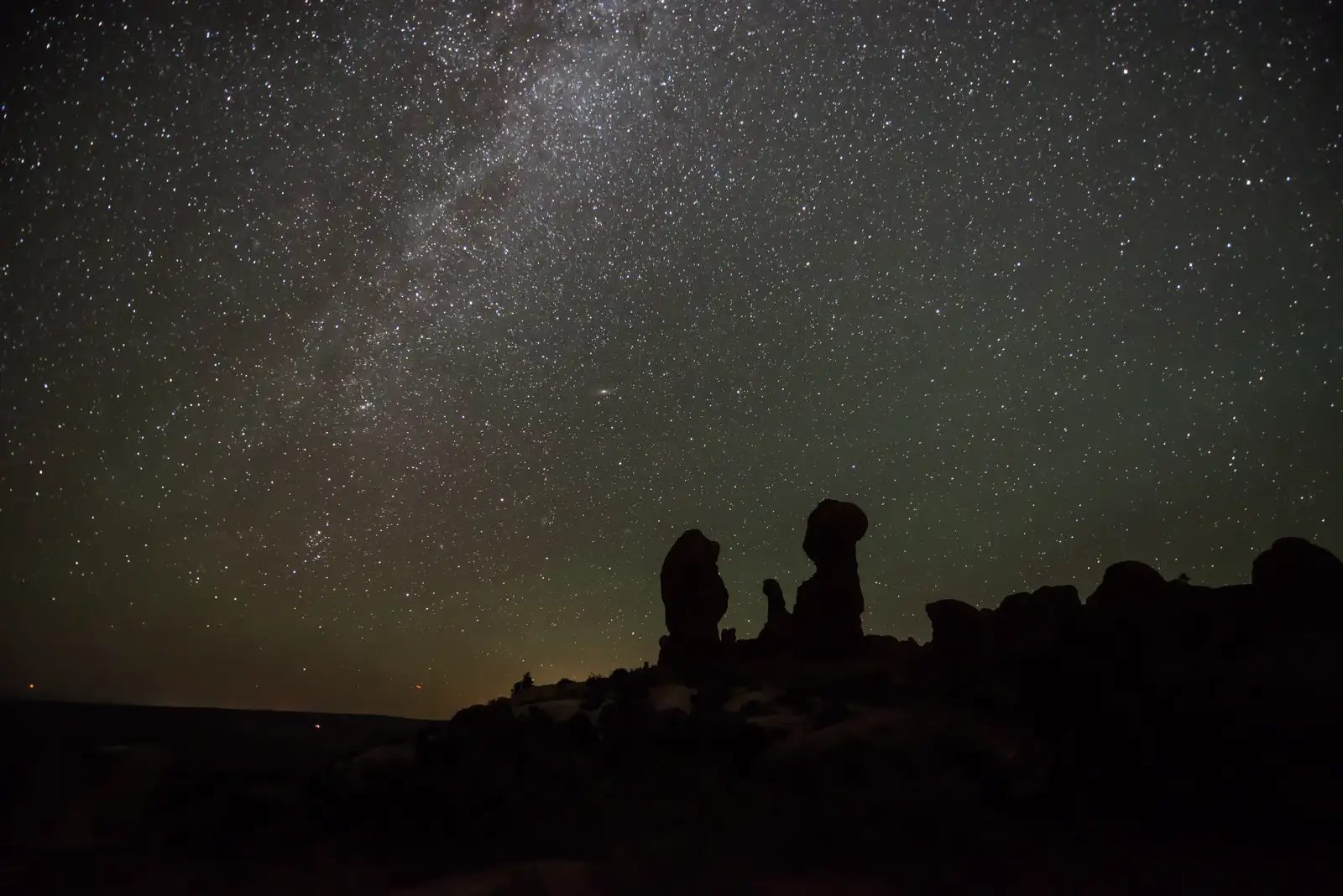
The Colorado Plateau holds some of the darkest night skies left in the United States, and Arches is part of it. Stay after sunset and the sky opens up.
Pay attention from your car and you can spot close to two dozen arches without leaving the road.
Free Junior Ranger books are packed with activities that show kids and parents the wonders of the park.
There are no real slot canyons here, but Arches does offer some unique on-rope routes.
Most climbing routes call for advanced technique. Climbing is not allowed on any arch or on certain named features like Balanced Rock.
Details and current conditions live on nps.gov.
From the field
Common questions
When is the best time to visit Arches National Park?
Spring (April to May) and fall (mid-September through October) are the most comfortable times, with daytime highs of roughly 60 to 80F and cooler nights. Summer highs often exceed 100F, which makes strenuous hiking difficult, while winter brings highs of 30 to 50F and lows near 0 to 20F. If you want fewer people, January and December are the quietest months by far.
How crowded does Arches National Park get?
Arches gets extremely busy from March through October, drawing over 1.5 million visitors a year, with May through September the peak. Entrance lines can exceed 60 minutes and trailhead lots often fill by 7:30 am. To skip the worst of it, enter before 8 am or after 3 pm, or visit in November through February.
Is Arches National Park dog-friendly?
Leashed dogs are allowed only in developed areas: paved roads, parking areas, picnic areas, and Devils Garden Campground. They are not permitted on any hiking trail, at overlooks, or inside buildings, and leashes must be six feet or shorter. Service animals meeting ADA criteria are allowed everywhere.
What is the quietest trail in Arches National Park?
Visitors consistently point to Tower Arch, Broken Arch, and the back half of the Devils Garden loop toward Double O, Partition, and Navajo arches as the least crowded options. Most people miss them because they involve longer drives on gravel roads like the unpaved Salt Valley Road, more walking in the heat, or fainter trail markers. Klondike Bluffs is another spot travelers mention for solitude.
Is Arches National Park accessible for wheelchairs?
Yes, Arches has paved, wheelchair-accessible trails at Balanced Rock, the Park Avenue viewpoint, and the first 1.5 miles of Devils Garden to Landscape Arch, though a steep slope just before that arch may require assistance. The visitor center is fully accessible with push-button doors, accessible restrooms, tactile models, and large-print and braille materials. The park does not run a shuttle, so visitors rely on personal vehicles.
Can you camp at Arches National Park?
Yes, the park has one campground, Devils Garden, with 57 sites including group and accessible options. Standard sites cost $25 per night. From March through October it is reservation-only, and from November through February it switches to first-come, first-served.
Where do you park at Arches National Park?
Parking is extremely limited at every major stop, and popular lots like Devils Garden, Wolfe Ranch for Delicate Arch, and The Windows often fill by 7:30 am in the busy season. Arrive before 7:30 am or in late afternoon, and consider leaving oversize vehicles in Moab or at the visitor center. If a lot is full, it is faster to move on and return later than to wait.
How much does it cost to enter Arches National Park?
Entry is $30 per private vehicle, $25 per motorcycle, or $15 per person for those on foot or bike, with youth 15 and under free. A park annual pass is $55. The park is open 24 hours a day, year-round.