National Park of American Samoa
Pago Pago, American Samoa
A reef and forest teeming with life
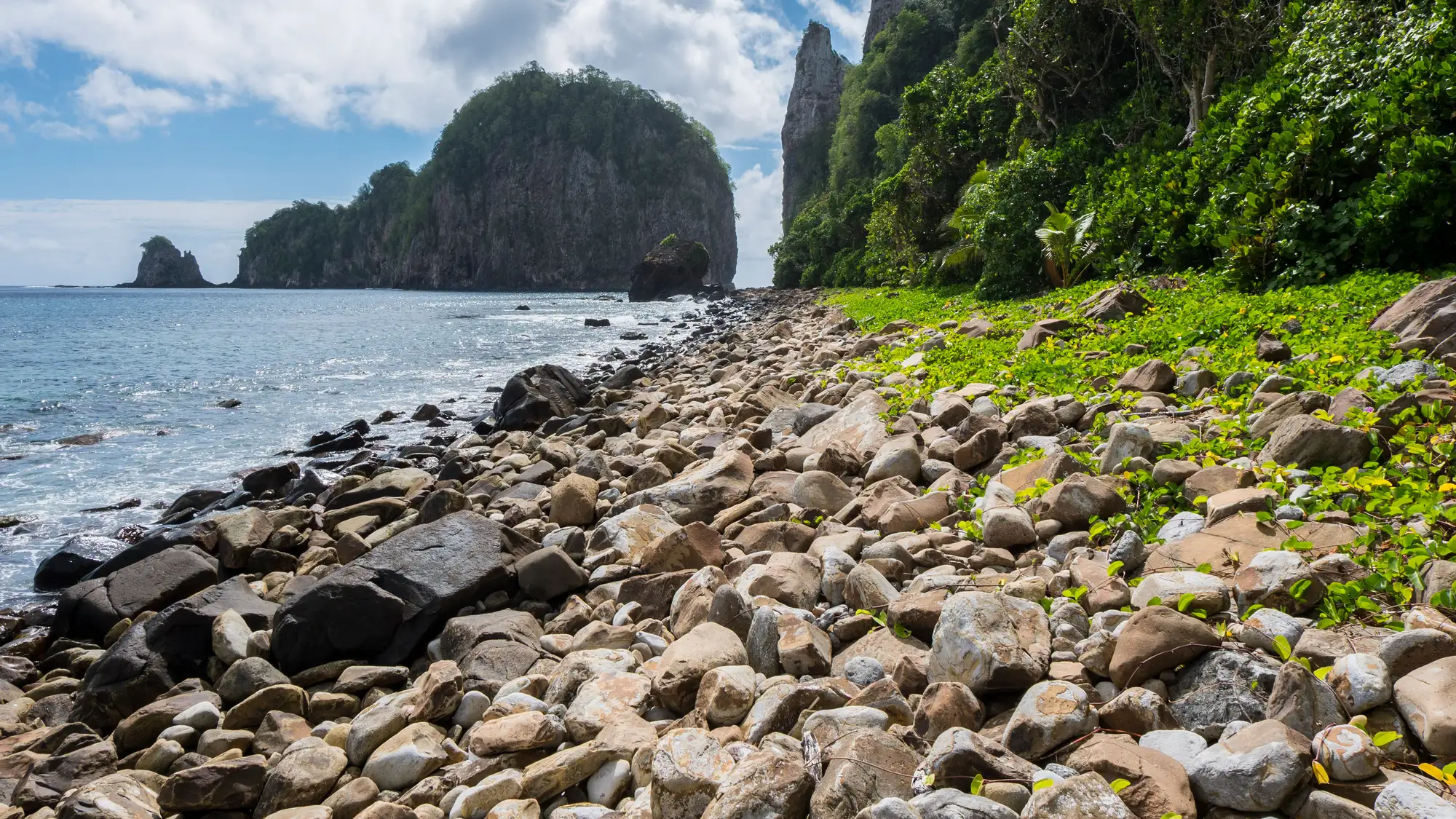
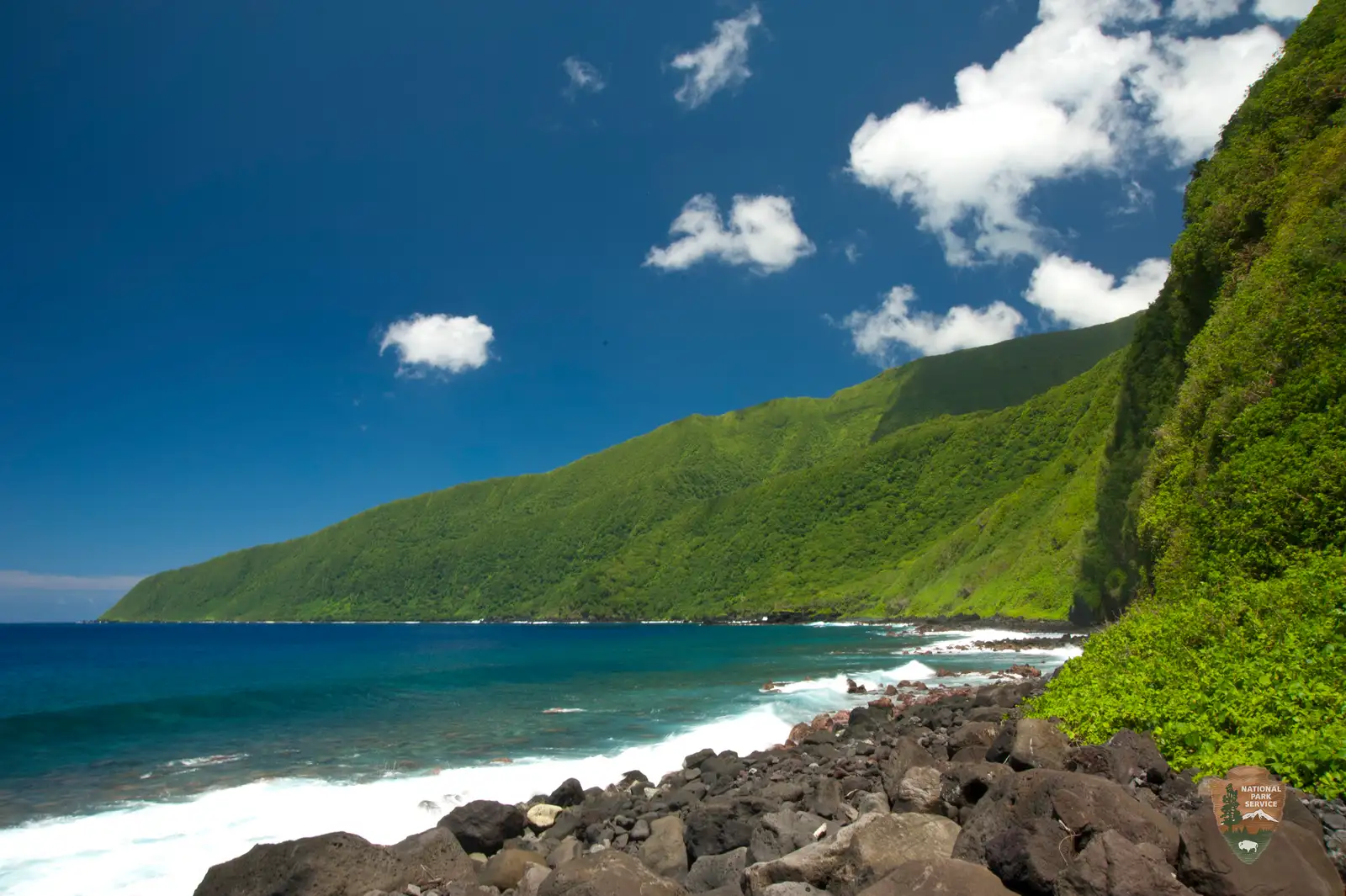
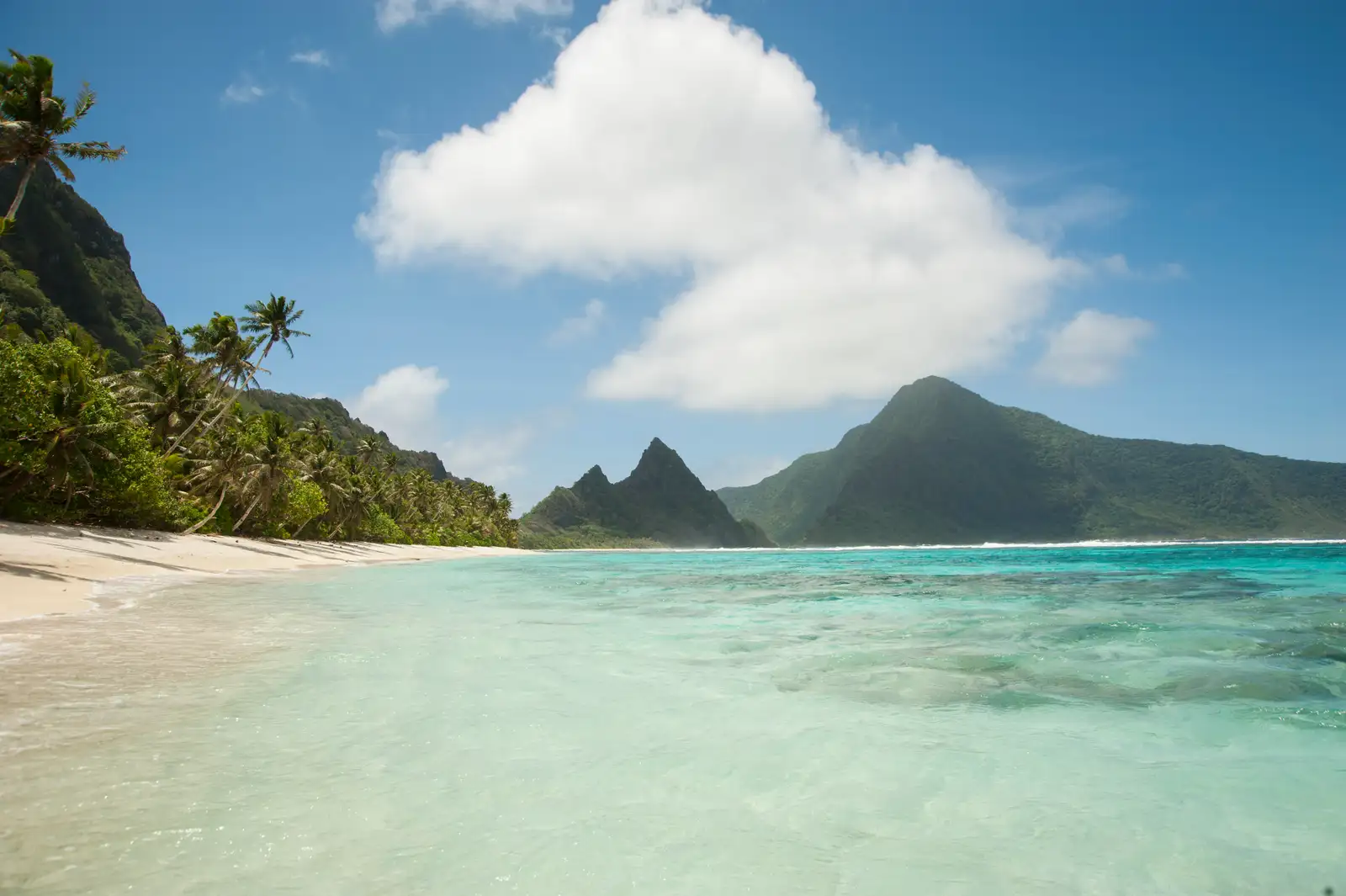
The National Park of American Samoa is scattered across islands in the South Pacific, and it protects two living systems at once: tropical forest climbing steep volcanic ridges, and coral reefs fringing the coast below. It ranks among the least-visited parks in the country, so both stay unusually intact. Snorkel off Ofu or walk a ridge above Vatia and the sheer amount of life around you is the whole experience, not the backdrop.
Fuller and colleagues studied people using green spaces and found their psychological wellbeing rose with a site's actual biodiversity, its plant and bird species richness, and that visitors could partly sense that richness for themselves rather than just how green it looked. That distinction lands harder here than almost anywhere. A reef crowded with fish, coral, and turtles, or a forest thick with birdsong, is not a generic patch of nature; it is exactly the kind of perceptibly rich place the research points to.
Reaching it filters out the noise on its own. The park charges no fee and requires no reservation, and getting to the quieter units on Ta'u and Ofu takes real effort, which is why so few travelers make it. What remains when they don't is warm water, birdcalls, and a coastline that asks nothing of you.
The science: Fuller and colleagues found that the wellbeing people drew from a green space increased with the site's actual biodiversity, its plant and bird species richness, and that visitors could partly perceive that richness rather than simply its greenness. In American Samoa that richness is the main event: a reef alive with fish and coral, or a ridge full of birds, is precisely the perceptibly biodiverse setting the finding describes.
Fuller, Irvine, Devine-Wright, Warren & Gaston (2007) · Biology Letters
Seasonal guide
Crowd levels use NPS monthly visitation, averaged 2015–2025. Excludes 2020 (COVID anomaly) and 2026 (partial year). Temperatures are NOAA climate normals from a station 58.2 miles away. Busy does not mean bad. If a peak month is your only window, the season notes below tell you how to work it.
This is the heart of the wet season, with highs near 88F, lows around 78F, and 14 to 15 inches of rain a month, plus a chance of tropical storms. It is also the quietest stretch for visitors, so pack good rain gear and stay flexible; showers often pass in minutes between long stretches of warm sun.
April is the single busiest month of the year, while March still sees heavy rain and May begins to dry out, with highs around 86 to 88F throughout. Start hikes early to beat both the midday heat and April's crowds, and aim for May if you want the drier air with fewer people around.
The drier, slightly cooler season settles in, with highs of 84 to 85F, lows near 77F, and rainfall dropping to 6 to 8 inches a month. Seas are calmest now, which makes it the best window for snorkeling the reefs, and June is the quietest month on the calendar.
The wet season returns as rain climbs back toward 10 to 12 inches a month and tropical storm risk rises, while October and November are two of the most-visited months. Watch the forecast closely, plan around afternoon downpours, and book any village homestay well ahead since these are peak weeks.
This month in the park
Timing changes everything out here. Pick a month to see when the light turns golden, which nights stay darkest for stargazing, and what visitors have actually recorded in bloom and on the move. The new-moon night is the one to plan a sky-watching evening around.
January 2027
In bloom · 2 species on record
- ❀ Guest Tree 1 sightings
- ❀ Barringtonia samoensis 1 sightings
Wildlife on the move · 28 species on record
- Cane Toad 3 sightings
- Tawny Hermit Crab 2 sightings
- Pacific Kingfisher 2 sightings
- Forest Hermit Crab 2 sightings
- Red-footed Booby 1 sightings
February 2027
Wildlife on the move · 18 species on record
- Brown Noddy 4 sightings
- Yellow Crazy Ant 2 sightings
- Telostylinus lineolatus 2 sightings
- Red-footed Booby 1 sightings
- Black Noddy 1 sightings
March 2027
Wildlife on the move · 38 species on record
- Bird Wrasse 2 sightings
- Sixbar Wrasse 2 sightings
- Speckled Butterflyfish 2 sightings
- Clown Coris 2 sightings
- South Seas Demoiselle 2 sightings
April 2027
Wildlife on the move · 3 species on record
- Polynesian Wattled Honeyeater 1 sightings
- Samoan Starling 1 sightings
- Purple Hermit Crab 1 sightings
May 2027
In bloom · 4 species on record
- ❀ Hernandia moerenhoutiana 1 sightings
- ❀ Bulbophyllum samoanum 1 sightings
- ❀ Meryta macrophylla 1 sightings
- ❀ Metrosideros vitiensis 1 sightings
Wildlife on the move · 20 species on record
- Pacific Kingfisher 2 sightings
- Buff-banded Rail 1 sightings
- Red Junglefowl 1 sightings
- Many-coloured Fruit Dove 1 sightings
- Pacific Imperial Pigeon 1 sightings
June 2027
Wildlife on the move · 18 species on record
- Pacific Kingfisher 2 sightings
- Pacific Reef Heron 1 sightings
- Polynesian Wattled Honeyeater 1 sightings
- Polynesian Starling 1 sightings
- Black Emo Skink 1 sightings
July 2026
Wildlife on the move · 28 species on record
- Guineafowl Puffer 2 sightings
- Strawberry Hermit Crab 2 sightings
- Brown Booby 1 sightings
- Pacific Flying-fox 1 sightings
- Common Lionfish 1 sightings
August 2026
In bloom · 2 species on record
- ❀ Yellow ginger 2 sightings
- ❀ Freycinetia reineckei 1 sightings
Wildlife on the move · 13 species on record
- Cane Toad 3 sightings
- Wandering Tattler 2 sightings
- Euploea lewinii 2 sightings
- Forest Hermit Crab 2 sightings
- Red-footed Booby 1 sightings
September 2026
Wildlife on the move · 36 species on record
- Small Giant Clam 4 sightings
- Bird Wrasse 2 sightings
- Arabian Cowrie 2 sightings
- Pacific Leaping Blenny 2 sightings
- Many-coloured Fruit Dove 1 sightings
October 2026
Wildlife on the move · 32 species on record
- Yellowlip Emperor 3 sightings
- Black Emo Skink 2 sightings
- Redfin Butterflyfish 2 sightings
- Convict Surgeonfish 2 sightings
- Threespot Wrasse 2 sightings
November 2026
Wildlife on the move · 14 species on record
- Reefcrest Parrotfish 2 sightings
- Small Giant Clam 1 sightings
- Threadfin Butterflyfish 1 sightings
- Sixbar Wrasse 1 sightings
- Blue-and-yellow Fusilier 1 sightings
December 2026
Wildlife on the move · 15 species on record
- Brown Noddy 3 sightings
- Black Noddy 3 sightings
- Red-footed Booby 2 sightings
- Masked Booby 1 sightings
- Brown Booby 1 sightings
Sun and moon times are computed for the park's coordinates from standard NOAA solar equations and cross-checked against the U.S. Naval Observatory. Species lists are research-grade community observations for National Park of American Samoa via iNaturalist, retrieved July 2026; sighting counts are all-time records for that calendar month.
Don’t wait for National Park of American Samoa.
One big trip a year isn’t what changes how you feel — the small stuff in between is. The 7-Day Nature Reset is one tiny outdoor practice a day, wherever you already are. Day one takes 60 seconds.
No spam. No noise. Just nature.
Day 1 is landing in your inbox right now — go say hi.
Activities & experiences
Beyond the trails
Fruit bats are the only native mammals in American Samoa, and they are harmless to people. Two fruit bat species and one insect-eating species live here, some with wingspans close to three feet. As they eat, they spread seeds through their droppings, which keeps the tropical rainforest healthy and full of new trees.
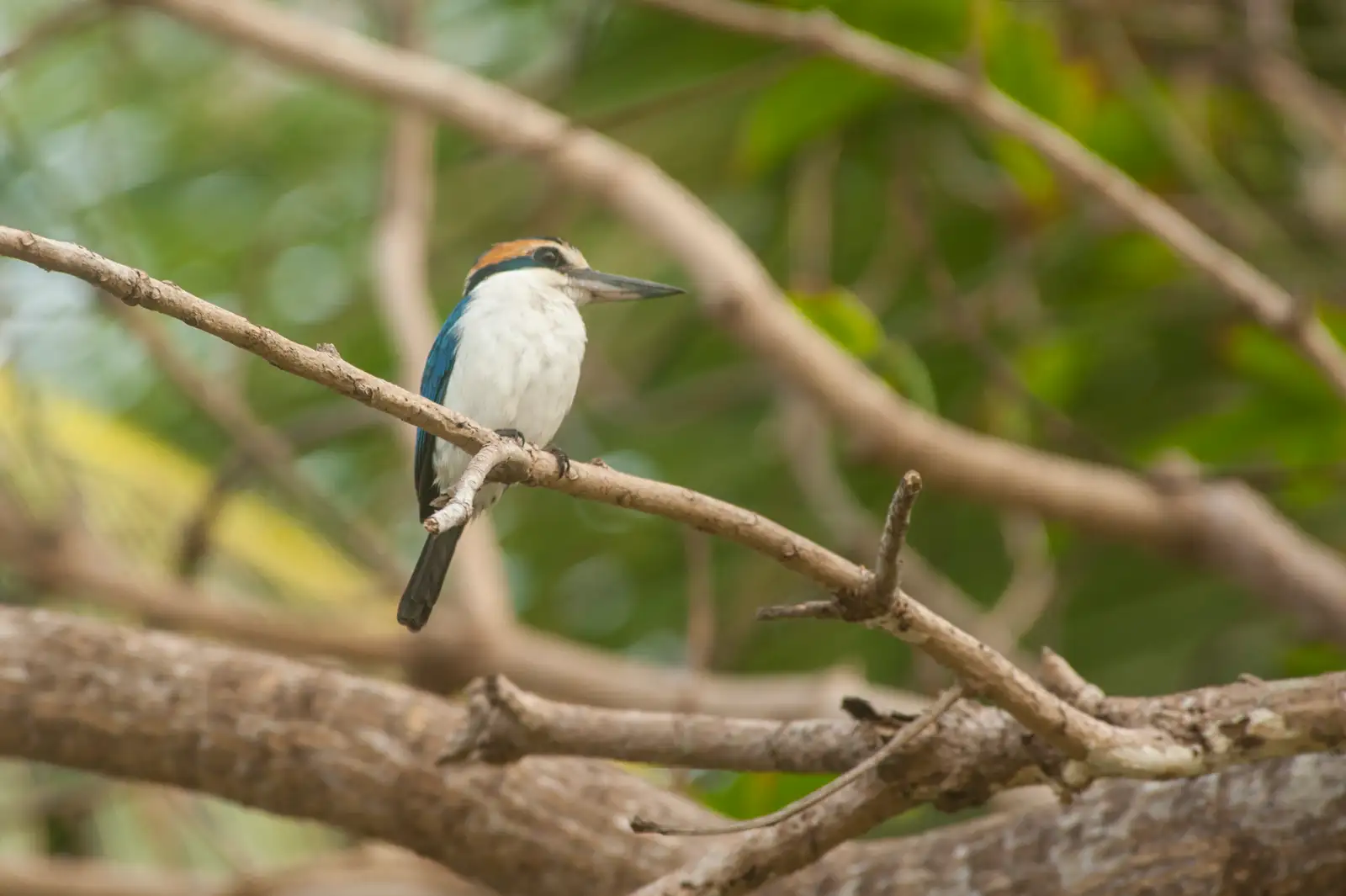
More than 35 native bird species fly the skies here. Each holds its own place in Samoan culture.
About one mile southeast of Tutuila's eastern tip sits 'Aunu'u, the smallest inhabited island. Reach it by boat and explore on foot. The young basalt flows layered with tuff, the wave-cut erosion, and the dense tropical vegetation are all on display.
Every island here has a coral reef ecosystem in its coastal waters, full of marine life typical of the tropical Indo-Pacific. So far, researchers have documented over 950 fish species and more than 250 coral species.
Details and current conditions live on nps.gov.
From the field
Common questions
When is the best time to visit the National Park of American Samoa?
The drier, slightly cooler season from June to September brings the calmest seas and least rain, making it the best window for snorkeling and hiking. June is also the quietest month for visitors, while April, October, and November draw the largest crowds.
Can I bring my dog to the National Park of American Samoa?
No, pets are not allowed on any hiking trails, in park buildings, on swimming beaches, or on park transportation. The prohibition covers all trails with no leashed-dog exceptions.
What is the quietest trail in the park?
The Si'u Point (Saua) Trail on Ta'u Island and the Oge Beach Trail on Ofu Island are the least-crowded, because they sit on remote islands far from the main visitor center on Tutuila. Most people never reach the Manu'a Islands, so these routes stay very quiet, while the Pola Island and Mt. Alava trails on Tutuila see the most foot traffic.
How crowded does the park get?
The National Park of American Samoa is one of the least-visited parks in the country, so crowding is rarely an issue. Most visitors stay on Tutuila near the visitor center in Pago Pago, hiking groups are capped at 40 people, and the Manu'a Islands see almost no one.
Is the park accessible for wheelchairs and strollers?
Accessibility is limited: the visitor center and its restrooms are wheelchair-accessible, but the trails are mostly steep, rugged, and unpaved. The Lower Sauma Ridge overlook can be reached with assistance and the Pola Island Trail is shorter and flatter than most, and the park suggests contacting them ahead to discuss specific needs.
Can you camp in the National Park of American Samoa?
No, camping is not authorized on park land, so there are no campgrounds or nightly fees. Overnight stays inside the park require special permission from the Superintendent, and most visitors use the local village homestay program instead.
Is there an entrance fee, and what are the hours?
No, there are no entrance fees and no reservations required to visit. The park itself is open 24 hours a day year-round, while the visitor center in Pago Pago is open weekdays from 8:00 am to 3:00 pm and closed on weekends and federal holidays.